admin
admin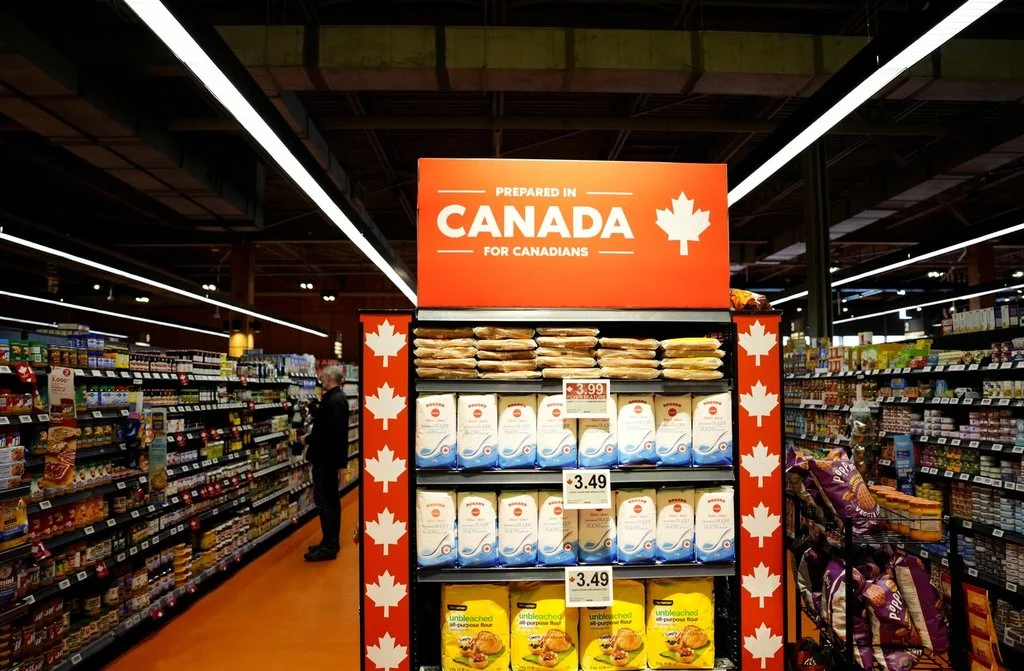
The Canadian Food Inspection Agency (CFIA) has announced a significant enforcement action, revealing it has issued administrative monetary penalties totalling $47,000 since April 1, 2025, to various businesses for misrepresenting the origin of food products through misleading "Product of Canada" labels. This crackdown comes at a time when the "Buy Canadian" movement has gained considerable momentum, driven by consumer desire to support domestic industries, economic nationalism, and a response to past international trade tensions, including U.S. tariffs and provocative political rhetoric. The agency’s proactive stance underscores its commitment to ensuring truth in labelling, thereby safeguarding consumer trust and fostering a fair marketplace for Canadian producers.
The Regulatory Framework and Recent Enforcement Landscape
The Canadian Food Inspection Agency stands as the federal body responsible for safeguarding Canada’s food supply, animal health, and plant resources. Operating under a comprehensive legislative framework, including the Food and Drugs Act and the Safe Food for Canadians Act, the CFIA’s mandate is multifaceted. It aims to protect Canadians from preventable health risks associated with food, animals, and plants, while simultaneously facilitating market access for Canadian agricultural and food products. A cornerstone of this mandate involves the rigorous enforcement of labelling regulations, designed to equip consumers with accurate and transparent information, particularly concerning product origin.
The recent accumulation of $47,000 in fines over the past year highlights a deliberate and intensified effort by the CFIA to tackle persistent issues surrounding product origin claims. Since the start of the 2025-2026 fiscal year on April 1, 2025, the agency has ramped up its inspections and investigations, both in response to specific complaints and through proactive market surveillance. While the original source did not provide an exhaustive list of all fined entities beyond the prominent case of Real Canadian Superstore, the agency’s aggregated figure implies a broad application of penalties across various segments of the food industry. This enforcement action signals a clear message that compliance with origin labelling rules is a top priority for the CFIA. The agency’s statement on Monday, March 17, 2026, unequivocally articulated its position: "Canadians have been clear that they want to support Canadian businesses and buy Canadian products. Consumers deserve origin labels they can trust so they can make informed choices." This declaration reflects a deep understanding of evolving public sentiment and the CFIA’s commitment to upholding market integrity.
Defining "Product of Canada": A Strict Standard

To fully grasp the implications of these violations, it is essential to understand the CFIA’s precise definitions for origin claims. The "Product of Canada" label is reserved for food items where an overwhelming majority—specifically, at least 98%—of the ingredients, processing, and packaging materials originate from Canada. This stringent criterion ensures that when consumers purchase a "Product of Canada," they are genuinely supporting Canada’s domestic agricultural sector, food processing industries, and related supply chains.
A less restrictive claim, "Made in Canada," applies when a significant portion, defined as at least 51%, of the total direct costs of producing or manufacturing the food have been incurred within Canada, and the final substantial transformation of the food product took place on Canadian soil. Even for "Made in Canada" labels, if imported ingredients constitute a significant component of the product, their country of origin must be clearly declared. These distinctions are not arbitrary; they are critical for consumers who wish to align their purchasing power with their values, such as supporting local economies or reducing their environmental footprint by choosing locally sourced goods.
Misuse of the "Product of Canada" designation, therefore, constitutes more than a technical infraction; it directly misleads consumers and creates an unfair competitive landscape for businesses that genuinely meet the strict domestic content requirements. The CFIA’s administrative monetary penalties are tiered to reflect the severity and potential impact of violations. A fine of $10,000, as levied in some of the cases under review, is classified as a "very serious" violation within the CFIA’s penalty framework. This framework considers factors such as whether the violation was committed in the course of business or for financial gain, allowing for adjustments based on the "total gravity value" of the offence. Such a classification underscores the agency’s view that these breaches are not minor oversights but significant deviations from regulatory standards that impact both consumers and honest businesses.
The Real Canadian Superstore Case: A Specific Incident
Among the publicly highlighted penalties, a notable fine was issued against Real Canadian Superstore, a prominent grocery retail chain operated by Loblaw Companies Limited. This particular fine, which came to light in February 2026, stemmed from an in-store display issue. Investigations revealed that "maple leaf advertising decals"—symbols universally recognized as representative of Canada—were strategically placed next to product information tags for food items that were, in fact, not of Canadian origin. This visual juxtaposition created a clear and misleading impression of domestic sourcing, contradicting the actual provenance of the products.
A spokesperson for Loblaw Companies addressed the incident in a statement provided to Global News last month, acknowledging the fine and offering an explanation for the discrepancy. "We take our labelling and signage responsibilities seriously and are committed to meeting applicable requirements. With thousands of products in our stores, many of which are sourced from different countries and regions throughout the year, information can change quickly," the spokesperson stated. The company attributed the issue to the inherent complexities of managing vast inventories and dynamic supply chains in a large retail environment. They further explained, "While we work hard to keep everything up to date, there are times when signage may not be refreshed as quickly as inventory is replenished." Loblaw also cited the potential for "human error" within their operational processes, stating, "We have processes in place to support accuracy, but like any retail environment, there is still the potential for human error. That’s why we’re continuing to strengthen our processes. We’re sorry for any confusion this may have caused. If something doesn’t look right, we encourage customers to let us know so we can correct it as quickly as possible." This comprehensive response from Loblaw highlights the operational challenges faced by major retailers while reaffirming their commitment to rectifying such issues and enhancing internal compliance mechanisms.

The "Buy Canadian" Movement: A Resurgent National Imperative
The intensified scrutiny on origin labelling is not an isolated regulatory phenomenon; it is deeply intertwined with a robust and resurgent "Buy Canadian" movement. This initiative has garnered significant public support in recent years, fueled by a complex interplay of economic patriotism, a desire to bolster domestic industries, and a collective response to periods of international trade instability. Consumers have increasingly recognized the direct correlation between purchasing Canadian-made goods and services, and the tangible benefits of supporting local jobs, fostering national economic resilience, and contributing to the prosperity of their communities.
This sentiment gained particular prominence and urgency in the mid-2020s, a period characterized by notable global economic uncertainty and significant trade tensions, particularly with Canada’s largest trading partner, the United States. During the administration of then-President Donald Trump, Canada faced a series of protectionist measures, including the imposition of tariffs on steel and aluminum, which prompted retaliatory tariffs from Ottawa. Beyond these economic pressures, the rhetoric emanating from the White House, including controversial statements about potential "annexation" of Canada—though widely perceived as hyperbole—contributed to a heightened sense of national identity and a collective resolve to strengthen Canadian sovereignty and economic independence. This era of "trade wars" effectively galvanized Canadian consumers, leading to a palpable surge in demand for products unequivocally identified as Canadian. Against this backdrop, misleading origin labels were not merely regulatory infractions; they were perceived as directly undermining a collective national effort to support Canadian businesses and workers.
Escalation of Complaints and CFIA’s Proactive Stance
The CFIA’s internal data corroborates the public’s heightened vigilance regarding product origins. As early as March 2025, precisely when trade tensions began to escalate, the agency observed a marked increase in consumer complaints concerning potentially mislabelled products. These complaints encompassed a range of issues, from products featuring Canadian symbols or imagery but containing imported ingredients, to outright fraudulent "Product of Canada" claims. The public’s increased scrutiny directly informed and shaped the CFIA’s subsequent enforcement strategy. "Last March, at the start of the trade war, the CFIA said it was tracking a rise in complaints about items that may have been mislabelled or had other missing details about the origin of products or ingredients," the agency reported, underscoring the direct link between public concern and regulatory action.
In response to this growing public outcry and internal intelligence, the CFIA broadened its investigative scope beyond merely reacting to complaints. The agency emphasized its proactive approach: "In addition to responding to complaints, we conduct inspections to verify origin claims on labels and advertisements, including in-store signage." This expanded strategy involves a combination of routine, unannounced audits of retail establishments, food processing plants, and distribution centers, complemented by targeted investigations based on market intelligence and consumer tips. The overarching objective is not solely to penalize violations but to establish a robust deterrent through consistent and visible enforcement. This comprehensive approach is designed to ensure that "accurate origin labelling creates a fair marketplace that benefits both consumers and businesses," thereby fostering an environment of trust and equitable competition.

Broader Industry Reactions and Corporate Responsibilities
The CFIA’s recent enforcement actions serve as a powerful and timely reminder to all food businesses operating within Canada regarding their fundamental legal and ethical responsibilities. The agency explicitly states that "Food businesses are responsible for ensuring that all food products they sell, whether made in Canada or imported, meet Canada’s legislative requirements." This directive extends beyond mere technical compliance; it encompasses a broader commitment to transparency, honesty, and accountability towards consumers.
Industry associations, such as the Retail Council of Canada and various agricultural federations, are actively engaged in communicating the gravity of these regulations to their respective memberships. While no specific public statements from these groups were provided, it is reasonable to infer that they would reinforce the CFIA’s message, urging members to conduct thorough reviews of their labelling practices, supply chain documentation, and in-store merchandising protocols. For Canadian agricultural producers, who genuinely meet the rigorous "Product of Canada" criteria, these enforcement actions are particularly welcomed. They provide assurance that their significant investments in domestic production, which often entail higher costs due to stringent Canadian labour standards, environmental regulations, and quality controls, are not unfairly undercut by competitors making false claims. This protects the integrity of the Canadian brand both domestically and in international markets. Similarly, consumer advocacy groups are likely to commend the CFIA’s robust actions, viewing them as indispensable for consumer protection and for preserving trust in the national food supply chain. These groups consistently champion the consumer’s right to accurate information, particularly when purchasing decisions are guided by values such such as supporting local economies and ethical sourcing.
Consequences of Misleading Labelling: Beyond the Financial Penalties
While the financial penalties, such as the $10,000 fine for a "very serious" violation, are indeed significant, the broader repercussions of misleading labelling extend far beyond these monetary sanctions. For businesses, the damage to reputation can be substantial and enduring. In the contemporary media landscape, characterized by rapid information dissemination and pervasive social media, a single instance of misleading labelling can quickly erode consumer trust. This erosion can manifest in various ways, from direct boycotts to a sustained shift in consumer preference towards competitors perceived as more transparent and trustworthy. Loblaw’s spokesperson’s apology and commitment to process improvements underscore a clear understanding of this wider impact on brand loyalty and public perception.
Furthermore, misleading labels actively distort the marketplace. When non-Canadian products are falsely marketed as Canadian, they gain an undue competitive advantage over genuine Canadian products. This creates an uneven playing field, potentially suppressing demand for truly domestic goods and ultimately harming Canadian producers who operate under legitimate Canadian costs and regulations. The integrity of Canada’s food system, which is a source of both national pride and significant economic contribution, hinges critically on the accuracy and honesty of its labelling practices. The CFIA’s consistent application of fines serves as a vital mechanism to uphold this integrity, ensuring fairness for both consumers and producers.

Strengthening Oversight and Future Outlook for Canadian Labelling
The CFIA’s explicit commitment to addressing the "growing concern with Canadian food businesses over inaccurate and misleading origin claims" signals that the recent enforcement actions are not an isolated campaign but rather a component of a sustained, long-term strategy. The agency’s ongoing program of inspections, audits, and responsiveness to consumer complaints will remain a critical pillar of this strategy. Crucially, consumers themselves are integral to this ecosystem of oversight. The CFIA actively encourages the public to report any suspicious labelling practices, providing a direct and accessible channel for feedback that effectively complements the agency’s proactive investigative efforts. This collaborative approach, which involves regulators, industry stakeholders, and the informed consumer base, is indispensable for maintaining the integrity and trustworthiness of food labelling in Canada.
Looking forward, the emphasis on transparency and accuracy in food labelling is poised to intensify. As global supply chains continue to grow in complexity and consumer awareness regarding food origins becomes increasingly sophisticated, the demand for clear, verifiable, and precise information will undoubtedly escalate. This evolving landscape could potentially lead to further refinements in existing labelling regulations, encourage greater investment in advanced digital traceability solutions throughout the food supply chain, and necessitate an even more rigorous focus on auditing practices from the farm gate to the consumer’s table. For Canadian businesses, the imperative is clear: proactive investment in robust labelling processes, comprehensive staff training, and rigorous supply chain verification is no longer merely about avoiding penalties. It is fundamentally about building and sustaining the trust that forms the bedrock of consumer loyalty and, by extension, a vibrant and resilient Canadian economy. The $47,000 in fines serves as a powerful and unambiguous reminder of the CFIA’s unwavering resolve to protect the integrity of "Product of Canada" claims, thereby ensuring that when consumers choose Canadian, they are truly getting Canadian.