admin
admin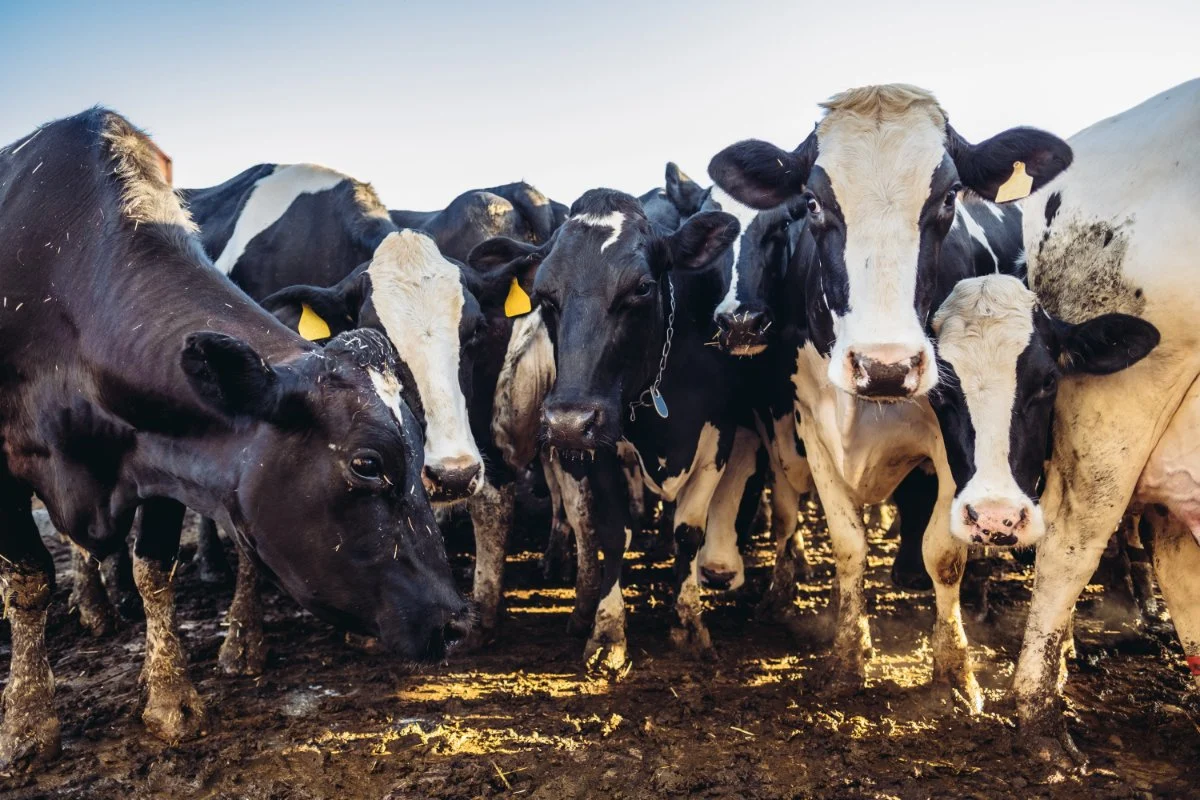
As federal and state financial incentives for concentrated animal feeding operation (CAFO) biodigesters continue to wane, and environmental objections intensify, the future of these once-heralded systems hangs precariously in the balance. Touted for their ability to capture methane from vast quantities of animal waste and convert it into renewable energy, biodigesters are now at a critical inflection point, facing scrutiny over their true environmental impact, economic viability, and contribution to the expansion of industrial agriculture.
The shift is starkly evident in regions like Kewaunee County, Wisconsin, a microcosm of the national debate. Lynn Utesch, a grass-fed beef farmer who has operated his 150-acre farm for over two decades, has witnessed a dramatic transformation in his rural landscape. "Those days are long gone," Utesch lamented on a rainy spring day in 2026, referring to a time when smaller, family-run dairy operations surrounded his property. Now, his farm, home to approximately 30 cows and additional steers, is enveloped by massive dairy CAFOs, each housing thousands of animals. Kewaunee County, a small corner of Wisconsin, has become one of the nation’s densest areas for factory-farm dairy operations, a trend significantly amplified, critics argue, by the presence of biodigesters.
The Promise and the Peril of Biogas Technology
Biodigesters, which collect gases—primarily methane—from animal manure to produce biogas, emerged as a promising technology in the early 2000s. Proponents lauded them as a dual solution: a means to reduce the vast quantities of manure stored in open lagoons, which are significant sources of potent greenhouse gas emissions, and a way to generate a renewable energy source that could displace fossil fuels. Operators could sell the resulting biogas to fuel companies, claiming lucrative renewable energy credits through state and federal programs, and sharing some of this revenue with dairy farms.
The process involves feeding manure from CAFOs into large, often dome-shaped biodigesters, where anaerobic decomposition occurs in the absence of oxygen. This process efficiently captures methane-rich biogas, preventing its release into the atmosphere. The biogas can then be refined into Renewable Natural Gas (RNG), which is chemically almost identical to fossil-fuel natural gas. This RNG can be compressed (CNG) or liquefied (LNG) for vehicle fuel or injected directly into utility pipelines. Alternatively, biogas can be burned directly to generate electricity for on-farm use or sale back to the grid, a model successfully employed by operations like Northern California’s organic Straus Family Creamery for years. The leftover material, a nutrient-rich slurry known as digestate, can be used as fertilizer or dried for animal bedding.
However, the widespread adoption of biodigesters, particularly when biogas is sold into larger gas markets, has ignited fierce opposition. Environmental organizations and small farm advocates contend that the financial incentives tied to biodigester output inadvertently encourage dairies to expand their herds to produce more manure. This, they argue, exacerbates existing environmental problems such as air and water pollution, rather than solving them. "Digesters have been touted as a cure for the many problems of the CAFO industry, while in reality all they do is multiply the problems," Utesch asserted, dismissing the notion of "green" or "clean" biogas as a "fallacy." He added, "What digesters provide is a way for CAFOs to milk the taxpayers as much as they milk the cows."
Academic studies have also cast doubt on the purported carbon reduction benefits. A 2024 study by Friends of the Earth on Wisconsin dairies found that those with biodigesters expanded at 52 times the rate of those without. Similarly, a California study spanning 2016 to 2025 revealed that dairies added an average of 860 cows within three years of installing a biodigester, resulting in a net increase in methane emissions. Critics also highlight that biodigesters disproportionately benefit large industrial operations, further entrenching the competitive advantage of CAFOs over smaller, independent farms. Only 21 farms with fewer than 500 cows reportedly utilize biodigesters, according to data from the American Biogas Council, underscoring this disparity.

Mounting Financial Headwinds: State-Level Programs Under Scrutiny
Despite these frequently voiced concerns, biodigesters enjoyed substantial financial backing from state and federal governments, alongside private investors, leading to a boom in the early 2020s. However, this period of robust growth appears to be drawing to a close, at least on several fronts.
California’s Low Carbon Fuel Standard (LCFS) program, the nation’s largest state-level clean transportation fuel initiative, had been a significant revenue source for biodigester operators. Under the LCFS, fuel companies are mandated to reduce the carbon intensity of the fuels they sell in California. They can achieve this by purchasing credits representing biogas that could theoretically flow into the state’s fuel market. A Wisconsin biogas producer, for instance, could sell credits to a California fuel company, provided the biogas is sold to a company with operations or vehicle fleets in California, or injected into a gas pipeline connected to the state. The value of these credits was based on "avoided methane" emissions—the methane that would have been released from an open manure lagoon if not captured.
However, the economic landscape for these credits has shifted dramatically. In early 2020, an LCFS credit was valued at over $200. By early 2025, that value had plummeted to just over $50, according to the California Air Resources Board (CARB), which administers the program. In response, CARB implemented amendments in the summer of 2025 to bolster credit values and expand eligibility for biogas to incentives related to industrial processes and hydrogen production.
These amendments, however, triggered legal challenges. In July 2025, Food & Water Watch, along with several other environmental organizations, filed a lawsuit against CARB, alleging that the LCFS "is already causing perverse outcomes that undermine the integrity of the program, harm the climate and local environmental quality," and that the 2025 amendments "will exacerbate those problems." Environmental advocates argue that states can design clean transportation programs without inadvertently incentivizing the expansion of CAFOs. They point to New Mexico’s recently adopted clean transportation fuel program, which includes safeguards to prevent credits from being awarded based on potentially dubious avoided methane emissions, as a more responsible model.
Federal Funding on Shaky Ground
The federal government’s support for biodigesters is also facing significant hurdles. The Trump administration introduced the Clean Fuel Production Credit (45Z), an incentive designed to be particularly lucrative for biodigester operators due to its calculation methodology. This credit allows biodigesters to claim "negative emissions" by combining the avoided methane from manure decomposition with the diesel fuel their biogas could displace. In February 2026, the Treasury Department proposed rules to implement this credit, which notably included an exception allowing biogas from manure to qualify for these negative emissions claims, a provision strongly supported by industry groups like the American Biogas Council. Environmental organizations are now petitioning the government to remove this exception, arguing it exaggerates the climate benefits of biodigesters.
Meanwhile, the U.S. Department of Agriculture’s (USDA) Rural Energy for America Program (REAP), a long-standing source of grants and loan guarantees for biodigester projects, has been significantly curtailed. An analysis by the organization Farm Forward found that REAP allocated $150 million to farm biogas projects in 2023. However, in January 2026, the USDA initiated a 90-day freeze on federal loan guarantees for biodigesters, citing a high rate of project defaults and the subsequent need for government bailouts. The loan delinquency rate for biodigester projects reportedly reached 28 percent. An analysis by The New Lede identified BC Organics, a Wisconsin-based company operating near Kewaunee County, as responsible for a majority of these federal loan guarantee defaults.

This pause was further extended through the end of 2026 in April 2026. Moreover, in March 2026, the USDA announced a broader pause on the entire REAP program, aiming to align its rules with a Trump administration executive order restricting subsidies for projects involving "entities of foreign concern" in their supply chains. This move, while prompted by financial and supply chain concerns, was met with praise from environmental and community groups. In January 2026, a large coalition had formally petitioned the USDA to cease all federal support for biodigesters, asserting that these systems were detrimental to the economies and health of rural communities. "We ask for no more grants or loan guarantees to digesters, ever," stated Kara Goad, senior associate attorney for Earthjustice, which represents the petitioning groups. "That would be the real victory."
Local Impact: Kewaunee County’s Struggle
The consequences of biodigester proliferation are acutely felt in Kewaunee County. Lynn Utesch recalls his youth in the 1970s, milking cows on his aunt’s 50-animal dairy farm, where he knew "the personality of each cow." Today, the county’s picturesque wooden barns stand largely empty, replaced by sprawling industrial facilities where thousands of cows live in tight stalls. Friends of the Earth’s 2024 study documented an 88 percent increase in the number of cows in Kewaunee County over the past 30 years, even as the number of dairies declined by 82 percent, illustrating the dramatic consolidation of the industry.
Pagel’s Ponderosa dairy was the first in Kewaunee County to install a biodigester in 2009. Three more followed in the subsequent years, with Kinnard Farms, a massive operation with over 9,000 cows, acquiring one in 2020. Today, seven biodigesters operate in Kewaunee County, one of Wisconsin’s smallest. All residents live within 10 miles of a biodigester, and every operation has faced citations for improper waste application. Multiple studies have linked E. coli and nitrate pollution in the county’s residential wells to manure runoff.
While proponents claim biodigesters reduce odors from manure pits, Utesch and other residents dispute this. Biodigester farms often retain large pits of waste, either awaiting digestion or holding the post-digestion slurry, both of which emit foul odors. Residents nationwide report a "poopy smell combined with weird chemical overtones" emanating from these facilities and their exhaust. The EPA acknowledges that digested material is "much less odorous," but the overall impact on air quality and community well-being remains a significant concern.
Industry Resilience and Emerging Markets
Despite the tightening of traditional funding streams, industry boosters remain optimistic, and watchdog organizations caution that biodigesters may be well-positioned to capitalize on spiking energy demand and evolving global sustainability incentives. The biodigester landscape is complex, involving not just CAFOs but also private equity investors, often with ties to fossil fuel companies. Companies like Brightmark RNG, a joint venture with Chevron, and Freehold Energy RNG (operating under various LLCs) are actively developing and acquiring biodigesters across multiple states.
John Peck, a small-scale farmer and executive director of Family Farm Defenders in Wisconsin, believes that while federal support lent biodigesters "more legitimacy," future momentum will increasingly "come from the private sector." A prime example is Vanguard Renewables, a company developing biodigesters nationwide that process both manure and municipal food waste. This "co-digestion" model increases biogas volume and generates additional revenue through "tipping fees" (similar to those paid to landfills). While this can reduce landfill strain, critics warn it raises the risk of spreading contaminants like PFAS and, crucially, props up the biodigester business model. Kathy Morrison, who fought a food waste-accepting biodigester near her Michigan orchard for years, described the odors as "horrendous" and fears new proposals in her county will follow suit.

Beyond co-digestion, new markets for biogas are emerging. Shipping giant Maersk and Vanguard Renewables are exploring biogas as a sustainable maritime fuel. Farm biogas is also being cited as a "sustainable" electricity source for data centers, which are increasingly proposed near agricultural communities already grappling with expanding CAFOs. Furthermore, Treasury Department rules announced shortly before the Trump administration took office made RNG, including that from biodigesters, eligible for potentially lucrative tax credits for producing "clean hydrogen." Private and international carbon credit markets, operating on models similar to state fuel programs, could also provide growing revenue streams, allowing businesses to meet sustainability goals by purchasing credits.
"There’s always going to be another market," observed Sarah D’Onofrio, a lecturer at the University of Tennessee-Knoxville who studied the boom-and-bust cycle of biodigesters. "It’s a problem looking for a solution."
An Alternative Path: Sustainable Agriculture
For sustainable farming advocates, the entire "problem" that biodigesters aim to solve could be averted through more environmentally sound agricultural practices. Lynn Utesch’s grass-fed operation exemplifies such an alternative. His cows graze on rotating plots of pastureland, depositing manure as they wander. This manure naturally decomposes through aerobic processes, releasing minimal methane, and fertilizes the soil. "It’s like nature had this all figured out," Utesch mused, watching his bull defecate, noting the natural disappearance of the manure within weeks, aided by dung beetles. This mirrors how buffalo once fertilized the prairie.
Even for larger operations where free-range grazing is not feasible, manure composting offers a low-emissions alternative to anaerobic decomposition. By combining solid manure with materials like sawdust, farmers can create compost for bedding or sale as fertilizer. California and Texas have both offered incentives for this type of manure management.
While Patrick Serfass of the American Biogas Council acknowledges composting as an important option, he argues that many large dairies lack the space to compost all their manure. However, Tyler Lobdell, staff attorney at Food & Water Watch, counters that this lack of space is itself a symptom of an unsustainable system. "Factory farm gas production only exists because of our current reliance on destructive factory farms," Lobdell stated. "At its base it’s really, really simple—we shouldn’t be treating animals like widgets and putting them in factories to maximize corporate profits at the expense of communities and the environment. There should be no market for factory farm biogas. The only reason it exists at all is because of a problem we should fix."
Utesch wholeheartedly agrees. As uncertainty clouds the financial incentives for biodigesters and awareness of their drawbacks grows, he remains hopeful that their proliferation will ultimately be curbed. The debate over biodigesters underscores a larger, fundamental question about the future of food production: whether to invest in technological fixes for industrial farming or to shift towards truly regenerative and environmentally harmonious agricultural systems.