admin
The Canadian outdoor performance brand Arc’teryx has officially inaugurated its first climbing-focused retail concept in Venice, California, signaling a strategic pivot toward experience-based commerce. Located on the prominent Abbot Kinney Boulevard, the new facility represents a departure from the brand’s traditional retail footprint, prioritizing community engagement, architectural storytelling, and the climbing ethos over conventional sales-floor density. By integrating a functional climbing wall and flexible communal spaces into the store’s core design, Arc’teryx aims to foster a "hub" environment that mirrors the social dynamics of the climbing world.
The Venice location marks the brand’s fourth flagship in the Los Angeles metropolitan area, joining existing storefronts in high-traffic districts such as La Brea and Century City. However, the Abbot Kinney site is the first to be designed specifically around the "sharing beta" philosophy—a climbing term referring to the exchange of critical information and techniques. This concept serves as the foundational pillar for the store’s layout, programming, and local partnerships, positioning the retail space as a center for knowledge exchange rather than a mere point of transaction.
Architectural Design and the "Crag" Philosophy
The design of the Abbot Kinney location was led by Senior Retail Designer Kirsty Marsland, who sought to honor the existing architectural character of the Venice building while infusing it with the brand’s technical identity. Rather than implementing a literal recreation of outdoor climbing environments, the design team utilized the "crag"—a climbing area—as a conceptual framework for social interaction.

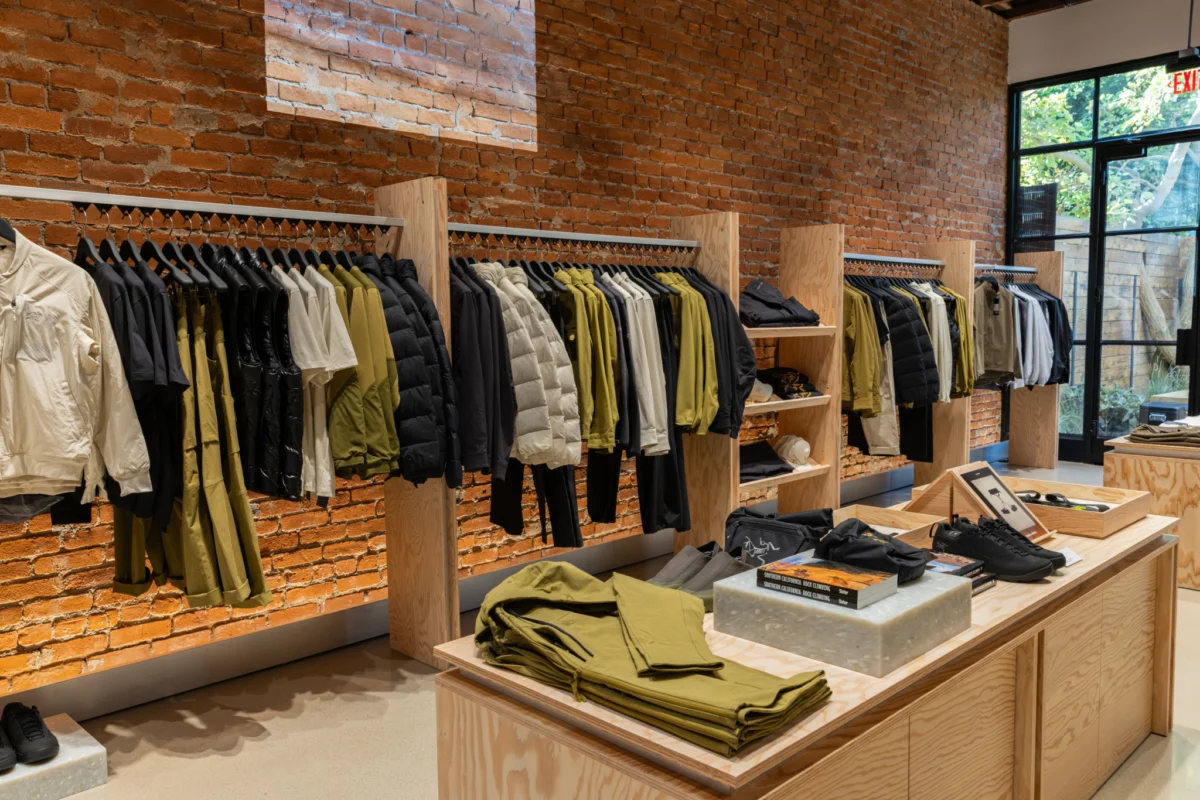
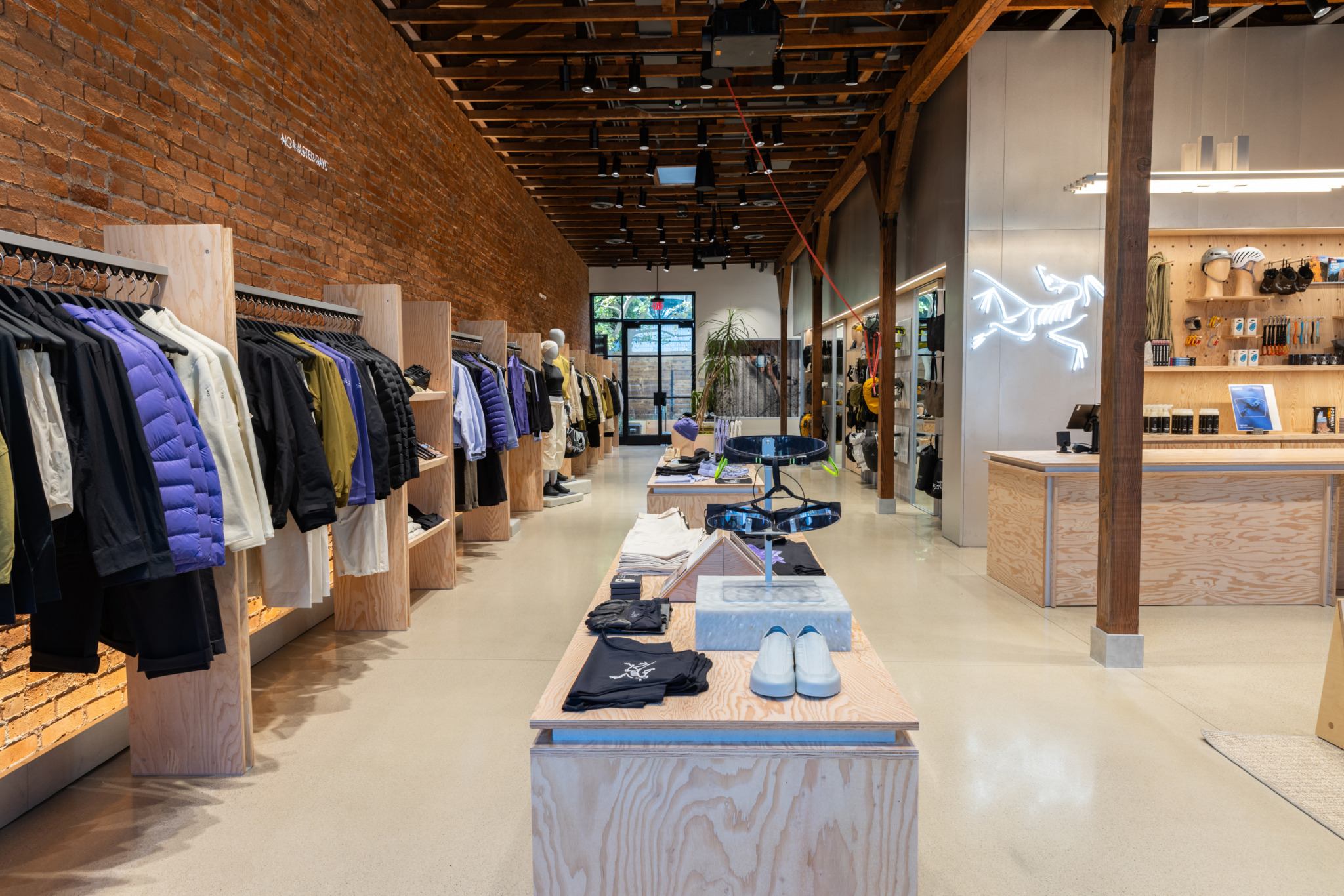
The interior retains the building’s original timber beams and columns, which remain exposed to emphasize structural transparency. This historical foundation is contrasted with a modern, restrained material palette designed to evoke the textures of the alpine environment. Galvanized steel surfaces are used to simulate the cool, tactile quality of granite rock faces, while Douglas fir plywood is employed extensively to provide warmth and visual continuity. To anchor the brand’s visual identity, the store features strategic applications of "Dynasty red," the signature hue synonymous with Arc’teryx’s high-altitude gear.
"The materials aren’t intended to mimic the crag directly," Marsland noted during the project’s unveiling. "Instead, the crag is the conceptual starting point for the design—a place to gather that feels informal, joyful, and dynamic. It’s this spirit that shapes the space, rather than any literal reference to the crag itself."

Technical Integration: The Grasshopper Climbing Wall
At the heart of the retail floor is a custom climbing wall developed in collaboration with Grasshopper, a leader in adjustable climbing board technology. Unlike many retail installations that treat such features as decorative afterthoughts, the Arc’teryx wall is integrated directly into the store’s bespoke millwork. This placement, situated near the front of the store, creates a visual bridge between the interior activity and the pedestrian traffic on Abbot Kinney Boulevard.
To ensure the wall met the standards of the local climbing community, Arc’teryx partnered with Long Beach Rising, a prominent Southern California climbing gym. The gym’s experts assisted in the route-setting process, treating the arrangement of holds as both a physical challenge and a sculptural installation. In a nod to artisanal craftsmanship, several of the climbing holds were crafted from clay, adding a unique tactile element to the experience.

The wall serves a dual purpose: it allows customers to test technical apparel and footwear in a functional setting and provides a focal point for workshops and community events. By incorporating this feature, Arc’teryx reinforces its position as a technical authority while providing a tangible service to the local climbing population.
The Beta Lounge and Local Artisanal Collaborations
The store’s layout includes a dedicated "Beta Lounge," a space designed to encourage visitors to linger and interact. This area is furnished with pieces from Waka Waka, a Los Angeles-based design studio founded by Shin Okuda. Known for his minimalist, wood-centric aesthetic, Okuda worked with the Arc’teryx team to create lightweight, modular furniture that can be easily reconfigured.

Whitney Kirk, Director of Future Concepts at Arc’teryx, emphasized the importance of this flexibility. "We were looking for light, movable furniture that we could rearrange easily when using the climb wall," Kirk explained. The collaboration with Waka Waka underscores the brand’s commitment to integrating with the local creative economy of Venice and the broader Los Angeles area.
The Beta Lounge is stocked with a curated selection of climbing guidebooks and specialty publications, such as Alpinist and Summit Journal. These resources, combined with the lounge’s comfortable seating, are intended to transform the store into a "third place"—a social environment separate from home and work where enthusiasts can research routes, discuss gear, or simply connect with like-minded individuals.

Content, Programming, and the "Arc’ Presents" Series
Beyond physical products, the Abbot Kinney location serves as a platform for Arc’teryx’s media and storytelling initiatives. One of the store’s interior walls was sandblasted to expose its natural brick texture, creating a "visual pause" and a raw canvas for film screenings. This wall is utilized for the "Arc’ Presents" series, a rotating program of films featuring the brand’s athletes and exploring themes of exploration, conservation, and the human spirit in high-stakes environments.
The store also features rotating displays that blend athlete photography with physical artifacts and personal narratives. These exhibits are designed to provide insight into the preparation and psychological resilience required for significant climbs, moving the brand narrative beyond product features and into the realm of lived experience.

Strategic Context: The Evolution of Outdoor Retail
The opening of the Abbot Kinney store comes at a time of significant growth and evolution for the outdoor apparel industry. According to market research data, the global outdoor clothing market was valued at approximately $15.5 billion in 2023 and is projected to grow at a compound annual growth rate (CAGR) of over 5% through 2030. This growth is driven in part by the "gorpcore" trend—the adoption of technical outdoor gear as high-fashion streetwear—as well as a post-pandemic surge in outdoor recreation participation.
Arc’teryx, a subsidiary of Amer Sports, has been a primary beneficiary of this trend. By focusing on "pinnacle" retail locations like Abbot Kinney, the brand is targeting a demographic that values both technical performance and aesthetic sophistication. The Venice store represents a move toward "hyper-local" retail, where the specific needs and culture of a neighborhood dictate the store’s format.

Industry analysts suggest that this community-centric model is a response to the increasing dominance of e-commerce. To justify the existence of a physical storefront, brands must offer experiences that cannot be replicated online. For Arc’teryx, that experience includes physical activity (climbing), social interaction (the Beta Lounge), and cultural immersion (film screenings and workshops).
Impact and Future Implications
The Abbot Kinney concept serves as a pilot for how Arc’teryx might approach future retail expansions in other major metropolitan hubs. By prioritizing flexibility and multi-purpose environments, the brand can adapt to various urban contexts while maintaining its core identity.

The store’s outdoor patio and movable retail fixtures allow it to host a wide range of events, from technical gear-repair workshops to local community meetings. This adaptability is central to the brand’s long-term strategy of building brand loyalty through engagement rather than high-pressure sales tactics.
"Our approach was to create a flexible, multi-purpose environment that could evolve with the needs of the local community," Kirk stated. This sentiment reflects a broader shift in the retail landscape, where "success" is increasingly measured by the depth of brand connection and the frequency of customer visits, rather than immediate transaction volume.

Conclusion
The opening of the Arc’teryx climbing concept on Abbot Kinney Boulevard marks a milestone in the brand’s retail evolution. By blending high-performance technical features with thoughtful architectural design and deep local collaborations, Arc’teryx has created a space that transcends the traditional retail model. As the outdoor industry continues to bridge the gap between technical utility and lifestyle fashion, the Venice location stands as a definitive example of how a brand can honor its heritage while innovating for a modern, community-focused audience. For the residents of Venice and the Southern California climbing community, the store offers a new home for "sharing beta" and fostering the next generation of outdoor enthusiasts.