admin
admin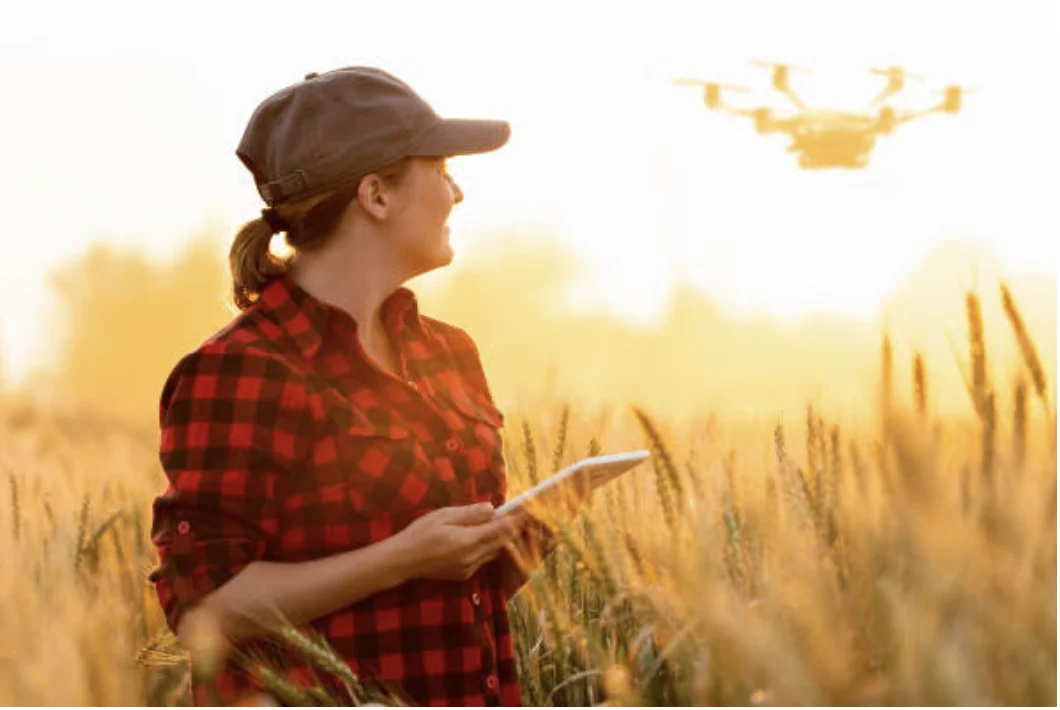
The pervasive influence of artificial intelligence, driven by the world’s leading technology companies, has become an undeniable force shaping the current federal administration’s agenda, with profound implications now extending into the very fabric of our global food systems. President Donald Trump’s administration has demonstrated a consistent focus on promoting AI research and development, setting a clear policy direction that prioritizes technological advancement across sectors. During his initial term, President Trump issued an executive order in February 2019 aimed at maintaining American leadership in artificial intelligence, signaling a strategic national commitment to this emerging field. Following his return to office last January, this commitment was further solidified when he issued another executive order specifically tasking federal agencies with investigating and removing any barriers to AI adoption, particularly in critical industries. This legislative momentum culminated in July 2025 with the signing of the One Big Beautiful Bill Act (OBBBA), a landmark piece of legislation that authorizes over $1 billion in federal funding specifically earmarked for AI projects, thereby institutionalizing the government’s push for AI integration.
Policy and Funding: Washington’s Embrace of AI
The timeline of federal engagement with AI under the Trump administration underscores a strategic and accelerating drive towards technological dominance. The 2019 executive order, "Maintaining American Leadership in Artificial Intelligence," was a foundational document, establishing a national strategy for AI. Its core tenets included prioritizing federal investments in AI research and development, unleashing AI resources, setting AI governance standards, building the AI workforce, and fostering international collaboration while protecting U.S. AI technology advantage. This initial policy framework laid the groundwork for future actions, framing AI not merely as a technological advancement but as a strategic imperative for national security, economic competitiveness, and societal well-being.
The subsequent executive order issued in January 2025, shortly after the President took office, built upon this foundation by targeting the practical implementation of AI. By directing federal bodies to identify and dismantle adoption barriers, the administration aimed to streamline the integration of AI solutions into various sectors, including those traditionally slower to embrace cutting-edge technology. This move reflected a desire to translate theoretical AI advantages into tangible economic and operational efficiencies. The capstone, the One Big Beautiful Bill Act (OBBBA) of July 2025, represents the financial commitment underpinning these policy directives. The authorization of over $1 billion in federal funding is a significant allocation, signaling not only political will but also a substantial investment in the infrastructure and innovation ecosystem required to advance AI across federal agencies and into private industries. This funding is expected to stimulate research, incentivize private sector development, and accelerate the deployment of AI applications, including those within critical sectors like agriculture and aquaculture.
The Agritech Revolution: Promises and Perils on the Farm
The "AI revolution" in agriculture is being actively championed by a powerful consortium of transnational corporations, financial institutions, major non-governmental organizations, and governmental bodies, all of whom stand to gain significantly from its widespread adoption. Proponents envision a future where AI-powered solutions dramatically boost yields, optimize resource use, and streamline complex farming operations, thereby "future-proofing" the industry against environmental challenges and market volatilities. The promise is one of unparalleled efficiency and productivity, painting a picture of a more resilient and abundant global food supply.
While the vision is ambitious, the current reality of AI integration in agriculture remains nascent yet rapidly evolving. As of 2025, the presence of fully autonomous tractors on U.S. farms is limited, with only around 20 units actively in operation. However, this figure belies the aggressive expansion plans of industry giants. John Deere, a leading agricultural machinery manufacturer, has publicly declared its intention to transition to fully driverless farm operations by 2030. This aggressive timeline indicates a profound shift in agricultural practices, moving beyond mere automation to comprehensive autonomy. The broader precision agriculture market, which includes AI-driven tools, is projected to grow substantially, with analysts estimating its global value could exceed $15 billion by the late 2020s, driven by increasing demand for automated machinery, data analytics, and smart farming solutions. This market expansion is fueled by significant venture capital investments, with agritech startups attracting billions in funding annually, all aimed at developing and deploying AI-powered sensors, drones, robotics, and software platforms.
However, beneath the surface of these efficiency claims lie critical concerns for individual farmers. The widespread adoption of AI tools often comes hand-in-hand with complex "click-to-agree" contracts that frequently require farmers to sign away their data rights. This intricate web of agreements means that while farmers utilize these advanced tools to monitor their fields, manage irrigation, and optimize planting, the valuable data generated—ranging from soil composition and crop health to yield statistics and operational metrics—is often not owned or controlled by them. Instead, this proprietary farm data is collected and aggregated by the tech firms developing the AI platforms. These firms then monetize this data, frequently selling it to a secondary market comprising seed suppliers, animal and fish feed conglomerates, and pharmaceutical companies. In a circular economic model, these very entities then leverage this aggregated data to refine their products and marketing strategies, selling their goods and services back to the same farmers who originally generated the data, often at premium prices. This creates an asymmetric power dynamic, raising questions about data sovereignty, fair compensation, and the long-term economic independence of agricultural producers.
The Blue Revolution Deepens: Offshore Aquaculture and Big Tech’s Role
Parallel to the land-based agricultural transformation, the "Blue Revolution" is sweeping through the seafood industry, characterized by the dramatic growth of farmed seafood since the early 2000s. Fashioned after the "Green Revolution" that industrialized agriculture in the mid-20th century, this aquatic counterpart describes the dramatic intensification and expansion of aquaculture. Big Tech is playing a pivotal role in this expansion, particularly in driving the push to develop and expand offshore fish farming operations. These ventures aim to move fish farms farther from coastal areas, often into federal waters, promising larger scales of production and reduced environmental impacts on sensitive nearshore ecosystems.
Among the most prominent players in this arena is TidalX AI, a subsidiary launched by Alphabet, Google’s parent company. TidalX AI is at the forefront of lobbying the U.S. government to open federal waters to large-scale industrial fish farming—a significant policy shift that would, for the first time, allow extensive aquaculture operations in areas traditionally managed for wild fisheries. The technological linchpin of these proposed offshore operations is the sophisticated use of underwater cameras and advanced AI algorithms. These technologies are designed to monitor fish health, feeding patterns, and environmental conditions in challenging open-ocean environments, ostensibly to optimize production and ensure sustainability.
However, the move to increasingly remote and riskier offshore environments, coupled with a heavy reliance on technology for monitoring, introduces its own set of challenges and potential pitfalls. The vastness and harshness of the open ocean make early detection and intervention for problems like disease outbreaks, equipment malfunctions, or environmental anomalies considerably more difficult. This increased risk factor has already manifested in tangible consequences. Last year, researchers reported a concerning trend of more frequent and larger mass die-offs on salmon farms globally. Their findings indicated that a contributing factor was the over-reliance on technologies designed to "optimize" production in these inherently riskier settings, potentially overlooking or exacerbating unforeseen vulnerabilities. Environmental advocacy groups and traditional fishing communities have voiced strong opposition to the expansion of industrial offshore aquaculture, citing concerns about potential ecological damage, waste discharge, disease transmission to wild stocks, and the displacement of established fishing livelihoods.
Data, Ownership, and the Farmer’s Dilemma
The issue of data ownership and control stands as one of the most contentious aspects of AI integration in food systems. Farmers, often operating with razor-thin margins and facing increasing pressures from climate change and market volatility, are enticed by the promise of AI to enhance efficiency and profitability. However, the fine print of many technology contracts often stipulates that the data generated by AI-powered machinery and sensors belongs to the tech provider, not the farmer. This data, which includes granular details about soil moisture, nutrient levels, pesticide application, crop yields, and livestock health, is a goldmine for agribusiness.
The HEAL Food Alliance, a multi-sector, multi-racial coalition dedicated to transforming food systems, recently published a comprehensive report on "precision" technology and AI tools in agriculture. Their findings illuminate a clear pattern: while corporations market these technologies as serving the public good—including solutions for climate change and food security—their practical effect is often the consolidation of corporate power. The report details how this data accumulation allows large corporations to gain unparalleled insights into farming operations, enabling them to refine their product offerings (seeds, fertilizers, pesticides, animal feed, pharmaceuticals) and tailor them more effectively to individual farm needs, thereby creating a cycle of dependency. This control over data effectively shifts environmental costs and risks onto communities and ecosystems, while the economic benefits disproportionately accrue to a few dominant players. The report argues that this paradigm diverts resources and attention away from farmer- and fisher-led solutions that prioritize ecological integrity, strengthen local economies, and build food sovereignty. Food systems dominated by a handful of technologically advanced corporations become inherently vulnerable to supply chain disruptions, market manipulations, and the singular profit motives of these entities, rendering them unsustainable in the long run.
Labor Transformation: The Human Cost of Automation
Beyond data ownership, the specter of labor displacement looms large over the future of food production. While industrial aquaculture is frequently promoted as a source of new jobs, both the aquaculture and agriculture sectors face a significant likelihood that AI and automation will replace human workers. The vision of a "fully autonomous farm" is rapidly coming into focus, with drones monitoring crops, automated feeders tending to livestock and fish, and ground sensors precisely determining pesticide application, timing, and location. This technological shift implies a dramatic reduction in the need for manual labor across various tasks, from planting and harvesting to feeding and processing.
The economic implications for rural communities and agricultural labor forces are profound. In the U.S., agricultural work has historically relied heavily on migrant and seasonal laborers, many of whom face precarious legal status. The increasing pace of automation, coupled with ongoing mass arrests and deportations of farm workers, raises a stark and unsettling question: Will robots be the ones feeding us when the human workforce is systematically removed? This scenario highlights a critical social and ethical dilemma, forcing a reconsideration of how societies value and support essential labor in an increasingly automated world. Without proactive policies for workforce retraining, job creation in new sectors, and social safety nets, the transition to AI-driven food production could exacerbate existing inequalities and create significant social upheaval in agricultural regions.
Yields Versus Nutrition: Lessons from Past Revolutions
To critically assess whether AI will genuinely help feed people, it is imperative to examine the track record of previous technological shifts in food production. It is undeniably true that certain technological tools have historically led to increased yields. For instance, advanced feed-measuring and herd-monitoring tools have demonstrably boosted output per cow on dairy farms, contributing to higher milk production. Similarly, the development of new pesticides and precision application methods has consistently raised yields for staple crops like soy and corn for decades. The Green Revolution of the mid-20th century serves as a powerful historical precedent. This era saw the introduction of high-yielding crop varieties, synthetic fertilizers, and chemical pesticides, leading to dramatic increases in global food production, particularly in developing countries. Proponents at the time hailed it as the solution to global hunger.
However, the experience of the Green Revolution also provides crucial cautionary tales. While it successfully increased the sheer volume of calories produced, higher yields have not necessarily guaranteed better access to nutritious food. Many farmers in the Global South, for example, became heavily dependent on synthetic chemicals, leading to significant environmental degradation, including soil depletion and water contamination. Furthermore, the focus on monoculture and maximizing specific crop yields often came at the expense of biodiversity and the nutritional quality of the food produced, with studies suggesting a decline in the nutrient density of modern produce compared to historical varieties. This historical context reveals a critical distinction between increasing production quantity and enhancing food security, which encompasses access, nutrition, and sustainability. Moreover, it highlights the often-overlooked efficacy of traditional, small-scale producers. By some estimates, these producers, operating without advanced AI technologies and on as little as 25 percent of the world’s land, have managed to feed as much as 70 percent of our global population, underscoring the resilience and productivity of diversified, localized food systems.
Corporate Consolidation and Environmental Costs: A Critical Assessment
The critique from the HEAL Food Alliance and other advocacy groups extends beyond data and labor to the fundamental structure and sustainability of AI-driven food systems. They contend that the corporate marketing of these technologies as solutions for climate change or global hunger often masks an underlying agenda of power consolidation. By centralizing control over inputs, data, and technology, a handful of multinational corporations gain unprecedented leverage over the entire food supply chain. This concentration of power makes the system inherently vulnerable to corporate priorities, which may not align with public health, environmental protection, or social equity.
Furthermore, the environmental footprint of this digital transformation is not negligible. The vast data centers required to power AI algorithms and store immense datasets "gobble up farmland and water" – two increasingly scarce resources. The physical expansion of these facilities consumes arable land, directly reducing the acreage available for food production and making it even harder for younger generations to enter farming, given the rising costs of land. The energy demands of these data centers contribute to carbon emissions, potentially undermining the very "climate solution" narrative that some AI proponents advance. This intricate interplay of technology, corporate strategy, and environmental impact demands a more holistic and critical assessment, challenging the simplistic narrative that more technology automatically equates to more sustainable or equitable outcomes.
Beyond Production: Redefining Food Security and Sovereignty
As countries grow wealthier, a well-documented trend is the rising demand for meat and seafood. This increased consumption fuels the drive for intensified production in both agriculture and aquaculture, often through methods enabled by AI. However, the fundamental question remains: Will ramping up production through these technological means genuinely improve global food security—ensuring that all people at all times have physical, social, and economic access to sufficient, safe, and nutritious food—or will it primarily serve to expand the supply for premium markets and exports, further entrenching inequalities?
The historical record suggests that increased production alone does not guarantee equitable access or improved nutrition. Instead, it often exacerbates existing power imbalances and entrenches dependency. True food security, many argue, requires a focus on food sovereignty, which emphasizes the rights of peoples to healthy and culturally appropriate food produced through ecologically sound and sustainable methods, and their right to define their own food and agriculture systems. This contrasts sharply with a system driven by a few large corporations and their AI tools, which may prioritize profit and efficiency over resilience, diversity, and local control. The future of food in an AI-dominated world necessitates a careful balancing act: leveraging technological advancements for genuine benefit while safeguarding against the consolidation of power, ensuring equitable access, protecting environmental health, and empowering local communities to shape their own food futures. The dialogue must shift from simply "how much can we produce" to "how can we produce equitably, sustainably, and nutritiously for all."