admin
admin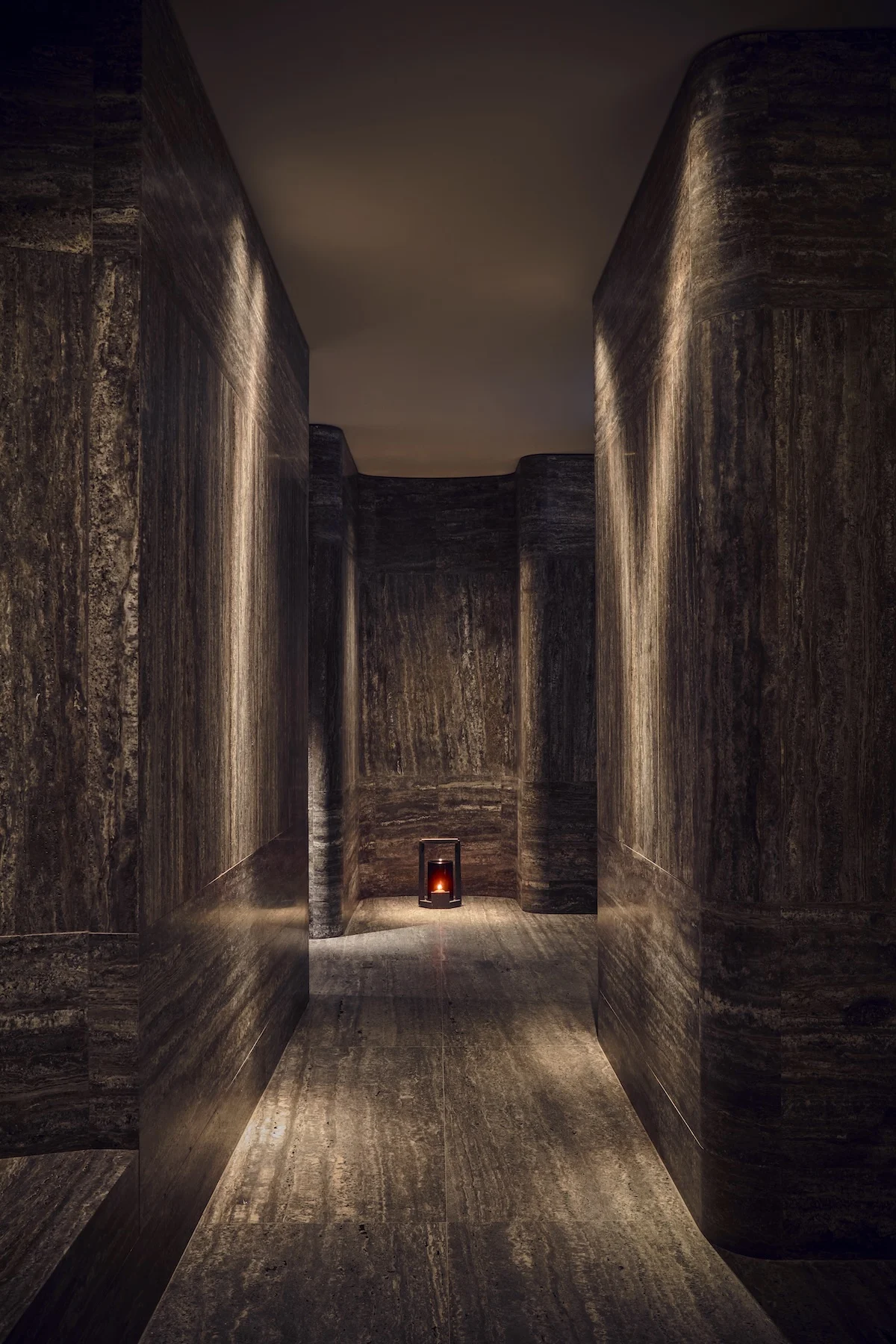
The revitalization of the spa at Hôtel Costes marks a significant chapter in the evolution of one of the world’s most enigmatic hospitality icons. Located at the prestigious intersection of Rue Saint-Honoré and Rue de Castiglione, the hotel has long served as a bastion of Parisian exclusivity. This latest architectural intervention by the renowned design house Liaigre represents more than a simple renovation; it is a meticulously crafted sensory environment that aligns the hotel’s historic prestige with a contemporary vision of wellness. By integrating high-tech acoustics, bespoke olfaction, and rare mineral finishes, the new spa reinforces Hôtel Costes’ position at the pinnacle of the French luxury market.
The Architectural Evolution of a Parisian Landmark
To understand the significance of the new spa, one must look at the trajectory of the Hôtel Costes brand. Founded in 1995 by Jean-Louis and Gilbert Costes, the hotel was instrumental in defining the "boutique luxury" movement in Europe. The brothers first gained international attention in the 1980s through their collaboration with Philippe Starck on Café Costes, a project that is often credited with launching Starck’s global career.
The original Hôtel Costes on Rue Saint-Honoré was defined by the opulent, maximalist interiors of Jacques Garcia. His use of heavy velvets, deep crimsons, and Napoleon III-era decorative flourishes created a "theatrical" atmosphere that became synonymous with 1990s Parisian glamour. However, as the brand expanded, the Costes brothers sought a different aesthetic direction for their newer acquisitions.
In the late 2010s, the brothers acquired the neighboring Hotel Lotti, a move that allowed for the creation of a second wing with a primary entrance on Rue de Castiglione. For this expansion, they moved away from Garcia’s baroque sensibilities, instead commissioning Studio Liaigre to establish a more restrained, modern architectural language. The newly unveiled spa is the culmination of this transition, bringing a sense of "quiet luxury" to the subterranean levels of the Castiglione wing.
Materiality and Aesthetic Philosophy
Studio Liaigre, now led by Creative Director Frauke Meyer following the passing of founder Christian Liaigre, has utilized a palette of "rich, solid materials" to create an environment that feels both grounded and ethereal. The design philosophy centers on the concept of "luxe monacal" or monastic luxury—a style that prioritizes the inherent quality of materials over superficial ornamentation.
The spa’s interior is defined by:
- Travertine: Used extensively for flooring and wall surfaces, the porous, pale stone provides a tactile connection to classical Roman architecture while maintaining a clean, modern line.
- Smoked Oak: This dark, textured wood provides a warm contrast to the stone, absorbing light and contributing to the "moody" atmosphere mentioned by observers.
- Liquid Amber and Lacquer: These high-gloss finishes are used strategically to reflect light in the dimly lit corridors, creating a sense of depth and mystery.
This material selection is a deliberate departure from the gilded surfaces of traditional Parisian five-star hotels. Instead, the focus is on the interplay of shadow and texture, a hallmark of the Liaigre aesthetic that encourages a state of introspection and calm.

A Multi-Sensory Approach to Wellness
Modern luxury hospitality has moved beyond the visual, increasingly focusing on the "invisible" elements of the guest experience. At the Hôtel Costes spa, this is achieved through a sophisticated layering of sound, scent, and light.
Upon entering through the molded metal gates at the base of a majestic double staircase, guests are greeted by a custom soundscape. The spa features a state-of-the-art Dolby Atmos system, which utilizes spatial audio technology to create a three-dimensional acoustic environment. Unlike traditional background music, this immersive audio is designed to mask the noise of the city above and lower the heart rate of arriving guests.
Complementing the auditory experience is the spa’s signature fragrance, developed by the legendary perfumer Olivia Giacobetti. Known for her work with Diptyque and Hermès, Giacobetti is a master of evocative, transparent scents. For Costes, she has crafted a scent that wafts through the air, providing a consistent olfactory anchor that guests associate with the tranquility of the space.
The lighting design, executed by Arnold Chan and the firm Isometrix, plays a critical role in the transition from the bright streets of the First Arrondissement to the secluded sanctuary of the spa. The lighting is architectural rather than decorative, with hidden sources highlighting the grain of the wood and the veining of the stone, ensuring that the transition into the spa feels like a descent into a private, protected world.

The Central Oasis: Technical Specifications of the Pool
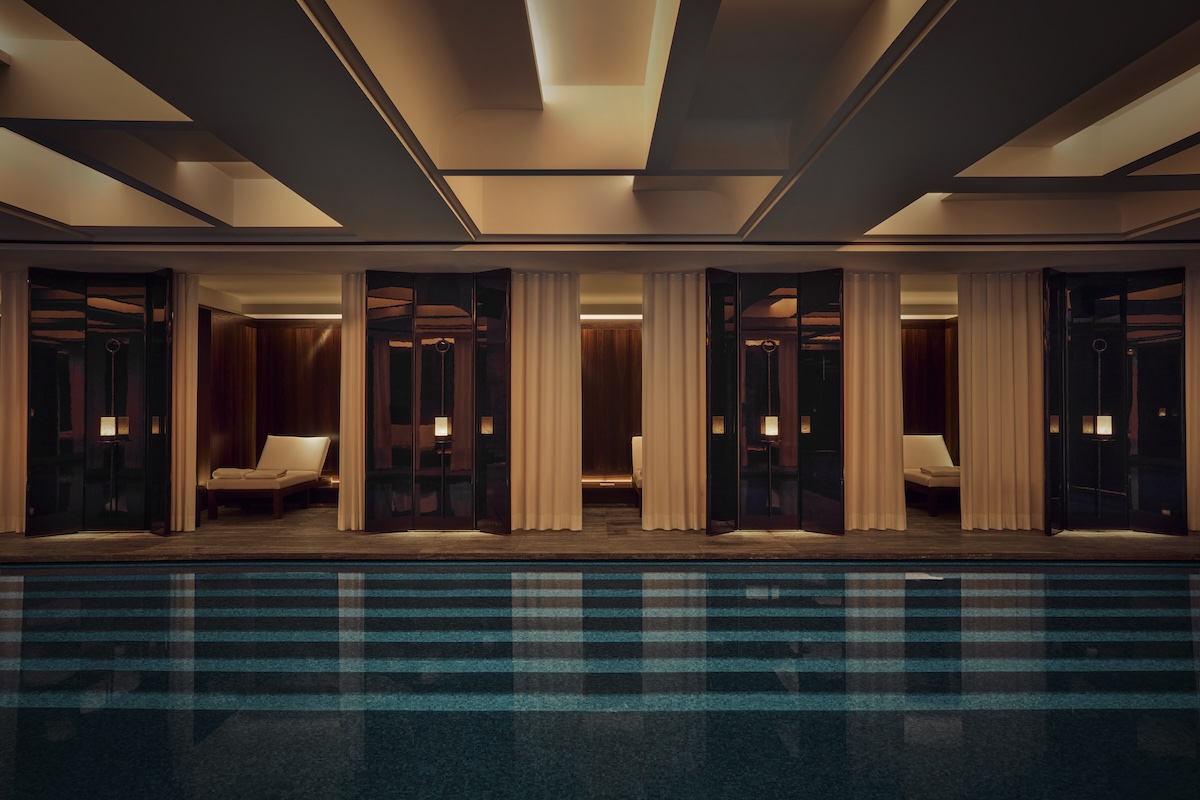
The centerpiece of the facility is a 65-foot (approximately 20-meter) swimming pool. In the context of Central Paris real estate, a pool of this scale is a rare luxury. The pool is housed under a dramatic coffered ceiling, which adds a sense of verticality and grandeur to the subterranean space.
Technical highlights of the pool area include:
- Lagoon Mosaic Lining: The interior of the pool is finished with a mosaic that mimics the deep blues and greens of a natural lagoon, creating a visual "oasis" effect.
- Oxygen-Enriched Water: Moving away from heavy chlorine treatments, the spa utilizes an oxygen-enrichment system. This technology provides a softer feel on the skin and hair, aligning with the "biotech" wellness trends currently dominating the high-end market.
- Curtained Lounge Nooks: Surrounding the water are private alcoves, allowing guests to relax in total seclusion—a feature highly valued by the hotel’s high-profile clientele.
Strategic Partnership with Augustinus Bader
To anchor its treatment menu, Hôtel Costes has partnered with Augustinus Bader, the German-born skincare brand that has achieved "cult" status in the beauty industry. This partnership is a significant indicator of the spa’s commitment to results-driven wellness.
Augustinus Bader’s products are based on TFC8® (Trigger Factor Complex), a technology developed by Professor Bader, a world-leading stem cell biologist. The inclusion of these treatments suggests that the spa is targeting a demographic that values scientific efficacy as much as aesthetic luxury. With eight dedicated treatment rooms, the spa offers a comprehensive range of skincare protocols that utilize these proprietary formulas, positioning Hôtel Costes as a destination for advanced dermatological care in the heart of Paris.

Chronology of the Hôtel Costes Expansion
The opening of the new spa is the latest milestone in a timeline spanning four decades:
- 1984: The Costes brothers open Café Costes in Les Halles, designed by Philippe Starck.
- 1995: Opening of the original Hôtel Costes on Rue Saint-Honoré, designed by Jacques Garcia.
- 2010s: The brothers acquire the Hotel Lotti, located directly behind the original property.
- 2020: The "Castiglione Wing" opens, featuring a new entrance and rooms designed by Liaigre.
- 2024: Completion and unveiling of the Liaigre-designed spa complex, finalizing the integration of the two buildings.
Market Context and Broader Implications
The redesign of the spa at Hôtel Costes arrives at a time of intense competition within the Parisian "Palace" hotel sector. With the recent renovations of the Ritz Paris and the Hôtel de Crillon, as well as the opening of the Cheval Blanc Paris, the bar for wellness facilities has been raised to unprecedented heights.
Industry analysts suggest that the "Costes" approach differs from its competitors by maintaining an air of independent, almost "anti-corporate" exclusivity. While the Ritz and Crillon cater to a traditional luxury demographic, Costes remains the preferred haunt of the fashion, film, and art elite. The move to a Liaigre-designed spa reflects a shift in the tastes of this "creative class," who are increasingly moving away from gold-leaf opulence toward a more minimalist, material-focused version of wealth.
Furthermore, the integration of high-end technology—such as the Dolby Atmos system and oxygenated water—signals a broader trend in the hospitality industry where "wellness" is no longer just an amenity, but a core architectural requirement. By investing in a 65-foot pool and a partnership with a biotech-led brand like Augustinus Bader, Hôtel Costes is ensuring its relevance in a market where health and longevity have become the ultimate luxury goods.

Conclusion
The new spa at Hôtel Costes is a masterclass in the "Liaigre style," successfully merging the firm’s signature restraint with the hotel’s inherent drama. Through the careful application of travertine, smoked oak, and advanced sensory technology, the studio has created a space that offers a profound sense of escape from the urban density of Paris. As the hospitality landscape continues to evolve, this sanctuary at the base of the Castiglione wing stands as a testament to the enduring power of thoughtful, material-driven design. For the discerning global traveler, it provides yet another reason to return to an address that has, for nearly thirty years, defined the cutting edge of Parisian style.