admin
admin
The decision to purchase a home is often fraught with considerations ranging from budget and location to structural integrity and aesthetic appeal. Yet, a hidden layer of complexity exists for properties associated with tragic or infamous events, known in the real estate world as "stigmatized properties." These homes carry a history that, while invisible, can profoundly impact their market value, buyer pool, and the very experience of ownership. Andy Gibbs and his wife encountered this phenomenon firsthand in 2018 when they closed escrow on a house near Tucson, Arizona. Their realtor, armed with smoldering sage, performed a ritual cleansing, symbolically inviting the spirit of the previous owner—who had died by suicide in the kitchen—to depart.
"We had a limited budget, and with little housing inventory—at Christmastime—our options were limited," Gibbs recounted, explaining their pragmatic approach. "We looked for a house with good bones in a good neighborhood. Despite the death disclosure—likely the reason the price was low—we put an offer on that house." Gibbs embarked on a comprehensive renovation, transforming the home room by room, including replacing all flooring. Upon selling the property in April, he opted not to disclose the past tragedy to the new buyers, a decision permissible under Arizona law, which mandates disclosure only if specifically queried by the buyer. "We never received that request," he confirmed.
Defining the Shadow: What is a Stigmatized Property?
Gibbs’s former residence is a prime example of a "stigmatized property," a term that encompasses any site where a significant negative event has occurred. Dr. Randall Bell, principal and CEO of Landmark Research Group, an advisory firm specializing in real estate damage economics, defines these sites broadly. "It refers to any site where there was a horrible tragedy—whether it be an old war site, crime scene, rape or murder, suicide, or any kind of negative event in human history," Bell explains. Nicknamed the "Master of Disaster" for his expertise in appraising properties scarred by traumatic events and crime scenes, Bell has assessed numerous high-profile homes with dark histories, providing a unique insight into the tangible and intangible costs associated with such legacies.
Echoes of Tragedy: Notorious Stigmatized Properties
The real estate market’s encounters with tragedy are well-documented, often leading to significant financial repercussions. Bell’s portfolio includes evaluations of properties linked to infamous 1990s crimes that captivated national attention.
- Nicole Brown Simpson’s Brentwood Condo (1994): The site of the brutal murders of Nicole Brown Simpson and Ron Goldman, this property became a global focal point during the O.J. Simpson trial. Despite its prime Brentwood location, the condo sold for a reduced price two years after the murders. The new owners reportedly altered its shrubbery and street address in an attempt to distance it from its grim past, highlighting the pervasive nature of public notoriety.
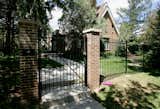
- The JonBenét Ramsey House (1996): In Boulder, Colorado, the Tudor-style home where six-year-old JonBenét Ramsey was found murdered became instantly recognizable. The Ramsey family sold the five-bedroom house to an investor group for $650,000 in 1998, a price $150,000 higher than their 1991 purchase. However, efforts to mitigate its stigma included changing the street address in 2001 and adding extensive fencing and tall trees. Despite these measures, the current owners, who acquired the property for $1.05 million in 2004, have struggled to sell it, listing it on and off since 2008 without success, underscoring the enduring impact of child-related tragedies.
- Heaven’s Gate Mansion (1997): Near San Diego, a Mediterranean-style mansion became the site of the mass suicide of 39 members of the Heaven’s Gate cult. The scale and unusual nature of this event rendered the property almost unsellable, eventually leading to its sale at a deep discount. Bell notes that all these properties either sold at significantly discounted prices or languished on the market for years, illustrating the economic penalty of extreme stigma.
While more recent tragedies often depress values, historical events can sometimes create a niche market for the macabre. The Lizzie Borden house in Fall River, Massachusetts, site of the notorious 1892 unsolved double murder, sold for $2 million in 2021 and has successfully operated as a house museum and bed and breakfast for decades. Similarly, the real-life Rhode Island farmhouse that inspired The Conjuring films, steeped in alleged paranormal activity, fetched $1.5 million in 2022—$300,000 over its asking price. These cases suggest that with sufficient passage of time and the right marketing, a property’s dark history can sometimes be reframed as a unique selling point for a specific clientele.
The Economic Calculus of Catastrophe: Assessing Stigma’s Impact
In the specialized field of real estate damage economics, stigmatized properties represent a distinct gamble. "It’s the risk that a buyer takes on, given the property’s reputation and notoriety in the marketplace, and any potential negative connotations toward that property," Bell explains. He notes that, "generally speaking, stigma tends to dissipate over time with many properties," but the initial impact can be substantial.
Bell’s assessment framework for stigmatized properties hinges on three critical elements:
- Cost: This typically includes the direct financial outlay for repair or remediation necessary to address any physical damage or psychological triggers.
- Use: This refers to the property’s conventional usability, often quantified by the lost rental income during periods when the occupants are displaced or the property is deemed uninhabitable or undesirable.
- Risk/Stigma: This is the most complex element, often calculated by comparing the property to similar situations or case studies, both locally and internationally. It accounts for the intangible reduction in value due to public perception.
The severity of the tragic event directly correlates with the degree of stigma and its impact on property value. Bell identifies a clear hierarchy: "Crimes against children would be at the top of the list," he states, followed by "crimes against women or the elderly, and then murder." Suicides, while tragic, generally affect property values the least, often due to a perception of the event being more personal and less a threat to future occupants. Price drops on homes where notable or recent deaths occurred typically range from 10 to 25 percent, though Bell has observed instances where homicides had no discernable effect on a property’s value, particularly in urban areas with lower-income demographics. In such constrained markets, financial imperatives often override emotional reservations.
The Legal Labyrinth: Disclosure Requirements
The responsibility of disclosing a property’s grim past is a patchwork of state-level regulations, as no federal law mandates realtors to reveal whether a death or crime occurred in a house. This creates a challenging environment for potential buyers, often governed by the principle of caveat emptor—"let the buyer beware."
- California’s Strict Stance: California stands as a notable exception, with realtors and sellers legally obliged to disclose any death that occurred on the property within the last three years. This proactive approach aims to provide buyers with crucial information upfront.
- Varying State Laws: Other states impose narrower disclosure requirements. South Dakota, for instance, requires the listing agent to inform potential buyers of any known murders or suicides within the last 12 months, while Alaska extends this period to three years. Many states, however, have no specific legislation on the matter, leaving it to the buyer’s diligence.
Given this inconsistency, Bell strongly advises potential buyers to directly inquire about a house’s history. "The one thing that one hundred percent no broker or realtor or agent has is the right to lie," he emphasizes. "If you ask, they have to tell you the truth." For those seeking information proactively, specialized websites like DiedInHouse.com and HouseCreep.com offer services to search an address for recorded deaths or crimes for a fee, empowering buyers to conduct their own due diligence.
Buyer Motivations: Price, Pragmatism, and the Paranormal
When individuals choose to purchase stigmatized properties, the decision is most often driven by economic factors. "Sometimes the market is really tight, and it’s what’s available," Bell observes. The allure of a significantly discounted price can outweigh personal discomfort, especially in competitive or high-cost housing markets. A 2025 poll from market research firm YouGov revealed that only 26 percent of American adults would be willing to purchase a house where previous owners had been murdered, indicating a substantial psychological barrier for the majority.
Robin Edwards, a property buying agent at Cureton Property Finders in London, corroborates this sentiment, noting that "the buyers who actually move forward are usually either completely unfazed by the history or very value-conscious." He adds, "A tragic history does not automatically mean a huge discount, but it can definitely narrow the buyer pool and sometimes that can give interested buyers more leverage."
Marisa Vallbona’s experience in La Jolla, California, exemplifies this economic rationale. When her family moved into their home in 2001, local children spread rumors of it being haunted. Vallbona, however, was already aware that the previous owner had died by suicide on the property. "The savings were substantial, so hearing that didn’t bother us at all," she explained. "We loved the home because it was the perfect size for us, located in an ideal community with gorgeous views, and had an expansive lot." For Vallbona, the tangible benefits of location and size, coupled with a significant price reduction, superseded the property’s somber past.
Interestingly, the impact of stigma can vary geographically and socioeconomically. Bell notes that homicides sometimes have less effect on property values in urban areas with lower-income demographics. This is likely not due to a greater comfort level with tragedy, but rather a reflection of market realities: with more financial constraints and fewer options in squeezed markets, buyers have less room to be selective about a home’s history.
The Surprising Resilience of Certain Stigmatized Properties

While discounts are common, recent trends suggest that not every house with a macabre background suffers a permanent value depreciation. In some highly competitive markets, the housing affordability crisis appears to be overriding traditional buyer apprehensions.
- San Francisco Family Murder-Suicide (2024): Earlier this year, a three-bedroom San Francisco home where a woman had tragically killed her husband and two young daughters before dying by suicide sold for an astonishing $2.2 million—$700,000 above its asking price—after only four days on the market. This remarkable sale highlights how extreme demand in a prohibitively expensive city can overshadow a property’s dark history.
- Bay Area Google Engineer Case (2024): Another Bay Area house, where a Google engineer was charged with killing his wife approximately eight months prior, sold for its $2.1 million asking price (about $71,000 more than the former owners paid just a year before) a mere nine days after being listed. The listing agent, adhering to California law, disclosed the homicide to the buyers, who reportedly "didn’t mind."
- Oahu Murder Site (2022): In Oahu, a home where a man was murdered and found in his bathtub about six months prior went into escrow after just 13 days on the market, selling for $2.5 million—$80,000 above the asking price and $300,000 more than the former owner had paid two years earlier. The listing agent received multiple offers, all from buyers fully aware of the property’s past.
- Michigan Cannibalism Case (2020): Even in cases involving extreme crimes, market demand can sometimes prevail. The Michigan home of a man accused of a grisly murder and cannibalism on the property sold at auction for $20,000 over its asking price two months after the crime, reportedly attracting four bidders.
These instances suggest a shifting dynamic, where the housing affordability crisis plays a significant role. With fewer Americans aspiring to homeownership due to soaring costs, potential buyers in certain markets may be less inclined to dismiss properties based on past tragedies. As one prospective buyer at an open house for the San Francisco murder-suicide home told the San Francisco Standard, homes in the city are "so fucking expensive" that "something like that wouldn’t dissuade anyone." Another commented on being disturbed by the events but prioritizing "getting a good deal," viewing the history as a potential leverage point for negotiation. This indicates that economic pragmatism is increasingly outweighing emotional or superstitious reservations in high-pressure markets.
The Unwanted Spotlight: Challenges of Notoriety
While some buyers are undeterred, stigmatized homes often generate a different kind of attention—one that can hinder rather than help a sale. "The problem is that plenty of that attention is curiosity, rather than serious buyer interest," says Robin Edwards. Jonathan Carcone, founder of Washington, D.C., company 4 Brothers Buy Houses, echoes this, noting that "curious looky-loos can overwhelm a showing and fail to make an offer." Others are simply "superstitious and will immediately walk away."
Cameron Walker, who leads the agent network at Clever Real Estate, has firsthand experience with these "window shoppers." He explains: "The true-crime aficionados, renovation experts that like a good ‘fixer with a story,’ and the kind that just can’t resist a ‘haunted’ home—they all will happily explore the property because of what happened there." This influx of non-serious viewers can make the selling process protracted and frustrating for agents and sellers alike.
Beyond the initial sales hurdle, owning a notorious home can bring ongoing challenges. After purchasing the Clancy family house in Duxbury, Massachusetts—where Lindsay Clancy tragically took the lives of her three children—new owner Michael C. Phippen faced an unexpected intrusion. A judge overruled his objection to a visit from jurors and attorneys involved in Clancy’s trial. Phippen argued that such a visit would be "massively disruptive" to his domestic partner, pets, and neighbors, highlighting the privacy infringements associated with owning a property tied to a high-profile case.
Dealing with unwanted visitors or gawkers is another significant drawback. When a house is the setting of an infamous crime, the public often feels a sense of entitlement to visit, photograph, or even trespass. "In some of the more extreme cases, I’ve seen property owners really pay out the nose for security systems because people are climbing fences," Bell recounts, citing the Heaven’s Gate mansion as a prime example of a property requiring extensive measures to deter unauthorized visitors.

Reinvention and Eradication: Strategies for Stigma Mitigation
For properties burdened by a dark past, strategic interventions are often necessary to make them palatable to new buyers. Renovation is frequently the first step, providing a tangible break from the past. Cameron Walker advocates for a multi-pronged approach to rebranding and incentivizing buyers:
- Highlighting Updates: Emphasizing significant renovations helps to reframe the property’s narrative, focusing on its renewed state rather than its history.
- Removing Visceral Triggers: This involves eliminating any physical remnants of the tragedy, such as stains, odors, or even specific fixtures, to create a fresh psychological slate.
- Incentivizing the Emotionally Courageous: Offering financial incentives like closing-cost credits or below-market interest rates can make a stigmatized property too attractive to ignore for value-conscious buyers. Walker shares a success story: "In one suicide listing that sat for a hundred and twenty days, for example, we priced it at seven percent below the clean comps, had the full remediation file, and a $10,000 closing cost credit that allowed the buyer to replace carpet and fixtures. Voila, multiple offers."
Sometimes, a mere renovation is insufficient. Robin Edwards recalls a London house where a double murder occurred. Despite its desirable neighborhood, the property sold at a substantial discount. The purchasers ultimately opted for demolition and complete rebuilding. "Sometimes buyers don’t just want a lower price—they want to erase the physical connection to what happened there entirely," Edwards observes.
In extreme cases, the stigma is so profound that demolition is the only viable option. Bell notes that "some crimes are so heinous that it’s a hundred percent loss," leading to the property being bulldozed and never rebuilt. This was the fate of Jeffrey Dahmer’s Milwaukee apartment building, the Connecticut home of the Sandy Hook mass shooter, and the house where the University of Idaho college murders took place. These demolitions reflect a societal consensus that certain places are so deeply scarred by trauma that their physical eradication is necessary for communal healing or to prevent morbid fascination.
A Calculated Risk: Advice for Buyers and Sellers
The market for stigmatized properties remains complex, driven by a delicate balance of human psychology, legal frameworks, and economic realities. For those considering such a purchase, expert advice is paramount. Edwards suggests looking beyond the initial discount: "Think about how you personally feel about the history, how future buyers may react when you eventually resell, and whether the stigma is already fully reflected in the price." He offers a crucial caution: "A bargain on the way in can still be difficult to sell on the way out."
Ultimately, buying or selling a stigmatized property is a calculated risk. While the allure of a lower price can be strong, especially in today’s challenging housing market, the emotional, social, and long-term financial implications must be thoroughly weighed. The invisible price tag of a property’s past can be as significant as any structural defect, shaping its destiny and the lives of those who inhabit it.