admin
admin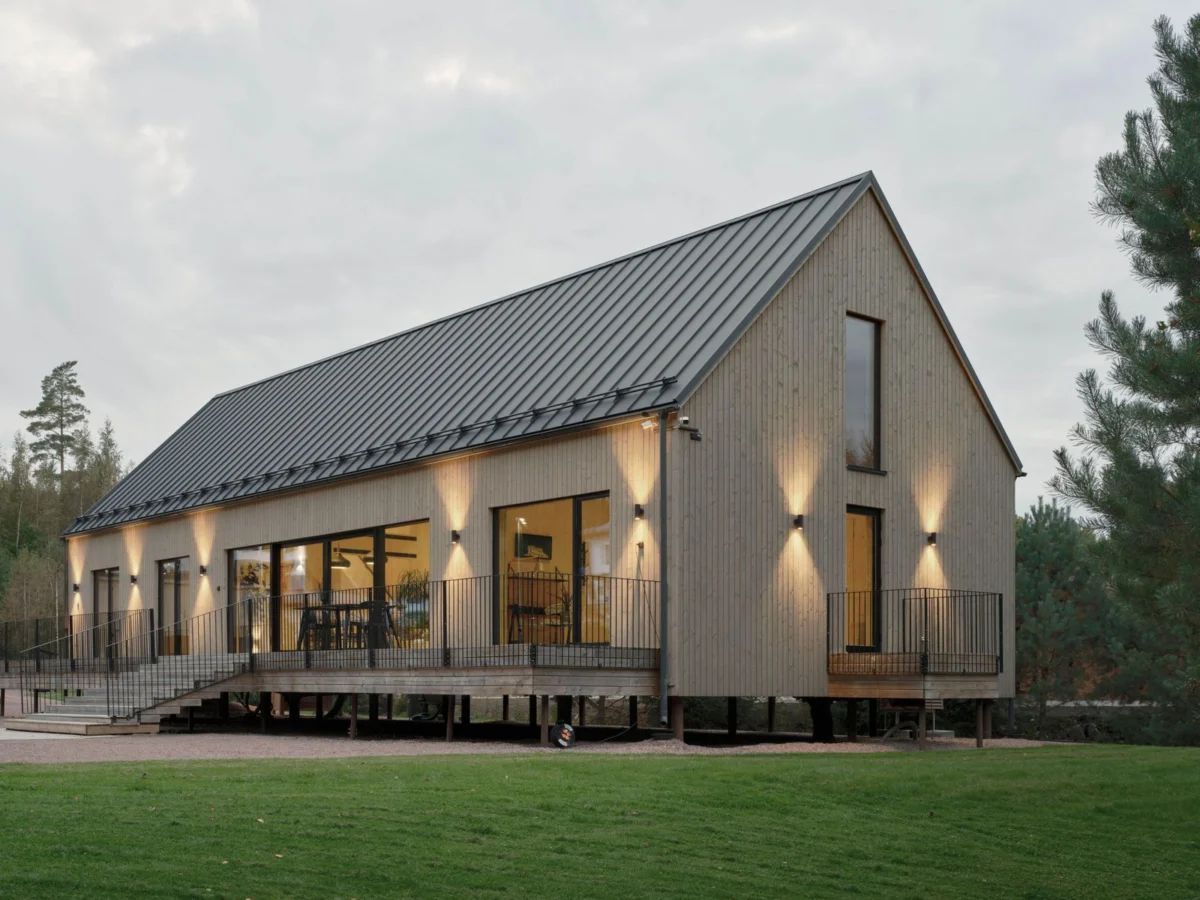
When Finnish architect Pekka Airaxin first met Nicholas Anderson and Tuire Niemi, he was looking for investors in his new cross-laminated timber homebuilding start-up, Kainuu. Instead, the couple became the company’s first clients, marking a significant early milestone for the nascent venture and signaling a broader shift in housing preferences towards sustainable, remote-work-friendly solutions. Tuire and Nicholas, having spent much of their careers as financiers in bustling urban environments—most recently Helsinki—were poised for a lifestyle change, seeking to build a countryside home to embrace the burgeoning trend of remote work. This unexpected turn not only provided Kainuu with its inaugural project but also validated Airaxin’s vision for combining advanced timber technology with contemporary design to meet the evolving demands of modern living.
The Genesis of Kainuu: Pioneering Sustainable Construction in Finland
Pekka Airaxin, a seasoned architect with a profound commitment to environmental stewardship and innovative design, founded Kainuu with a singular mission: to revolutionize residential construction through the widespread adoption of Cross-Laminated Timber (CLT). Airaxin’s architectural philosophy has long centered on harmonizing human habitats with natural surroundings, a principle that found its ultimate expression in CLT technology. Recognizing the immense potential of engineered wood products, Airaxin envisioned Kainuu as a beacon for sustainable building, offering homes that are not only environmentally responsible but also structurally superior, energy-efficient, and aesthetically pleasing.
CLT, a relatively modern marvel in construction, involves laminating several layers of solid wood panels, with each layer oriented perpendicular to the next. This intricate process creates panels of exceptional strength, stability, and rigidity, akin to reinforced concrete but with a significantly lighter environmental footprint. The benefits of CLT are manifold and increasingly recognized globally. Environmentally, it serves as a substantial carbon sink, sequestering carbon dioxide absorbed by trees throughout their growth. A single cubic meter of CLT can store approximately 0.8 tonnes of CO2, a critical advantage in an era defined by climate change mitigation efforts. Furthermore, CLT production requires less energy than steel or concrete, and the wood used typically comes from sustainably managed forests, ensuring renewability. Finland, with its vast forest resources covering over 70% of its land area, is exceptionally well-positioned to lead in sustainable timber construction, leveraging its natural capital responsibly.
From a structural perspective, CLT offers impressive load-bearing capacity, seismic resistance, and excellent thermal and acoustic performance. Its prefabrication capabilities allow for rapid on-site assembly, significantly reducing construction times and minimizing waste. This efficiency translates into lower labor costs and less disruption at the building site, making it an attractive option for both developers and homeowners. Airaxin’s vision for Kainuu was to harness these advantages, integrating them with high-quality Finnish design principles known for their minimalist aesthetics, functionality, and deep connection to nature.
The Clients’ Journey: From Urban Finance to Rural Serenity
Nicholas Anderson and Tuire Niemi represent a growing demographic of professionals seeking a deliberate shift in their work-life balance and residential environment. Both held demanding careers in the financial sector, a world often characterized by high-pressure urban settings and relentless schedules. Their professional journey took them through various cities, culminating in Helsinki, Finland’s vibrant capital. While Helsinki offers a rich cultural tapestry and economic opportunities, the urban intensity eventually prompted a desire for change. The global paradigm shift towards remote work, significantly accelerated by recent technological advancements and global events, provided the catalyst for their decision.
The ability to work effectively from virtually any location, thanks to robust internet infrastructure and collaborative digital tools, has fundamentally altered traditional office-centric employment models. This newfound flexibility has empowered many, including Anderson and Niemi, to reconsider their living arrangements. Data from various sources indicates a sustained interest in remote work post-pandemic, with a significant percentage of employees preferring hybrid or fully remote options. This trend has fueled an exodus from dense urban centers to more spacious, nature-proximate locales, driving demand for homes that support a high quality of life alongside professional productivity. For Anderson and Niemi, this meant envisioning a home in the tranquil Finnish countryside, a stark contrast to their previous city dwellings. They sought a dwelling that would not only provide a serene backdrop for their remote work but also align with their evolving values of sustainability and connection to nature.
The Serendipitous Meeting: From Investor Pitch to First Project
The initial encounter between Pekka Airaxin and Nicholas Anderson and Tuire Niemi was predicated on a common objective, albeit from different angles. Airaxin, in the early stages of launching Kainuu, was actively seeking financial backing to scale his ambitious venture. He presented his business model, the innovative application of CLT, and the projected market demand for sustainable, modern homes. Anderson and Niemi, with their extensive backgrounds in finance, were precisely the type of discerning individuals Airaxin hoped to attract—those who could understand the long-term value proposition and the investment potential of a forward-thinking startup.
However, as the discussions unfolded, a different kind of synergy emerged. Instead of merely evaluating Kainuu as an investment opportunity, Anderson and Niemi found themselves increasingly drawn to the product itself—the concept of a high-quality, sustainably built CLT home. Their personal quest for a countryside residence, coupled with Airaxin’s compelling vision and the inherent benefits of CLT, transformed the dynamic of the meeting. The conversation naturally shifted from financial projections to architectural possibilities, from market analysis to personalized design aspirations.
"It was an unexpected but incredibly welcome turn," Airaxin reportedly commented on the meeting. "I had prepared a pitch for potential investors, highlighting the scalability and environmental impact of Kainuu. But as we delved deeper into the technical aspects of CLT and the design philosophy, Nicholas and Tuire’s eyes lit up. They weren’t just seeing a business opportunity; they were seeing their future home." This shift underscored the powerful appeal of Kainuu’s offerings: a tangible solution to a growing personal and societal need. The couple, already convinced of the financial viability of sustainable ventures through their professional lens, recognized the intrinsic value of Airaxin’s proposal as clients. They articulated their desire for a home that was energy-efficient, utilized natural materials, and offered a healthy indoor environment—all core tenets of Kainuu’s design philosophy. This alignment of values and needs cemented their decision to become Kainuu’s first clients, bypassing the investor role to become direct beneficiaries of the company’s innovation.
Designing the Future: A Sustainable Countryside Retreat
The transition from a potential investment discussion to a concrete building project initiated a collaborative design phase focused on realizing Anderson and Niemi’s vision for their countryside home. The design process for their home is expected to emphasize integration with the natural Finnish landscape, maximizing natural light and offering expansive views of the surrounding wilderness. Utilizing CLT allows for design flexibility, enabling open-plan living spaces and unique architectural forms that would be more challenging or costly with conventional materials.
Key design elements will likely include superior insulation for Finland’s climate, advanced ventilation systems to ensure excellent indoor air quality, and the aesthetic warmth of exposed timber surfaces, which contribute to a biophilic design approach—connecting occupants with nature. The inherent thermal properties of CLT also contribute significantly to the home’s energy efficiency, reducing heating and cooling demands and aligning with the highest standards of sustainable building practices in the Nordic region. The precision of CLT prefabrication means that components are manufactured off-site under controlled conditions, ensuring quality and accuracy, and then rapidly assembled on the chosen plot. This streamlined construction timeline is a significant advantage, particularly for clients eager to transition into their new lifestyle.
The anticipated construction timeline, following the design finalization, is projected to be notably shorter than traditional builds, a hallmark of CLT construction. This efficiency, combined with minimal on-site waste generation, further reinforces the project’s sustainable credentials. For Anderson and Niemi, this project represents not just a new house, but a carefully curated environment designed to support their remote work, enhance their well-being, and reflect their commitment to environmental responsibility.
Broader Implications: Reshaping Construction and Lifestyles
The unexpected acquisition of its first clients by Kainuu carries significant implications for the company, the sustainable construction industry, and the evolving landscape of work and residential patterns.
For Kainuu: Securing its first clients directly, rather than solely through investment, offers invaluable validation of its business model and the market appeal of its CLT homes. This early success provides a tangible example of Kainuu’s capabilities, which is crucial for attracting future clients and, subsequently, securing the necessary investments for scaling operations. It demonstrates that there is immediate demand for high-quality, sustainable housing solutions, reinforcing Airaxin’s initial market analysis. This project will serve as a foundational case study, showcasing Kainuu’s ability to deliver on its promise of innovative, eco-friendly, and bespoke homes.
For CLT and Sustainable Building: This project contributes to the growing momentum for CLT and other engineered wood products in the construction sector. As consumers become more environmentally conscious and regulatory bodies tighten building standards for energy efficiency and carbon emissions, materials like CLT are poised for significant growth. Finland, already a leader in forestry and wood product innovation, is strengthening its position as a hub for sustainable construction. The increasing adoption of CLT aligns with national and European Union climate targets, which emphasize reducing the carbon footprint of the built environment. Each CLT home built represents a step towards a more sustainable future, challenging the dominance of traditional high-carbon materials like concrete and steel.
For Remote Work and Rural Development: The decision by Anderson and Niemi to build a remote-work-friendly home in the countryside reflects a broader societal trend with profound implications. The decentralization of the workforce can revitalize rural economies, bringing skilled professionals, new ideas, and economic activity to areas that have traditionally experienced outmigration. This shift creates demand for new services, improves local infrastructure, and fosters a more balanced regional development. It also highlights the need for robust broadband internet access and community services in rural areas to support this evolving lifestyle. The demand for homes that cater specifically to remote work—featuring dedicated office spaces, excellent connectivity, and a connection to nature—is likely to continue shaping residential architecture and planning for years to come.
Market Trends and Future Outlook: Industry analysts suggest that the confluence of environmental awareness, technological advancements enabling remote work, and a growing desire for healthier living environments will continue to drive demand for sustainable, nature-integrated homes. The Kainuu project exemplifies this convergence, positioning the company at the forefront of a transformative movement in housing. As the project progresses, it will offer concrete data on the benefits of CLT construction, from energy performance to occupant well-being, providing valuable insights for future developments.
The story of Pekka Airaxin, Nicholas Anderson, and Tuire Niemi is more than just a business transaction; it is a narrative of foresight, sustainability, and adaptation. It underscores how individual choices, driven by evolving lifestyles and environmental consciousness, can collectively shape the future of architecture, work, and community development. Kainuu’s journey has just begun, but with its first clients on board, it is well-positioned to become a significant player in the sustainable housing revolution.