Jia Lissa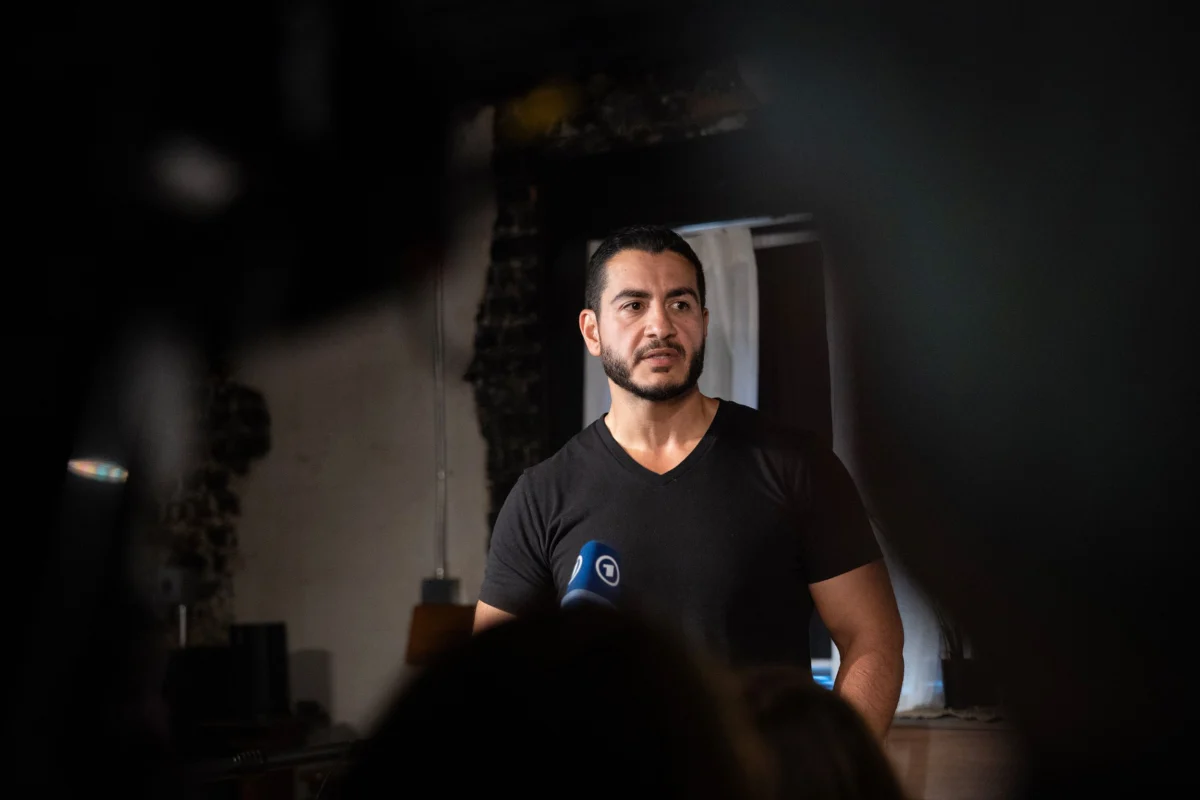
Abdul El-Sayed, the Democratic candidate vying for the crucial US Senate seat in Michigan, has initiated a potent new advertising campaign targeting his Republican opponent, Mike Rogers, over his extensive record supporting expanded government surveillance powers during his tenure in Congress. The offensive, launched on Tuesday, employs a combination of paid digital video and strategic billboard placements, marking a decisive push in the final weeks leading up to the closely watched midterm elections. This strategy aims to capitalize on burgeoning bipartisan voter anxieties regarding privacy infringements, a concern recently amplified by the proliferation of technologies like Flock Safety cameras across the nation.
Unpacking El-Sayed’s Surveillance Offensive
The core of El-Sayed’s new campaign is a hard-hitting digital video that meticulously intersperses archival clips of Mike Rogers, a former Republican Representative who chaired the powerful House Intelligence Committee, endorsing measures that expanded government surveillance. A significant portion of the ad focuses on Rogers’ vocal support for the Patriot Act of 2001. Enacted in the immediate aftermath of the September 11 terrorist attacks, the Patriot Act dramatically broadened the powers of law enforcement agencies, notably allowing for the collection of Americans’ telephone metadata without a warrant under Section 215, a provision that later became a flashpoint in national debates over civil liberties.
The video further highlights Rogers’ consistent legislative and public backing for surveillance initiatives throughout his career. This includes his introduction of a bill in 2011 that would have controversially permitted private companies to share email data directly with the National Security Agency (NSA). Perhaps most damning for Rogers in the current political climate, the ad repeatedly features a quote attributed to him from 2013, delivered during his chairmanship of the House Intelligence Committee: "You can’t have your privacy violated if you don’t know your privacy is violated." This statement, coupled with remarks from Rogers extolling the data collection practices of tech giants like Google, is presented as evidence of a deeply ingrained philosophy prioritizing state and corporate access to personal information over individual privacy rights.
Complementing the digital video, the El-Sayed campaign has rolled out a series of billboards across key Michigan locations, emblazoned with the stark, attention-grabbing tagline: "Mike Rogers is watching you." This direct and somewhat ominous message is designed to resonate with voters increasingly wary of omnipresent monitoring, whether by governmental agencies or private entities. The campaign has also established a dedicated website, MikeIsWatching.com, to further elaborate on Rogers’ record and consolidate the message.
Mike Rogers’ Legislative History on Surveillance: A Chronology
To fully grasp the context of El-Sayed’s attacks, it is essential to review Mike Rogers’ public and legislative stances on surveillance:
- 2001: Support for the Patriot Act: As a freshman Congressman, Rogers was a vocal supporter of the USA Patriot Act, signed into law by President George W. Bush. This landmark legislation significantly expanded domestic surveillance capabilities, granting federal agents greater latitude to search phone and email communications, medical, financial, and other records. While framed as essential for national security post-9/11, it immediately drew criticism from civil liberties advocates who warned of its potential for overreach and infringement on constitutional rights. Rogers consistently defended its provisions as necessary tools in the fight against terrorism.
- 2009-2015: Chairman of the House Intelligence Committee: Rogers’ most influential period regarding surveillance policy came during his tenure as chairman of this powerful committee. In this role, he was a primary defender of the NSA’s controversial metadata collection programs, which were later revealed in detail by Edward Snowden.
- 2011: Proposed Email Sharing Bill: Rogers introduced legislation that would have codified a framework for private companies to share user data, including emails, with the NSA. This proposal sparked significant opposition from privacy advocates who viewed it as a dangerous expansion of government access to private communications without adequate judicial oversight.
- 2013: "You Can’t Have Your Privacy Violated…" Quote: During a period of intense public debate over the scope and legality of NSA surveillance programs following the Snowden revelations, Rogers famously made the statement, "You can’t have your privacy violated if you don’t know your privacy is violated." This quote has become a focal point for critics, portraying a mindset dismissive of inherent privacy rights. He also publicly defended the NSA’s collection of phone records, arguing it was a critical tool that prevented terrorist attacks.
- 2014: Attempt to Reform Bulk Collection: In a notable, albeit ultimately unsuccessful, pivot, Rogers introduced a bill that aimed to end the "bulk collection of metadata" by the NSA. This move, coming amidst widespread public outcry and congressional pressure for surveillance reform, suggested an acknowledgment of the changing political landscape surrounding privacy. However, the bill ultimately failed to advance to a vote, leaving his earlier record as the prevailing legislative footprint.
The Evolving Landscape of Privacy Concerns: From Patriot Act to Flock Cameras
El-Sayed’s campaign is not merely highlighting historical votes but skillfully connecting Rogers’ past record to contemporary anxieties about privacy. The landscape of surveillance has shifted dramatically since the early 2000s, driven by technological advancements and heightened public awareness, particularly in the wake of the Edward Snowden revelations in 2013. Snowden’s leaks exposed the vast scale of the NSA’s metadata collection programs, including those conducted under Section 215 of the Patriot Act, sparking a global debate about government transparency, individual liberties, and the balance between security and privacy. This moment irrevocably altered public perception, transforming what was once a niche concern into a mainstream issue.
In the current cycle, a new focal point for privacy concerns has emerged: the rapid proliferation of automated license plate reader (ALPR) systems and surveillance technologies, most notably those from Flock Safety. Flock cameras, designed to capture license plate data and vehicle characteristics, have been adopted by thousands of police departments and homeowner associations nationwide. Proponents argue these cameras are invaluable tools for solving crimes, identifying stolen vehicles, and locating missing persons, citing statistics on crime reduction.
However, a growing chorus of civil liberties organizations and privacy advocates has raised serious alarms. Critics point to the creation of vast, searchable databases of ordinary citizens’ movements, the potential for mission creep, and documented cases of misuse. Recent reports have highlighted instances where individual officers have allegedly abused access to Flock data to stalk ex-girlfriends or track individuals without legitimate law enforcement justification. Furthermore, concerns about misidentification, algorithmic bias, and the potential for these systems to be integrated with facial recognition technology fuel public opposition. Voters are increasingly questioning the trade-offs between perceived safety and the erosion of their anonymity and freedom of movement.
Beyond specific technologies, the broader implications of artificial intelligence (AI) on privacy are also a significant concern for voters. The increasing ability of AI to analyze vast datasets, identify patterns, and even predict behavior raises questions about data ownership, consent, and the potential for surveillance to become even more pervasive and intrusive.
Rogers Campaign’s Defense and Strategic Counterarguments
In response to the growing focus on surveillance, a spokesperson for Mike Rogers’ campaign has previously stated that Rogers "vehemently opposes unchecked use of Flock cameras to track law-abiding citizens." The campaign also emphasizes that Rogers left Congress in 2015, two years before Flock Safety was founded in 2017, suggesting he cannot be held accountable for the rise of this specific technology.
This defense attempts to draw a clear distinction between Rogers’ historical record on national security surveillance and the current debate surrounding local police use of commercial surveillance tools. While factually correct that Rogers was not in Congress when Flock was founded, El-Sayed’s strategy is to draw a direct line between Rogers’ past legislative philosophy and the spirit of contemporary privacy infringements. The El-Sayed campaign is arguing that Rogers’ foundational support for expansive government access to data paved the way for a less privacy-protective environment in which technologies like Flock cameras could flourish with minimal oversight.
The Stakes: A Critical Michigan Senate Race and Broader Implications
The Michigan Senate race, currently rated a toss-up by the Cook Political Report, is one of the most closely watched contests in the nation. For Democrats, retaining this seat is considered essential for any viable path to maintaining or expanding their majority in the Senate. The El-Sayed campaign’s decision to lean heavily into privacy concerns underscores the perceived potency of this issue across the political spectrum.
This strategic pivot towards technology-related voter anxieties mirrors successful tactics in other competitive races. In Ohio, for instance, Democratic incumbent Sherrod Brown effectively cast his Republican opponent, Jon Husted, as "the face of data centers" in the state, leveraging concerns about data privacy and corporate power. This suggests a growing recognition among political strategists that technology and privacy issues are no longer niche topics but potent electoral weapons capable of swaying undecided voters.
El-Sayed’s campaign is also engaged in a broader effort to rebuild and galvanize the Democratic coalition, which experienced some fragmentation during the primary. El-Sayed faced criticism and attacks regarding antisemitism after he publicly described the war in Gaza as a genocide and advocated for an end to US military aid to Israel. In a significant move to unify and energize his base, El-Sayed announced he would rally with former President Barack Obama in late October. Furthermore, sources familiar with the campaign indicate that El-Sayed plans an extensive statewide tour in the final weeks before the midterms, joined by prominent progressive allies, including Senator Bernie Sanders and Representative Alexandria Ocasio-Cortez. These high-profile endorsements and rallies are designed to consolidate progressive support, attract independent voters, and maximize turnout in a race that is expected to be decided by a narrow margin.
Analysis of Impact and Future Trajectories
The El-Sayed campaign’s sustained focus on Mike Rogers’ surveillance record presents a significant challenge for the Republican candidate. While Rogers can point to his national security credentials, which may appeal to certain segments of the electorate, the post-Snowden era has shifted public sentiment. Many voters, including those who lean conservative or libertarian, are increasingly wary of government overreach and corporate data collection. The "You can’t have your privacy violated if you don’t know your privacy is violated" quote, in particular, could prove difficult for Rogers to fully contextualize or disavow, as it directly speaks to a perceived indifference to individual rights.
The campaign’s success will depend on its ability to effectively link Rogers’ past actions to the tangible, contemporary concerns of voters regarding their digital footprint and physical surveillance. If El-Sayed can successfully frame Rogers as out of touch with modern privacy expectations, it could erode support among younger voters, tech-savvy individuals, and those who prioritize civil liberties.
Conversely, Rogers’ campaign will need to articulate a compelling vision that balances national security needs with robust privacy protections, perhaps by emphasizing the need for oversight and accountability in new technologies. His argument that he left Congress before Flock cameras were founded may resonate with some voters who differentiate between federal intelligence gathering and local law enforcement tools. However, the overarching narrative presented by El-Sayed’s campaign—that Rogers has a history of prioritizing government access over individual privacy—is a powerful and potentially sticky one in an era defined by digital omnipresence.
Ultimately, this ad blitz highlights the increasing prominence of technology and privacy as battleground issues in American politics. As digital surveillance tools become more sophisticated and ubiquitous, candidates will face mounting pressure to articulate clear stances on how they intend to protect individual liberties in an increasingly monitored world. The Michigan Senate race serves as a compelling case study of how these complex issues are being leveraged to shape electoral outcomes in critical contests.