admin
admin
The Nike "swoosh" stands as perhaps the most recognizable corporate trademark in the world, a symbol that transcends linguistics and geography to represent a singular ideal of athletic performance. However, the transition of Nike from a niche Pacific Northwest running company into a multi-billion-dollar global cultural arbiter was not an accident of marketing alone, but a result of rigorous industrial design and experimental engineering. This journey is the central focus of "Nike: Form Follows Motion," a major retrospective curated by the Vitra Design Museum. Following its successful debut in Weil am Rhein, Germany, in 2024, the exhibition has moved to the Museum of Arts and Design (MAD) in New York City, where it will remain on view through March 2027.
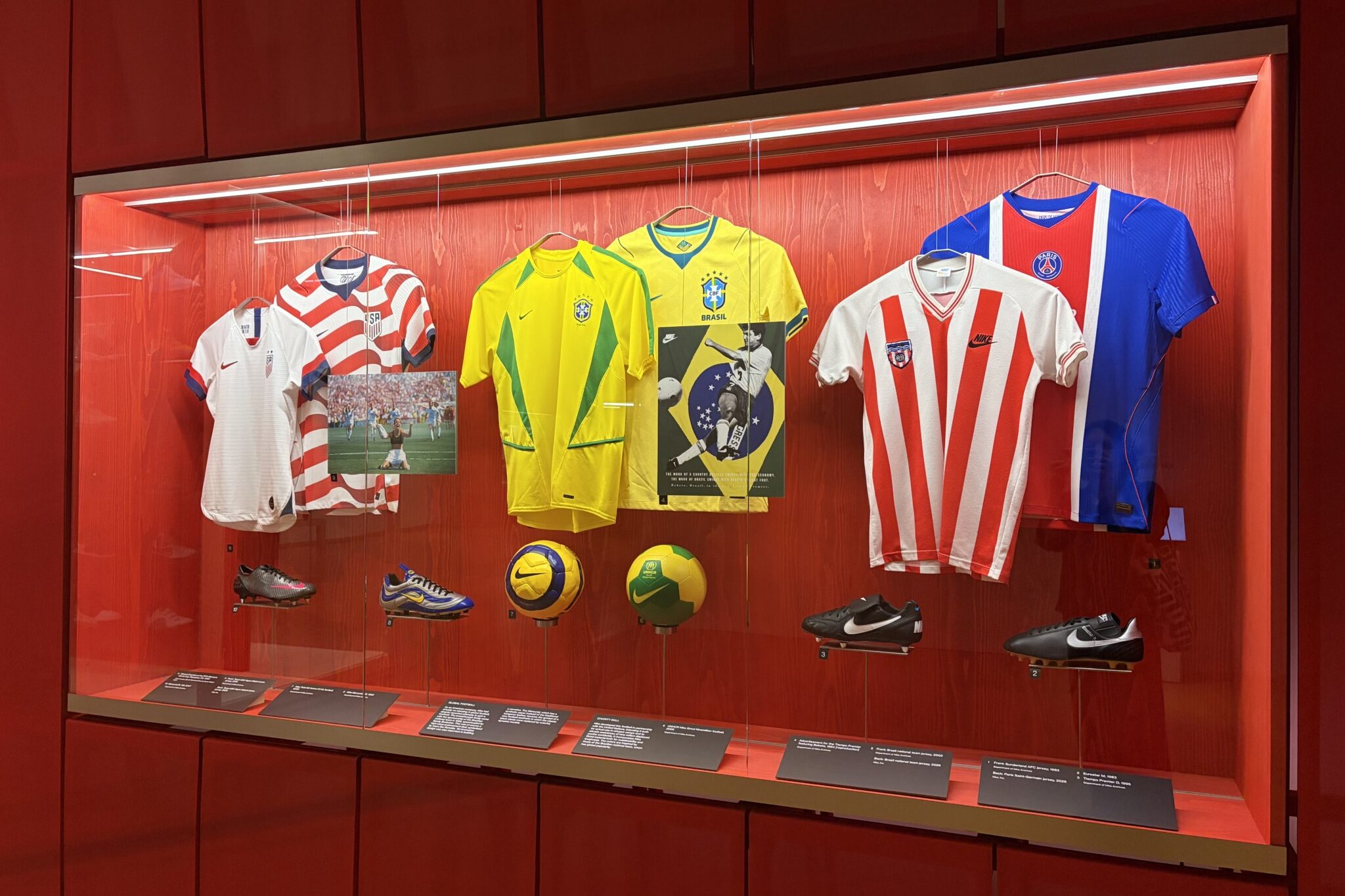
The exhibition represents a rare moment of transparency for the Beaverton, Oregon-based corporation. For the first time, Nike has granted outside curators unprecedented access to the Department of Nike Archives (DNA), a vast repository containing more than 200,000 items. Under the guidance of exhibition curator Glenn Adamson, the show deconstructs the mythos of the brand to reveal the tangible, often messy process of creation—prototypes, failed experiments, and technical studies that have defined the last five decades of sports history.
The Genesis of an Industrial Powerhouse
To understand the scale of "Nike: Form Follows Motion," one must look to the company’s origins in the early 1960s. Originally founded as Blue Ribbon Sports by University of Oregon runner Phil Knight and his coach Bill Bowerman, the company began as a distributor for Japanese Onitsuka Tiger shoes. The exhibition’s "Track" section chronicles this formative period, highlighting Bowerman’s obsessive quest to reduce the weight of running shoes to improve athlete speed.

The most famous artifact from this era is the "Waffle Trainer." Legend and historical record converge around Bowerman’s use of his wife’s kitchen waffle iron to create a new type of rubber outsole that provided superior traction on both grass and track surfaces. The exhibition displays early iterations of these soles, showcasing the literal "garage-built" nature of the company’s early innovations. This period marks the beginning of Nike’s commitment to "athlete-informed design," a philosophy that continues to drive its research and development today.
Technical Innovation and the Visibility of "Air"
As the exhibition transitions into the 1980s, the focus shifts to the "Air" section. This era represents a paradigm shift in footwear technology, spearheaded by the introduction of pressurized gas as a cushioning medium. The technology was the brainchild of Frank Rudy, a former NASA aerospace engineer who proposed the idea of "air" cushioning to several footwear companies before Nike’s leadership saw its potential.

The exhibition provides a technical deep dive into the evolution of the Nike Air Max. Before the Air Max 1 debuted in 1987, the cushioning technology was hidden within the midsole of the shoe. It was designer Tinker Hatfield—originally trained as an architect—who suggested making the "Air" unit visible through a window in the heel. Hatfield’s sketches and prototypes, featured prominently in the gallery, illustrate how he drew inspiration from the high-tech architecture of the Centre Pompidou in Paris to "expose" the inner workings of the shoe. This move was not merely aesthetic; it was a masterstroke of design communication, allowing consumers to see the technology they were feeling.
The Science of Human Performance: The Nike Sport Research Lab
Moving beyond the finished product, the "Sensation" section of the exhibition explores the empirical data that informs Nike’s design language. This portion of the show highlights the work of the Nike Sport Research Lab (NSRL), a facility where biomechanics, physiology, and sensory science intersect.

Visitors are introduced to the tools of the trade: high-speed cameras, force plates, and metabolic carts used to study the body in motion. The exhibition displays various "lasts"—the mechanical forms around which a shoe is shaped—as well as jigs, silicone pads, and fixtures from the Advanced Product Creation Center. This section also addresses the contemporary challenge of sustainability. As one of the largest producers of synthetic materials in the world, Nike’s research into circular manufacturing and recycled materials (such as Nike Grind) is presented as a necessary evolution of the design process. The display of the Flyknit technology, which reduces waste by knitting a shoe upper in a single piece rather than cutting multiple panels, serves as a bridge between performance engineering and environmental responsibility.
Cultural Convergence: Nike, New York, and Hip-Hop
The final section of the exhibition, titled "Relation," explores the symbiotic relationship between Nike and global street culture. While Nike products were designed for the track and the court, they were adopted and recontextualized by urban communities, particularly in New York City.

Curator Glenn Adamson notes that the timing of the exhibition’s arrival in New York is particularly poignant. The city’s relationship with Nike solidified in the early 1980s, coinciding with the rise of hip-hop culture in Queens, Harlem, and the Bronx. During this period, sneakers like the Air Force 1 transitioned from basketball staples to symbols of status and identity. The exhibition features 50 transformative footwear styles, ranging from the avant-garde to the iconic, presented alongside hip-hop music videos and archival footage that illustrate how the brand became woven into the fabric of New York’s counterculture.
To further cement this local connection, the Museum of Arts and Design collaborated with the renowned New York graffiti artist Faust. Known for his elegant, calligraphic tag, Faust designed the cover of the exhibition’s accompanying book and provided a site-specific installation on the museum store doors. This collaboration underscores the exhibition’s theme: that Nike’s "motion" is not just physical, but cultural.

Chronology of Innovation: A Timeline of Key Artifacts
The exhibition’s logical flow is supported by a timeline of milestones that changed the industry:
- 1964: Blue Ribbon Sports is founded.
- 1971: The "Swoosh" logo is designed by Carolyn Davidson for $35; the company rebrands as Nike.
- 1972: The Moon Shoe debuts at the Olympic Trials, featuring the waffle sole.
- 1978: Nike Air technology is first introduced in the Tailwind running shoe.
- 1982: The Air Force 1 is released, eventually becoming the most sold sneaker in history.
- 1985: The Air Jordan 1 is launched, initiating the modern "sneakerhead" phenomenon.
- 1987: The Air Max 1 makes the cushioning technology visible for the first time.
- 2012: Flyknit technology debuts, introducing a new era of sustainable, lightweight manufacturing.
- 2017: The Vaporfly 4% is released, sparking debate over "technological doping" in marathon running due to its extreme efficiency.
Analysis of Impact: The "Museumification" of the Sneaker
The presence of "Nike: Form Follows Motion" at a prestigious institution like the Museum of Arts and Design signifies a broader trend in the art world: the "museumification" of commercial design. Sneakers are no longer viewed merely as disposable athletic gear; they are analyzed as industrial objects that reflect societal shifts in technology, labor, and aesthetics.

From a business perspective, the exhibition serves as a testament to Nike’s dominant market position. By opening its archives, the company isn’t just showing shoes; it is asserting its role as a historical entity. The inclusion of more than 200,000 objects in the DNA suggests that Nike views its own history with the same rigor a nation-state might view its national library. For the public, the exhibition offers a rare glimpse "under the hood," moving past the high-budget advertising campaigns to show the technical grit required to stay at the top of a competitive global market.
Conclusion and Visitor Information
"Nike: Form Follows Motion" is more than a display of footwear; it is an exploration of how human ambition is translated into material form. By showcasing the prototypes and the process, the Museum of Arts and Design invites visitors to see the "Swoosh" not just as a logo, but as a byproduct of continuous, restless experimentation.

The exhibition will remain at the Museum of Arts and Design, located at 2 Columbus Circle, Manhattan, through March 7, 2027. It spans two full floors of the museum, offering an immersive experience for design students, sports fans, and cultural historians alike. As New York prepares to host major sporting events like the 2026 World Cup, the exhibition provides a timely reflection on the equipment that will inevitably define those moments of athletic history.