admin
admin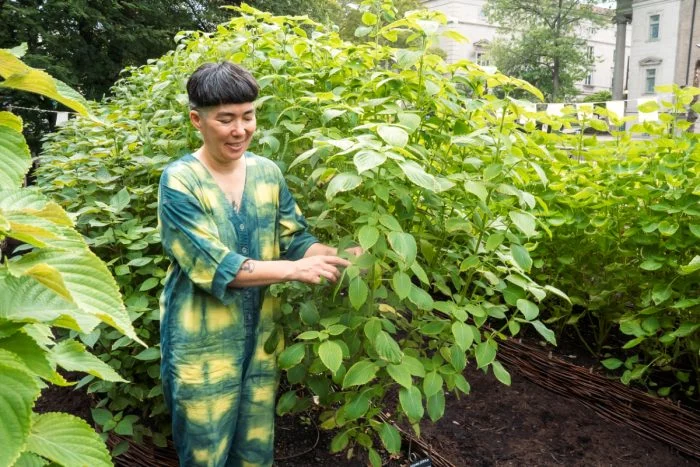
Pittsburgh, PA – In the heart of Pittsburgh, an unassuming herb is challenging long-held notions of identity, migration, and historical memory. Artist Ginger Brooks Takahashi’s "Perilla People’s Garden" and accompanying exhibition at the Carnegie Museum of Art serve as a profound exploration of Perilla frutescens, a plant often dismissed as an invasive species, yet deeply revered as a cultural touchstone across diverse Asian communities. Part of the prestigious 59th Carnegie International, Takahashi’s multidisciplinary project, unveiled this spring, uses the aromatic leaf to unravel complex narratives of displacement, resilience, and belonging, prompting visitors to reconsider their understanding of both plant and human journeys.
The Artist’s Journey: An Ancestral Tether
For Ginger Brooks Takahashi, perilla, known in her mother’s native Japan as shiso, has always been an anchor. Growing up, her family moved frequently, with spells in West Virginia, Oregon, and Italy. Yet, wherever they settled, her mother unfailingly cultivated perilla, its distinctive scent a constant reminder of heritage. Takahashi, an artist now based in Pittsburgh, explains that this intensely aromatic leaf, a member of the mint family, holds a flavor profile unique to Japanese cuisine, balancing crisp citrus notes with bitter undertones and subtle hints of anise and cinnamon. "It’s a very significant flavor that can’t really be replaced by anything else and becomes part of a cultural identity," she states, emphasizing its culinary importance akin to basil in Italian cooking.
Despite a childhood largely disconnected from her extended family in Japan and living in areas without strong Japanese communities, perilla became Takahashi’s primary cultural connector. She came to view the herb as an "ancestral tether," a botanical link binding Japanese-Americans to their forebears. This personal revelation soon expanded as she recognized the same phenomenon among people from Korea, Vietnam, and other regions where perilla is prominent. She discovered not just one perilla, but a rich spectrum of relatives, each variety meticulously cultivated and cherished by different cultures for its unique characteristics—whether medicinal properties, a fresh garnish, or a vibrant flavor punch in hearty dishes. This profound connection catalyzed her artistic vision, leading to the creation of the Perilla People’s Garden.
Perilla: A Global Culinary and Medicinal Tapestry

Perilla frutescens, often referred to broadly as perilla, is a fascinating and versatile plant with a deep history rooted in East and Southeast Asia. Originating in mountainous regions of China, its cultivation has spread over millennia, adapting to diverse climates and culinary traditions. The genus Perilla encompasses several species, but Perilla frutescens is the most widely recognized for its edible leaves and seeds. Its distinctive flavor profile, a complex blend of mint, basil, citrus, and a hint of spice, makes it irreplaceable in many cuisines.
In Japan, where it is known as shiso, varieties like aojiso (green shiso) and akajiso (red shiso) are staples. Green shiso is often fried for tempura, served fresh with sushi and sashimi, or finely chopped into salads. Red shiso is famously used to impart its vibrant burgundy color and tangy flavor to umeboshi (pickled plums) and shiso juice. These Japanese varieties typically feature smaller seeds and delicate leaves, closely resembling the plant’s wild ancestors.
Korean cultivars, known as kkaennip, tend to have thicker, larger, and sturdier leaves. These are prized for their ability to wrap grilled meats (ssam), providing a bold, fresh contrast that cuts through richness. Kkaennip is also fermented into kimchi, used in various banchan (side dishes) seasoned with soy sauce, or incorporated into stews. The robust nature of Korean perilla reflects its integral role in their hearty and flavorful cuisine.
Vietnamese perilla, or tía tô, often presents a bicolor leaf—green on top, purple underneath—and is highly valued for both its culinary and medicinal qualities. It is commonly served raw alongside noodle dishes like bún riêu, slivered into soups, or even stuffed with meat. Beyond the plate, tía tô is a significant herb in traditional Vietnamese medicine, believed to alleviate inflammation, coughs, and support cardiovascular health. Its leaves are frequently steeped to make herbal teas or used in steam inhalation remedies.
While perilla is ubiquitous in Asian markets and gardens, its accessibility in the U.S. is growing, albeit still primarily through Asian grocers or specialty farmers focusing on culturally significant produce. Its ease of cultivation—often growing up to six feet tall in ideal conditions—also makes it a popular choice for backyard gardens, a testament to its resilience and widespread appeal.
Cultivating Dialogue: The Perilla People’s Garden

The Perilla People’s Garden, located at the Carnegie Museum of Art, is more than a botanical display; it is a living artwork designed to foster community and critical reflection. This spring, Takahashi meticulously cultivated over a dozen perilla varieties, sourced from the U.S. Department of Agriculture’s gene bank and specialist seed keepers like Truelove Seeds and Second Generation Seeds. These diverse cultivars, arrayed in 11 beds shaped like a leaf, offer a kaleidoscopic view of the plant’s variations and, by extension, the myriad Asian communities that cherish it. "They serve almost like a visualization or a representation of the different people who associate with these plants," Takahashi explains. Visitors encountered flat, broad-leaf varieties alongside curly cultivars resembling mustard greens. The ornately serrated hojiso, a Japanese variety with deep green topsides and purple bottoms, contrasted with the softer greens and rounded leaves of Thai nga-mon, Nepalese silam, and Bhutanese zintshinam.
The garden is a central component of Takahashi’s broader installation for the 59th Carnegie International, a quadrennial survey that stands as one of the oldest and most significant exhibitions of contemporary art in the world. Being included in such a prestigious event elevates the project from a mere horticultural display to a significant platform for artistic and social commentary. The exhibition, running through January 3, 2027, invites a global audience to engage with its themes.
A highlight of the garden’s public programming was an ice cream party held on August 15. On bustling Forbes Avenue, near the museum’s entrance, guests sampled fresh perilla leaves and perilla gelato sprinkled with toasted perilla seeds. This seemingly innocuous summer event carried profound historical weight: August 15th is Gwangbokjeol, Korea’s National Liberation Day, commemorating its liberation from Japanese colonial rule in 1945. Takahashi deliberately chose this date as an attempt at "unearthing the colonial history" between Japan and Korea, a period from 1910 to 1945 that she notes many Japanese people are "hidden from or hide from." The shared affinity for perilla between the two nations, despite their fraught history, offered a poignant backdrop for a conversation about reconciliation and understanding. As children wandered through the fragrant "corn maze" of towering perilla plants, and grandmothers rubbed fuzzy leaves to release their smell, the garden became a multisensory space for reflection and connection.
Echoes of History: Colonialism and Resistance
The historical context of Gwangbokjeol is crucial to understanding the depth of Takahashi’s project. The Japanese annexation of Korea in 1910 initiated a brutal 35-year colonial rule marked by cultural suppression, forced labor, and military conscription. Korea’s National Liberation Day is therefore a powerful symbol of independence and resistance. By hosting an event on this day, Takahashi brought this complex history into the public sphere, using perilla as a shared cultural element to bridge a divide often overlooked or actively suppressed.
Further enriching this historical dialogue was the inclusion of garden balsam (Impatiens balsamina), known as bongseonhwa in Korea. This flower gained symbolic resonance as a metaphor for the springtime rebirth of the Korean people and became a potent symbol of resistance during Japanese rule, famously immortalized in popular songs. Sunni Park, a Korean-American chef and caretaker of the Perilla People’s Garden, engaged visitors in a traditional practice: grinding bongseonhwa flowers with a mortar and pestle to create a henna-like paste, which she then used to dye visitors’ fingernails orange, secured with a perilla leaf wrap. This act connected the garden’s visitors to centuries-old Korean customs and the nation’s enduring spirit of defiance.

Takahashi’s personal history also deeply informs the exhibition. In an audio installation inside the museum, she recounts her family’s presence in Japanese-occupied Manchuria, where her grandfather worked on a railroad as "part of Japan’s settler-colonial presence." This admission by an artist of Japanese descent acknowledges the difficult realities of her own heritage within the broader narrative of Japanese expansionism, adding layers of self-reflection and accountability to the project’s exploration of colonization.
The Museum’s Interior: An Immersive Reflection
The exhibition extends beyond the verdant outdoor garden into the museum’s interior, creating a complementary space for deeper contemplation. In a small, intimate room, speakers play audio recordings of Takahashi’s interviews with perilla seed keepers, alongside her personal account of the plant’s significance in her life and family history. This auditory element allows visitors to immerse themselves in the stories and voices connected to perilla, amplifying the plant’s role as a vessel for collective memory.
A particularly striking feature of the indoor display is a series of text works printed on handmade perilla paper. These pieces directly confront the contentious language used to describe both invasive species and immigrants. Phrases like "Noxious Enemy Weed" and "Aggressive Transplant Worker" are juxtaposed, drawing a powerful parallel between environmental policy and xenophobic rhetoric. This artistic intervention forces viewers to question the subjective nature of such labels and their societal implications, highlighting how language can dehumanize and marginalize.
Adding another sensory dimension, a handmade vessel emanates the pungent fragrance of mature perilla leaves. Takahashi designed this vessel to carry the evolving scents of the garden through the seasons: from the rich humus and tender first leaves of spring to the toasted, nutty aroma of seeds in the fall. This olfactory experience provides a continuous, subtle reminder of the plant’s life cycle and its enduring presence.
Voices from the Diaspora: Perilla as a Doorway to Heritage

The Perilla People’s Garden project is enriched by the insights and experiences of several key collaborators, each of whom views perilla as a profound cultural conduit. Sunni Park, who served as the garden’s caretaker while Takahashi completed her Master of Fine Arts degree in Chicago, found herself deeply immersed in the nuances of the plant. She developed an appreciation for the subtle differences between cultivars, noting how the delicate Japanese varieties and the bolder Korean ones reflect the distinct culinary philosophies of their respective cultures. For Park, perilla has always been a "doorway" through which she could explore her Korean heritage, a steady companion in her culinary journey. She vividly recalls harvesting piles of leaves for ssam, kimchi, or simple soy-seasoned banchan, emphasizing her preference for the raw leaf, which she believes delivers the purest essence of the plant and its history. "When I’m eating perilla," Park reflects, "I’m thinking of all my ancestors."
Another vital voice is Kristyn Leach, founder of Second Generation Seeds, a company dedicated to preserving culturally significant plant varieties. Born in Korea and adopted into a U.S. family, Leach grew up disconnected from her birth culture. When she sought to reconnect with her heritage through growing Korean foods, perilla was her unequivocal first choice, even though she had never tasted it. "It felt like the equivalent of flying a Korean flag," she explains. Fifteen years later, Leach cultivates six varieties of perilla, including ’38N,’ a Korean variety with palm-sized, heart-shaped leaves. The name ’38N’ references the 38th parallel north latitude, which divides North and South Korea, and coincidentally passes through Leach’s Namu Farm in Sebastopol, California. This deliberate naming underscores the plant’s symbolic power in representing divided histories and the longing for connection. Leach observes that the nutritious perilla seeds attract hundreds of birds in the fall, leading her to draw a poignant parallel between migratory birds and the Asian diaspora—a word whose Greek roots mean "to scatter or sow seeds." She emphasizes the power perilla holds for communities separated from their ancestral lands, stating, "There’s something somatically freeing about sitting in the presence of these plants."
Thao Tran, a farm organizer at Resilient Roots Farm in Camden, New Jersey, echoes this sentiment. At her farm, Vietnamese elders garden alongside local youth, cultivating produce for their community and seeds for Truelove Seeds, including ‘lã tía tô,’ a bicolor Vietnamese perilla. Tran works with elders who were displaced from their homes and resettled in the U.S. as refugees. She contemplates the comfort and familiarity perilla must have offered them upon encountering it in a foreign land. "I wonder if that supported them in the process of finding home and community here," Tran muses. "I would imagine that there was a sense of comfort when they were like, ‘This grows really well here,’ and they could see themselves in perilla in that way."
Tran also offers a nuanced perspective on perilla’s aggressive growth habit, which often leads to its designation as an invasive species in places like Pennsylvania. While acknowledging its tendency to overtake gardens, she reinterprets this trait as a mark of resilience. "The plant evades capture or complete erasure because it is very difficult, once the seed bank is established, to actually get rid of it," she explains. This reframing challenges the negative connotations of "invasive" and highlights the plant’s enduring strength, mirroring the tenacity of immigrant and refugee communities.
Beyond the Garden: Broader Implications and Future Harvests
Takahashi’s Perilla People’s Garden and exhibition serve as a powerful lens through which to examine broader societal issues. The designation of perilla as an "invasive species" in Pennsylvania and several other states provides a critical entry point for discussion. An invasive species is typically defined as a non-native organism that causes harm to the environment, economy, or human health. However, as Takahashi discovered in the Carnegie Museum of Natural History’s herbarium, perilla samples from the Pittsburgh region date back over a century, indicating its long-term naturalization. "It’s been here a long time," she observes. "It’s naturalized at this point. How much time needs to pass before it’s accepted that it lives here?" This question extends beyond botany, prompting a re-evaluation of how societies define "native" versus "foreign," and how quickly—or slowly—newcomers, be they plants or people, are accepted into a landscape.

The project contributes significantly to contemporary discourse at the intersection of food systems, art, and social justice. It underscores the critical role of culturally significant plants in preserving heritage, facilitating community building, and providing solace for diaspora populations. Furthermore, it highlights the importance of seed-saving initiatives like Truelove Seeds and Second Generation Seeds, which actively work to preserve genetic diversity and cultural knowledge often overlooked by mainstream agriculture.
Takahashi views her work on perilla as just the beginning of a much larger endeavor. As fall progresses, the perilla in the People’s Garden will set seed, allowing visitors to witness its natural life cycle, and offering a tangible connection to the plant’s regenerative power. She envisions this exhibition as the first iteration of a long-term project, with plans to delve deeper into her research and eventually publish a book. "I have even more questions," Takahashi admits. "I want to continue to work with the plant. There’s so much more to learn."
In a world grappling with increasing migration, climate change, and persistent historical grievances, the Perilla People’s Garden offers a timely and poignant invitation. It is a space where the simple act of growing and sharing an herb becomes a profound act of remembrance, reconciliation, and resistance, demonstrating how a single plant can cultivate not only food but also crucial conversations about what it means to belong.