admin
admin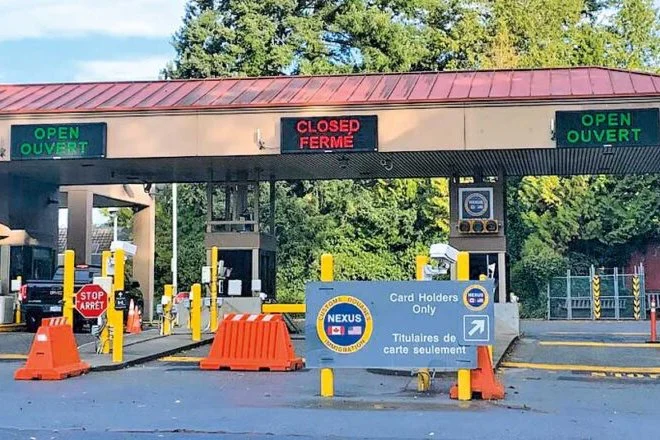
When Ali Hayton, the steadfast owner of the International Marketplace grocery store in Point Roberts, Washington, convened with Democratic Senator Patty Murray and fellow state business leaders in the spring of 2025, her message was unambiguous and urgent. Escalating trade tensions with Canada were pushing her vital business to the brink of collapse, an outcome that would not only eliminate the area’s sole grocery store but also plunge the roughly 1,200 year-round residents into a severe food security crisis. This remote U.S. anomaly, geographically tethered to Canada, finds itself caught in the crosshairs of a geopolitical dispute, threatening its very sustenance and unique way of life.
A Geographic Anomaly and Its Intrinsic Cross-Border Dependence
Point Roberts is a five-square-mile American exclave, an unusual peninsula dangling precariously from the British Columbia mainland, twenty miles south of Vancouver. Its existence is a historical quirk, a byproduct of the 1846 Oregon Treaty between the U.S. and Great Britain, which arbitrarily drew the international boundary along the 49th parallel. This diplomatic stroke of a pen effectively isolated "the Point," as residents affectionately call it, from the contiguous United States, making it accessible by land only through Canada.
For nearly two centuries, this unique geography has forged an unbreakable bond with its Canadian neighbors. Point Roberts evolved not as a self-sufficient American outpost, but as a symbiotic cross-border community. Its economy, infrastructure, and social fabric became inextricably woven with Canadian commerce and tourism. Residents relied on easy passage through Canada for access to mainland Washington, while Canadian visitors flocked to the Point for cheaper U.S. goods, gasoline, and parcel pickup services. The steady influx of Canadian shoppers and tourists was the lifeblood of local businesses, from gas stations and restaurants to the International Marketplace itself. As Hayton succinctly puts it, "Canadian customers are part of who we are and part of who we have always been." This harmonious equilibrium, however, began to unravel with a shift in political winds.
The Onset of a Geopolitical Storm: Trump’s Second Term and Trade Tariffs
The amicable cross-border relationship, a bedrock of Point Roberts’ prosperity, began to crumble following President Donald Trump’s return to office in January 2025. His administration’s renewed "America First" trade doctrine quickly translated into a systematic imposition of tariffs on Canadian goods, coupled with inflammatory rhetoric that included threats to annex Canada as the 51st state. This aggressive stance, reminiscent of his first term’s trade skirmishes, sent shockwaves through the carefully balanced U.S.-Canada economic partnership.
A critical escalation occurred in July 2026, when President Trump signed executive orders mandating a 50 percent increase in tariffs on a wide array of Canadian products. This punitive measure targeted key sectors, including beer, wine, honey, various fruits, and dairy products – staples that frequently crossed the border in both commercial and personal capacities. The rationale behind these tariffs, according to the administration, was to address perceived unfair trade practices and protect American industries. However, for communities like Point Roberts, these macro-level policies had immediate and devastating micro-level consequences.
The hope for de-escalation was dashed in August 2026, when critical trade talks aimed at mitigating the tariffs collapsed without resolution. In response, Canada, demonstrating a strong show of national unity and resolve, vowed to implement retaliatory tariffs, matching U.S. duties dollar for dollar. This tit-for-tat trade war further entrenched the divide, pushing relations to a historic low and fundamentally altering the cross-border dynamics that had long sustained Point Roberts.
Economic Fallout: A Declining Customer Base and Mounting Pressure
The immediate and most visible impact of these trade tensions has been a drastic reduction in Canadian travel to the U.S. A February 2026 Bank of Canada survey underscored this alarming trend, reporting a staggering 10 million fewer trips by Canadians to the U.S. in 2025 compared to 2024—a precipitous drop of 25 percent. This sharp decline in cross-border traffic has starved Point Roberts businesses of their primary customer base.
For Ali Hayton’s International Marketplace, the repercussions have been dire. Business has plummeted by almost 50 percent, jeopardizing the very existence of the area’s only full-service grocery store. The vast parking lot, once bustling with cars bearing Canadian license plates on a summer weekend, now stands eerily half-empty. These Canadian shoppers, who once filled their tanks with cheaper U.S. gas and then stocked up on American cheese, eggs, and other groceries, are now staying home, deterred by the increased costs of goods, the general anti-U.S. sentiment fueled by political rhetoric, and the perceived hassle of border crossings.
The economic strain extends beyond the grocery store. Other businesses, such as The Pier and the Saltwater Café, owned by Hansen, have reported a customer base decline of up to 40 percent. These establishments, historically reliant on the vibrant tourist trade and day-trippers from Canada, are now struggling to maintain profitability. Hansen’s desperate measure of accepting Canadian dollars at a flexible rate, hovering around 80 percent of the American dollar, underscores the gravity of the situation and the lengths local businesses are going to entice any customers they can.
A Precursor to Crisis: The Lingering Shadows of the Pandemic
While the current trade war represents a critical threat, it is not the first major challenge Point Roberts has faced. Hayton acknowledges that many of her difficulties trace back to the COVID-19 pandemic, which forced the closure of the U.S.-Canada border for an agonizing 20 months. During this period, although grocery items were deemed essential and trucks continued to cross, both Canadian and U.S. customers largely stayed away due to health restrictions and fears. The community experienced a prolonged period of isolation and economic hardship.

"In 2024, things were starting to look up again," Hayton recalls, reflecting on the tentative recovery post-pandemic. "Then all the rhetoric about the 51st state [started]." This sequence of events—a recovery from one crisis immediately followed by the onset of another—has left businesses like the International Marketplace with little room to breathe, depleting their reserves and resilience. The pandemic exposed the fragility of Point Roberts’ reliance on cross-border traffic; the trade war is now exacerbating it to potentially irreversible levels.
The Unique Logistical Nightmare of Supplying an Enclave
Maintaining a grocery store in Point Roberts presents a unique set of logistical challenges, even in the best of times. Due to its isolation from the U.S. mainland, the International Marketplace relies on a U.S.-based wholesaler. This means inventory must travel across the U.S./Canada border, traverse Canadian territory (often through Tsawwassen, British Columbia), and then re-enter the U.S. at the Point Roberts crossing before finally reaching the store shelves.
While goods transported "in transit" through Canada typically do not incur duty charges, the process is far from seamless or inexpensive. Hayton highlights the prohibitive cost of transportation: "I would love to have fresh produce delivered every single day, but when that truck costs me $1,000 to come across the border, I can’t do it." With fewer customers and dwindling revenue, these fixed costs become an even heavier burden. To cope, Hayton has been forced to limit food orders to every two or three days and reduce operating hours, measures that, while saving money, inevitably impact the freshness and variety of available produce, further straining the community’s food access.
This complex supply chain underscores the inherent vulnerability of Point Roberts. Any disruption—be it political, economic, or health-related—has an outsized impact on the availability and cost of essential goods, particularly fresh produce, as the enclave lacks any significant commercial agricultural production or market gardens. The Marketplace is not just a store; it’s the community’s sole conduit to a consistent food supply.
Food Security: A Community on the Edge
The precarious position of the International Marketplace directly threatens the food security of Point Roberts residents. Without it, obtaining groceries would require an arduous and inconvenient journey. Residents would have to cross into Canada, either to shop in Canadian stores or to re-cross into the Washington mainland, a multi-border crossing trip that many, especially the elderly, those with limited mobility, or families with young children, would find exceptionally difficult.
Dave Lee, a permanent resident and president of the board of directors for the Point Roberts Food Bank (PRFB), intimately understands this vulnerability. He and his family make a conscious effort to shop exclusively at the Marketplace, hoping their loyalty can help keep its doors open. The PRFB itself serves close to five percent of the enclave’s population, operating with a compassionate policy that does not require proof of income for assistance.
The food bank’s operations are also intricately linked to the grocery store. Like the Marketplace, the PRFB collects food from Bellingham, Washington, and transports it across two international borders. While similar "in transit" rules prevent duties, the logistics are complex. Crucially, the food bank relies on the Marketplace for storage, sharing space in its fridges and freezers to provide perishable items like cheese, eggs, and fresh vegetables to those in need. "If it went out of business, say next month," Lee states gravely, "we’d have to scramble and try and figure out what we’re going to do."
Recognizing this critical dependency, the PRFB has taken proactive steps. In 2023, they acquired property, and in July 2023, construction began on a dedicated warehouse. This single facility aims to centralize inventory management and, most importantly, lessen the food bank’s reliance on the grocery store’s storage capacity. While this initiative promises greater operational resilience for the PRFB, it does not solve the fundamental problem of attracting the Canadian customers that Point Roberts businesses desperately need to survive.
Local Diplomacy in the Face of Geopolitical Discord
Despite the overarching political tensions and the economic hardships, the spirit of resilience and neighborliness endures in Point Roberts. Local businesses and community leaders are actively devising strategies to rebuild the cross-border connection and entice visitors back. Wayne Lyle, president of the Point Roberts Chamber of Commerce, emphasizes these efforts: "We advertise in nearby Delta, B.C., and into the Bellingham and Seattle areas," aiming to cast a wider net for potential customers. While acknowledging the lack of local produce, Lyle maintains a degree of optimism about the community’s food supply, noting that residents could, in extremis, access groceries in nearby Tsawwassen, Canada, and that the International Marketplace has remained open even through the pandemic.
More than a year has passed since Ali Hayton’s urgent appeal to Senator Murray. The collapse of U.S.-Canada trade talks in August 2026, followed by Canada’s matching retaliatory tariffs, has only solidified the border’s chilling effect on Canadian travel. Yet, Hayton’s solution, consistent since her initial plea, remains rooted in human connection. She had hoped for a grand public relations event at the border, bringing together officials from British Columbia and legislators from Washington State, but it never materialized.
Undeterred by political inertia, Hayton has launched her own form of grassroots diplomacy. Her staff at the International Marketplace operate under clear instructions: "When [Canadians] come down, we show them that we’re the same people we’ve always been [despite political tensions]. We still treat everybody the way we want to be treated and provide the same excellent services." This personal approach, fostering relationships one customer at a time, is what Hayton believes is the most effective—and perhaps only—way to save her store and continue to feed the residents of Point Roberts.
The plight of Point Roberts serves as a stark microcosm of the broader implications of trade wars and geopolitical friction on border communities. Its unique geography, once a source of charm and cross-cultural exchange, has become its greatest vulnerability. As the U.S. and Canada navigate a complex and often contentious political landscape, the fate of this small American enclave hangs in the balance, a testament to how global policies reverberate, with profound and immediate consequences, on the lives and livelihoods of ordinary people. The future of Point Roberts, and its ability to secure food for its residents, rests on the hope that diplomacy, both grand and grassroots, can ultimately mend the fractured bonds of a vital cross-border relationship.