admin
admin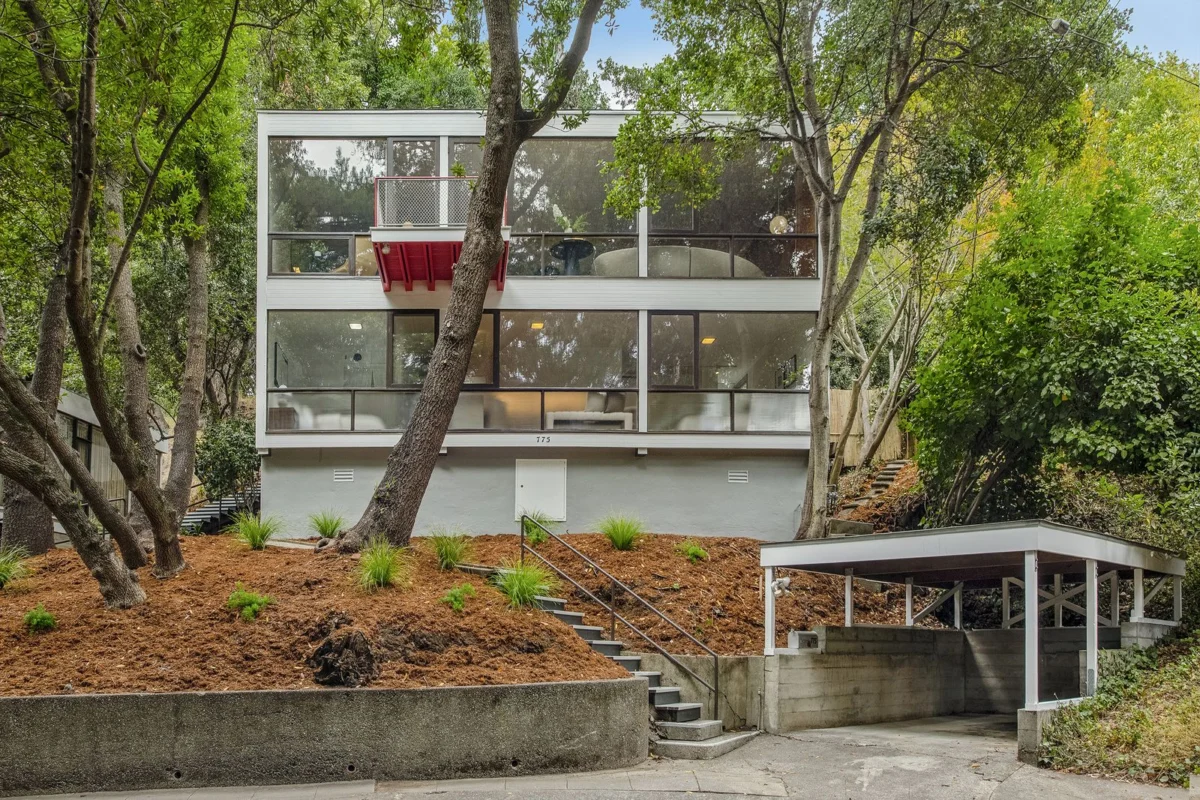
The architectural gem known as the Kip House, a seminal early residential work by the renowned Berkeley modernist Donald Olsen, has officially entered the market with an asking price of $1,425,000. Located at 775 San Diego Road, directly across from the verdant expanses of John Hinkel Park, this 1952-built residence offers a rare opportunity to acquire a significant piece of California’s mid-century modern heritage. Spanning 1,904 square feet with three bedrooms and two bathrooms, and set on a generous 0.4-acre lot, the property embodies the thoughtful integration of European modernist principles with a distinctive Californian sensibility that defined Olsen’s enduring legacy.

A Legacy of Modernism: Donald Olsen’s Vision
Designed in 1952 for Arthur Frederic Kip, a distinguished experimental physicist at the University of California, Berkeley, the Kip House represents a formative period in Donald Olsen’s architectural career. Olsen, a visionary who had absorbed the rigorous tenets of European modernism, particularly the influential Bauhaus movement, sought to translate these ideas into a context uniquely suited to California’s climate, landscape, and informal lifestyle. His work, including the Kip House, masterfully balanced clarity, functional planning, and the rejection of superfluous ornamentation—hallmarks of the Bauhaus philosophy—with a profound responsiveness to site and natural surroundings.
Born in 1919, Donald Olsen’s architectural journey began with studies at the University of Minnesota and Cranbrook Academy of Art, where he was exposed to key figures of modern design. His direct experiences working with architectural giants such as Mies van der Rohe and Walter Gropius, both pivotal figures in the Bauhaus movement, deeply influenced his approach. However, upon establishing his practice in Berkeley, Olsen didn’t merely replicate European styles. Instead, he innovated, developing a regional modernism that celebrated open plans, expansive glazing to invite natural light and views, and an organic connection between indoor and outdoor spaces. The Kip House stands as a testament to this synthesis, showcasing his early mastery of these principles.
Arthur Frederic Kip, the original owner, was a prominent physicist whose scientific career at UC Berkeley contributed significantly to the understanding of solid-state physics. It is perhaps fitting that a scientist dedicated to clarity, precision, and fundamental principles would commission an architect who championed similar ideals in design. The clean lines, logical flow, and efficient use of space within the Kip House mirror the intellectual rigor and aesthetic clarity often found in scientific pursuits.
Architectural Harmony: Design and Site Integration
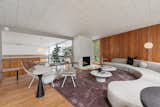
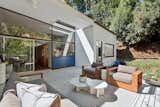
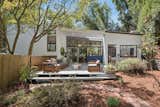
More than seventy years after its construction, the Kip House retains a striking contemporary feel, a testament to Olsen’s timeless design. Its clean geometry, generous expanses of glass, and remarkably fluid plan continue to resonate with modern architectural preferences. Olsen’s genius is particularly evident in his sensitive handling of the site’s natural slope. Rather than imposing a rigid structure, he leveraged the topography to create a dynamic sequence of subtly changing levels, enriching the spatial experience within the home.
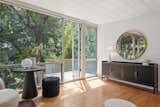
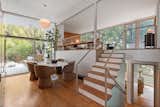
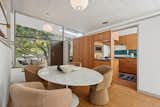
Upon approach, visitors are guided to an intermediate level that serves as the heart of the home, housing the kitchen and dining spaces. This central area is designed for seamless interaction; the kitchen opens directly into the dining room, which in turn extends outward into a secluded English garden. This thoughtful arrangement blurs the lines between interior and exterior, inviting the California landscape into daily living. From this central nexus, the plan gracefully ascends to a raised living room and a dedicated study, offering elevated views and distinct zones for relaxation and intellectual work. Conversely, two of the home’s three bedrooms are strategically placed on the lower portion of the house, ensuring privacy and a tranquil retreat. The strategic placement of large windows on both the front and back facades ensures that nearly every room benefits from abundant natural light and picturesque landscape views, further reinforcing the home’s deep connection to its environment.
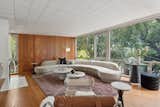
The design principles embedded within the Kip House – open living, profound connection to the landscape, efficient utilization of space, the achievement of privacy without resorting to enclosure, and architecture that intimately responds to its site – remain highly relevant and sought after in contemporary residential design. This makes the Kip House not just a historical artifact but a living example of enduring architectural foresight.
The Berkeley Context: John Hinkel Park and Community
The prime location of 775 San Diego Road, directly across from John Hinkel Park, significantly enhances the property’s appeal. John Hinkel Park, a beloved Berkeley institution, offers residents a serene natural escape with its mature trees, winding paths, and recreational amenities. The park’s amphitheater, a historic stone structure, hosts various community events, adding to the cultural richness of the neighborhood. Living across from such a significant green space provides immediate access to nature, recreational opportunities, and a sense of community, all while enjoying the privacy and architectural distinction of the Kip House.

The Berkeley Hills area, where the Kip House is situated, is renowned for its diverse architectural landscape, featuring many significant examples of mid-century modern design. This neighborhood has long been a magnet for academics, artists, and innovators, fostering an environment that values intellectual curiosity and sophisticated aesthetics. The presence of UC Berkeley, a world-class research institution, contributes to a vibrant cultural and intellectual milieu that has historically drawn influential figures like Arthur Frederic Kip and visionary architects like Donald Olsen to the area.

Market Dynamics and Historical Significance
This listing marks only the second time the Kip House has been offered for sale since its original construction in 1952, underscoring its exceptional rarity and the long-term appreciation for its design integrity. In the highly competitive Bay Area real estate market, architecturally significant homes, particularly those by celebrated modernists, command considerable attention and often achieve premium values.

The current asking price of $1,425,000 for a 1,904-square-foot home on a 0.4-acre lot in Berkeley reflects not only the intrinsic value of the property but also the premium associated with its provenance and architectural pedigree. The median home price in Berkeley has consistently been among the highest in the nation, driven by strong demand, limited inventory, and the area’s desirable lifestyle and economic opportunities. For example, recent market analysis indicates that well-preserved mid-century modern homes in the East Bay, especially those with clear architectural lineage, often sell above appraisal, demonstrating a robust market for discerning buyers seeking unique properties with historical and artistic merit.
Architectural historians and preservation societies are expected to view this listing with keen interest. The sale of such a property often raises discussions about the importance of safeguarding modernist architecture, ensuring that future owners understand and respect the original design intent. Experts in Bay Area architecture, such as those associated with the Berkeley Architectural Heritage Association or the Environmental Design Archives at UC Berkeley, often advocate for thoughtful stewardship of these homes, recognizing them as irreplaceable cultural assets. The potential sale is likely to attract not only individual buyers seeking a unique residence but also collectors of modernist art and architecture, or institutions interested in preserving such iconic structures.
Broader Implications and Enduring Legacy
The listing of the Kip House serves as a powerful reminder of the enduring legacy of mid-century modernism and the specific contributions of architects like Donald Olsen to the California landscape. It highlights a period when design was driven by a belief in progress, functionality, and a harmonious relationship with nature. In an era where sustainability and indoor-outdoor living are paramount, the principles championed by Olsen over seven decades ago feel remarkably prescient.

The acquisition of the Kip House offers more than just a residence; it provides an opportunity to inhabit a piece of architectural history, to live within a meticulously crafted environment that continues to inspire. Its continued relevance demonstrates that truly great design transcends transient trends, offering a timeless quality that resonates across generations. As the Bay Area continues to evolve, the preservation and appreciation of such landmark homes become increasingly vital, ensuring that the architectural narrative of the region remains rich and accessible. The Kip House stands as a beacon of early Californian modernism, ready for its next chapter, awaiting a steward who will appreciate its profound historical and aesthetic value.