admin
admin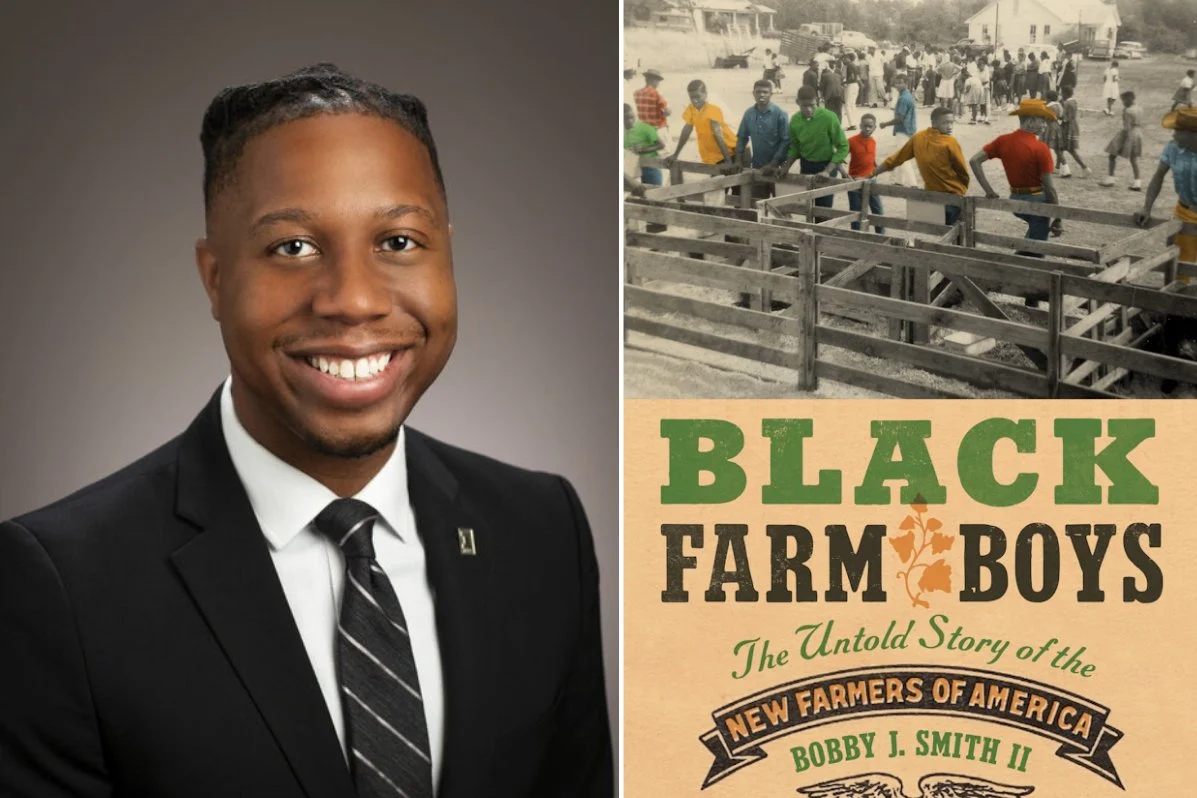
The titles, it turned out, were the only two ever written about the New Farmers of America (NFA), the nation’s first organization for youth studying vocational agriculture at Black segregated public high schools across the South and up the East Coast to New Jersey. This stark revelation came to Bobby J. Smith, a sociologist with a background in agricultural economics who teaches in the Department of African American Studies at the University of Illinois Urbana-Champaign, who, remarkably, had never heard of the organization himself. His discovery sparked a dedicated pursuit to unearth and document the forgotten history of an institution that profoundly shaped the lives of tens of thousands of young Black men during a tumultuous period in American history.
"We’re talking about an organization that existed in 18 states and had an annual membership of 55,000 rural Black boys," Smith recounted from his office. "I was amazed at how big the organization was and the fact that no [scholarly] book had ever been written about it. That’s when I knew it was time for me to write one." The sheer scale of the NFA, coupled with its profound absence from historical and academic discourse, underscored the urgent need for a comprehensive examination of its legacy. Released this month, Smith’s book, Black Farm Boys: The Untold Story of the New Farmers of America, meticulously traces the organization’s history, from its founding in 1935 to its traumatic end 30 years later, when it was absorbed by the predominantly white Future Farmers of America (FFA).
Unearthing a Lost Legacy: The NFA’s Overlooked Significance
The NFA’s obscurity in contemporary historical narratives is a puzzling oversight, given its immense reach and impact. Operating in 18 states, from the agricultural heartlands of the South to the northern reaches of New Jersey, the organization was a powerful force for Black youth development. Its annual membership of 55,000 rural Black boys represented a significant demographic, providing vocational training, leadership opportunities, and a sense of community during an era of systemic racial discrimination and economic hardship. The NFA’s existence challenges common perceptions of Black life during segregation, revealing a vibrant, self-organized network dedicated to uplift and progress through agricultural education.
The organization was structured as a network of thousands of chapters, each intrinsically linked to vocational agriculture programs within Black-only high schools. These schools, often under-resourced but vital community pillars, served as the crucibles for the NFA’s work. Teachers not only delivered classroom instruction but also served as dedicated chapter advisors and mentors, fostering deep, personal connections with their students. Smith characterizes the NFA as more of a brotherhood than a top-down organizational structure, emphasizing the strong bonds formed among its members and the emphasis on Black male youths stepping into significant leadership roles within their chapters and communities. This grassroots leadership model empowered young men to take ownership of their development and contribute actively to their communities.
The NFA’s Genesis: A Movement Rooted in Resilience
The New Farmers of America did not emerge in a vacuum; its foundations were laid much earlier, tracing back to a broader "Black youth farm movement" that began in the 1870s. This period was marked by immense challenges for Black Americans following Reconstruction, including systematic disenfranchisement, racial violence, and economic exploitation. Black people were increasingly pushed off their land or steered away from farming, often relegated to exploitative sharecropping arrangements that perpetuated economic dependency.
Against this backdrop, the idea of the NFA had been circulating since at least the mid-1920s, with deep roots in the Black land-grant institutions established in the South. These institutions, such as Tuskegee Institute and Prairie View A&M (Smith’s alma mater), were crucial for providing higher education and agricultural extension services to Black communities when white institutions largely excluded them. They championed the dignity of agricultural labor and saw it as a path to economic independence and community strength. The NFA, along with other parallel initiatives like Negro 4-H clubs, was explicitly designed to counter the pervasive narrative that agriculture was a backward or inherently oppressive endeavor for Black people. Instead, these organizations encouraged rural Black individuals to remain in, invest in, and become leaders within their agricultural communities.
Responding to Systemic Pressures: The Great Migration and Land Loss
The NFA’s formation in 1935 coincided with the peak of the first wave of the Great Migration, a monumental demographic shift during which millions of Black Americans moved from the rural South to urban centers, both North and South, in search of better economic opportunities and to escape racial terror. Lynching, Jim Crow laws, and systemic violence created an environment of fear and oppression that drove many Black families from their ancestral homes. Simultaneously, Black farmers were rapidly losing land due to discriminatory lending practices, lack of access to government programs, and outright theft.
In this context of profound upheaval and dispossession, the NFA offered a radical alternative vision. It presented agriculture not as a trap of exploitation but as an emancipatory force—a means for Black youth to uplift themselves, their families, and their communities. It provided vocational skills, leadership training, and a strong community network, empowering its members to build resilient lives despite the systemic barriers they faced. The NFA fostered a sense of pride and agency, encouraging "Black farm boys," as participants proudly called themselves, to embrace their connection to the land and see themselves as future leaders.
Building a Brotherhood: NFA’s Structure and Activities
The NFA’s robust organizational structure and diverse activities were instrumental in its success. Each state boasted an association headquartered at its local Black land-grant institution, such as Prairie View A&M in Texas, which hosted the largest association with over 1,000 chapters. Even states without a Black land-grant university, like New Jersey, found creative ways to establish their associations, with New Jersey’s being headquartered at a high school in Bordentown. This decentralized yet interconnected model allowed the NFA to tailor its programs to local needs while maintaining a national identity.
NFA members were highly engaged in self-directed activities that went beyond mere classroom learning. They organized their own community banquets, showcasing their achievements and fostering community pride. They hosted state fairs, providing platforms for members to display their agricultural skills and compete, much like their white counterparts in FFA. National conventions brought together youth from across the 18 states, offering opportunities for networking, leadership development, and exposure to broader agricultural trends. A testament to their ambition and vision, NFA members even attended the 1939-40 New York World’s Fair, learning about global agriculture and broadening their perspectives.
Summer camps were a particularly impactful component of the NFA experience. These camps provided intensive, hands-on learning in critical areas such as conservation, forestry, and agriscience. Beyond vocational training, these camps were crucial for fostering the deep bonds that defined the NFA brotherhood. Through outdoor activities like crabbing, boating, and swimming, these young men solidified friendships and built a powerful sense of camaraderie. "These boys not only went to high school together, they grew up together," Smith emphasized, highlighting the holistic nature of the NFA experience that extended far beyond formal education.
Cultivating Future Leaders: Beyond Farming
The NFA’s vision extended well beyond simply producing farmers. While it certainly trained skilled agriculturalists, its broader objective was to cultivate a generation of Black leaders across every facet of the agricultural industry and beyond. As Smith points out, the "Black farm boys" who participated in the NFA didn’t just grow up to work the land; they became soil scientists, agricultural teachers, economists, engineers, veterinarians, and dairy or meat scientists. Many found careers working for state departments of agriculture, as farm credit agents, or even as university chancellors. The NFA served as a vital pipeline for a generation of cooperative extension agents, who then carried agricultural knowledge and resources to countless rural Black communities.
This focus on professional development underscores the NFA’s forward-thinking approach. It recognized that true empowerment for Black communities meant not just proficiency in farming but also representation and leadership within the broader agricultural infrastructure and scientific community. By equipping its members with diverse skills and a professional outlook, the NFA enabled them to break barriers and create new opportunities for themselves and future generations.
A Traumatic End and Enduring Questions
The NFA’s impactful journey came to a "traumatic end" in 1965 when it was absorbed by the predominantly white Future Farmers of America (FFA). This merger occurred amidst the burgeoning Civil Rights Movement and the legislative push for desegregation, particularly following the landmark Civil Rights Act of 1964. While the integration of educational and youth organizations was a stated goal of the era, the absorption of the NFA into the FFA represented a complex and often painful transition.
For many, the merger symbolized progress towards racial equality. However, for the NFA and its members, it meant the dissolution of a cherished, self-determined institution that had served as a bedrock of Black community and leadership for three decades. The unique cultural identity, leadership structures, and pedagogical approaches developed within the NFA were often subsumed by the larger, established FFA. While some Black youth undoubtedly benefited from the expanded resources and opportunities within the integrated FFA, the distinct legacy and contributions of the NFA were largely erased from public memory and historical records. This "traumatic end" highlights a critical aspect of desegregation: while opening doors, it sometimes came at the cost of dismantling vital Black institutions that had flourished under separate but equal doctrines, leading to a loss of collective identity and a unique historical narrative.
Reshaping the Narrative of Black Agriculture
A central argument of Smith’s book is the imperative for a narrative shift away from portraying agriculture solely "as an oppressive facet of Black existence." Growing up in a family of Black farmers and studying agriculture at a Black college, Smith’s understanding of agriculture was inherently different from mainstream perspectives. He learned about it through the lived experiences of Black people and from Black professors who celebrated its emancipatory potential.
Smith acknowledges the undeniable "bad facets of the agrarian past"—enslavement, sharecropping, land confiscation, denial of credit—but he insists that these do not represent the entire story. His work seeks to illuminate the narratives where agriculture was profoundly important to Black people, where they "were able to build lives on the same lands they were once marginalized on." The NFA’s story is a powerful testament to this alternative perspective, demonstrating how Black communities actively cultivated agency, opportunity, and leadership through agriculture.
By providing "more airtime to the emancipatory aspects of our Black people’s historical and contemporary relationships to agriculture," Smith aims to correct a significant imbalance in historical discourse. Even within the discipline of Black studies, he notes, this "other side of the story" is often overlooked. His book fills this critical gap, offering a nuanced and empowering account of how Black youth, through the NFA, transformed agriculture into a tool for self-determination, professional advancement, and community building, thus enriching our understanding of Black resilience and achievement.
Lessons for the Future: NFA’s Timeless Relevance
The historical recovery of the NFA holds profound lessons for contemporary organizers and educators. The organization’s model of youth-led development, community engagement, and vocational empowerment remains highly relevant. In a society still grappling with issues of equity, access, and representation, the NFA’s success in fostering leadership and professional pathways for marginalized youth offers valuable insights. Its emphasis on a brotherhood model, where peer mentorship and collective responsibility were paramount, provides a blueprint for creating supportive and empowering environments for young people today.
Smith’s research, which includes invaluable oral histories, brings the NFA’s impact to life. He recounts starting his book with a quote from Dr. Alfred L. Parks, his beloved mentor and former college professor at Prairie View A&M. Smith first met Dr. Parks in a summer program designed to interest high school students in studying agriculture, an encounter that "changed my entire trajectory." This personal anecdote underscores the transformative power of mentorship and vocational programs, mirroring the very essence of the NFA’s mission. "The moment I met Dr. Parks, I knew I wanted to be like him when I grew up," Smith shared, illustrating how the NFA’s legacy, through its alumni and institutions, continued to inspire generations.
In conclusion, Bobby J. Smith’s Black Farm Boys is more than just a historical account; it is an act of reclamation, restoring a vital chapter of Black history to its rightful place. By meticulously documenting the New Farmers of America, Smith not only highlights the remarkable achievements of thousands of young Black men but also challenges entrenched historical narratives, urging a broader recognition of agriculture as a source of Black agency and emancipation. The NFA’s story is a powerful reminder of the resilience, ingenuity, and community spirit that thrived within segregated Black institutions, offering timeless lessons on youth development, leadership, and the enduring quest for self-determination.