admin
admin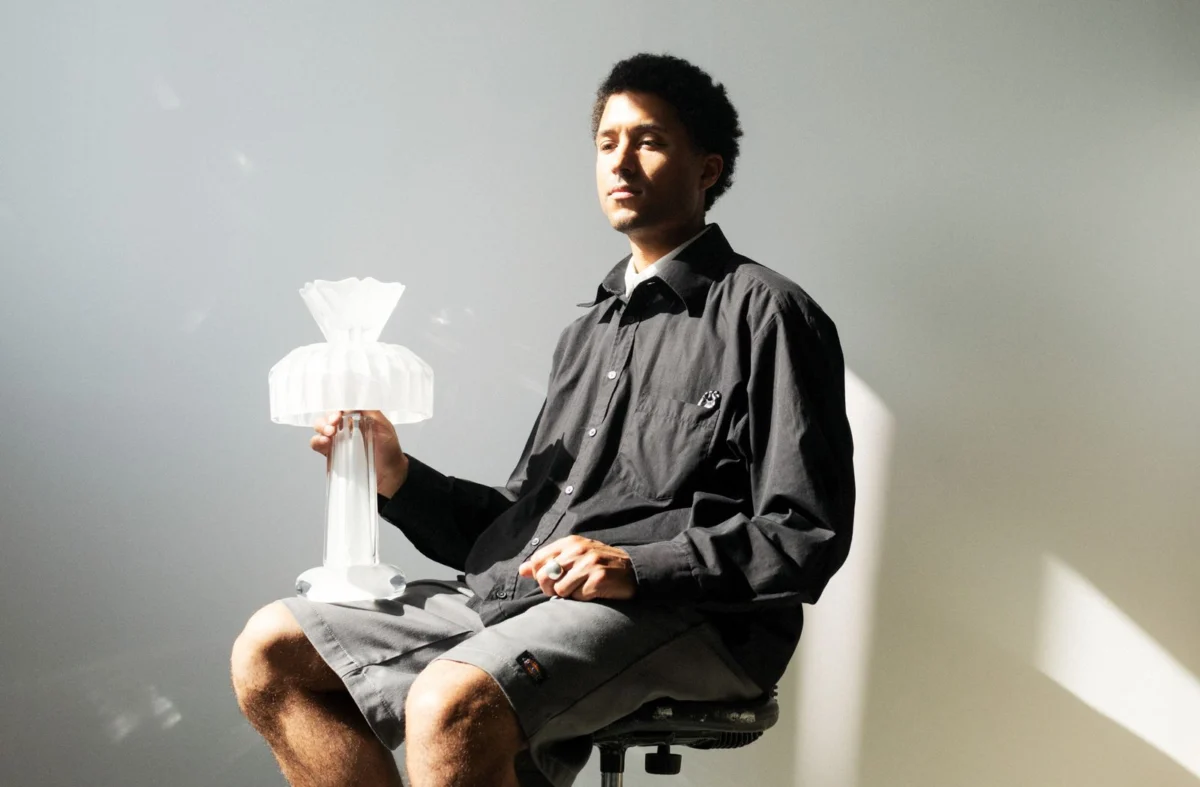
Published on September 3, 2026, Dwell’s annual "The Dwell 24" list, a highly anticipated showcase of emerging talent shaping the future of design, has this year cast a spotlight on "Intentional Ornamentation." This theme signals a definitive departure from the minimalist austerity that has dominated interior aesthetics for decades, embracing a rich tapestry of personal narratives, cultural heritage, and profound emotional resonance within functional art. The 2026 selection highlights five visionary designers and studios whose work transcends mere utility, infusing objects with deeper meaning and intricate detail, thereby transforming domestic spaces into curated reflections of identity and history.
The Curatorial Vision: Embracing Narrative and Heritage in Modern Design
"Intentional Ornamentation" as a theme for Dwell 24: 2026 is not merely a stylistic trend but a philosophical pivot within the design world. It acknowledges a growing desire among consumers and creators alike for objects that tell stories, evoke memories, and carry cultural weight, contrasting sharply with the mass-produced, transient items of the past. Dwell, renowned for its commitment to modern architecture and design, positions this selection as a forward-looking forecast, identifying innovators who are redefining the relationship between people and their living environments. The featured designers — Bechara Maalouf, Realm, Simon Skinner, Studio Sour, and Yoonjeong Lee — exemplify this shift by weaving personal histories, cultural symbols, and unconventional inspirations into their meticulously crafted pieces. This movement suggests a broader societal trend towards valuing authenticity, bespoke craftsmanship, and the emotional connection embedded in everyday objects.
The landscape of contemporary design, often criticized for its homogeneity and disposability, is now witnessing a powerful resurgence of individuality and depth. According to a hypothetical statement from Dwell’s editorial team, "The Dwell 24: Intentional Ornamentation 2026 champions designers who dare to imbue their creations with soul, challenging the notion that modern design must be devoid of embellishment. These artists demonstrate that true innovation lies in crafting objects that resonate on a deeply personal and cultural level, making each piece a testament to human experience and a valuable heirloom for future generations." This sentiment underscores a strategic move by Dwell to not just report on trends but to actively shape the discourse around design’s evolving purpose.
Bechara Maalouf: Lebanon’s Enduring Spirit Captured in Light
From his New York City studio, Bechara Maalouf presents work deeply rooted in his Lebanese heritage, particularly drawing inspiration from his family home. Maalouf’s journey from studying industrial design at the University of Michigan to embracing a more artistic, collectible approach is illustrative of the broader shift Dwell highlights. He deliberately moved away from the "disposable" commercial sector, seeking to create pieces with "deeper personal meaning." His designs serve as a powerful conduit for cultural expression and remembrance, especially poignant given the ongoing geopolitical challenges affecting Lebanon.
Maalouf’s MP01: Cherries lamp stands as a prime example of his philosophy. The lamp reinterprets the wrought-iron window grilles common in Lebanese architecture, transforming them into intricate stainless-steel lattices. This structural element, often overlooked, becomes a focal point, symbolizing protection, beauty, and the enduring craftsmanship of his homeland. Adding "an almost whimsical quality," as Maalouf describes it, are tiny flowers, fruits, and flies—elements directly inspired by the orchard surrounding his family home. The lamp’s dimmer switch, a glossy resin cherry, is not just functional but a playful "Cherry Memory Protector," a tactile reminder of cherished moments and the vibrant natural beauty of Lebanon. This fusion of industrial materials with organic, nostalgic motifs creates a dialogue between tradition and modernity, a hallmark of intentional ornamentation. Maalouf articulates his motivation, stating, "Sharing its beauty has become important to me. In doing this work, the connection has only grown stronger, and in some ways that makes it hurt a little bit more." This profound statement reveals how design can serve as a personal act of cultural preservation and a response to adversity, transforming pain into artistic expression. His work resonates with a growing global audience seeking design that carries narratives beyond aesthetic appeal, particularly those that speak to resilience and identity in the face of conflict.
Realm: Mythical Narratives and Gothic Grandeur
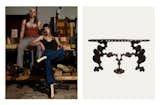
In Baltimore, Maryland, the design duo Ian Murphy and Stevie Pniewski, founders of Realm in 2023, are carving a niche with contemporary furniture that marries dark fantasy, ancient crafts, and Gothic architecture. Their collaboration is a synergy of Murphy’s woodworking expertise and Pniewski’s background in jewelry making and upholstery, resulting in pieces that are both functional and dramatically sculptural. Their initial foray into design was driven by a desire to infuse their own home with a "mischievous tone," which quickly evolved into an atelier dedicated to "ritualizing the domestic setting but defy the ordinary," as Murphy explains.
The Obsidian Seraphim table exemplifies Realm’s distinctive aesthetic. Carved from oxidized sapele mahogany, the table is an explicit "ode to the seraphim," the six-winged, fiery angels from medieval Christian theology. Its design captures the ethereal yet powerful essence of these celestial beings: the legs flare out dramatically, evoking wings poised for flight, while "talon-like feet claw the floor," suggesting both grace and a primal connection to the earth. The inspiration for this piece extends beyond religious iconography, drawing from the baroque- and Victorian-era console tables displayed at Baltimore’s Walters Art Museum. This blend of historical grandeur with fantastical elements creates an object that is both familiar in its form and otherworldly in its execution. Murphy encapsulates their design philosophy by stating, "We try to think about different spaces that might exist in an alternate reality." Realm’s work taps into a deep human fascination with mythology and the sublime, transforming everyday furniture into artifacts of a fantastical realm. This approach aligns perfectly with intentional ornamentation by embedding rich symbolic narratives and intricate sculptural details into functional pieces, challenging conventional notions of domestic aesthetics and inviting users into a story.
Simon Skinner: The Poetics of Repurposed Glass
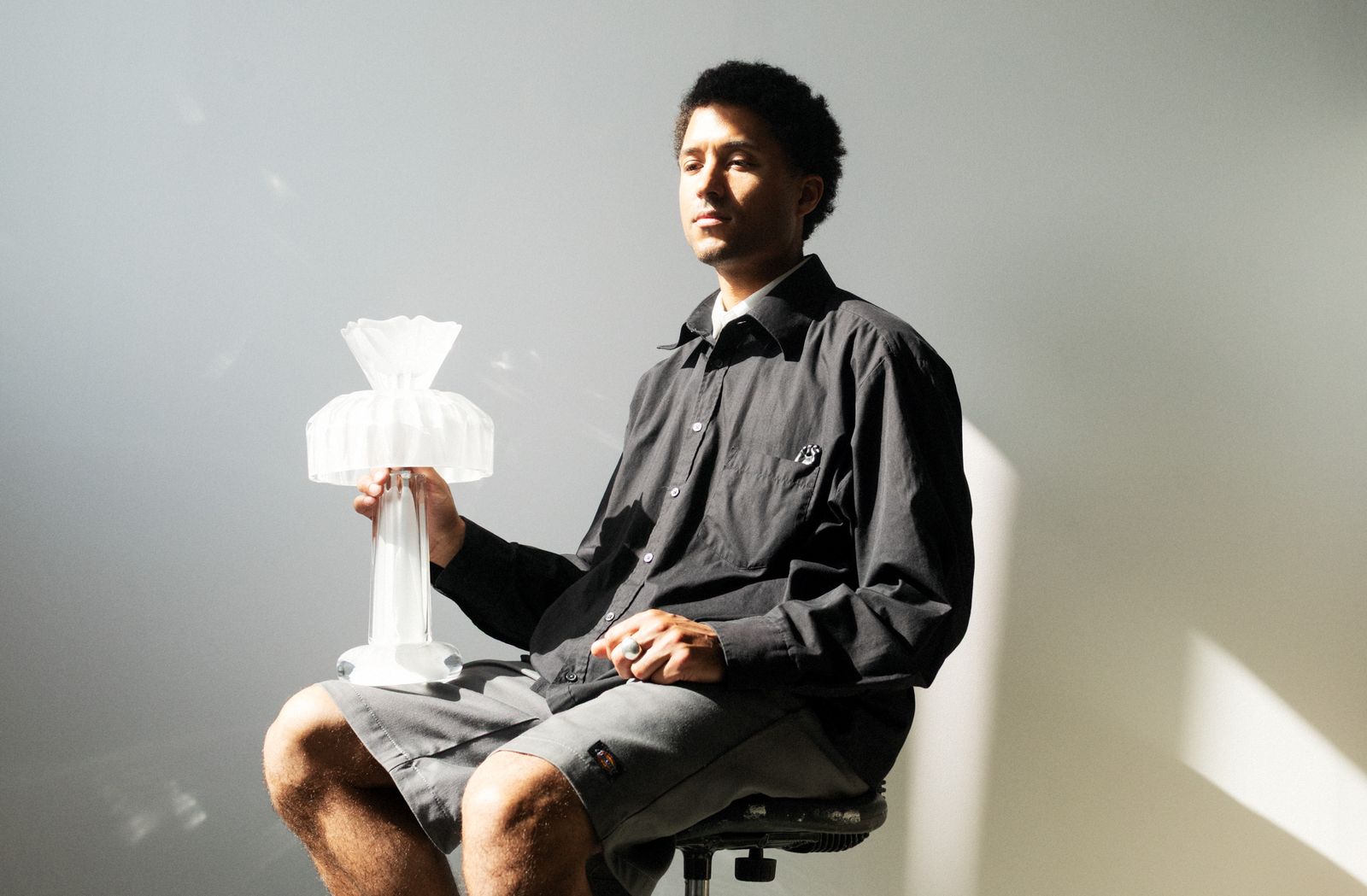
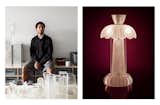
Stockholm-based designer Simon Skinner’s work is a masterclass in "reconfiguring familiar forms in ways that change how they are perceived." His latest collection, "Buké," is a testament to this philosophy, transforming disparate vintage glass objects into cohesive and captivating lighting compositions. Skinner’s process is as meticulous as it is imaginative: he first amasses a diverse collection of glass items—ashtrays, vases, and bowls—each carrying its own "character and history." He then arranges these found objects, meticulously cutting, grinding, and polishing them to remove imperfections. A final sandblasting treatment unifies the surfaces, creating a frosted, softened finish that gives the composite pieces a harmonious and sophisticated appearance.
The Buké lamp #13 is a prime example of this "Frankensteined beauty." This tabletop light is a sculptural assemblage: a bowl forms the base, a vase serves as the body, a second bowl functions as the lampshade, mirroring the base, and a small candleholder crowns the entire structure. The interplay of different textures from the original pieces, now unified by a similar finish and clear glass tone, creates a visually satisfying arrangement. Skinner’s choice of the name "Buké," a clear nod to "bouquet," emphasizes the idea of a perfectly composed arrangement, where individual elements contribute to a greater, more beautiful whole. His approach is inherently sustainable, giving new life to discarded objects and imbuing them with renewed purpose and aesthetic value. "I’m drawn to materials and objects that carry a certain cultural or historical weight," Skinner explains, highlighting his appreciation for the embedded stories and craftsmanship of vintage items. This commitment to repurposing and narrative-driven design positions Skinner as a leader in the growing movement towards eco-conscious luxury, demonstrating that high design can be both beautiful and responsible. His work signals a significant trend towards valuing provenance and the narrative power of objects in an increasingly mindful consumer landscape.
Studio Sour: Adam Mansour’s Legacy of Palestinian Resilience
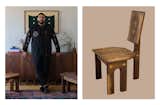
Adam Mansour, the Chicago-based designer behind Studio Sour, channels both profound pride in his Palestinian heritage and deep sorrow over the destruction impacting his ancestral homeland into his "Future Relics" collection. Founded during the pandemic, Studio Sour quickly became a vehicle for Mansour to honor his family and translate traditional Islamic architectural forms into contemporary furniture. This collection stands as a powerful act of cultural affirmation and preservation, demonstrating how design can respond to complex sociopolitical realities.
The Sukar chair is a poignant illustration of Mansour’s vision. It not only incorporates a traditional Palestinian embroidery motif as an ornamental detail but ingeniously integrates it as functional joinery, merging aesthetic beauty with structural integrity. This seamless integration speaks to the depth of Mansour’s research and his commitment to authentic cultural representation. "I wanted to make work that reminds me of home," Mansour states, reflecting his personal connection forged through childhood visits to Palestine while growing up in the U.S. His material preference for walnut, which he confesses to being "a glutton for," often paired with cherry or maple accents, adds a rich, warm palette to his designs, evoking the natural beauty and artisanal traditions of the Levant. The inspiration for his work is deeply personal and communal; a family member’s recent advice, "If one day someone associates Palestine with a beautiful piece of furniture, then you have lived a fulfilled life," serves as a guiding principle. Mansour’s presentation of this impactful collection at ICFF 2026’s Look Book design exhibition underscores its significance within the broader design community, highlighting the increasing importance of cultural identity and social commentary in contemporary furniture design. Studio Sour’s work is a testament to design’s capacity to preserve, honor, and project a powerful sense of identity and hope amidst adversity.
Yoonjeong Lee: The Quiet Allure of the Background Object
From Seoul, South Korea, designer Yoonjeong Lee offers a distinctive perspective on "objects that stay in the background." Her furniture and hardware pieces challenge the conventional hierarchy of design, where objects often compete for attention. Lee’s work, primarily utilizing molten metal, aims to preserve the material’s "thick, viscous quality," resulting in forms that appear soft and organic, as if they have only just settled into their final shape. This fluidity extends to her creative process; Lee rarely sketches, moving directly from idea to fabrication, allowing her hands to "lead before my mind does." This intuitive approach results in pieces that feel naturally formed and inherently sculptural.
Her ongoing "Mold on Wall" hooks series is a fascinating exploration of overlooked beauty. Lee found inspiration in the "unruly form and shifting colors" of mold, transforming this often-maligned natural phenomenon into elegant, functional wall hooks. Each hook is individually striking, possessing a unique organic shape, yet they are designed to "recede when exhibited alongside larger objects." This paradoxical quality is central to Lee’s philosophy: she embraces the subtle impact, believing that true connection occurs when an object is discovered rather than overtly demanding attention. "When someone happens to notice one or takes the time to look for it," she explains, "that’s the moment when we can affect each other." This philosophy speaks to a refined aesthetic that values contemplation and serendipitous discovery. In a world saturated with visual noise, Lee’s work offers a refreshing counterpoint, emphasizing the profound beauty found in the quiet, understated details. Her intentional ornamentation is not about extravagance, but about the nuanced beauty of form and material, inviting a deeper, more mindful engagement with the objects that populate our daily lives.
The Broader Implications for Contemporary Design
The collective vision of the designers featured in Dwell 24: Intentional Ornamentation 2026 points towards a significant evolution in contemporary design. This selection underscores a broader industry movement away from transient, mass-produced items towards objects imbued with lasting value, personal significance, and cultural depth. The emphasis on narrative, heritage, and emotional connection transforms design from mere aesthetics into a powerful tool for storytelling, identity expression, and even social commentary.
These designers are not just creating furniture or lighting; they are crafting "future relics," as Adam Mansour aptly describes his own collection. They are demonstrating that design can be a vehicle for cultural preservation (Maalouf, Mansour), a channel for mythological exploration (Realm), a practice in sustainable repurposing (Skinner), and an art of subtle, profound presence (Lee). The increasing demand for unique, handcrafted pieces reflects a consumer shift towards valuing authenticity, provenance, and the ethical dimensions of production. The digital age, with platforms like Instagram where designers like these actively share their process and inspirations, has also played a crucial role in amplifying their voices and connecting them directly with a global audience hungry for meaningful design. The "Intentional Ornamentation" trend signifies a richer, more thoughtful future for interior design, one where every object in a home is chosen for its story, its craftsmanship, and its ability to resonate deeply with its inhabitants. The Dwell 24: Intentional Ornamentation 2026 serves as a powerful declaration that the future of design is not just about what looks good, but what feels right, what connects us, and what endures.