Jia Lissa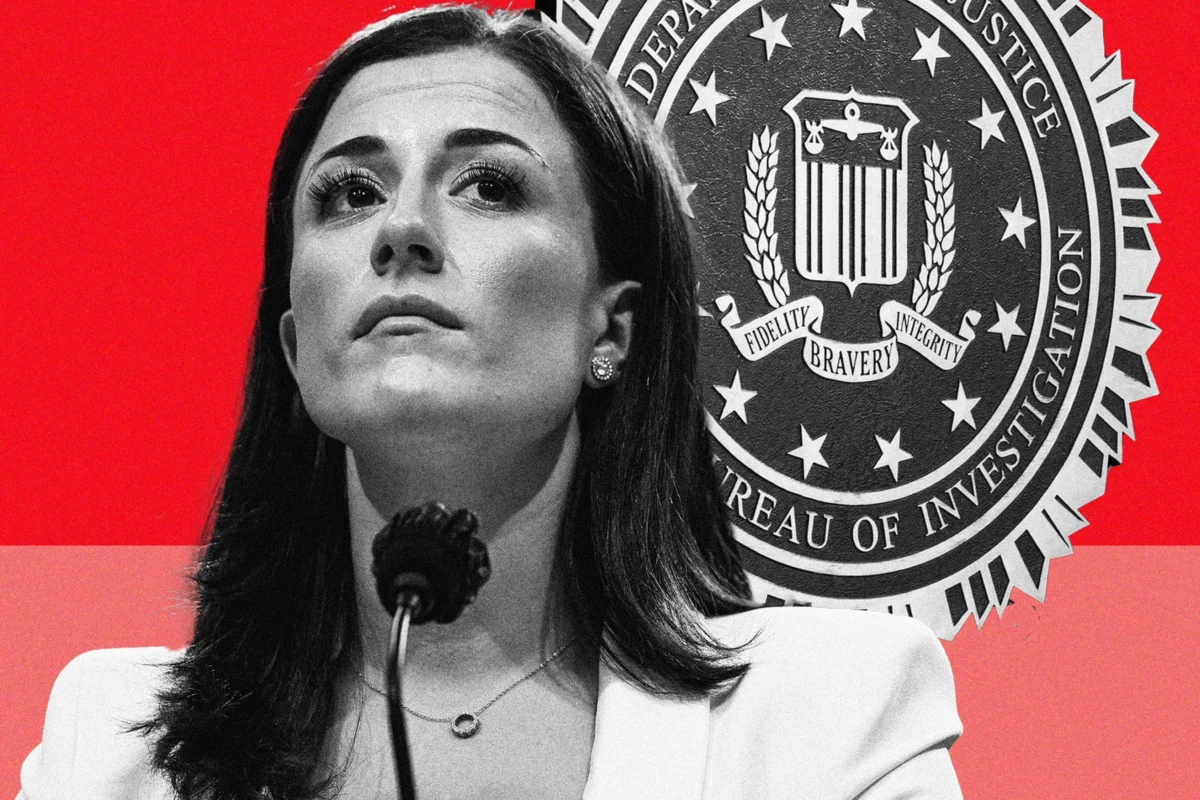
Federal prosecutors are actively weighing potential perjury and obstruction of justice charges against Cassidy Hutchinson, a former White House aide and a pivotal witness in the congressional investigation into the January 6, 2021, Capitol riot. This significant development, confirmed by two sources familiar with the ongoing matter, marks an intensified focus by the Justice Department on Hutchinson’s testimony, which dramatically implicated then-President Donald Trump in the events surrounding the insurrection. The deliberations suggest the Justice Department’s intent to proceed, though prosecutors are not expected to seek an indictment from a federal grand jury in Washington until after the upcoming midterm elections.
Hutchinson, who served as an aide to former White House Chief of Staff Mark Meadows, garnered national attention for her compelling and often graphic testimony before the House Select Committee investigating the January 6 attack. Her accounts painted a vivid picture of a White House in chaos and a president allegedly aware of the potential for violence among his supporters, even encouraging them to march to the Capitol despite knowing many were armed. Among her most explosive claims was the recounting of an alleged altercation in the presidential limousine, where Trump reportedly lunged at a Secret Service agent after being told he could not join his supporters at the Capitol.
However, the foundation of Hutchinson’s testimony has come under increasing scrutiny by federal investigators. In recent months, prosecutors within the Justice Department have focused on significant discrepancies and uncorroborated elements of her account. Specifically, the Special Counsel Jack Smith’s team, tasked with investigating various aspects of the January 6 events, reportedly did not corroborate much of Hutchinson’s testimony to the committee. Compounding this, the Secret Service has consistently denied any physical altercation in the presidential limo, directly contradicting a key component of her public statements.
The Genesis of Scrutiny: Discrepancies and Referrals
The Justice Department’s intensified interest in Hutchinson’s statements stems from a meticulous comparison of transcripts from her multiple interviews with the House Select Committee and her subsequent testimony to Special Counsel Jack Smith’s team. Prosecutors are reportedly attempting to construct a case based on how her testimony may have evolved or contradicted itself across these various official proceedings. This investigative approach seeks to identify material falsehoods or inconsistencies that could meet the high legal bar for perjury or obstruction of justice.
A particular point of interest for prosecutors is Hutchinson’s assertion that she drafted a critical statement on a notecard for President Trump to release during the riot. This claim has been directly disputed by former Trump White House counsel Eric Herschmann, who has publicly stated that he was the author of that note. Such a discrepancy, if proven to be a deliberate misrepresentation by Hutchinson, could be interpreted as an attempt to inflate her role or mislead investigators about critical events and communications during the height of the Capitol attack. The veracity of who penned this specific note, and Hutchinson’s knowledge of its true authorship, forms a significant piece of the ongoing prosecutorial inquiry.
The grand jury investigation gained significant momentum following a criminal referral from Representative Barry Loudermilk, a Georgia Republican. Loudermilk, who has been a vocal critic of the January 6 Committee investigation for years, initiated the referral. In an unusual procedural move, this referral was assigned to the Civil Rights Division at the Justice Department, rather than the U.S. Attorney for the District of Columbia or the Criminal Division, which typically handles public corruption cases. This assignment has drawn attention due to the Civil Rights Division’s specific mandate, which is generally confined to cases with a nexus to civil rights violations, and its leadership by Harmeet Dhillon, a known Trump loyalist who has reliably advocated for the Trump administration’s prosecutorial agenda.
Cassidy Hutchinson’s Pivotal Role in the January 6 Narrative
Cassidy Hutchinson emerged as a central figure in the January 6 investigation in the summer of 2022 when she delivered explosive public testimony before the House Select Committee. As a close aide to Mark Meadows, she offered an insider’s perspective on the chaotic final weeks of the Trump administration, providing firsthand accounts and second-hand information about the president’s mindset and actions leading up to and during the riot.
Her testimony, delivered with poise and conviction, included several bombshell revelations:
- Trump’s Knowledge of Armed Supporters: Hutchinson testified that Trump was aware that many of his supporters gathered for his rally on January 6 were armed with weapons, including firearms, knives, and spears, yet he still encouraged them to march to the Capitol. She recounted Trump reportedly saying, "I don’t care that they have weapons. They’re not here to hurt me."
- The "Limo Incident": Perhaps the most dramatic claim was her recounting of a conversation she had with Anthony Ornato, then the deputy chief of staff for operations, about Trump’s attempt to join the march to the Capitol. According to Hutchinson, Ornato told her that Trump became enraged when his Secret Service detail refused to drive him to the Capitol, reportedly lunging at his lead Secret Service agent, Bobby Engel, and attempting to grab the steering wheel of the presidential SUV. Both Ornato and Engel reportedly disputed this account to the Secret Service, and the Secret Service later issued a statement indicating they were prepared to rebut the claim under oath.
- Meadows’s Inaction: Hutchinson described Meadows’s apparent indifference and lack of urgency during the riot, portraying him as largely disengaged as the Capitol was breached.
- Disputed Notecard Authorship: Her claim of drafting a statement for Trump urging peace during the riot, later contested by Eric Herschmann, also became a point of contention.
Hutchinson’s testimony was widely praised by members of the January 6 Committee and anti-Trump factions, who viewed her as a courageous whistleblower providing critical insights into the events of that day. Conversely, Trump and his allies vehemently denied her claims, accusing her of lying and fabricating stories to gain public attention. In 2023, Hutchinson, now 29, published a memoir titled "Enough," detailing her experiences in the Trump administration and her decision to testify, which kept her in the public eye. Since then, she has maintained a relatively low profile.
Legal Challenges and the High Bar for Perjury
Prosecuting a case of perjury or obstruction of justice, particularly against a high-profile witness in a politically charged investigation, presents significant legal challenges. Legal experts, including former U.S. Attorney Joyce Vance, emphasize the stringent requirements for a successful perjury conviction. To prove that Hutchinson lied to Congress, prosecutors would need to demonstrate beyond a reasonable doubt that:
- She lied: The statement in question was factually false.
- She did so knowingly: She knew the statement was false at the time she made it. This element of intent is often the most difficult to prove.
- It materially impacted the investigation: The false statement was significant and capable of influencing the outcome or direction of the investigation.
Some Justice Department officials reportedly harbor skepticism about the viability of a criminal case against Hutchinson, precisely because of this high evidentiary bar. The nuanced nature of memory, perception, and second-hand accounts can complicate proving deliberate falsehoods "beyond a reasonable doubt." Furthermore, demonstrating that any alleged lie "materially impacted" an investigation as sprawling as the January 6 inquiry can also be complex.
Obstruction of justice charges, while related, focus more on actions taken to impede or influence an investigation. If Hutchinson’s testimony was found to be intentionally misleading, aimed at misdirecting investigators or obscuring facts, it could potentially fall under this umbrella. However, proving such intent also requires compelling evidence.
Political Undercurrents and Broader Implications
The investigation into Cassidy Hutchinson unfolds against a backdrop of intense political polarization and accusations of weaponizing the Justice Department. The original article notes that this grand jury investigation is perceived by some as "the latest example of the Justice Department pursuing criminal cases against Trump’s perceived political enemies." This sentiment is exacerbated by revelations that Trump allegedly fired former Attorney General Pam Bondi in April, partly due to her perceived slowness in initiating such cases against his political adversaries.
The assignment of Loudermilk’s criminal referral to the Civil Rights Division, rather than a more conventional division for public corruption cases, has further fueled concerns about the political motivations behind the inquiry. The Civil Rights Division, under the leadership of Harmeet Dhillon—a known Trump loyalist—is typically focused on enforcing laws against discrimination and protecting fundamental civil liberties. Its involvement in a potential perjury case against a key January 6 witness, particularly one who testified against Trump, is seen by some as an unorthodox move that could signal political influence over prosecutorial decisions. Critics argue that this assignment risks politicizing a division traditionally seen as insulated from such partisan pressures, potentially undermining public trust in the DOJ’s impartiality.
Should charges ultimately be brought against Hutchinson and, more significantly, lead to a conviction, the implications would be far-reaching:
- Credibility of the January 6 Committee: A successful prosecution could cast a shadow over the overall credibility of the House Select Committee’s findings and the reliability of some of its star witnesses. This would be a significant victory for those who have consistently dismissed the committee’s work as politically motivated or flawed.
- Political Fallout for Trump Critics: It could embolden Trump and his allies, who have long claimed that the January 6 investigation was a "witch hunt" built on false pretenses and unreliable testimony. Conversely, it would be a severe blow to those who relied on Hutchinson’s testimony to underscore the severity of Trump’s actions and culpability.
- Chilling Effect on Future Whistleblowers: The potential prosecution of a key witness, regardless of the outcome, could create a chilling effect, deterring future whistleblowers or insiders from coming forward with sensitive information in high-stakes political investigations.
- Justice System Integrity: The entire process will be closely watched as a test of the Justice Department’s ability to navigate politically sensitive cases while upholding principles of fairness and impartiality. The perception of whether justice is being served or if political retribution is at play will have lasting consequences for public confidence in the legal system.
As federal prosecutors continue their deliberations, the future of Cassidy Hutchinson and the narrative surrounding the January 6 Capitol riot hang in a precarious balance. The decision whether to pursue perjury and obstruction charges against her will not only determine her personal legal fate but also send a powerful message about accountability, truth, and the enduring political divisions within the nation. Neither the Justice Department nor Hutchinson and her legal team responded to requests for comment on the ongoing investigation. The initial report of the Justice Department’s interest in charging Hutchinson was first published by Punchbowl News.