admin
admin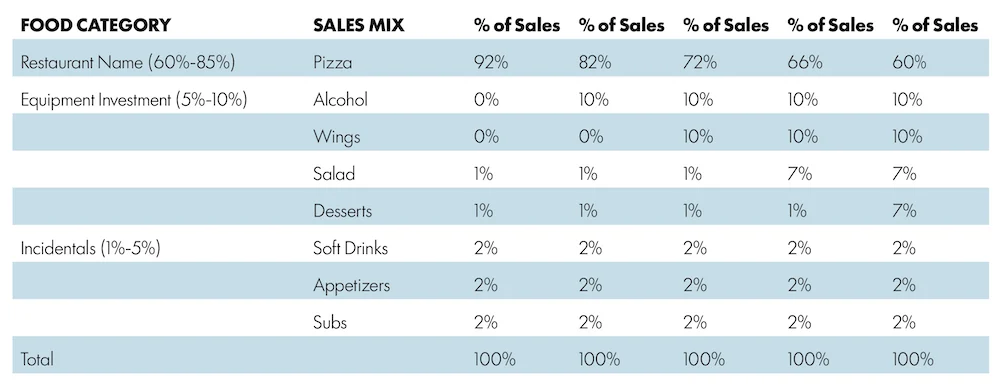
The restaurant industry, particularly the highly competitive pizzeria segment, constantly seeks strategies to optimize profitability and sustain growth in an evolving market. A fundamental yet often underutilized tool in this pursuit is meticulous sales mix analysis. This analytical approach, which involves dissecting total sales by product category, provides actionable insights that inform menu development, operational adjustments, and marketing campaigns. Understanding the precise percentage contribution of each menu item or category to overall revenue is the initial step for any establishment aiming to strategically manage its profit margins, inventory, and customer engagement.
Unpacking the Fundamentals of Sales Mix Analysis
At its core, sales mix analysis quantifies the proportion of total revenue generated by each distinct product or service category within an establishment. For a pizzeria, this begins with a foundational question: "What percentage of your sales are pizza sales?" The methodology is straightforward: divide the sales generated by a specific category by the total sales for a given period. For instance, if a pizzeria records $15,000 in pizza sales during a week where total revenue reached $20,000, then pizza accounts for a significant 75% of the sales mix. This calculation is then extended to all other sales categories, such as appetizers, salads, beverages, or desserts, to construct a comprehensive sales mix profile. This data provides a clear snapshot of customer purchasing habits and the relative importance of different menu segments to the business’s financial health.
Businesses like PizzaMan Dan’s utilize such charts to visualize their sales distribution, often revealing areas of strength and opportunities for improvement. While the calculation itself is simple, its implications are far-reaching, influencing everything from ingredient procurement and staffing levels to menu pricing and promotional strategies. Sophisticated point-of-sale (POS) systems are invaluable in automating this data collection, providing granular insights into hourly, daily, weekly, or monthly sales trends across categories. This analytical rigor moves beyond anecdotal observations, offering a data-driven foundation for strategic decision-making in a fast-paced environment.
Crafting an Optimal Sales Mix: Brand Identity and Strategic Investment
The pursuit of an optimal sales mix is deeply intertwined with a restaurant’s brand identity and its willingness to make strategic capital investments. For a brand like PizzaMan Dan’s, where "pizza" is explicitly part of the name, customer expectations are firmly set. This branding inherently steers a significant portion of sales towards the core product. Industry analysis suggests that pizzerias with "pizza" in their name can anticipate between 60% and 85% of their total sales stemming from pizza items. This intrinsic brand positioning acts as a powerful driver, regardless of supplementary menu offerings or marketing efforts. Should an establishment wish to elevate another food item to a similar sales prominence, incorporating it into the brand name, such as "John’s Pizza & Wings" or "John’s Pizza and Bar," can recalibrate customer expectations and significantly shift the sales mix over time.
Beyond brand nomenclature, strategic equipment investment plays a pivotal role in reshaping sales distribution. While pizza remains the dominant category for pizzerias, other food categories often hover between 1% and 5% of sales, largely categorized as "incidentals." However, a targeted capital outlay can dramatically alter these percentages. Dan Collier, founder of PizzaMan Dan’s, provides compelling real-life examples of this phenomenon:
- Adding a Bar: Investing in a full bar setup can increase alcohol sales from a modest 2%-3% to a robust 10%-15% of total sales. This not only introduces a high-margin revenue stream but also enhances the dining experience for customers.
- Incorporating Fryers: The installation of commercial fryers can boost appetizer and wing sales from 2%-4% to 10%-15%, catering to evolving consumer preferences for shareable plates and diverse snack options.
- Establishing a Salad Bar: A well-stocked salad bar, often requiring specific refrigeration and display equipment, can elevate salad sales from 1%-2% to 5%-7%, appealing to health-conscious diners.
- Introducing an Ice Cream Counter: A dedicated ice cream or dessert counter can see dessert sales rise from 1%-2% to 5%-7%, providing an enticing conclusion to the meal.
It is crucial to note that while these investments boost specific categories, they concurrently lead to a proportional decrease in the percentage of primary sales (e.g., pizza). However, as Collier’s experience demonstrates, this percentage shift does not necessarily equate to a decline in the actual dollar sales of the primary category; rather, it often signifies an overall increase in total revenue due to an expanded customer base and higher average check sizes.

A Case Study in Strategic Diversification: The Bar Investment
The decision to diversify the menu through capital investment often stems from a recognition of changing market dynamics. Dan Collier observed that his traditional pizzeria model faced increasing competition from third-party delivery services, which made a vast array of food options readily available, and a proliferation of new dine-in restaurants. This intensified competitive landscape threatened to erode traditional pizzeria sales.
In response, Collier implemented a strategic move: he added a bar to an existing PizzaMan Dan’s location. This single operational tweak yielded remarkable results, doubling weekly sales from $20,000 to $40,000. Encouraged by this success, Collier integrated a bar into the design of his subsequent pizzeria openings. The impact was immediate and substantial, with new locations featuring a bar opening at approximately $60,000 in weekly sales, significantly outperforming traditional openings that typically started around $40,000 per week. This chronology highlights a proactive approach to market challenges, demonstrating how a well-considered investment can not only bolster existing revenue streams but also accelerate the growth trajectory of new ventures. The implication here is clear: while pizza remains the core, offering a more comprehensive dining and social experience can unlock substantial growth in a saturated market.
Tactical Management of Sales Mix: Expanding Value and Innovating Offerings
Effective sales mix management extends beyond initial strategic investments; it involves continuous monitoring and tactical adjustments to maximize profitability and customer satisfaction. A common misconception is that increasing sales in ancillary categories might cannibalize primary product sales. However, experience, particularly at PizzaMan Dan’s, reveals a different outcome: each time equipment was added to boost another sales category, while the percentage of pizza sales might have declined, the actual dollar amount spent on pizza frequently increased. This phenomenon underscores the concept of adding value to the customer experience. By offering a broader array of choices, a pizzeria can attract new customers, encourage existing customers to visit more frequently, and increase their average spend per visit, resulting in a net gain for overall sales.
The four categories identified by PizzaMan Dan’s—alcohol, wings, salads, and desserts—have consistently proven to be the most effective additions for enhancing customer experience and driving overall sales. These items typically boast healthy profit margins and complement the core pizza offering without fundamentally altering the pizzeria’s identity.
Beyond major investments, attention to "incidentals"—any food category contributing less than 2% of total sales—is crucial. These low-performing categories represent an opportunity for optimization. Instead of eliminating them, improving their offerings can often boost their share of total sales without requiring significant capital expenditure. This could involve ingredient upgrades, recipe refinement, or more prominent menu placement.
The Pizza Burger: A Real-life Example of Menu Innovation
The challenge of stagnant sales in a particular category can spark innovative solutions. Dan Collier faced this with his sub/sandwich sales, which stubbornly remained below 2% of total sales despite various attempts to boost them. Concurrently, he observed the escalating prices of fast-food burgers in his market, averaging $6.50 due to rising minimum wages. This confluence of factors led to the creation of the "Pizza Burger." This inventive menu item leveraged existing pizza ingredients, allowing for a competitive selling price of $5 while maintaining a favorable food cost. The Pizza Burger quickly resonated with customers, becoming the No. 1 seller in the sub/sandwich category and effectively doubling its contribution to 4% of total sales. This case exemplifies how creative menu engineering, informed by market analysis and operational constraints, can revitalize underperforming categories and significantly impact the overall sales mix. It also highlights the importance of adapting to external economic pressures, such as minimum wage increases, through strategic pricing and product development.

Marketing Based on Your Sales Mix: Reinforcing the Core Brand
A critical aspect of sales mix management is an integrated marketing strategy that consistently reinforces the primary product while promoting diversified offerings. For a pizzeria, the core identity is "first and foremost a pizzeria." This means that ancillary items should be marketed as enhancements to the pizza experience, not as standalone competitors to specialized establishments. For example, a bar within a pizzeria is designed for customers to enjoy their pizza with a cocktail or a pitcher of beer, not primarily as a destination for drinks alone. Similarly, hot wings are positioned as an appetizer to precede the pizza, not as a challenge to dedicated wing restaurants. This approach ensures brand consistency and leverages the existing customer base’s primary interest.
Marketing efforts should always feature the pizza prominently, even when promoting other menu items. This strategy ensures broad relevance. If marketing focuses solely on the salad bar, a significant portion of potential customers primarily interested in pizza may disregard the message. However, by marketing the salad bar as an addition to the pizza experience—e.g., "Add a fresh salad from our new salad bar to your pizza order"—the message becomes relevant to pizza customers, effectively expanding the reach and impact of the promotion. This method maximizes marketing spend by tying all promotions back to the top-selling product.
The Carpinteria Salad Bar: A Lesson in Integrated Marketing
The power of integrated marketing is vividly illustrated by Dan Collier’s experience with a salad bar at his Carpinteria, California, location. This new establishment was launched with an expansive salad bar, boasting double the selections of other PizzaMan Dan’s locations and outperforming competitors in variety. In its first year, salad sales accounted for a respectable 5% of total sales. In the second year, an aggressive social media campaign was launched, featuring "beautiful pictures" of the salads. Surprisingly, despite the visually appealing campaign, salad sales remained stagnant at 5%.
Frustrated by the lack of growth, Collier re-evaluated his marketing approach. He shifted the focus, presenting the same high-quality salads but strategically placing them next to the pizza in all marketing materials. This subtle but significant change in presentation resonated immediately with the customer base. Over the subsequent three months, salad sales surged to 10% of total sales, and crucially, total restaurant sales increased by over 10%. This outcome underscores a fundamental principle of marketing in the restaurant industry: even when promoting supplementary items, the core offering must remain the focal point to capture the attention and interest of the primary customer demographic.
Broader Implications and Future Outlook
The insights derived from Dan Collier’s strategies at PizzaMan Dan’s offer invaluable lessons for restaurant operators across the industry. In an increasingly competitive and data-driven landscape, merely selling food is no longer sufficient. Strategic management of the sales mix, informed by detailed analysis and iterative experimentation, is paramount for both existing establishments seeking growth and new ventures aiming for success.
The ongoing evolution of consumer preferences, the proliferation of digital ordering platforms, and fluctuating operational costs (such as minimum wage increases) necessitate a dynamic approach to menu and operations. By understanding how each menu item contributes to the bottom line, operators can make informed decisions about inventory, staffing, pricing, and promotional efforts. Furthermore, the ability to creatively diversify offerings and market them effectively within the context of a strong core brand identity provides a robust framework for long-term sustainability and profitability. The journey of analyzing sales mix is not merely an accounting exercise; it is the first critical step in crafting a compelling customer experience and building a resilient, growing business. Operators who embrace this data-driven mindset and innovate thoughtfully will undoubtedly continue to write their own success stories in the ever-challenging restaurant industry.