admin
admin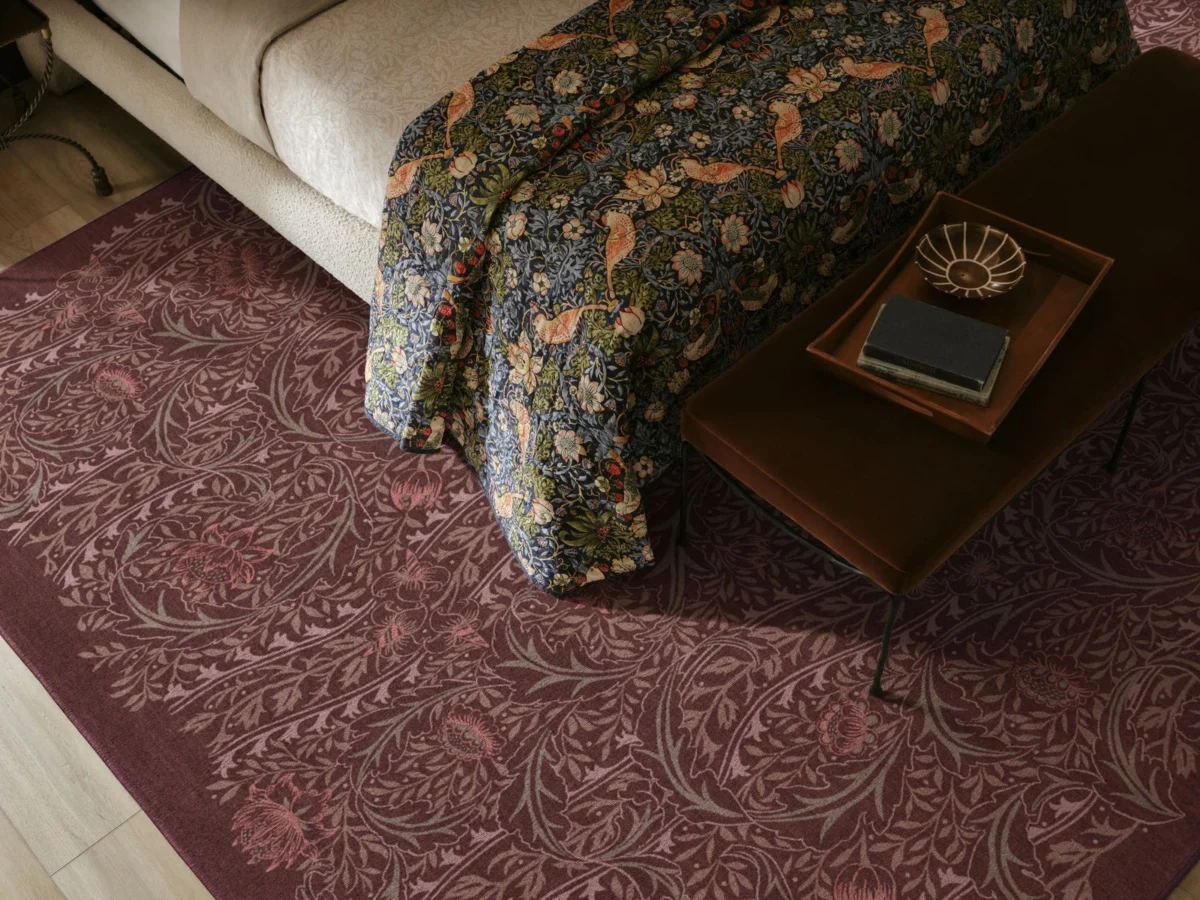
The celebrated Arts & Crafts designer and committed socialist activist, William Morris, championed the profound value of handcraft, advocating for the inherent joy and dignity of labor while drawing boundless visual inspiration from the natural world. Disillusioned by the dehumanizing effects and aesthetic degradation wrought by the Industrial Revolution, Morris fervently called for a return to the ethos of medieval guilds, where skilled craftspeople oversaw every intricate step of design and production. His enduring maxim, "Have nothing in your houses that you do not know to be useful or believe to be beautiful," encapsulates a philosophy that transcends centuries, influencing generations of designers and homeowners alike. Morris himself meticulously furnished his iconic home, The Red House, located just outside London, with bespoke botanical wallpaper, exquisite hand-painted murals, intricate Gothic-inspired woodwork, and luminous stained glass, each element a testament to his holistic design vision.
A prolific and visionary designer, Morris sketched countless ideas and patterns throughout his career, many of which his esteemed brand, Morris & Co., established in 1861, never brought to full production. Today, over 160 years later, these dormant designs are being resurrected and reimagined. Ruggable, the innovative direct-to-consumer (DTC) company renowned for its patented machine-washable rug system—comprising a nonslip rubber pad and a removable, patterned top—is adapting a selection of these previously unproduced archival drawings into a vibrant new body of work. This marks their fourth significant collaboration with the venerable British heritage company, Morris & Co., resulting in "The Morris & Co. x Huntington Collection." This eagerly anticipated collection introduces 26 distinct rugs, each featuring a tapestry of classic Morris patterns, including intricate anemones and delicate bluebells, striking wild tulips, and rich Persian-inspired botanical motifs, all infused with a contemporary sensibility.
William Morris: A Legacy of Beauty, Craft, and Social Vision
To fully appreciate the significance of this new collection, it is essential to delve into the enduring legacy of William Morris. Born in 1834, Morris was a pivotal figure in the Victorian era, a polymath whose influence spanned across textile design, poetry, fantasy writing, translation, and social activism. He was a principal founder of the British Arts & Crafts movement, which emerged in the latter half of the 19th century as a direct reaction against the perceived soullessness and mass-produced mediocrity of industrial manufacturing.
Morris and his contemporaries believed that industrialization had severed the connection between the maker and the object, leading to a decline in aesthetic quality and a devaluation of human labor. He envisioned a society where art was integrated into everyday life, where functional objects were also things of beauty, and where workers found joy and pride in their craft. His commitment was not merely aesthetic but deeply ethical and political; he was a staunch socialist, believing that true reform in art and design could only be achieved through broader societal change. He advocated for a return to pre-industrial production methods, where skilled artisans worked in small workshops, controlling the entire creative and manufacturing process—a direct antithesis to the factory system.
Morris & Co., originally founded as Morris, Marshall, Faulkner & Co., was established to realize these ideals. It produced a wide array of decorative arts, including furniture, stained glass, textiles, wallpaper, and tapestries, all characterized by intricate, nature-inspired patterns, rich colors, and a commitment to quality craftsmanship. Morris’s designs were not merely decorative; they were imbued with storytelling and symbolism, often drawing from medieval romance, mythology, and the flora and fauna of the English countryside. The Red House, designed by Philip Webb for Morris, stands as a living manifesto of the Arts & Crafts movement, a place where every element, from the architecture to the smallest spoon, was carefully considered and handcrafted, reflecting Morris’s belief in a unified aesthetic environment.
The enduring appeal of Morris’s designs, even 150 years later, lies in their timeless quality. As Maria O’Brien, Ruggable’s VP of Global Design, aptly observes, "For me, it comes back to how specific Morris’s eye was. These patterns were rooted in folklore and storytelling, not decoration for its own sake. That specificity is exactly why they hold up now." This inherent depth and narrative quality ensure that his work resonates with contemporary audiences who increasingly seek authenticity and meaningful design in their homes.
Ruggable’s Modern Innovation Meets Timeless Artistry
Ruggable, founded in 2010, carved out a unique niche in the home décor market by addressing a common household challenge: keeping rugs clean. Its innovative two-piece system—a cushioned, non-slip rug pad and a lightweight, removable cover—revolutionized the rug industry by offering consumers the unprecedented convenience of machine-washable rugs. This blend of practicality and style has positioned Ruggable as a leader in adaptable home furnishings, making high-design accessible to busy households.
The collaboration between Ruggable and Morris & Co. is a testament to the universal appeal of Morris’s artistry and Ruggable’s ability to democratize luxury and heritage design. The partnership has been remarkably successful, demonstrating a significant market demand for Morris’s distinctive aesthetic presented in a functional, modern format. Ruggable reports that its previous collaborations with Morris & Co. have collectively sold over half a million rugs, making it the company’s most successful partnership to date. This resounding success underscored a clear consumer appetite, making the development of a new, expanded collection a natural and strategic progression for both brands.
O’Brien highlights a broader shift in consumer preferences: "People are moving toward pieces that feel considered rather than trend-driven, and Morris’s work was built for that kind of permanence long before it was a marketing idea." This observation points to a growing desire among consumers for products that offer lasting value, aesthetic integrity, and a sense of history—qualities inherently present in Morris’s original vision.
The Genesis of The Huntington Collection: From Archive to Home
What distinguishes "The Morris & Co. x Huntington Collection" from its predecessors is its groundbreaking approach: it consists entirely of patterns derived from William Morris’s archival drawings that have never before been produced as commercial products. This represents a profound shift from merely reinterpreting existing iconic patterns to actively expanding the Morris & Co. design canon. As O’Brien states, "We’ve moved from reinterpreting the archive to actually adding to it."
The journey to bring these hidden treasures to light began with O’Brien’s immersive trip to The Huntington Library, Art Museum, and Botanical Gardens in Pasadena, California. The Huntington holds an extensive and invaluable collection of British Arts & Crafts materials, including a significant archive of William Morris’s original works. Within these hallowed halls, O’Brien discovered a trove of material that had remained untouched for over a century and a half: delicate hand sketches, intricate embroidery designs, detailed artwork intended for carpets, and even a minute detail "lifted from a book cover." These forgotten blueprints offered a rare glimpse into Morris’s boundless creative process and his unfulfilled design aspirations.
Upon selection of these archival works, the painstaking process of completion and adaptation commenced. Morris & Co.’s dedicated in-house design team, working from their London studio, meticulously repainted these historical patterns by hand. This crucial step ensured that the integrity, depth, and unique character of Morris’s original artistic intention were faithfully preserved. Claire Vallis, Design Director of Sanderson Design Group (the parent company of Morris & Co.), articulates this delicate balance: "Our designers have effectively picked up the pen laid down by Morris and J. H. Dearle. It’s a remarkable, unspoken exchange across centuries, pushing the boundaries of exquisite U.K. craft to bring these hidden historical treasures into the modern home, as they were meant to be enjoyed."
Following this artistic completion, Morris & Co. collaborated closely with Ruggable’s designers to adapt these intricate, large-scale patterns to the specific requirements of their washable rug system. This involved a meticulous translation of the designs to ensure they retained their visual impact and fidelity when printed on Ruggable’s proprietary materials, while also accommodating the practicalities of machine washing. O’Brien emphasizes the guiding principle throughout this intricate process: "The goal was never to modernize Morris. It was to finish what he started, using the same hand and eye that would have completed the piece originally." This commitment to historical authenticity, rather than contemporary reinterpretation, is what gives "The Huntington Collection" its unique power and resonance.

The Collection’s Offerings and Design Ethos
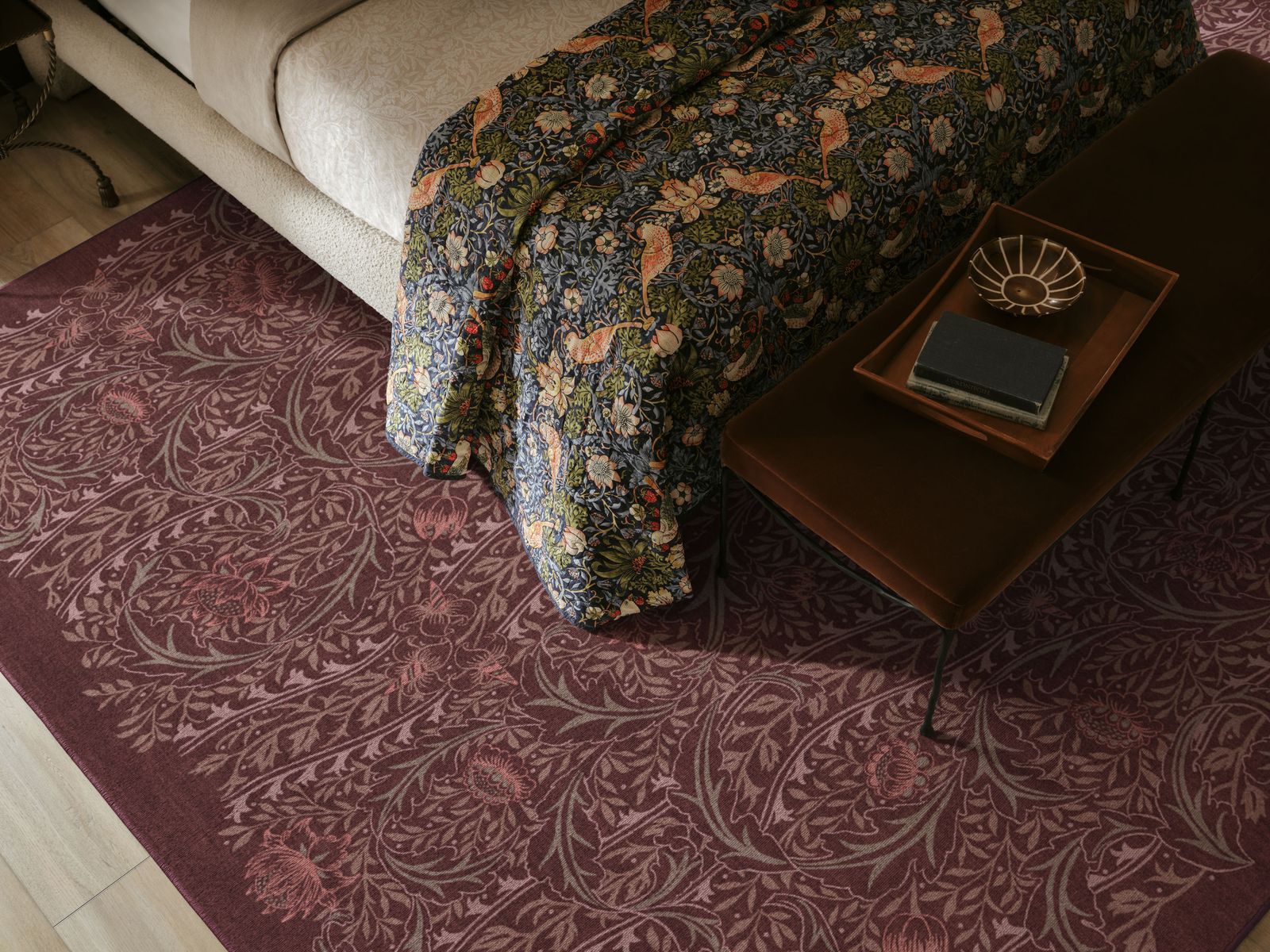
"The Morris & Co. x Huntington Collection" showcases the quintessential organic, floral motifs that are synonymous with William Morris’s aesthetic. The 26 new rug designs are available in a diverse range of sizes, catering to various domestic needs—from expansive area rugs to practical runners and inviting doormats—and feature a spectrum of colorways, spanning from vivid, rich hues to subdued, true neutrals.
Specific examples within the collection highlight the breadth of Morris’s original vision and the careful adaptation by the design teams. The "Woodbell and Anemone" rug, for instance, features an intricately drawn large-scale composition of flowers and leaves, characterized by a symmetrical repeat that is both opulent and orderly. In contrast, the "Wild Tulip and Vine" pattern presents a more subtle yet equally captivating design, with a dense concentration of delicate leaves and small blossoms, evoking the lushness of a hidden garden. Each pattern, regardless of its specific botanical inspiration, speaks to Morris’s profound connection to nature and his ability to translate its organic forms into captivating decorative art.
The seamless integration of these 19th-century designs into 21st-century products, while retaining their timeless appeal, is a testament to Morris’s genius and the thoughtful execution of this collaboration. The collection embodies Morris’s philosophy of marrying beauty with utility, even if the "utility" of machine washability would have been unimaginable in his time. The washable rug system provides a modern solution to the practical challenges of everyday living, making these historically rich designs accessible and maintainable for a contemporary audience.
Broader Implications: Archival Revival in Contemporary Design
The release of "The Morris & Co. x Huntington Collection" arrives at a time when archival design is experiencing a significant resurgence across various industries. Brands are increasingly delving into their historical archives to unearth forgotten designs, reissued classics, and previously unproduced concepts. This trend reflects several underlying shifts in consumer behavior and market dynamics.
Firstly, there is a growing appreciation for authenticity and heritage. In an era saturated with fleeting trends and mass-produced disposables, consumers are seeking products with a story, a sense of provenance, and enduring quality. Archival designs offer a tangible link to history and craftsmanship, providing a counter-narrative to fast fashion and rapid obsolescence. William Morris’s work, with its deep roots in a philosophy of ethical production and timeless beauty, perfectly aligns with this desire for considered, long-lasting pieces.
Secondly, the democratization of design continues to evolve. While Morris initially aimed to make beautiful objects accessible, the handcraft methods he advocated often resulted in products that were expensive and thus exclusive. Modern manufacturing techniques, coupled with innovative business models like Ruggable’s DTC approach, allow for the widespread distribution of designs that were once limited to a privileged few. By adapting these intricate patterns to a washable rug system, Ruggable effectively democratizes access to high-end, classic design, making it practical and affordable for a broader demographic.
Thirdly, the collaboration highlights the fascinating interplay between historical artistry and contemporary convenience. Morris’s intricate patterns, originally conceived for hand-blocked wallpapers or woven textiles, are now meticulously rendered through advanced digital printing technologies onto durable, washable materials. This technological bridge allows Morris’s unfulfilled visions to manifest in ways he could not have foreseen, transforming delicate sketches into resilient, functional home furnishings suitable for the demands of modern family life.
The economic implications for both Ruggable and Morris & Co. are significant. For Ruggable, the continued success of the Morris & Co. partnership reinforces its brand identity as a purveyor of stylish yet practical home solutions, while differentiating it in a competitive market. For Morris & Co., and its parent Sanderson Design Group, these collaborations expand the reach and relevance of their historical archive, introducing Morris’s iconic aesthetic to new generations and ensuring the continued vibrancy of a heritage brand. It also presents a lucrative market for their intellectual property, demonstrating that historical assets can be dynamically re-engaged for contemporary commercial success.
While William Morris himself, a staunch critic of industrial production, might have expressed reservations about the mass-produced nature of these rugs, the spirit of his philosophy—that homes should be filled with objects that are both useful and beautiful—is undeniably upheld. This collection beautifully marries visually arresting patterns with the undeniable modern practicality of a machine-washable rug topper, bringing an "unspoken exchange across centuries" into the heart of the modern home.
Conclusion
"The Morris & Co. x Huntington Collection" stands as a profound testament to the timeless appeal of William Morris’s artistic genius and the innovative spirit of Ruggable. By meticulously unearthing and completing designs that lay dormant for over 150 years within the hallowed archives of The Huntington Library, this collaboration not only expands the celebrated Morris & Co. canon but also offers consumers a unique opportunity to bring a piece of design history into their contemporary living spaces.
Through the dedicated work of designers who have faithfully channeled Morris’s "hand and eye," these intricate botanical patterns, once confined to sketches and unfulfilled aspirations, are now realized as durable, beautiful, and supremely practical rugs. This partnership exemplifies how a deep reverence for historical craft can harmoniously converge with modern innovation, bridging the gap between Victorian ideals of beauty and utility and the practical demands of 21st-century living. The collection ensures that William Morris’s vision for a world enriched by beautiful, handcrafted objects continues to inspire and adorn homes, proving that truly exceptional design transcends the limitations of time and production methods.