admin
admin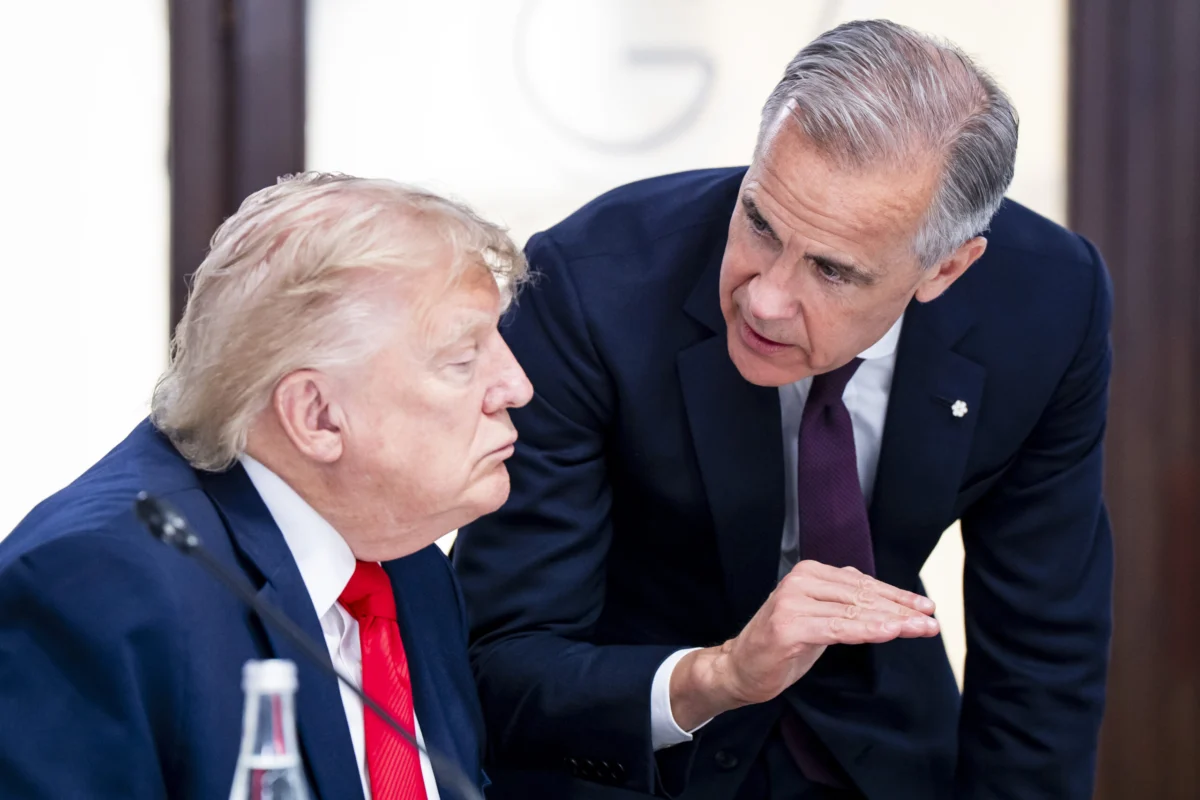
Prime Minister Mark Carney today announced that high-stakes trade negotiations with the United States collapsed at the eleventh hour, citing insurmountable disagreements over the treatment of Canadian auto exports, restrictions on Canada’s independent trade policy, and the protection of Canadian culture and language. The abrupt breakdown shatters a period of cautious optimism that had seen U.S. President Donald Trump momentarily delay tariffs on Canadian goods and even declare a deal was imminent, leaving the future of Canada-U.S. economic relations in a state of precarious uncertainty.
A Precarious Path to Collapse: The Chronology of Recent Negotiations
The road to this sudden impasse has been marked by escalating tensions and fleeting hopes. Trade relations between Canada and the United States, traditionally among the world’s most robust, have been strained since the Trump administration, operating under its "America First" doctrine, began levying tariffs on Canadian goods in 2025. These initial tariffs, primarily targeting steel and aluminum, were later expanded to include key sectors, most notably the automotive industry.
Over the past several days, however, a breakthrough had seemed increasingly plausible. Negotiating teams from both nations had been engaged in intense, round-the-clock discussions, fueling speculation that a comprehensive agreement was within reach. On the eve of a new round of tariffs, President Trump himself provided a glimmer of hope, delaying the imposition of 50 percent tariffs on billions in Canadian goods by three days. He publicly attributed this pause to "progress in trade talks" and, in a characteristically bold pronouncement, even asserted, "we have a deal" with Canada.
On the Canadian side, Prime Minister Carney, while maintaining a more measured public stance, had evidently seen enough promise to engage provincial leaders. Earlier in the week, he had reportedly shared details of a potential accord with Canada’s premiers, even going so far as to ask them to begin preparations for resuming the sale of American alcohol products as a gesture of goodwill and a component of the anticipated agreement. This move underscored the perceived proximity of a resolution and the level of internal commitment Canada was prepared to offer.
However, the optimistic veneer dissolved rapidly. In a dramatic turn of events, Prime Minister Carney recalled his negotiating team to Ottawa on Saturday, delivering a stark message to the nation: he was "walking away from a bad deal." His subsequent detailed explanation revealed the depth of the chasm that ultimately proved too wide to bridge, highlighting core disputes that touch upon Canada’s economic lifeline, its sovereign right to forge international alliances, and its deeply held cultural identity.
The Automotive Conundrum: A Sticking Point for Canada’s Industrial Heartland
At the forefront of the intractable issues was the future of Canada’s vital automotive sector. In 2025, President Trump had imposed 25 percent tariffs on vehicles assembled predominantly in Ontario, a move that sent shockwaves through Canada’s industrial heartland. The motivation behind these tariffs, according to President Trump’s repeated statements to reporters, was explicit: he aimed to compel automakers to relocate their operations from Canada to the United States, thereby shifting jobs south of the border.

The Canadian auto industry is a cornerstone of the national economy, particularly in Ontario. According to Statistics Canada, the motor vehicle and parts manufacturing sector contributes significantly to the national GDP and directly employs over 120,000 Canadians, with hundreds of thousands more in indirect and spinoff jobs across the supply chain. Provinces like Ontario, home to major assembly plants for global giants such as Ford, General Motors, and Stellantis, view the protection of this sector as paramount. Unions, notably Unifor, which represents a significant portion of auto workers, and the provincial government have consistently voiced profound concerns about safeguarding auto assembly jobs and the industry’s long-term viability in Canada.
Prime Minister Carney elaborated on the specific points of contention regarding autos within the abandoned deal. He stated that while there had been initial progress on a framework for integrating the automotive sectors, the agreement ultimately faltered over "the treatment of Canadian content" in vehicles. This term typically refers to rules of origin, which dictate the percentage of a product’s components that must originate from within the signatory countries to qualify for tariff-free trade. Canada likely sought a more favourable or flexible definition of Canadian content to ensure its integrated supply chains could continue to operate efficiently without punitive tariffs.
A critical blow to the negotiations came from the U.S. refusal to extend tariff relief beyond passenger cars to include medium and heavy vehicles, such as trucks. Carney highlighted that this exclusion would directly impact significant Canadian manufacturing operations, specifically citing Ford Motor’s plant in Oakville, which produces F-series trucks, and General Motors’ facility in Oshawa, known for its Silverado truck production. "No rationale, just for exclusion," Carney lamented, suggesting the U.S. position was arbitrary. He warned that such a carve-out would effectively render the production of these vehicles "more uneconomic over time," threatening thousands of high-paying jobs and undermining a key segment of Canada’s manufacturing capacity. Industry analysts underscore that North American auto manufacturing relies on deeply integrated supply chains, where parts often cross the border multiple times before final assembly. Imposing tariffs on specific vehicle categories within this intricate web would disrupt efficiency, increase costs, and jeopardize investment in Canadian facilities.
Sovereignty and Global Ambitions: Canada’s Independent Trade Policy
Another major point of contention, and one with significant implications for Canada’s long-term geopolitical strategy, was the United States’ demand to include terms in the deal that would restrict Canada’s ability to pursue trade agreements with other nations. This demand directly challenges Canada’s post-2025 trade strategy, which has emphasized diversification away from an over-reliance on the U.S. market, especially in the wake of the initial tariffs.
Since 2025, Ottawa has actively positioned itself as a leading "middle power" on the global stage, vigorously pursuing new trade deals with countries across the world. The Prime Minister’s office proudly touts having secured approximately 20 such agreements. Notable recent successes include comprehensive trade pacts with Indonesia and the United Arab Emirates, alongside advanced discussions with economic powerhouses like India. This strategy is rooted in a desire to reduce economic vulnerability and enhance Canada’s global influence by fostering broader market access for Canadian goods and services.
"The U.S. introduced, in the last hours, efforts to restrict our ability to have other trade deals," Carney stated emphatically. "We believe in free trade; we’re the partner of choice in many respects for countries around the world, and the Americans wanted to restrict that. They had language that they wanted to restrict. Unacceptable." This direct challenge to Canada’s sovereign right to conduct its own foreign trade policy was deemed a non-starter by Ottawa. For Canada, accepting such terms would not only undermine its economic diversification efforts but also diminish its standing as an independent actor in international diplomacy and trade.
Furthermore, Carney revealed that the U.S. had also proposed that Canada should match American tariffs imposed on other countries. While acknowledging that such an approach could make sense under specific conditions, Carney stressed a crucial caveat: "If you do that though, you should have an integrated market." He elaborated that if Canada were to align its tariffs with the U.S. against third countries, then the tariff level applied to Canadian goods entering the U.S. market "should clearly be the lowest. It shouldn’t be the same as other people. It should clearly be the lowest because you have this added market protection." The implication was that the U.S. was demanding Canadian alignment without offering reciprocal preferential access, effectively asking Canada to sacrifice its independent trade relationships without adequate compensation in the bilateral market. This imbalance further solidified Canada’s refusal to accept such terms, which would have put Canadian businesses at a disadvantage and constrained future economic growth.
Cultural Sovereignty: Protecting Language and Identity

Perhaps the most symbolically charged point of contention, and one deeply rooted in Canadian identity, revolved around disagreements over French language rules and broader cultural protections. Prime Minister Carney provided fewer explicit details on the exact nature of these disagreements but suggested they constituted a "broader attack on Canada."
"[There were] efforts to restrict our protections of our language, our culture, and in effect, our sovereignty," he declared. Speaking later in French, he underscored the gravity of the situation, referring to "threats" from the United States within the deal concerning French language and Quebec culture. This aspect of the negotiations touches upon a long-standing principle in Canadian public policy: the active promotion and protection of its distinct cultural industries and official languages, particularly French, given its proximity to the overwhelming cultural influence of the United States.
This issue is directly linked to Canada’s Online Streaming Act (formerly Bill C-11), which was passed into law in 2023. This landmark legislation empowers the Canadian Radio-television and Telecommunications Commission (CRTC) to regulate online streaming services, including large foreign platforms like Netflix, Amazon Prime Video, and Disney+. Its core objective is to ensure that these platforms contribute to and promote Canadian content, similar to how traditional broadcasters have been regulated for decades. The Act requires these platforms to contribute a portion of their annual Canadian revenues to funds dedicated to the production of Canadian television, film, and music, and to ensure discoverability of Canadian programming.
The Online Streaming Act has been a significant point of contention with the United States. Republicans in particular have vehemently criticized the law, labeling it "discriminatory" against U.S. companies and openly suggesting it should trigger additional tariffs against Canada. Major U.S. streamers and the Motion Picture Association have not only voiced strong opposition but have also launched court challenges against the Act itself, as well as the CRTC’s subsequent requirements for these companies to disclose financial information necessary for compliance with Canadian content funding obligations. The Trump administration had already identified the law as a significant trade irritant in the lead-up to the scheduled review of the Canada-United States-Mexico Agreement (CUSMA) this summer. For Canada, protecting its cultural sovereignty through legislation like the Online Streaming Act is seen not as a trade barrier but as a fundamental necessity for preserving its unique identity in an increasingly globalized digital landscape. The U.S. demands, therefore, were perceived as an unacceptable encroachment on Canada’s internal cultural policy and sovereign decision-making.
Implications and the Road Ahead
The collapse of these high-stakes trade talks carries significant economic, political, and diplomatic implications for both Canada and the United States. For Canada, the immediate consequence is continued uncertainty for businesses, particularly within the automotive sector, which now faces the prospect of sustained or even escalated tariffs. This could lead to reduced investment, job losses, and a further erosion of competitiveness. The broader Canadian economy, heavily reliant on trade, will likely face headwinds as it navigates a prolonged period of trade tensions with its largest trading partner.
Politically, Prime Minister Carney’s decision to walk away from a "bad deal" reinforces his government’s commitment to protecting Canadian interests, but it also exposes him to domestic pressure if the economic fallout proves severe. It highlights the difficult balancing act between asserting national sovereignty and maintaining harmonious relations with a powerful neighbour.
Diplomatically, the breakdown casts a shadow over the upcoming CUSMA review scheduled for this summer. The inability to resolve these key issues bilaterally suggests that the review process could be contentious and fraught with challenges. Analysts suggest that the U.S. demands, particularly those concerning Canada’s independent trade policy and cultural sovereignty, reflect a deeper philosophical divide between the two nations on the nature of international trade and national autonomy. This could further strain Canada-U.S. relations, potentially forcing Canada to accelerate its diversification strategies and strengthen alliances with other global partners. The episode underscores Canada’s resolve to defend its core interests, even at the risk of escalating trade disputes with its closest ally. The path forward for Canada-U.S. trade relations remains deeply uncertain, with both nations now needing to recalibrate their strategies in the wake of this significant diplomatic setback.