admin
admin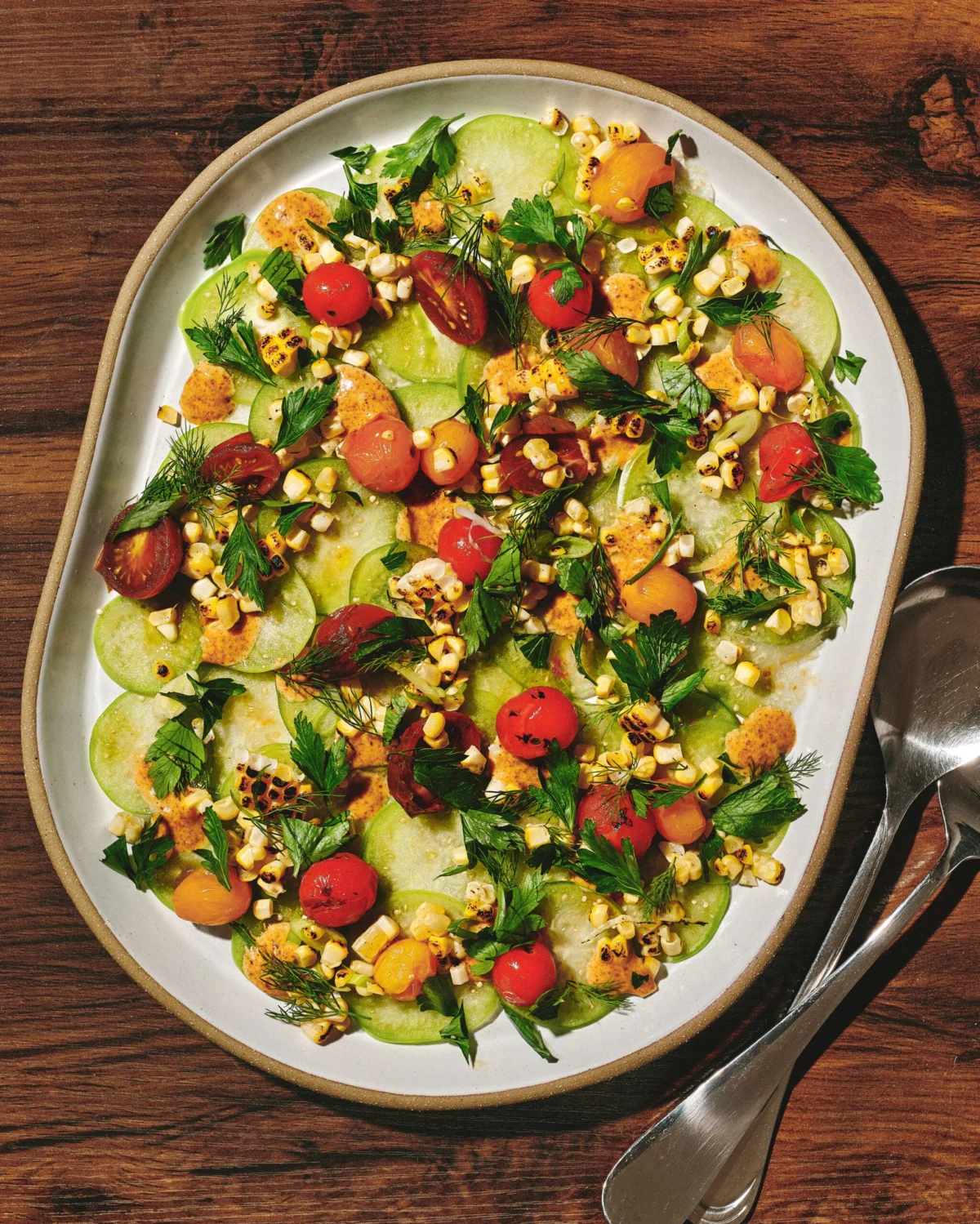
As summer’s bounty ripens, chefs and home cooks alike are drawn to the vibrant tapestry of fresh produce, seeking innovative ways to capture the season’s essence. A recent culinary exploration has unveiled a sophisticated dish that artfully combines contrasting textures and bold flavors: a meticulously crafted ensemble featuring cured green tomatoes, marinated cherry tomatoes, roasted corn relish, and an Old Bay aioli. This multi-component creation, while appearing complex, is rooted in fundamental techniques that elevate humble ingredients into a memorable gastronomic experience.
The genesis of such a dish often lies in a desire to showcase ingredients at their peak, while also exploring the nuances of preservation and preparation. Green tomatoes, typically a harbinger of autumn’s approach or a product of an unseasonably cool summer, are here transformed through a curing process. This method, a culinary technique with ancient roots, involves drawing out moisture and concentrating flavor through the application of salt and sugar. The result is a firm, slightly yielding slice with a bright, tangy profile, a stark contrast to the soft, burst-in-your-mouth sweetness of marinated cherry tomatoes.
The accompanying roasted corn relish adds a layer of smoky sweetness and textural intrigue. Roasting corn kernels intensifies their natural sugars, imbuing them with a delightful char and a deeper, more complex flavor. This is then brightened with the zesty notes of lime and the subtle bite of scallions, creating a relish that is both refreshing and satisfying. Finally, the Old Bay aioli, a creamy emulsion infused with the iconic Chesapeake seasoning, provides a rich, savory counterpoint and a unifying element to the diverse components of the dish.
A Culinary Timeline of Creation
The preparation of this dish unfolds in a series of distinct stages, each building upon the last to achieve a harmonious final presentation. Understanding the chronology of these steps is key to appreciating the skill and foresight involved.
-
Stage 1: The Art of Curing Green Tomatoes (Minimum 1 Hour, Up to 2 Hours)
The process begins with the careful preparation of the green tomatoes. Using a mandoline, the tomatoes are sliced to an almost translucent thinness, approximately 1/8 inch. This precise slicing is crucial for even curing and optimal texture. The thin slices are then arranged in a single layer on a wire rack set over a baking sheet. A precise balance of salt and sugar is then sprinkled over the tomatoes. This mixture acts as a dehydrating agent, drawing out excess moisture and beginning the transformation of the firm green tomato into a more tender, flavorful slice. The process is repeated with a second layer of tomato slices, ensuring each piece is adequately seasoned. The prepared tomatoes are then refrigerated for a minimum of one hour, allowing the curing process to effectively penetrate the slices. This initial step lays the foundation for the dish’s bright, acidic notes. -
Stage 2: Slow-Roasting Cherry Tomatoes (Approximately 1 Hour)
While the green tomatoes undergo their transformation, the culinary journey shifts to the slow roasting of cherry tomatoes. The oven is preheated to a low temperature of 190°F (87°C), with a rack positioned in the upper third. This gentle heat is ideal for coaxing out the sweetness of the cherry tomatoes without allowing them to burst prematurely. The tomatoes are tossed with extra-virgin olive oil, oregano, and garlic, then seasoned with salt and freshly ground black pepper. Spread in a small roasting pan, they are baked until they begin to soften, a process that takes approximately one hour. This slow roasting concentrates their natural sugars and imparts a subtle depth of flavor, creating a jammy, intensely sweet element to complement the cured green tomatoes. They are then set aside at room temperature to cool and meld their flavors. -
Stage 3: Roasting Corn for Relish (15-20 Minutes)
The next step focuses on the corn relish. Fresh corn kernels are placed on a baking sheet, drizzled with extra-virgin olive oil, and seasoned with salt. The oven temperature is then increased to 425°F (218°C). The corn is roasted for 15 to 20 minutes, or until a majority of the kernels develop a golden-brown hue. This high-heat roasting imparts a desirable smoky char and intensifies the corn’s inherent sweetness. Once roasted, the corn is set aside to cool. -
Stage 4: Assembling the Corn Relish (Active Preparation Time Minimal)
Once the roasted corn has cooled, the kernels are carefully removed from the cob, ensuring minimal white pith is included. These kernels are then transferred to a small bowl. The relish is brought together with the addition of extra-virgin olive oil, the zest and juice of a lime, and finely chopped scallions. A pinch of cayenne pepper is added, not to impart significant heat, but to provide a subtle warmth that enhances the other flavors. The relish is seasoned to taste with salt and then set aside at room temperature, allowing the ingredients to harmonize. -
Stage 5: Crafting the Old Bay Aioli (Active Preparation Time Approximately 10-15 Minutes)
The final preparatory component is the Old Bay aioli. In a small bowl, lemon juice, Old Bay seasoning, egg yolks, a whole egg, and minced garlic are whisked together until the mixture thickens and becomes viscous. This emulsification process is critical. While continuously whisking, olive oil and then vegetable oil are added in a very slow, steady stream. This gradual addition is paramount to prevent the aioli from breaking, a common issue where the oil separates from the egg mixture. The result is a thick, creamy, and intensely flavorful aioli, seasoned with the distinctive blend of spices. The aioli is then refrigerated until ready to be served. -
Stage 6: The Grand Assembly (Serving)
The final act is the assembly of the dish. Any excess moisture from the cured green tomatoes is gently patted dry. The cured green tomato slices are artfully arranged on a platter or individual serving plates, often in a slightly overlapping pattern to create visual appeal. The marinated cherry tomatoes are spooned over the green tomatoes, accompanied by a drizzle of their concentrated juices. The roasted corn relish is then generously topped over the tomatoes, adding a vibrant pop of color and texture. Finally, the Old Bay aioli is artfully dotted across the dish, providing creamy richness. The dish is then garnished with torn soft herbs, adding a final flourish of freshness and aroma.
Supporting Data and Culinary Context
The techniques employed in this dish are not merely arbitrary; they are informed by a long history of culinary practice and scientific understanding.
-
Curing and Dehydration: The use of salt and sugar in curing is a well-established method for preserving food by creating an environment that inhibits microbial growth. The osmotic pressure created by the salt draws water out of the tomato cells, concentrating the natural flavors and altering the texture. The sugar balances the saltiness and contributes to browning during any subsequent cooking. According to food science research, the optimal salt concentration for curing is typically around 2-5% by weight of the food item. While specific quantities are not provided in the recipe, the principle is clearly applied.
-
Low-Temperature Roasting: The slow roasting of cherry tomatoes at 190°F (87°C) is a technique often referred to as "confit" when done in oil, or simply low-temperature dehydration. This method allows for gentle cooking, preserving delicate flavors and achieving a concentrated sweetness without the harshness that can come from higher heat. Studies on the Maillard reaction, the chemical process responsible for browning and flavor development, indicate that lower temperatures over longer periods can yield more nuanced and complex flavors than rapid high-heat cooking.
-
Emulsification in Aioli: The creation of aioli relies on the principle of emulsification, where oil and water-based ingredients are stabilized into a smooth, homogenous mixture. Egg yolks, rich in lecithin, act as a powerful emulsifier, binding the oil and water components together. The slow, steady addition of oil is critical, as adding it too quickly can overwhelm the emulsifier, leading to a broken sauce. The ratio of oil to egg yolk is a key factor in aioli consistency, with typically 4-8 ounces of oil per yolk being a common range.
Potential Implications and Culinary Trends
This dish exemplifies several prevailing trends in contemporary cuisine. The emphasis on fresh, seasonal ingredients is paramount, with a focus on showcasing the natural flavors of produce at their peak. The multi-component nature of the dish, where distinct elements are prepared separately and then brought together, reflects a move towards more composed and layered presentations. This approach allows for a greater control over the texture and flavor of each individual ingredient, resulting in a more refined and sophisticated dining experience.
Furthermore, the incorporation of globally inspired flavors, such as the use of Old Bay seasoning (a quintessential American spice blend), alongside techniques that draw from various culinary traditions, highlights the increasingly interconnected nature of food culture. The ability to transform simple, readily available ingredients like green tomatoes and corn into something extraordinary speaks to a growing appreciation for resourceful and creative cooking.
The dish also speaks to a broader culinary philosophy of "farm-to-table" or "garden-to-plate." By highlighting the diverse stages of a tomato’s life cycle – from the unripe green stage to the ripe cherry stage – and incorporating other garden staples like corn and herbs, the dish celebrates the agricultural cycle and the bounty it provides. This approach resonates with consumers who are increasingly seeking transparency and a connection to the source of their food.
The success of such a dish lies in its meticulous execution and the chef’s understanding of how different flavors and textures interact. It is a testament to the fact that even with seemingly simple ingredients, a complex and deeply satisfying culinary creation can be achieved through thoughtful preparation and an appreciation for the nuances of flavor development. As the culinary landscape continues to evolve, dishes like this serve as inspiring examples of innovation, tradition, and the enduring power of fresh, seasonal ingredients.