admin
admin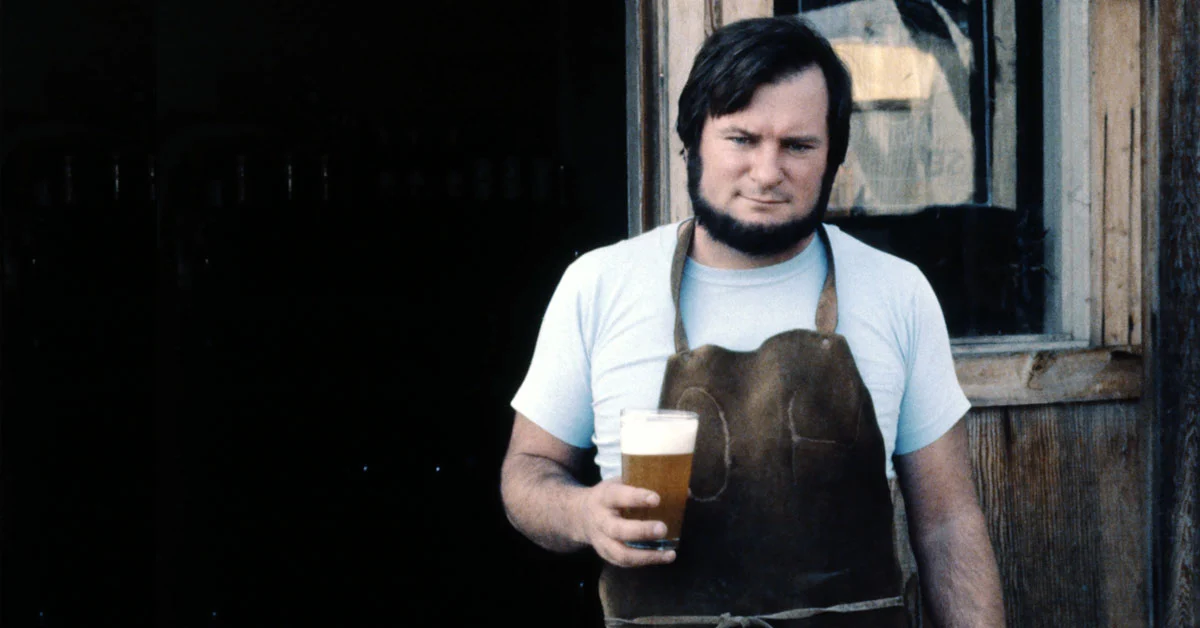
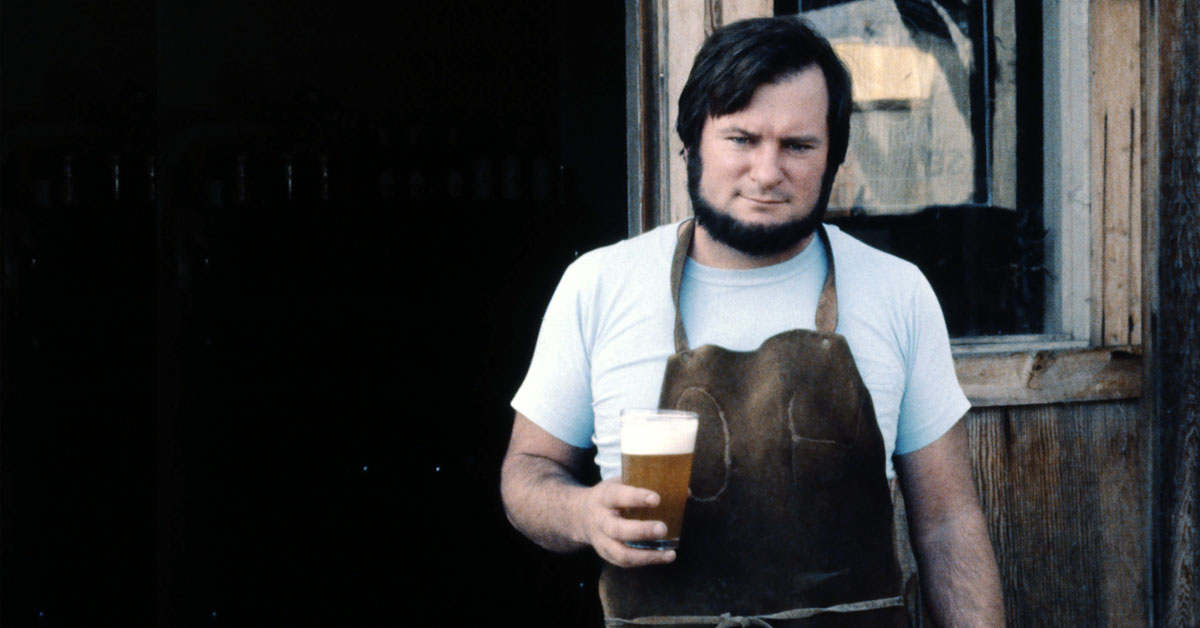
The passing of Jack McAuliffe in July at the age of 80 marks the conclusion of a seminal chapter in American culinary and industrial history. McAuliffe, a former Navy technician and self-taught brewer, is widely recognized as the primary architect of the modern craft brewing movement. His founding of the New Albion Brewing Company in 1976 did more than just introduce a new brand to the market; it dismantled a decades-old monopoly held by industrial conglomerates and proved that a small-scale, quality-focused enterprise could survive—and eventually thrive—in a landscape dominated by mass-produced light lagers.
The Genesis of an Iconoclast
The origins of the American craft beer movement can be traced back to the cold waters of the North Atlantic. During the 1960s, while serving in the United States Navy aboard a nuclear submarine stationed in Scotland, McAuliffe was exposed to the rich, complex profiles of traditional British ales. In an era when the American market was almost exclusively limited to pale, adjunct-heavy lagers, the robust porters and stouts of the United Kingdom offered a revelation.
Upon returning to California, McAuliffe found the domestic beer selection inadequate. Motivated by a desire to replicate the flavors he had experienced abroad, he turned to homebrewing. At the time, homebrewing occupied a legal gray area and was largely viewed as a fringe hobby. However, McAuliffe’s technical background as an electronics technician gave him a unique advantage. He did not merely follow recipes; he engineered a vision for a commercial-scale operation that could function on a fraction of the budget required by established industry giants.
Breaking the Post-Prohibition Stasis
To understand the audacity of McAuliffe’s venture, one must consider the state of the American brewing industry in the mid-1970s. Following the repeal of Prohibition in 1933, the industry underwent massive consolidation. By 1976, the number of brewing companies in the United States had plummeted from thousands in the late 19th century to fewer than 50. The market was a virtual oligopoly, defined by high-volume production, aggressive marketing, and a homogenization of flavor.
No new brewery had been built from the ground up in the United States since the 1920s. When McAuliffe partnered with Jane Zimmerman and Suzy Stern to launch New Albion Brewing Company in Sonoma, California, he was entering uncharted territory. With a modest investment of approximately $5,000—pooled from personal savings—the trio rented a dilapidated fruit-processing warehouse and began the arduous process of "MacGyvering" a brewery.
McAuliffe’s resourcefulness became the stuff of industry legend. He repurposed stainless steel tanks from the dairy industry and converted 55-gallon Coca-Cola syrup drums into fermentation vessels. This DIY ethos—born of necessity—established the "bootstrap" model that would define the first two decades of the craft beer movement.
The Technical Innovation of Cascade Hops
While New Albion’s business model was revolutionary, its contribution to the sensory profile of American beer was equally impactful. McAuliffe was among the first commercial brewers to embrace the Cascade hop. Developed by the USDA’s breeding program at Oregon State University and released in 1972, the Cascade hop was initially rejected by major brewers like Anheuser-Busch for being too "floral" and "grapefruit-like."
McAuliffe saw these distinct characteristics not as flaws, but as the foundation of a new American style. By utilizing Cascade hops in his pale ale, he created a flavor profile that was aromatic, bitter, and profoundly different from anything else on the shelves. This decision effectively "opened the floodgates," according to Ken Grossman, the founder of Sierra Nevada Brewing Company. Grossman, who visited New Albion in its early years, would later use Cascade hops as the centerpiece of his own Sierra Nevada Pale Ale, which remains a benchmark of the industry today.
A Brief Flame and a Lasting Impact: The New Albion Timeline
Despite its outsized influence, New Albion Brewing Company was a short-lived enterprise. The company’s timeline reflects both the passion of its founders and the immense structural hurdles facing small brewers in the late 20th century:
- 1976: New Albion Brewing Company is incorporated in Sonoma, California. It becomes the first "microbrewery" of the modern era.
- 1977: Production begins. The brewery produces a trio of flagship beers: a Pale Ale, a Porter, and a Stout.
- 1979-1981: The brewery gains a cult following and attracts national media attention, including a profile in The New York Times. Despite popularity, the company struggles with scaling and distribution.
- 1982: Unable to secure the capital needed for expansion and facing the logistical pressures of a burgeoning industry, New Albion ceases operations.
- 1983: The equipment from New Albion is purchased by the founders of the Hopland Brewery (later Mendocino Brewing Company), which became California’s first brewpub.
While New Albion was only operational for six years, it proved the viability of the micro-scale model. It served as a prototype for the thousands of entrepreneurs who would follow in McAuliffe’s footsteps.
Industry Tributes and the "American Original"
The news of McAuliffe’s passing prompted a wave of reflections from the titans of the craft beer industry. Jim Koch, the founder and Chairman of the Boston Beer Company, emphasized the psychological barrier McAuliffe broke. "Before him, starting a brewery from scratch was thought impossible," Koch noted. "After him, 10,000 people have done it."
This sentiment is echoed throughout the brewing community. McAuliffe is frequently described as an "American original"—a man whose personality was as uncompromising as his beer. Historian Maureen Ogle, author of Ambitious Brew, described him as a brilliant but caustic figure who "did not suffer fools gladly." His technical genius was paired with a fierce independence and a skepticism of corporate structures, traits that have become embedded in the cultural DNA of craft brewing.
Analyzing the Macro Impact of the Micro Model
The legacy of New Albion can be measured in more than just sentiment; it is reflected in the staggering economic data of the 21st-century beer market. In 1976, New Albion was an anomaly. Today, the Brewers Association reports that there are over 9,900 craft breweries operating in the United States.
In 2023, the craft brewing industry contributed roughly $72 billion to the U.S. economy and was responsible for more than 400,000 jobs. This economic engine grew from the seeds planted in a shabby Sonoma warehouse. Furthermore, McAuliffe’s use of adaptive reuse—transforming old warehouses and agricultural buildings into production spaces—has become a standard practice in urban revitalization efforts across the country. Craft breweries are now frequently the "anchor tenants" of redeveloped neighborhoods, proving that McAuliffe’s vision had implications far beyond the glass.
The shift in consumer behavior is equally profound. The "flavor revolution" started by New Albion has forced global brewing conglomerates to diversify their portfolios, acquiring smaller brands and developing "craft-like" offerings to compete with the variety and quality pioneered by independent brewers.
The Continuing Lineage of Resourcefulness
The closure of New Albion in 1982 did not end its story. The transfer of its equipment to Mendocino Brewing Company established a tradition of "hand-me-down" hardware that continues to this day. It is common for a startup brewery to purchase used tanks from an expanding mid-sized brewery, which in turn had purchased them from a predecessor. This lineage of equipment represents a shared history of struggle and success within the community.
In 2012, Jim Koch and the Boston Beer Company collaborated with McAuliffe to briefly revive the New Albion Ale, using the original yeast strain that McAuliffe had preserved for decades. The project was a tribute to the man who started it all, with all profits from the venture going directly to McAuliffe. It was a rare moment of the industry’s current leaders paying direct homage to their foundational figure.
Conclusion: A Legacy in Every Pint
Jack McAuliffe’s life was a testament to the power of a single, well-executed idea. He did not set out to build a multi-billion dollar industry; he simply wanted to brew a beer that tasted like the ones he loved. In doing so, he challenged the inevitability of corporate consolidation and restored a sense of craftsmanship to American manufacturing.
As the craft beer industry faces new challenges—ranging from changing consumer habits to supply chain fluctuations—the principles established by New Albion remain more relevant than ever. Resourcefulness, a commitment to quality ingredients, and the courage to brew "against the grain" are the bedrock of the movement.
To honor McAuliffe is to recognize the importance of the independent spirit. His roadmap turned a basement passion into a viable profession for thousands of brewers worldwide. The next time a consumer enjoys a hoppy IPA or a robust stout at a neighborhood brewery, they are participating in a culture that Jack McAuliffe built from the ground up, one 55-gallon drum at a time. He proved that in the world of American enterprise, being "pint-sized" is no obstacle to having an outsized impact.