admin
admin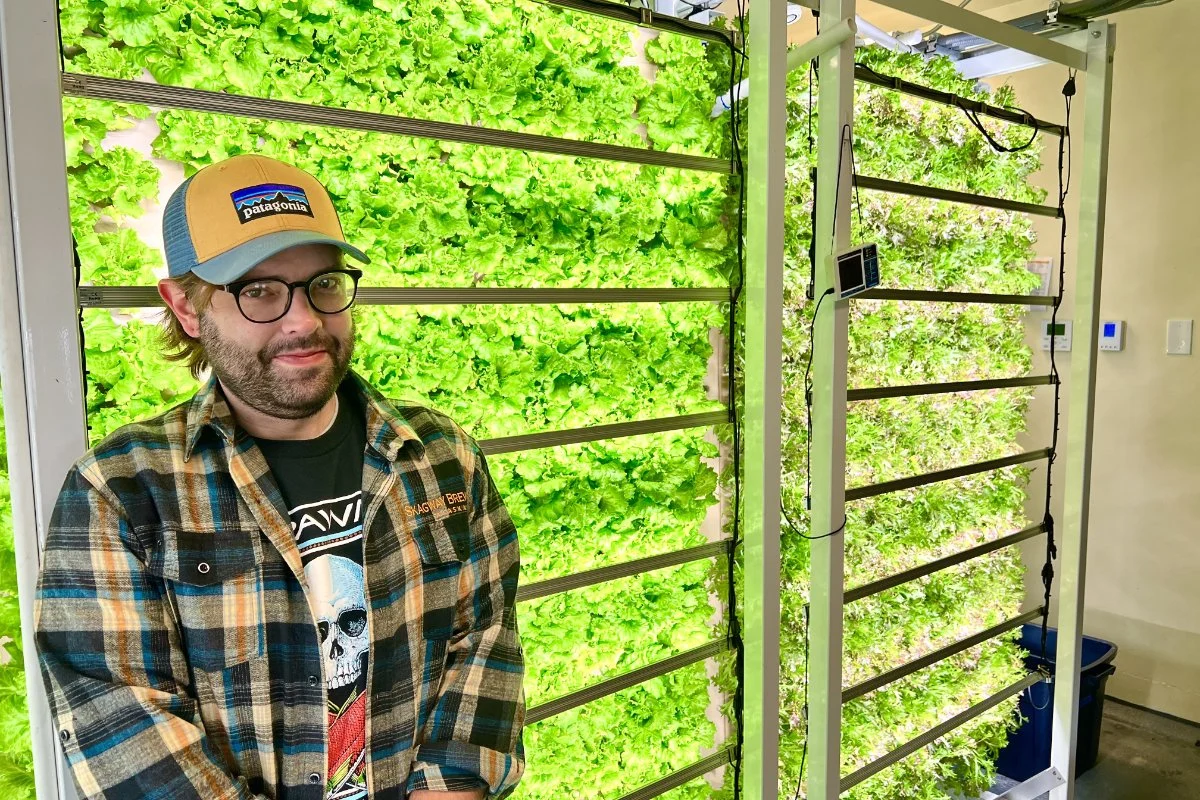
As the global vertical farming industry grapples with a wave of high-profile bankruptcies and the collapse of once-hyped business models, a small, independent aeroponic farm nestled within a microbrewery in remote Skagway, Alaska, is demonstrating a resilient and sustainable path forward. This unique operation, known as the Raven’s Nest, illustrates that while large-scale, venture-backed vertical farms struggle to find profitability, localized solutions tailored to specific community needs can not only survive but thrive by addressing critical food security challenges in isolated regions.
Skagway’s Persistent Quest for Fresh Produce
Skagway, a picturesque town in southeast Alaska, is a place of stark contrasts. Home to approximately 1,000 year-round residents, its population swells dramatically during the summer months, hosting over 1.3 million cruise ship passengers. Despite its historical moniker, the "Garden City of Alaska," the town has long contended with severe limitations in accessing fresh, healthy produce, particularly during its long, isolated winters. The town’s lifeline for essential goods, including food, relies almost entirely on an intricate and often precarious barge system transporting supplies from the Lower 48 states to its single market. This dependency exposes Skagway to the volatility of weather, supply-chain disruptions, and escalating transportation costs, frequently resulting in inconsistent availability, exorbitant prices, and compromised quality of perishable items.
The challenges are palpable for residents. Fresh lettuce, a staple in many diets, often arrives bruised, wilted, or nearing the end of its shelf life, having endured a journey spanning thousands of miles and multiple days. "Lettuce is the hardest to get up here, because of how delicate it is, to harvest it, ship it," explains John Michael Mead, the farm manager at Skagway Brewing Company. "It shows up bad or partially bad and we spend hours picking through it." This chronic issue not only impacts the nutritional well-being of the community but also exacts a mental toll, symbolizing the broader struggles of remote living.

The Genesis of the Raven’s Nest: A Local Solution
Against this backdrop of food insecurity, Mike Healy, owner of Skagway Brewing Company (affectionately known as Brew Co. by locals), envisioned a radical solution. Frustrated by the poor quality and unreliability of barged-in produce for his brewery restaurant, Healy began exploring options for local cultivation. Initial research into traditional outdoor farming quickly proved impractical for meeting the demands of a bustling tourist season that stretches from early April to October, requiring significant energy inputs for heating and lighting in the shoulder seasons.
In 2018, Healy attended an indoor agriculture conference in Las Vegas, a pivotal moment that cemented his decision to invest in aeroponics. Aeroponics, a soilless cultivation method where plant roots are suspended in the air and misted with nutrient-rich water, promised high yields, minimal water usage, and a controlled environment perfect for Skagway’s unpredictable climate. Healy’s ambition was not merely to supply his restaurant but to become "the most sustainable brewpub on the planet" while securing a steady, fresh food source for his community. He committed a significant sum—$150,000—for an aeroponics system, an investment he hoped would transform Skagway’s food landscape.
A Rocky Start and Resilience: The Farm’s Early Chronology
The journey to establishing the Raven’s Nest was far from smooth, serving as an early microcosm of the challenges that would later plague the wider vertical farming industry. Shortly after Healy made his substantial payment in 2018, the company that sold him the aeroponics system vanished, leaving him without technical support, replacement parts, or guidance. "What I didn’t know—basically when I was writing the check, which was a large check—[was that] the company was going out of business," Healy recounts.

Despite the abrupt disappearance of the vendor, Healy eventually managed to connect with the salesman he had met at the conference. In an act of personal commitment, the salesman facilitated the delivery of the system in a container and provided limited assistance with its installation. The Skagway Brewing team, alongside their head grower, worked diligently to set up the system in the new brewery building, which they moved into in 2019. This state-of-the-art facility was purpose-built with the farm in mind: the brewery on the first floor, the restaurant on the second, and the aeroponic farm, dubbed the Raven’s Nest, occupying the entire third floor.
However, the installed system proved to be fundamentally flawed. Healy discovered that many of its components were generic hardware store items, with the only proprietary elements—the misting panels—being insufficient in number and the piping unable to handle the necessary pressure for effective nutrient delivery. With no vendor support, Healy and his team embarked on an arduous process of trial and error, rebuilding the system not once, but twice, to optimize its functionality. This hands-on, problem-solving approach, born out of necessity, laid the groundwork for the farm’s eventual success.
Today, the Raven’s Nest flourishes, producing approximately 250 pounds of artisanal lettuce each week. This diverse harvest includes varietals like red oak, butter crisp, sweet crisp, and a romaine-sweet crisp hybrid, along with basil. These specific crops were chosen for their rapid growth cycles and suitability for vertical cultivation. During the busy summer season, nearly all the produce is consumed by the brewery restaurant. In the quieter winter months, surplus greens are either donated or sold at cost to local institutions such as the school, senior center, and the town market, strengthening community ties and improving access to fresh food.
The Broader Vertical Farming Landscape: Boom, Bust, and Lessons Learned
The Skagway Brewing Company’s journey unfolded amidst a tumultuous period for the broader controlled environment agriculture (CEA) and vertical farming industry. The late 2010s saw an explosion of interest and investment, fueled by promises of sustainable, hyper-local food production. The Agriculture Improvement Act of 2018, commonly known as the "farm bill," expanded federal support for urban agriculture, including indoor and rooftop farming, signaling a governmental endorsement of these innovative methods. Venture capital poured into the sector, with a staggering $4.7 billion fueling an ag-tech boom in 2019 alone. Startups promised to revolutionize food systems, attracting billions from high-profile investors like Bezos Expeditions and Walmart.

However, this rapid expansion was followed by an equally dramatic series of high-profile bankruptcies and liquidations, signaling a significant "bubble burst" in the industry.
- Bowery Farming, once touted as the largest vertical farming company in the U.S. with a valuation of $2.3 billion, abruptly ceased operations in 2025. Its massive Georgia facility was liquidated in what was described as one of the "largest vertical farming asset disposals in industry history."
- AppHarvest, a company backed by celebrities and politicians, filed for bankruptcy in 2023, citing unsustainable high operational costs and insufficient yields.
- Plenty Unlimited, which had raised over $1 billion, declared bankruptcy in 2025 before attempting a pivot through a partnership with Driscoll’s to grow strawberries.
- Just recently, 80 Acres Farm, a pioneer in indoor farming with 13 years of operation, shuttered after failing to secure additional capital.
These failures sent shockwaves through the industry, prompting critical introspection. Analysts point to several contributing factors: exorbitant startup costs, misaligned business models that failed to account for market realities, intense price competition from traditional agriculture, and a pervasive prioritization of technology and rapid scaling over fundamental horticultural expertise.
Dr. Laura Cammarisano, an assistant professor of plant sciences at the University of California, Davis, and a specialist in CEA, offers a critical perspective on these failures. "Some of these companies started without having a plant person within their team. They have engineers, economists, entrepreneurs—and they start without having a grower," Cammarisano observes. "How do you even start a farm without a grower? I understand this looks all technical, but the main piece in this is a plant." This sentiment underscores a crucial lesson: while technology provides the infrastructure, successful farming, even in a controlled environment, ultimately hinges on a deep understanding of plant biology and agricultural practice.
The Human Element and Sustainable Economics
This insight resonates deeply with Skagway Brewing Company’s approach. Mike Healy, himself raised on a South Dakota farm, understood the irreplaceable value of agricultural expertise. He prioritized hiring an experienced indoor farm manager, John Michael Mead, whose practical knowledge proved invaluable, especially during the system’s initial troubleshooting and subsequent rebuilds. Mead champions a balanced approach, where technology serves as a tool, not a replacement for human oversight. "A lot of times, these systems rely too much on automation," Mead notes. "It’s important to have human contact. You have to be able to walk your system, understand what’s going on, and know if your plants are healthy." This blend of technical innovation and traditional farming wisdom has been a cornerstone of the Raven’s Nest’s enduring success.

From an economic standpoint, Mead estimates that growing the restaurant’s own lettuce costs approximately 10 percent more than purchasing and shipping produce to Skagway. However, this calculation omits a multitude of intangible and tangible benefits that paint a more comprehensive picture of value. The environmental advantages are significant:
- Reduced Carbon Footprint: By eliminating the need for lettuce to be grown in distant regions like the Arizona desert, driven to Seattle, and then barged to Alaska, the Raven’s Nest drastically cuts down on fossil fuel consumption associated with transportation. This aligns with Healy’s vision of being a sustainable brewpub.
- CO2 Recapture: A truly innovative aspect of the Raven’s Nest is its closed-loop system that utilizes CO2, a byproduct of the brewing process. A tube connects the fermenters directly to the farm on the third floor, channeling the greenhouse gas to accelerate plant growth. This not only sequesters CO2 that would otherwise be released into the atmosphere but also, according to Healy’s estimates, increases the farm’s overall harvest by over 20 percent annually, a finding supported by academic research on CO2 enrichment in CEA.
- Water Conservation: Aeroponics inherently uses significantly less water than traditional soil-based agriculture, making it an efficient choice for resource management.
- Waste Reduction: The brewery also repurposes yeast from the brewing process into compost for local community gardens, further closing the loop on waste.
- Energy Efficiency: The heat generated by the LED lights on the third-floor farm contributes to warming staff offices below during the cold Alaskan winters, effectively reducing the brewery’s overall energy consumption and utility bills.
Beyond these environmental and operational efficiencies, the reliability of a consistent supply of high-quality, fresh produce prevents lost business due to damaged or unavailable shipments—a common occurrence in Skagway. The ability to offer fresh, crisp lettuce year-round is a distinct competitive advantage for the restaurant and a significant morale booster for the community.
Despite these advantages, the economics are not without their challenges. Healy’s initial aspiration to fully supply the entire Skagway community with fresh produce during the winter has not yet been fully realized due to the escalating cost of electricity, a significant operational expense for any indoor farm. "It is my hope that after this season, when we start looking at all the numbers again, we’re going to say, ‘OK, we’re back in it’," Healy states, reflecting his ongoing commitment to expanding community access as costs allow.
Implications for Remote Communities and the Future of Vertical Farming
The Skagway Brewing Company’s Raven’s Nest offers a compelling counter-narrative to the recent struggles of the vertical farming industry. Its success highlights that while high costs prohibit large-scale vertical farms from competing directly with conventional agriculture in many markets, they can be incredibly valuable in niche applications, particularly in remote, food-insecure regions. As Dr. Cammarisano points out, "I do think this has a great potential for certain locations and for certain scales like Skagway, where it’s serving the community. Elsewhere, the point is that this type of production system or farming is too expensive to even compete with high-quality organic."

The Raven’s Nest also underscores the importance of resilient, adaptable systems. The closure of smaller CEA companies and the proprietary nature of many large-scale systems have left independent operators like Skagway Brewing Company to navigate challenges largely on their own, often without the benefit of robust industry support or accessible replacement parts. This necessitates significant internal expertise, resourcefulness, and a willingness to innovate through trial and error—qualities that the Skagway team has demonstrated in spades.
Yet, the potential for small-scale controlled environment agriculture extends beyond remote outposts. These systems are proving invaluable as educational tools, reconnecting students with their food sources and imparting critical life skills in schools across New York, California, Maryland, and beyond. In Santa Barbara, California, an aeroponic tower farm, coupled with a microgreens greenhouse and apiary, provides fresh food to families, seniors, and students, illustrating the broader community benefits of localized food production.
Just as early computers that once filled entire rooms have evolved into ubiquitous pocket-sized devices, it is conceivable that advancements in technology and economies of scale could eventually make these sophisticated farming systems more accessible and affordable for a wider range of users. Imagine a future where more restaurants, breweries, rural communities, schools, and senior centers can readily install, maintain, and benefit from their own sources of fresh, year-round produce.
Until such widespread accessibility becomes a reality, the intricate realities of growing lettuce in Skagway will continue to offer a profound lesson on the promises and limitations of integrating advanced technology with agricultural practices. Mike Healy and John Michael Mead never set out to disrupt global agriculture; their goal was simpler yet profoundly impactful: to provide their neighbors with fresh food during the long, dark winters and their guests during the bustling summers. In communities like Skagway, where the need is immediate and the impact tangible, this localized, resilient model of indoor farming may well be where the true north of sustainable food production lies.