admin
admin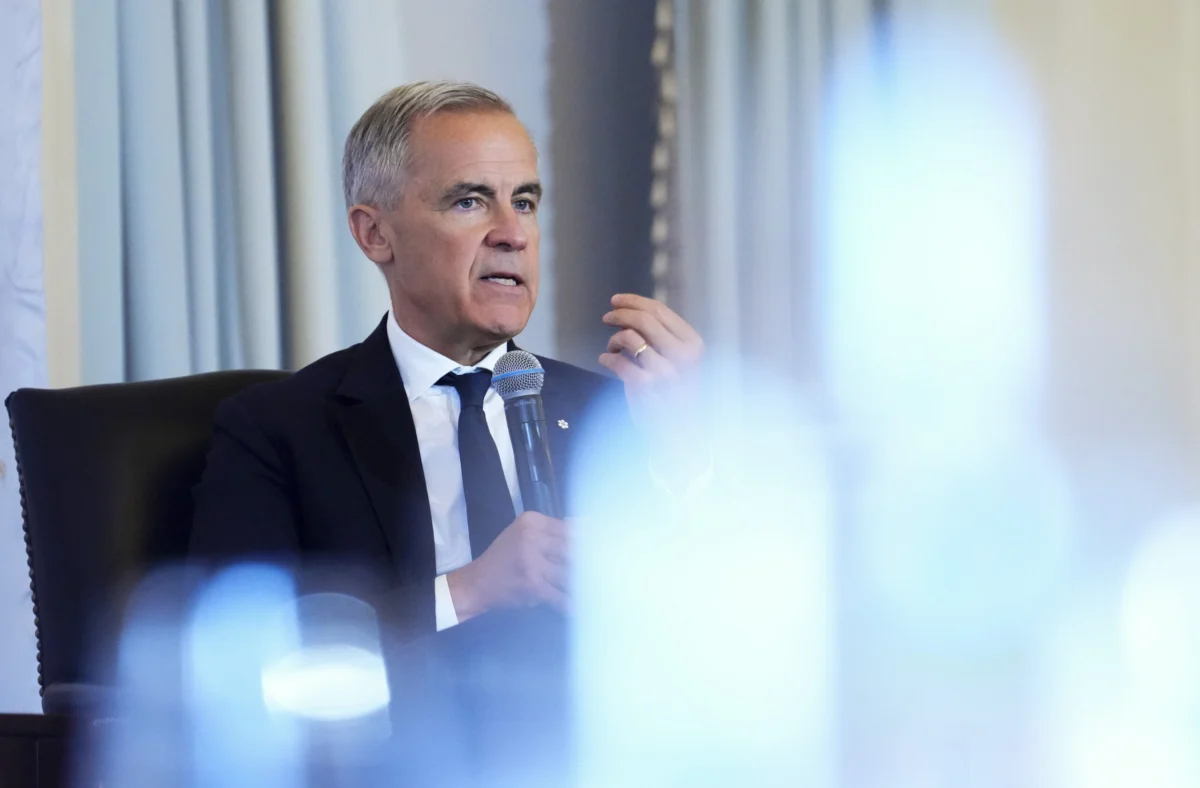
Prime Minister Mark Carney announced today that Canada will impose "dollar-for-dollar" retaliatory tariffs on a range of American goods, effectively walking away from what he termed a "bad deal" with the United States. Speaking in Ottawa on Saturday morning, Carney confirmed the government’s reluctant decision to implement tariffs targeting key U.S. industries, including steel and dairy, in direct response to tariffs previously levied by United States President Donald Trump. This move signals a significant escalation in the ongoing trade dispute between the two historically close allies, portending potential economic headwinds for both nations.
Carney’s Firm Stance and Retaliatory Measures
In a resolute address, Prime Minister Carney articulated Canada’s position, stating, "We cannot accept what they’ve offered, and we will not give what they asked." He acknowledged that the imposition of these counter-tariffs would inevitably add costs for Canadians in certain sectors, but underscored their necessity as a measure of retaliation against what Canada views as unfair and economically damaging levies from its southern neighbor. The specific quantum of Canada’s retaliatory tariffs is set to match 50 percent of the value of the U.S. tariffs, applied to an equivalent value of American imports. While steel and dairy were explicitly mentioned, the broader "dollar-for-dollar" principle suggests a wider array of U.S. products could be impacted, encompassing goods across various sectors to maximize pressure. These measures are slated to take effect next month, providing a brief window for affected businesses to prepare for the impending changes.
Carney detailed that discussions with the United States had been ongoing for the past year, intensifying considerably in recent days. Despite initial skepticism within his negotiating team, there had been a persistent optimism that a fair resolution could be achieved. However, the Prime Minister conveyed a sense of disillusionment, likening the U.S. commitment to a "signature… written in pencil," implying a lack of steadfastness in their negotiating stance. He lamented that the United States had ultimately "asked too much and offered too little," rendering a mutually beneficial agreement unattainable under the proposed terms.
Background to the Bilateral Spat
The current trade friction is rooted in President Trump’s earlier decision to impose tariffs on imported steel and aluminum, citing national security concerns under Section 232 of the U.S. Trade Expansion Act of 1962. These tariffs, initially set at 25 percent for steel and 10 percent for aluminum, were widely seen by Canada and other allies as protectionist measures rather than legitimate security imperatives. Canada, as a major supplier of both metals to the U.S. and a long-standing security partner, particularly bristled at this justification. The dispute further complicated the already fraught renegotiation of the North American Free Trade Agreement (NAFTA), a pact that had underpinned continental trade for decades. While the U.S. administration sought to replace NAFTA with a new accord (later known as the USMCA), the tariff impositions created a hostile environment for the ongoing, sensitive trade talks. Canada’s dairy supply management system has also been a perennial point of contention for the U.S., with American negotiators consistently pushing for greater access to the Canadian market for their dairy products, a demand fiercely resisted by Ottawa due to its critical role in supporting Canadian dairy farmers.
A Tumultuous Week of Negotiations
The path to this retaliatory announcement was marked by a turbulent week of diplomatic efforts. The U.S. tariffs, originally scheduled to commence on Wednesday, were temporarily delayed by three days by President Trump himself, ostensibly to allow for a final push in trade talks. This brief reprieve ignited hopes for a breakthrough. While President Trump prematurely declared, "we have a deal" with Canada, Canadian officials quickly moved to temper expectations, emphasizing significant disagreements on the "finer details of legal language." This divergence highlighted a fundamental gap between the two sides on critical aspects of the proposed agreement.

The climax of these intense negotiations arrived late on Friday when Prime Minister Carney issued a statement announcing Canada’s decision to suspend trade negotiations and recall its negotiating team to Ottawa. He attributed this drastic step to last-minute changes in the U.S. position, which he characterized as "unfair, uneconomic and raised questions about the reliability of any agreement." This abrupt halt to talks signaled a deep fracture in the negotiating process and foreshadowed the retaliatory actions announced today.
Points of Contention and Canada’s Objectives
Prime Minister Carney elaborated on Saturday regarding the specific "outstanding problems" that ultimately led to the collapse of the talks. While the initial article left these points vague, common points of friction in such high-stakes negotiations typically include:
- Dispute Resolution Mechanisms: Canada has historically favored strong, impartial dispute resolution panels, a feature of NAFTA that the U.S. sought to weaken or remove in subsequent agreements.
- Rules of Origin, particularly for Automotive Sector: The U.S. pushed for stricter rules on where vehicle components are sourced to qualify for tariff-free trade, aiming to bring manufacturing jobs back to the U.S. This had significant implications for Canada’s integrated auto industry.
- Intellectual Property Protections: Differences existed in how intellectual property rights, especially for pharmaceuticals, should be protected and enforced.
- Cultural Exemptions: Canada historically maintains exemptions for cultural industries (e.g., broadcasting, publishing) from free trade rules, a stance often challenged by U.S. negotiators seeking broader market access.
- Dairy Supply Management: As noted, Canada’s system, which manages supply and prices to ensure farmer income stability, was a major sticking point, with the U.S. demanding its dismantling or significant modification.
Carney reiterated Canada’s core objectives throughout the negotiations: preserving broad, predictable access to the U.S. market, reducing tariffs on key Canadian sectors, and safeguarding Canadian businesses from undue economic harm. He conveyed disappointment that recent progress had proven insufficient to meet these critical national interests.
Countering Canada’s narrative, U.S. Trade Representative Jamieson Greer placed the blame squarely on Ottawa for the collapse of the talks. Greer asserted that Canada had declined to finalize a deal under terms that had purportedly been agreed upon earlier in the week, suggesting Canadian intransigence was the primary obstacle. This stark difference in accounts highlights the deep mistrust and divergent interpretations that ultimately doomed the negotiations.
Economic Repercussions and Diversification Efforts
The imposition of tit-for-tat tariffs carries significant economic implications for both sides. For Canada, industries reliant on imports of U.S. steel and aluminum will face higher input costs, which could be passed on to consumers or erode profit margins. The dairy sector, already operating under a managed system, could see disruptions as Canadian consumers face higher prices for certain dairy products or substitute goods. Economists warn of potential supply chain disruptions, reduced competitiveness for Canadian businesses, and a drag on economic growth. Trade between Canada and the U.S. totals over C$1 trillion annually, making it the world’s largest bilateral trading relationship. Any disruption, even targeted, can send ripples through the broader economy.
Acknowledging these potential downsides, Prime Minister Carney articulated a forward-looking strategy: "We can’t control the storm that blows in from Washington. We can, however, chart a new course by building Canada strong at home and diversifying our trading relationships abroad." This statement underscores Canada’s commitment to reducing its economic reliance on the U.S. by forging stronger trade ties with other global partners, particularly in Asia and Europe. Initiatives like the Comprehensive Economic and Trade Agreement (CETA) with the European Union and the Comprehensive and Progressive Agreement for Trans-Pacific Partnership (CPTPP) are examples of Canada’s proactive efforts to broaden its trade horizons and mitigate risks associated with over-reliance on a single trading partner.
Domestic Political Landscape: United Front, Divergent Views

Domestically, the Prime Minister’s firm stance largely garnered support, though with some notable provincial dissent. Conservative Leader Pierre Poilievre, while expressing disappointment over the U.S. tariffs, rallied behind a unified Canadian response. In a social media post, Poilievre asserted, "Canadians must stand united to defend our country against these unfair attacks on our jobs and businesses." He echoed Carney’s sentiment that "Canada cannot accept one-sided tariffs that will deindustrialize our country. Nor can we accept a bad deal." Poilievre announced his intention to seek a call with the Prime Minister to discuss a coordinated strategy to "fight for our workers, businesses, and economy," signaling a rare moment of cross-party alignment on a critical national issue.
Provincial premiers also largely voiced support for Carney’s confrontational approach. British Columbia’s Premier David Eby championed a tough stance, declaring that Canadian "politeness should never be mistaken for weakness." Ontario Premier Doug Ford, who had maintained public silence until the conclusion of talks, released a letter he had sent to the Prime Minister earlier in the week, advocating for "a coordinated dollar-for-dollar, tariff-for-tariff response and the continuation of existing countermeasures." Ontario, as Canada’s most populous province and an industrial powerhouse with deep economic integration with the U.S., stands to be significantly affected by the tariffs, making Ford’s support crucial.
However, Alberta Premier Danielle Smith presented a more nuanced, cautious perspective. Long a vocal opponent of retaliatory tariffs, Smith expressed deep concern for the "Albertans and Canadians whose livelihoods are at risk from these new tariffs and counter-tariffs," as stated in a social media post. Alberta, with its export-oriented economy heavily reliant on the U.S. market for its oil, gas, and agricultural products, faces unique vulnerabilities. Smith welcomed the federal government’s intention to provide relief for impacted businesses, highlighting the need for targeted support to mitigate economic fallout.
Prime Minister Carney acknowledged that Ontario, Quebec, and British Columbia would likely bear the brunt of the initial economic impact from the tariffs, given their extensive manufacturing, agricultural, and export sectors. He emphasized the "crucial, fundamentally important" partnership established with the premiers, reflecting the consensus reached during a First Minister’s discussion two days prior. Carney explained that the collective judgment was that pursuing a potential deal, even with a price, was worth paying for Canada’s strategic sectors. Interestingly, following the deal’s collapse, Carney confirmed he was no longer asking premiers to bring American alcohol back to provincial liquor stores, a proposed gesture of goodwill that now seems irrelevant.
International Reactions and Future Outlook
The escalation of trade tensions between Canada and the United States reverberates beyond North America, drawing the attention of international trade bodies and global economic observers. The World Trade Organization (WTO) framework, designed to regulate international trade and resolve disputes, may become an increasingly relevant forum for Canada to challenge U.S. tariffs, even as the U.S. itself has shown skepticism towards the WTO’s effectiveness. The ongoing dispute also sends a chilling signal to other nations about the stability of global trade relationships and the potential for unilateral actions to disrupt established norms.
Prime Minister Carney is scheduled to meet with Canada’s premiers at 1:30 p.m. today to further discuss the implications of these developments and coordinate a national response strategy. The path forward remains uncertain. While both countries express a desire for fair trade, the current impasse suggests that a resolution is not imminent. The "dollar-for-dollar" retaliation marks a firm assertion of Canadian sovereignty and economic independence, but it also carries the inherent risk of further escalation, potentially leading to a protracted trade war that could inflict lasting damage on the integrated North American economy. The world watches to see if diplomacy can eventually prevail over protectionism in this critical bilateral relationship.