admin
admin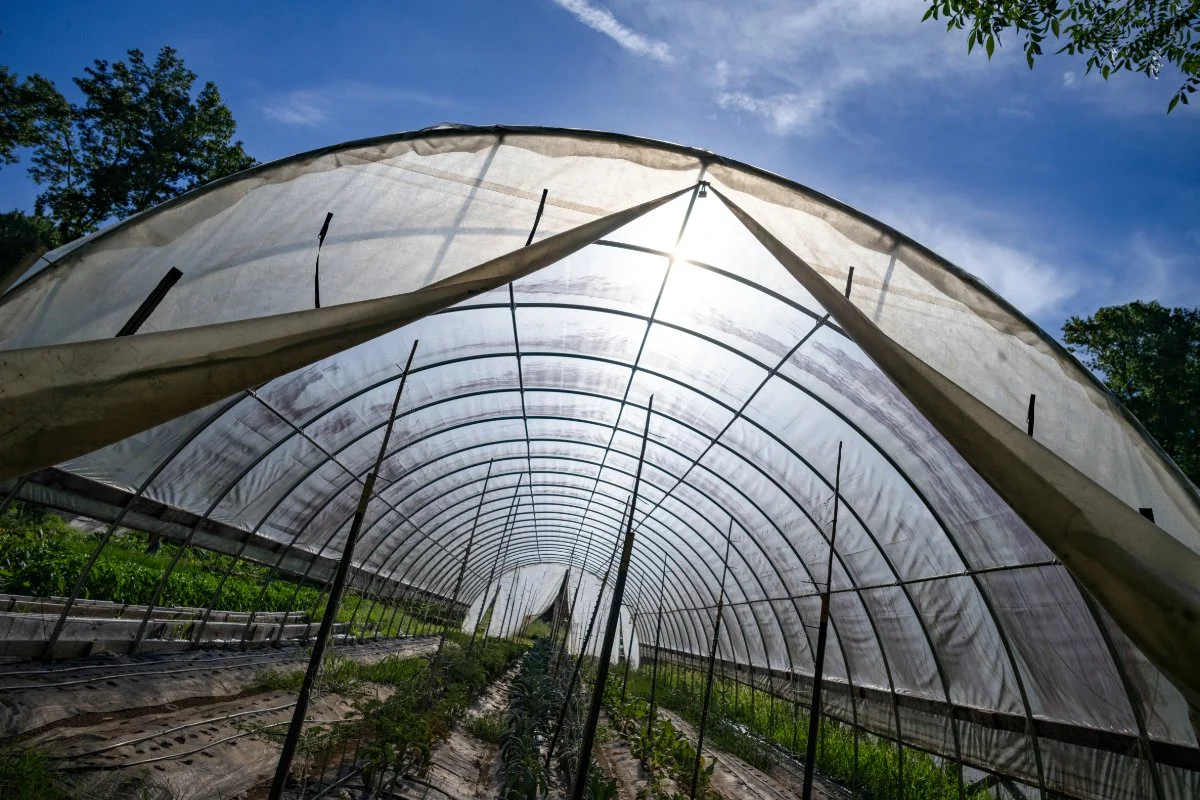
Jamila Norman, founder and operator of Patchwork City Farms, stands as a pivotal figure in Atlanta’s urban agriculture movement, transforming neglected land in the city’s southwest quadrant into a thriving organic farm. Her journey, rooted in a desire to provide fresh, healthy food for her family and community, has evolved into a broader mission to challenge prevailing narratives about food access, champion the legacy of Black farmers, and advocate for the critical role of small-scale agriculture in the national food system. Her work exemplifies a powerful blend of personal initiative, community empowerment, and a deep commitment to environmental and social justice.
The Genesis of Patchwork City Farms: Addressing a Local Crisis
Norman’s profound engagement with food systems began with a personal awakening after she moved to southwest Atlanta with her family. She describes the area at the time as "majority African American, mixed income, marginalized," and critically, plagued by a severe lack of nutritious food options. "All the food options were trash," she recounts, expressing her frustration at having to travel across town to access fresh produce. This personal inconvenience highlighted a systemic issue impacting countless residents: the stark reality of a "food desert."

Motivated by this glaring disparity, Norman resolved to take action within her own neighborhood. Her initial step was modest yet impactful: "I decided I was just going to grow some food with some people in the neighborhood." This led to the establishment of a community garden at a local park, merely two blocks from her home. This grassroots initiative quickly demonstrated the latent desire and capacity within the community to cultivate its own food sources.
The success and community engagement surrounding the garden laid the groundwork for a more formal venture. In 2010, Norman incorporated Patchwork City Farms as a business, seizing an opportunity when a dissolving nonprofit transferred its lease of a garden located at a middle school. This expansion marked a significant step towards institutionalizing their efforts and broadening their impact beyond the initial community plot.
However, the vision extended beyond leased spaces. Norman harbored a strong desire for independent land ownership, a foundational element for long-term sustainability and autonomy in farming. In a testament to serendipity and sharp observation of local market dynamics, she conducted a simple Google search for "land for sale in Atlanta." This search led her to a pivotal discovery: an available parcel of 1.2 acres, offered at what she perceived as an "insanely low" price. "I thought, I cannot believe somebody is selling this property for this. They have no idea what’s going on in this city," she recalls, recognizing the undervaluation of the land’s potential, especially in a rapidly developing urban environment.
With a combination of personal savings, an unexpected IRS refund, and a modest loan of $2,000 from a friend, Norman secured the property in 2016. The following year, in 2017, Patchwork City Farms commenced full-time operations on its own land. This strategic acquisition and the subsequent commitment to full-time farming solidified the farm’s presence and marked a turning point, allowing Norman to declare, "I’ve never looked back."

Challenging the "Food Desert" Narrative: Community Agency and Resilience
The term "food desert" is frequently used to describe areas with limited access to affordable and nutritious food, often characterized by a prevalence of convenience stores and fast-food outlets rather than supermarkets or grocery stores. Southwest Atlanta has historically been categorized as such. Norman acknowledges the veracity of this classification, stating, "Yes, it is a food desert, because the retailers that are in the business of fresh and healthy food are not servicing this community." This perspective correctly attributes the problem to market failures and the deliberate choices of retailers to disinvest from certain neighborhoods.
However, Norman offers a crucial nuance to this narrative, one that shifts the focus from victimhood to empowerment. She points out that what is often overlooked in the "food desert" discourse is the inherent resilience and proactive spirit within these communities. "But what we were not uplifting was the fact that the community, despite all of that, was just like, ‘Well, we’re gonna figure out our own options and come up with solutions to our own issues,’" she emphasizes.
This reframing is critical. While the lack of external investment is a systemic issue, communities themselves are not passively waiting for solutions. Instead, they are actively forging their own pathways to food security through initiatives like community gardens, urban farms, and local food networks. Norman’s work at Patchwork City Farms is a prime example of this self-determination, demonstrating that even in the face of structural inequalities, local agency can create meaningful and sustainable change. This perspective aligns with a growing movement that critiques the "food desert" label for potentially overlooking the vibrant local economies and community efforts already underway, advocating instead for terms like "food apartheid" to highlight the systemic racial and economic injustices that create these disparities while also celebrating the self-sufficiency and ingenuity of affected communities.

Uplifting Black Agricultural Heritage: A Story of Survival and Ingenuity
Beyond addressing contemporary food access issues, Jamila Norman is deeply committed to recognizing and celebrating the profound yet often overlooked history of Black farmers in the United States. She is an active member of and collaborates with several organizations dedicated to supporting Black farmers in the Southeast, working tirelessly to "really trying to uplift" their stories and contributions.
"Black farmers have gone through so much in this country," Norman asserts, highlighting a painful and enduring legacy of systemic discrimination. Historically, Black Americans played a central role in the agricultural landscape of the South, particularly after emancipation. By 1910, Black farmers owned an estimated 16 million acres of land. However, over the subsequent century, this ownership plummeted dramatically due to a combination of discriminatory practices, including denial of federal loans, land theft, violence, and lack of access to markets and resources. By 1997, Black land ownership had dwindled to just over 2 million acres. The landmark Pigford v. Glickman class-action lawsuit against the U.S. Department of Agriculture (USDA) in 1999, which settled claims of racial discrimination against Black farmers, starkly illustrates the institutional biases that plagued generations.
Despite these immense challenges, Norman stresses the narrative that often goes untold: "we’re not talking about the story of resilience and how people farmed despite this—the incredible, amazing, mind-blowing stories of survival and ingenuity." This resilience is a hallmark of Black agricultural history, characterized by innovative farming techniques, the establishment of cooperative networks, and an unwavering commitment to feeding families and communities against overwhelming odds. Norman’s work, therefore, is not just about growing food; it is about reclaiming and honoring this powerful heritage, ensuring that the contributions and struggles of Black farmers are acknowledged and celebrated as a vital part of American agricultural history. By supporting organizations focused on Black farmers, she contributes to fostering a new generation of agricultural leaders who can draw strength and inspiration from this rich legacy.

The Future of Food: Small Farms as the Cornerstone of a Resilient System
Jamila Norman’s vision for the future of food extends far beyond the borders of Patchwork City Farms, advocating for a fundamental shift in how society perceives and supports its food producers. Her imagined future is one where there is "more recognition and awareness of where the food that we eat every day actually comes from." This awareness, she argues, would reveal a truth often obscured by the industrial food complex: "And it really does come from small farms. Globally, small farmers, small landholders, are the ones producing food. Big Ag produces commodities."
This distinction is crucial. "Big Ag," or industrial agriculture, is typically characterized by large-scale monoculture, heavy reliance on chemical inputs, and production primarily aimed at global commodity markets (e.g., corn, soy, wheat for processed foods and animal feed). While efficient in volume, this model often comes at significant environmental costs and contributes to a lack of biodiversity in the food supply. In contrast, small farms, like Patchwork City Farms, frequently prioritize diversified crops, organic or sustainable practices, and direct sales to consumers, offering fresh, nutrient-dense food.
Norman expresses deep concern about the current trajectory, noting, "But we can’t build a system on luck, right? We’re losing farmers by the many thousands every year. We need more than luck." Data from the USDA’s National Agricultural Statistics Service consistently shows a decline in the number of farms, particularly small and mid-sized operations, across the U.S. This loss is attributed to a myriad of factors, including increasing land values, insufficient financial support, an aging farmer population, and the competitive pressures from large agricultural corporations.

The implications of this trend are stark. "If we do not replace small farmers, if we do not replace family farms, individual farms, if we leave food up to Big Ag, the variety is going to plummet even more," Norman warns. Small farms are critical custodians of agricultural biodiversity, often cultivating heirloom varieties and a wider range of crops that are less appealing to industrial-scale production but vital for dietary diversity and ecological resilience. Furthermore, the human element in food production remains indispensable. "Today, it’s still people, it’s still hands, it’s still communities, it’s still individuals that are really growing your food, picking it, harvesting it, packaging it, all of that." This emphasizes the labor-intensive nature of real food production and the community bonds it fosters.
Therefore, Norman’s call to action is clear: "So, yeah, I just want to see more people turn to it. I see a lot of interest from people wanting to become farmers, and we have to figure out a way to make it viable." This involves addressing systemic barriers such as access to affordable land, capital, technical training, and supportive policies that incentivize small-scale, sustainable agriculture. Without concerted efforts to nurture and support new farmers, the nation risks losing a critical component of its food security, environmental health, and community well-being.
Patchwork City Farms in Practice: A Beacon of Urban Agriculture
At 1.2 acres, Patchwork City Farms, with its hoop houses and vibrant array of crops, serves as a tangible example of Norman’s vision in action. Operating as an independent, organic urban farm, it directly counters the food access issues in southwest Atlanta by providing fresh, locally grown produce to the community. The farm likely utilizes various direct-to-consumer models, such as farmers’ markets, Community Supported Agriculture (CSA) programs, and direct sales to local restaurants or institutions, thereby creating a localized food economy.

Beyond its role as a food producer, Patchwork City Farms also functions as an educational hub and a symbol of what is possible. It demonstrates that productive, sustainable agriculture can thrive within an urban environment, transforming underutilized spaces into vital community assets. The farm’s commitment to organic practices ensures that the food produced is not only fresh but also free from harmful pesticides and chemicals, contributing to the health of both consumers and the local ecosystem. Its very existence serves as an inspiration for aspiring urban farmers and a testament to the power of community-led solutions in addressing complex societal challenges.
Conclusion
Jamila Norman’s journey from a concerned mother in southwest Atlanta to a respected urban farmer and advocate underscores the multifaceted impact of Patchwork City Farms. It is more than just a farm; it is a living testament to resilience, a powerful critique of systemic inequities, and a beacon for a more just and sustainable food future. By cultivating land, nurturing community, and championing the unsung heroes of Black agriculture, Norman is not merely growing food; she is cultivating food sovereignty, fostering community health, and sowing the seeds of a profound societal transformation. Her work at Patchwork City Farms stands as a vital model for how local action, informed by historical understanding and guided by a clear vision, can create lasting positive change in the urban landscape and beyond.