admin
admin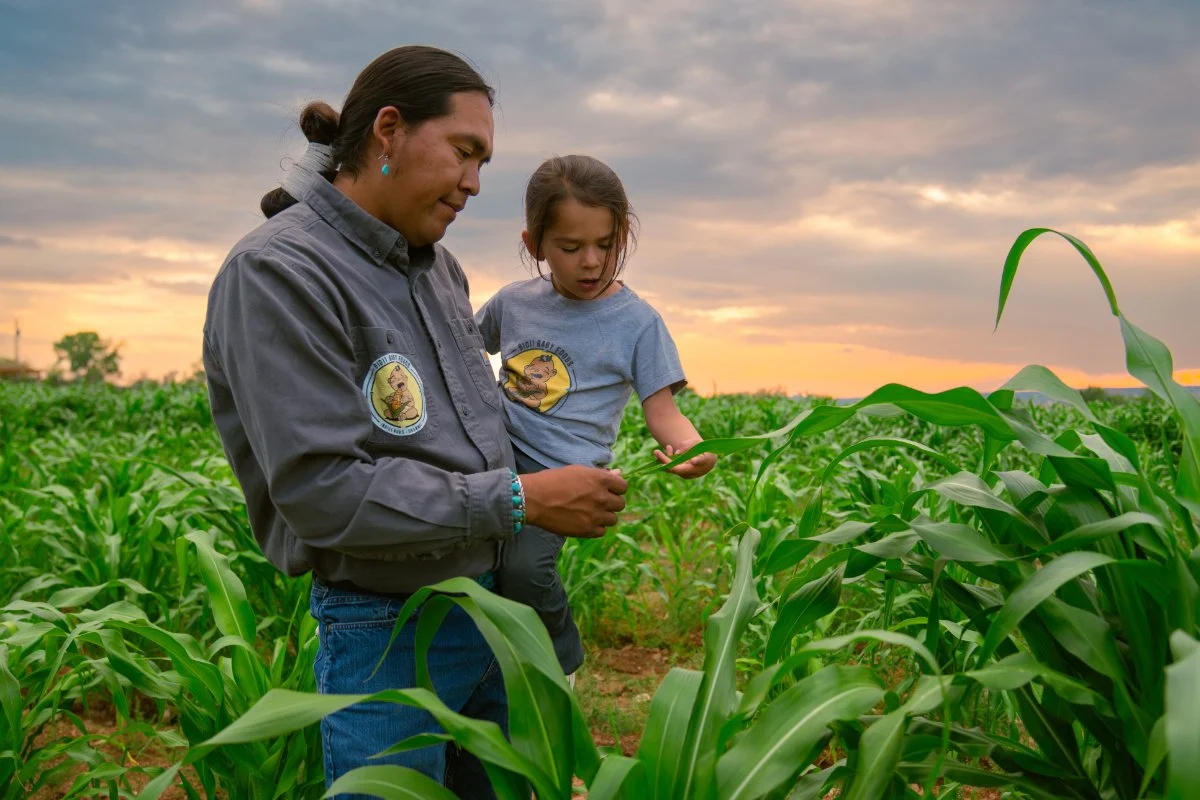
Zachariah Ben (Diné), a sixth-generation Navajo farmer from Shiprock, New Mexico, is at the forefront of a burgeoning movement to reclaim Indigenous food sovereignty through his enterprise, Bidii Baby Foods. Co-founded with his wife, Mary, the company is dedicated to providing fresh, locally sourced, and culturally significant baby food, challenging the pervasive presence of processed alternatives on the Navajo Nation. This initiative not only addresses critical issues of food insecurity and public health within Native communities but also serves as a powerful testament to the enduring wisdom of traditional ecological knowledge and the resilience of Indigenous entrepreneurship.
The Roots of Revolution: A Personal and Community Need
The genesis of Bidii Baby Foods in March 2021 was deeply personal for Zachariah and Mary Ben, coinciding with the birth of their son, Yabiito Yehoshzho, whose name translates to "water of the sky." Amidst the uncertainties of the pandemic, the couple confronted a stark reality: the scarcity of healthy, organic baby food options within the vast expanse of the Navajo Nation. The region, a USDA-recognized food desert spanning over 27,000 square miles with only 13 grocery stores, highlighted a systemic failure to provide adequate nutritional resources for its residents. Mary Ben’s background in public health further underscored the alarming implications of heavily processed commercial baby foods on early childhood development and long-term health.
The Navajo Nation, like many Indigenous communities, faces disproportionately high rates of diet-related illnesses, including type 2 diabetes. According to the Centers for Disease Control and Prevention (CDC), American Indians and Alaska Natives are more than twice as likely as non-Hispanic whites to have diagnosed diabetes. This health crisis is often exacerbated by limited access to fresh produce and culturally appropriate dietary guidance. Traditional medical advice, often recommending diets reliant on expensive, inaccessible health food stores, proves impractical for many residents who may lack basic amenities like electricity or running water. Bidii Baby Foods emerged from a desire to offer a realistic, empowering alternative: to "put more options on the table" by normalizing consistent access to healthy, traditional foods, thereby shaping children’s palates and improving health outcomes from an early age.
Cultivating Heritage: Traditional Methods Meet Modern Demands
Zachariah Ben’s agricultural lineage runs deep, rooted in generations of farming near Shiprock. While he grew up cultivating staples like corn, beans, and squash, the birth of Yabiito transformed his perspective from viewing these as mere cash or ceremonial crops to recognizing their profound importance for daily sustenance and health. This shift marked a conscious dedication to cultivating heritage foods for his family. The initial season, dedicated entirely to Yabiito, served as Bidii’s practical "genesis," a living case study in the potential of traditional farming.

The company’s approach is deeply informed by ancestral Diné processes. For their corn, a cornerstone crop, Ben and his family employ methods passed down through generations. After harvest, the corn is steamed in underground pits for 12 hours, utilizing local wood and a small amount of water to create a natural pressure-cooking environment. This technique not only imparts a unique flavor but also preserves nutritional value. Following steaming, the corn is carefully dehydrated on drying racks for a week. Starting with just two acres and rudimentary tools – a shovel and seeds – Bidii Baby Foods has expanded significantly, now producing approximately two tons of dehydrated corn, cornmeal, and corn-based cereals annually. This expansion has included leasing farmland, notably his grandmother’s 16 acres, and diversifying crops to include various types of corn (white, yellow, blue, green), summer and winter squash, watermelon, cantaloupe, casaba melons, beans, and amaranth. This meticulous, tradition-steeped production process ensures that each Bidii product carries not just nutritional value but also cultural integrity.
Navigating the Labyrinth: Challenges on the Reservation
Despite the clear demand for their products, Bidii Baby Foods encountered formidable obstacles inherent to operating within the Navajo Nation. Farming on the reservation is complicated by a confluence of systemic issues: antiquated irrigation infrastructure, complex water rights disputes, and layers of jurisdictional bureaucracy. The Navajo Nation’s ongoing legal battles with surrounding states over Colorado River water rights highlight a larger issue: while Indigenous people often hold senior water rights, the lack of developed agricultural land on the reservation means these opportunities often "flow by." This was starkly evident when Bidii Baby Foods lost a significant portion of their crops due to water access issues, ranging from sabotaged irrigation lines to denied access. Attempts to secure crop insurance revealed another layer of complexity, as the Navajo Nation government reportedly claims a blanket policy for all agricultural lands, receiving payouts for drought that do not "trickle down" to individual farmers.
Beyond resource access, the Bens faced significant infrastructure deficits. The absence of a publicly accessible, FDA-registered commercial kitchen or manufacturing facility on the Navajo Nation necessitated a four-hour roundtrip commute every other day for four years to a leased facility in Gallup, New Mexico. This logistical burden, which even led to a truck transmission rebuild, underscores the severe lack of local support for food producers. Furthermore, the Bens reported experiencing "lateral violence" within local tribal politics, characterized by bureaucracy, nepotism, and resistance to progress. Zachariah Ben’s personal experience of being denied the transfer of his grandmother’s farmland, despite proper documentation and her wishes, exemplifies these internal challenges. This "pedagogy of oppression," as Ben describes it, where historical trauma manifests as internal barriers to advancement, became a powerful motivator for the couple to seek alternative pathways for growth and community empowerment.
Partnerships and Progress: Building Bridges to Market
The turning point for Bidii Baby Foods’ market strategy came in their third year with their engagement in the New Mexico Grown program. This state-funded initiative provides vital support to local farmers, ranchers, and producers, offering food safety training, inspection, and technical assistance to facilitate sales to New Mexico institutions. This partnership was crucial, not only for establishing Bidii Baby Foods as a sustainable business but also for aligning with their core values of prioritizing children and communities. Through New Mexico Grown, the company has been able to feed tens of thousands of children annually through schools, childcare programs, and food banks, significantly expanding their reach and impact.
The company’s growing success also attracted interest from larger commercial entities like Whole Foods and Trader Joe’s, and even an invitation to appear on Shark Tank. However, at the time, issues with water security prevented them from guaranteeing the consistent supply required for such large-scale retail partnerships. This strategic decision to prioritize institutional sales allowed Bidii Baby Foods to solidify its foundation while staying true to its community-focused mission. The subsequent expansion, driven by the birth of their daughter, Nadaa’tsui Yidehaya ("yellow corn, she emerged") in 2023 – born traditionally in their cornfield – reinforced their commitment to normalizing traditional foods and ensuring access for all children on the reservation.

CHIYAAN: A Hub for Health and Heritage Beyond the Reservation
The ongoing challenges within the reservation, including threats to their family’s safety, propelled the Bens to seek a solution off-reservation. In January 2026, a significant milestone was reached with the acquisition of a 47-acre property in a border town, complete with a 1,900-square-foot food manufacturing facility. This pivotal move was made possible through a collaborative effort involving several key financial partners, including Mad Capital, New Mexico Climate Investment Center, New Mexico Community Capital, Rooted Relative Fund, 1st Sovereign Capital, and 1st Sovereign Capital.
This new facility, named CHIYAAN (Navajo for "food," and an acronym for "Child Health Improvement through Youth Aggregated Ancestral Nutrition"), has become the central hub for Bidii Baby Foods’ operations. It now hosts the majority of their farming and processing activities, and critically, serves as the home for their Farmer-in-REZidence Program. Launched in 2023, this incubator initiative trains young Indigenous farmers (under 30) in sustainable agricultural business development, providing access to piped irrigation, heavy equipment, heirloom seeds, mentorship, and traditional ecological knowledge. The program aims to create a robust network of young farmers who can share resources and develop collective markets. To date, six farmers have been supported, with three more in the current cohort; two have established their own farm businesses (ReRooted Farm and Skoden Farm), two now work full-time with Bidii, and one is developing the program’s curriculum for Navajo Technical University.
The CHIYAAN facility represents more than just a production site; it is a communal space designed for growth, safety, and cultural connection. It offers a safe environment for the Ben children to participate in farming, features a playground, and hosts regular visits from schools and community members. Since its opening in March 2026, it has welcomed over 300 visitors, many of them youth. While the ideal location for such a facility would have been on the reservation, the systemic barriers—lack of "equity" in tribal trust land and short 25-year leases for small businesses—made investment nearly impossible. The off-reservation location, therefore, became a necessary step to achieve their vision of establishing the region’s primary traditional Indigenous food production and manufacturing hub. This decision, while pragmatic, highlights the ongoing need for policy reform and infrastructure development within tribal lands to support Indigenous economic development and food sovereignty initiatives.
Sowing the Future: Intergenerational Knowledge and Global Vision
At the core of Bidii Baby Foods’ philosophy is the profound connection between the land, food, and people, deeply rooted in traditional ecological knowledge. Zachariah Ben emphasizes that "the corn loves being surrounded by children, because the corn are children themselves." This perspective underscores a holistic approach where positive energy and intention in farming directly enhance the quality of the food. The involvement of his children in farming is not merely a chore but a sacred transmission of knowledge: "Our kids understand that we need to take care of the corn, because the corn takes care of us." This intergenerational learning extends beyond agricultural techniques to encompass the ritualization of practice, including donating crops for ceremonies and to those in need, fostering a cycle of reciprocity and community care.
The "Farmer-in-REZidence Program" is a direct extension of this philosophy, empowering the next generation to become stewards of the land and their communities. By addressing the disconnect many Indigenous youth feel from their culture, the program fosters a renewed sense of identity and purpose through ancestral practices. Zachariah Ben’s vision for Bidii Baby Foods transcends local impact; it aims to "re-establish humanity" on a global scale. This expansive view, rooted in the Diné understanding of being "the people" for the world, envisions the farm as a microscopic model for nurturing individuals—physically, mentally, and spiritually. Visitors to CHIYAAN leave not only with "bellies full" but also with "minds full," experiencing a deep connection to the earth and their heritage.

The company’s name itself, "Bidii," encapsulates this abundance mindset. Meaning "always hungry," it is colloquially used to describe someone who loves food. Historically, a "bidii" person was skilled in hunting and providing, embodying self-sufficiency. Today, for Zachariah Ben, being "bidii" signifies a commitment to taking care of oneself and the community with an abundance mindset, ensuring that future generations are not just fed, but truly nourished in every sense.
Conclusion: A Model for Sustainable Indigenous Food Systems
Bidii Baby Foods stands as a powerful example of Indigenous innovation and resilience in the face of systemic challenges. By blending ancestral agricultural practices with modern business acumen, Zachariah and Mary Ben have created a vital enterprise that addresses food insecurity, promotes health, and preserves cultural heritage. Their journey, marked by personal dedication, community engagement, and overcoming bureaucratic hurdles, underscores the critical need for robust support systems for Indigenous farmers and entrepreneurs.
The establishment of the CHIYAAN facility, while born out of necessity to circumvent reservation-specific obstacles, offers a tangible model for creating self-sustaining, culturally relevant food systems. It demonstrates the potential for communal hubs to foster economic opportunity, intergenerational knowledge transfer, and holistic well-being. Bidii Baby Foods’ commitment to empowering young Indigenous farmers through the Farmer-in-REZidence Program is crucial for building a sustainable future, ensuring that the legacy of traditional ecological knowledge continues to thrive. As communities worldwide grapple with issues of food security and environmental sustainability, the lessons from Bidii Baby Foods offer invaluable insights into the transformative power of Indigenous food sovereignty in nurturing not just bodies, but also cultures, communities, and indeed, humanity itself.