admin
admin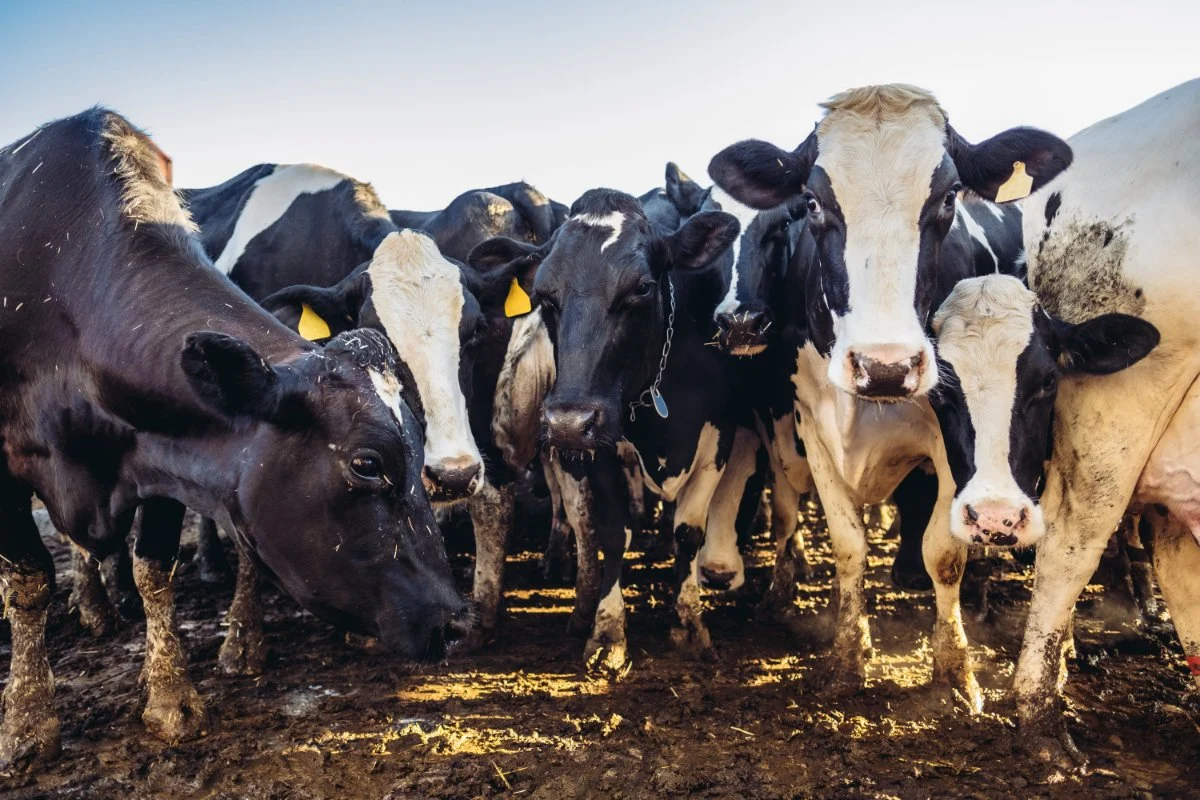
The landscape for industrial-scale biodigesters, long championed as a sustainable solution for managing the colossal waste output of concentrated animal feeding operations (CAFOs), is undergoing a dramatic shift. As federal and state financial incentives diminish and environmental opposition mounts, these systems, designed to convert manure-derived methane into biogas, are at a critical inflection point. The optimism that fueled a boom in the early 2020s is giving way to skepticism, legal challenges, and a reevaluation of their true environmental and economic benefits.
The Rise of Biodigesters and Their Initial Promise
For decades, the agricultural sector has grappled with the environmental consequences of large-scale livestock farming. Concentrated Animal Feeding Operations (CAFOs) house thousands of animals, generating vast quantities of manure that, when stored in open lagoons, release significant amounts of methane—a potent greenhouse gas. Against this backdrop, biodigesters emerged as a seemingly elegant solution. By capturing the methane produced through anaerobic decomposition of manure and converting it into biogas (primarily methane), these systems promised to mitigate emissions, generate renewable energy, and even provide additional revenue streams for farmers.
In central Wisconsin’s Kewaunee County, a microcosm of nationwide agricultural shifts, the transformation has been stark. Lynn Utesch, who began his grass-fed beef operation over two decades ago, has witnessed his modest 150-acre farm, home to 30-some cows, become encircled by massive dairy operations housing thousands of animals. Kewaunee County now boasts one of the country’s highest proportions of factory-farm dairy operations, their rapid expansion bolstered in part by the installation of biodigesters. These systems allow operators to sell biogas to fuel companies, claiming lucrative renewable energy credits through state and federal programs, thereby passing on a portion of this revenue to the dairies. Supporters, including the American Biogas Council, applaud this technology as a dual benefit: reducing the environmental footprint of manure lagoons and generating a renewable fuel that can offset fossil fuels. Some farms, such as California’s organic Straus Family Creamery, have successfully used biogas to power their own operations for years, even feeding excess electricity back into the grid.
Unraveling the Green Narrative: Growing Criticisms and Perverse Incentives
However, the narrative of biodigesters as an unmitigated environmental good has increasingly been challenged. Critics, including environmental groups, small farmers, and academics, contend that the economic incentives tied to biogas production inadvertently encourage dairies to expand their herds, leading to a perverse outcome: more cows mean more manure, and thus, more biogas potential and greater subsidies. This expansion, they argue, exacerbates existing problems of air and water pollution, negating any supposed climate benefits.

Studies have lent weight to these concerns. A 2024 report by Friends of the Earth revealed that Wisconsin dairies equipped with digesters expanded at an astonishing 52 times the rate of those without. Similarly, a California study conducted between 2016 and 2025 found that dairies typically added an average of 860 cows within three years of installing a biodigester, resulting in a net increase in methane emissions. This suggests that instead of solving the problem of industrial agricultural waste, biodigesters may be entrenching and expanding the very systems they were meant to mitigate.
Lynn Utesch articulates this sentiment forcefully: "Digesters have been touted as a cure for the many problems of the CAFO industry, while in reality all they do is multiply the problems. What digesters provide is a way for CAFOs to milk the taxpayers as much as they milk the cows." His observation underscores a fundamental critique: that these systems primarily benefit the largest operators, further widening the competitive gap between industrial farms and smaller, more sustainable operations.
Beyond the issue of scale, the environmental claims of biodigesters have also come under fire. Academics question the extent of actual carbon reduction benefits, particularly when biogas is refined into Renewable Natural Gas (RNG) and injected into the broader gas market, chemically indistinguishable from fossil natural gas. The process of refining and transporting RNG can introduce its own emissions, further complicating the "clean" energy claim. Moreover, while proponents highlight methane capture, critics point out that biodigester farms often still maintain large pits of raw manure awaiting digestion or holding digestate (the solid and liquid byproduct), which continue to emit odors and contribute to local pollution. Residents living near these facilities frequently report foul odors, a mix of manure and chemical fumes, contradicting the notion that digesters eliminate the smell associated with large-scale manure management.
A Shifting Financial Landscape: State and Federal Support Wanes
Despite these mounting concerns, biodigesters have historically enjoyed substantial financial backing from state and federal governments, alongside private investment. However, after a significant boom in the early 2020s, the financial outlook has become considerably dimmer on several fronts, marking a critical juncture for the industry.
California’s Low Carbon Fuel Standard (LCFS): Many biodigesters, including those in Kewaunee County, have historically profited from California’s Low Carbon Fuel Standard (LCFS) program. This program mandates fuel companies to reduce the carbon intensity of fuels sold in the state, allowing them to purchase credits from biogas producers, even if the biogas originates outside California, provided it could theoretically enter the state’s fuel market. The credit value is based on "avoided methane" emissions, meaning the methane that would have been released from open lagoons. This framework has enabled large dairies to receive substantial payouts for their methane reduction efforts.
However, the value of these credits has plummeted. In early 2020, an LCFS credit was worth over $200; by early 2025, this value had fallen to just over $50, according to the California Air Resources Board (CARB). In response, CARB implemented amendments last summer to bolster credit values and expand eligibility to industrial processes and hydrogen production. This move, however, was met with immediate legal challenge. Food & Water Watch, alongside other environmental groups, filed a lawsuit alleging that the LCFS is already creating "perverse outcomes" and that the 2025 amendments would "exacerbate those problems," undermining the program’s integrity and harming local environmental quality and the climate. They argue that states should design clean transportation programs that avoid disproportionately incentivizing biodigesters, pointing to New Mexico’s recently adopted clean transportation fuel program, which includes safeguards against credits based on dubious "avoided methane" emissions.

Federal Tax Credits and USDA Funding Hurdles: At the federal level, the Clean Fuel Production Credit, introduced under the Trump administration, offered another potentially lucrative revenue stream for biodigesters. This credit uniquely allowed biodigester operators to claim their greenhouse gas footprint as "less than zero"—and get paid for these "negative emissions"—specifically for biogas derived from manure. In February, the Treasury Department issued proposed rules to implement this credit, but environmental groups are actively lobbying to remove the exception that allows biogas from manure to claim negative emissions, citing concerns about its scientific basis and potential for abuse.
Further undermining federal support, the U.S. Department of Agriculture (USDA) has paused critical funding programs. The Rural Energy for America Program (REAP), which provided $150 million to farm biogas projects in 2023 through grants and loan guarantees, faced a significant setback. In January, the USDA temporarily halted federal loan guarantees for biodigesters for 90 days, citing an alarming loan delinquency rate of 28 percent. This pause was extended through the end of 2026, with an analysis by The New Lede revealing that a single Wisconsin company, BC Organics, was responsible for the vast majority of these defaults. This financial instability has provided additional ammunition for environmental and community groups, who had already filed a lengthy petition with the USDA in January 2026, requesting an end to federal support for biodigesters, arguing they erode rural economies and health. Kara Goad, senior associate attorney for Earthjustice, articulated the groups’ stance: "We ask for no more grants or loan guarantees to digesters, ever. That would be the real victory."
The Industry’s Resilience: Emerging Markets and Private Capital
Despite these significant headwinds in traditional state and federal funding, the biodigester industry and its powerful backers remain bullish. Industry boosters, including private equity investors and fossil fuel companies with vested interests in biogas, are actively exploring new avenues to maintain profitability. The American Biogas Council, which notes nearly 500 biodigesters currently operating at dairies nationwide, aims to see this number increase to nearly 3,000 dairies with over 500 cows.
One key strategy involves diversifying feedstock. Companies like Vanguard Renewables are developing biodigesters that process not only manure but also municipal food waste. This "co-digestion" boosts biogas volume and generates additional revenue through tipping fees, similar to those paid to landfills. While this can reduce landfill strain, critics warn of increased risks of spreading contaminants like PFAS and other pollutants, while simultaneously propping up the biodigester business model. Kathy Morrison, who successfully fought a food-waste-accepting biodigester near her Michigan orchard, recounts the "horrendous" odors, a mix of "poopy smell combined with weird chemical overtones," underscoring the community impacts of these expanded operations.
Beyond feedstock, new markets for selling biogas and credits are emerging globally. Shipping giants like Maersk and companies like Vanguard Renewables are exploring biogas as a sustainable maritime fuel. Farm biogas is also being pitched as a "sustainable" electricity source for energy-intensive data centers, many of which are being proposed near the very farming communities already burdened by expanding CAFOs. Furthermore, Treasury Department rules announced before the Trump administration made Renewable Natural Gas (RNG), including from biodigesters, eligible for potentially lucrative tax credits for clean hydrogen production. International carbon markets, operating on models similar to state fuel programs, offer another avenue for businesses to meet sustainability goals by purchasing credits. Sarah D’Onofrio, a lecturer at the University of Tennessee-Knoxville who has studied the boom-and-bust cycle of biodigesters, observes, "There’s always going to be another market. It’s a problem looking for a solution." This suggests that even as current incentives wane, the industry will pivot to exploit new opportunities, driven by profit and the demand for "green" credentials.
An Alternative Path: Sustainable Agriculture and Ecological Balance

For sustainable farming advocates, the entire "problem" that biodigesters ostensibly solve—the massive waste from CAFOs—is itself a byproduct of an unsustainable agricultural model. They argue that a more environmentally sound approach would negate the need for industrial-scale waste management technologies.
Lynn Utesch’s grass-fed beef operation exemplifies this alternative. His cows graze on rotating plots of pastureland, depositing manure as they wander. This manure decomposes aerobically, releasing minimal methane, and naturally fertilizes the soil. He notes that a steaming pile of manure from his bull naturally disappears within about two weeks, aided by dung beetles, mirroring the natural decomposition processes that once fertilized vast prairie grasses. "It’s like nature had this all figured out," Utesch muses.
Even for larger operations where cows may not be free to graze year-round, alternative manure management techniques exist. Manure composting, which involves combining solids with materials like sawdust, offers a low-emissions alternative to anaerobic decomposition. The resulting compost can be used as bedding or sold as fertilizer. California and Texas have both offered incentives and adopted regulations that promote manure composting, recognizing its environmental benefits.
Patrick Serfass of the American Biogas Council acknowledges composting as an important option but argues that many large dairies lack the physical space required for extensive composting. However, Tyler Lobdell, staff attorney at Food & Water Watch, counters that this spatial constraint itself highlights the inherent problem: "Factory farm gas production only exists because of our current reliance on destructive factory farms. At its base it’s really, really simple—we shouldn’t be treating animals like widgets and putting them in factories to maximize corporate profits at the expense of communities and the environment. There should be no market for factory farm biogas. The only reason it exists at all is because of a problem we should fix."
As the financial viability of biodigesters becomes increasingly uncertain and environmental scrutiny intensifies, the agricultural sector faces a crucial choice. Will it continue to invest in technological fixes that may inadvertently perpetuate unsustainable practices, or will it pivot towards fundamental reforms that prioritize ecological balance and community well-being? The future of biodigesters, and indeed the future of agricultural sustainability, hangs in the balance.