admin
admin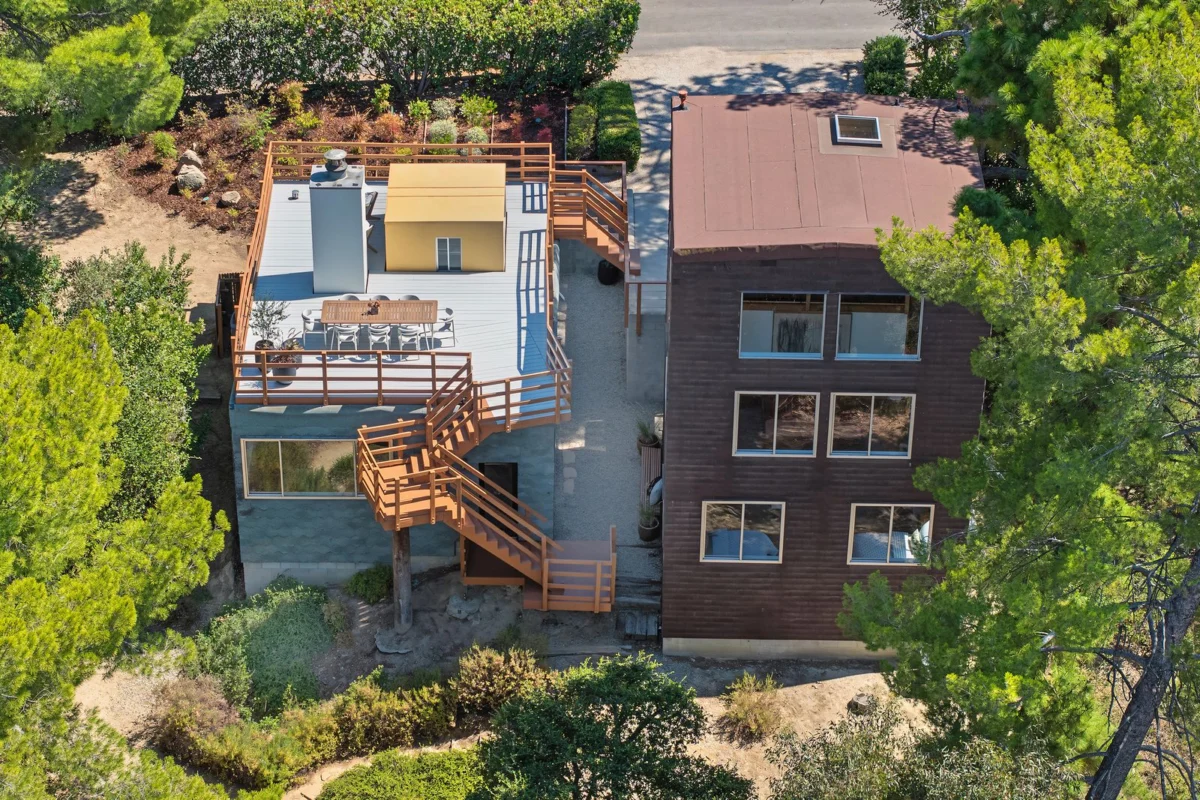
A rare opportunity has emerged for architectural connoisseurs and collectors, as the Benson House, a seminal early work by Pritzker Prize-winning architect Frank Gehry, has been placed on the market for $1,745,000. Located at 23685 Clover Trail in the Calabasas Highlands, this 1,719-square-foot residence, completed in 1981, features two bedrooms and three bathrooms, and stands as a testament to Gehry’s burgeoning experimental vision before his global renown. The listing represents a unique chance to acquire a formative piece of architectural history, meticulously documented and recognized for its profound influence on one of the most significant architects of our era.
A Precursor to Global Iconography: Gehry’s Early Los Angeles Period
Before the sweeping, titanium-clad forms of the Guggenheim Museum Bilbao or the intricate, stainless-steel curves of the Walt Disney Concert Hall defined his international reputation, Frank Gehry was already challenging conventional architectural norms in his native Los Angeles. The Benson House hails from this pivotal early period, specifically 1981, when his residential commissions served as a fertile ground for the radical ideas that would later reshape civic and cultural landscapes worldwide. During these years, Gehry’s domestic projects were not merely houses but intensely sculptural and experimental laboratories, pushing boundaries with an audacious spirit that belied their relatively modest scale and budget. This era, often characterized by a raw, deconstructivist approach, saw Gehry re-evaluating architectural elements, materials, and spatial relationships in ways that would lay the groundwork for his later masterpieces. The Benson House perfectly encapsulates this transitional phase, demonstrating the architect’s commitment to innovation in a residential context.
The Genesis of an Architectural Experiment: Robert Benson’s Vision
The commission for the Benson House came from law professor Robert ‘Bob’ Benson, a client who provided Gehry with an extraordinary degree of creative freedom. Benson’s directive, "Whatever you want to do, we will go for," was a gift to an architect eager to explore unconventional forms and materials. This unbridled trust allowed Gehry to imbue the project with a deeply personal and experimental force, leading him to later describe the Benson House as "one of my all-time favorite projects because the budget was so tight and so impossible." This budgetary constraint, rather than limiting creativity, often spurred Gehry to ingenious solutions, forcing him to re-evaluate the inherent qualities of readily available, often humble, materials. The resulting design reflects this intense period of exploration, showcasing a dialogue between constraint and unbounded imagination.
Deconstructivist Principles in Domestic Scale: Design and Materials
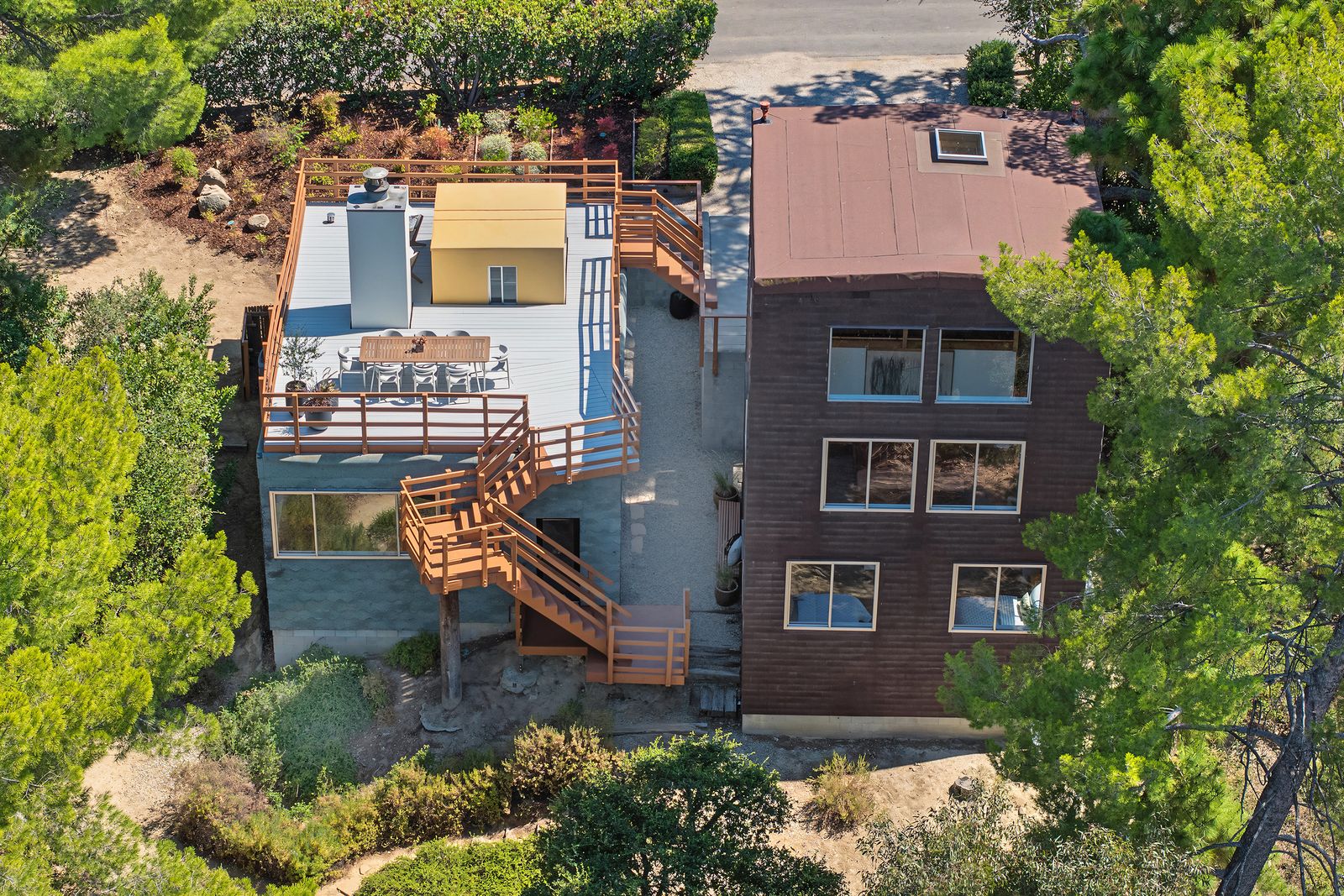
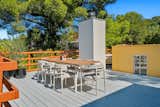
The architectural ingenuity of the Benson House begins with its site-specific response to the sloping terrain of the Calabasas Highlands. Gehry designed the structure to subtly detach from the hillside, creating a deliberate "moat-like negative space." This separation allows two distinct vertical volumes to emerge, articulating a dynamic relationship with the natural landscape rather than merely conforming to it. These two primary volumes—one housing the private bedroom wing, the other the communal living and gathering spaces—are not rigidly joined but rather connected by an expressive, "vertebrae-like wooden walkway." This interstitial element transforms the act of moving between private and public realms into a conscious experience of spatial discovery and sequence, a hallmark of Gehry’s experiential design philosophy. It forces occupants to engage with the architecture and the surrounding environment, blurring the lines between interior and exterior. Gehry himself noted this sculptural separation, stating, "It is like a Japanese sculpture, when you have two stones almost touching," highlighting the delicate balance and tension he sought to achieve.
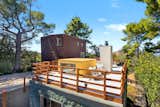
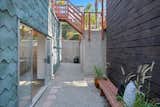
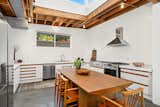
In terms of materiality, the Benson House showcases Gehry’s pioneering use of industrial and everyday elements, recontextualized to achieve high architectural impact. The exterior is clad in humble asphalt shingles, a choice Gehry reportedly drew from his observations of working-class houses in Queens, New York. This seemingly mundane material, typically relegated to roofs, is elevated to a primary facade treatment, challenging traditional notions of architectural aesthetics and value. Inside, the raw material palette continues with concrete floors, exposed unvarnished rafters, and other untreated surfaces. These raw material contrasts underscore Gehry’s early language of recontextualized vernacular, California modernism, and his fundamental belief in architecture as sculpture. The visible structural elements and unrefined finishes celebrate the process of construction and the intrinsic beauty of materials, rejecting polished facades in favor of an honest, almost brutalist, expression. This approach was revolutionary for residential architecture at the time, anticipating the broader deconstructivist movement that would gain prominence in the ensuing decades.
Chronology and Enduring Recognition
The Benson House’s timeline underscores its significance:
- 1981: Completion of construction, marking a crucial moment in Gehry’s experimental residential work.
- Post-1981: The house quickly gained recognition within architectural circles as an important example of Gehry’s innovative approach. Its design principles and material usage became subjects of study and critique, contributing to the broader discourse around postmodern and deconstructivist architecture.
- Designation as Calabasas Historical Landmark No. 2: This official recognition by the city of Calabasas cements its status as a culturally and historically significant structure within the region. Such landmark designations are rare for residential properties and highlight the house’s exceptional architectural merit and contribution to the area’s heritage.
- Archived at the Getty Research Institute: The inclusion of the Benson House’s plans, drawings, and related documentation within the esteemed Getty Research Institute’s archives further validates its historical and artistic importance. The Getty, a leading institution for the study of art and architecture, selectively curates its collections to preserve works of enduring scholarly interest, making the Benson House a documented artifact for future generations of architects and historians.
These markers of recognition confirm that the Benson House is not merely a dwelling but a vital piece of architectural scholarship and a tangible record of Gehry’s creative evolution.
The Market for Architectural Masterpieces: A Singular Opportunity
The listing of the Benson House for $1,745,000 is an event of considerable note within the real estate and architectural communities. Early residential works by architects of Frank Gehry’s stature rarely come to market, making this a truly singular opportunity for prospective buyers. Properties with such a direct provenance to a living legend are often considered more than just real estate; they are cultural assets, investments in art, and fragments of architectural history.

The market for architecturally significant homes, particularly those by Pritzker laureates, operates on principles distinct from conventional luxury real estate. Buyers in this niche segment are typically sophisticated collectors, patrons of the arts, or individuals deeply invested in design heritage. They are often willing to pay a premium for authenticity, historical importance, and the unique experience of inhabiting a work by a master architect. The relatively modest size of 1,719 square feet for a property approaching $1.75 million in Calabasas might seem unusual to the uninitiated, but for those who understand the intrinsic value of its authorship and historical weight, the price reflects its rarity and significance. Furthermore, its landmark status and archival presence at the Getty add layers of prestige and ensure its long-term historical preservation and value appreciation.
Broader Impact and Implications: A Foundation for Deconstructivism
The Benson House, though conceived as a private residence, carries broader implications for understanding Gehry’s trajectory and the evolution of modern architecture. It stands as a critical bridge between his earlier, more conventional projects and the monumental, deconstructivist forms that would later define his global legacy. The themes explored within its compact footprint—the dialogue with the landscape, the separation of volumes, the experiential journey through space, and the re-evaluation of common materials—are all foundational elements of his later, larger-than-life works.
For instance, the strategic placement of distinct volumes and the creation of "negative space" in the Benson House can be seen as an early exploration of the complex massing and spatial tension evident in the Guggenheim Bilbao, where seemingly disparate forms coalesce into a unified, yet dynamic, whole. Similarly, the "vertebrae-like walkway" foreshadows Gehry’s fascination with circulation as an integral part of the architectural experience, a concept refined in the grand staircases and ramps of his public buildings. The "humble" asphalt shingles, concrete floors, and exposed rafters represent a direct challenge to the polished veneers of mainstream modernism, advocating for an aesthetic rooted in honesty and material integrity. This raw, expressive quality would evolve into the dramatic, fragmented compositions of his later career, where industrial materials like corrugated metal and chain-link fencing were famously used to create sophisticated, high-art structures.

The Benson House serves as a microcosm of Gehry’s architectural philosophy, demonstrating his ability to infuse even a domestic commission with intellectual rigor and artistic ambition. It highlights his early commitment to creating buildings that are not just functional spaces but powerful, emotive sculptures that engage the occupant in a continuous dialogue with their environment.
In conclusion, the availability of the Benson House is more than a real estate transaction; it is a moment to reflect on the origins of a revolutionary architectural career. It offers an unparalleled opportunity to acquire a tangible piece of Frank Gehry’s formative genius, a structure that embodies the experimental spirit and innovative material use that would ultimately redefine contemporary architecture on a global scale. As Calabasas Historical Landmark No. 2 and a documented work at the Getty Research Institute, its place in architectural history is secured, making it a truly exceptional offering for discerning buyers worldwide.