admin
admin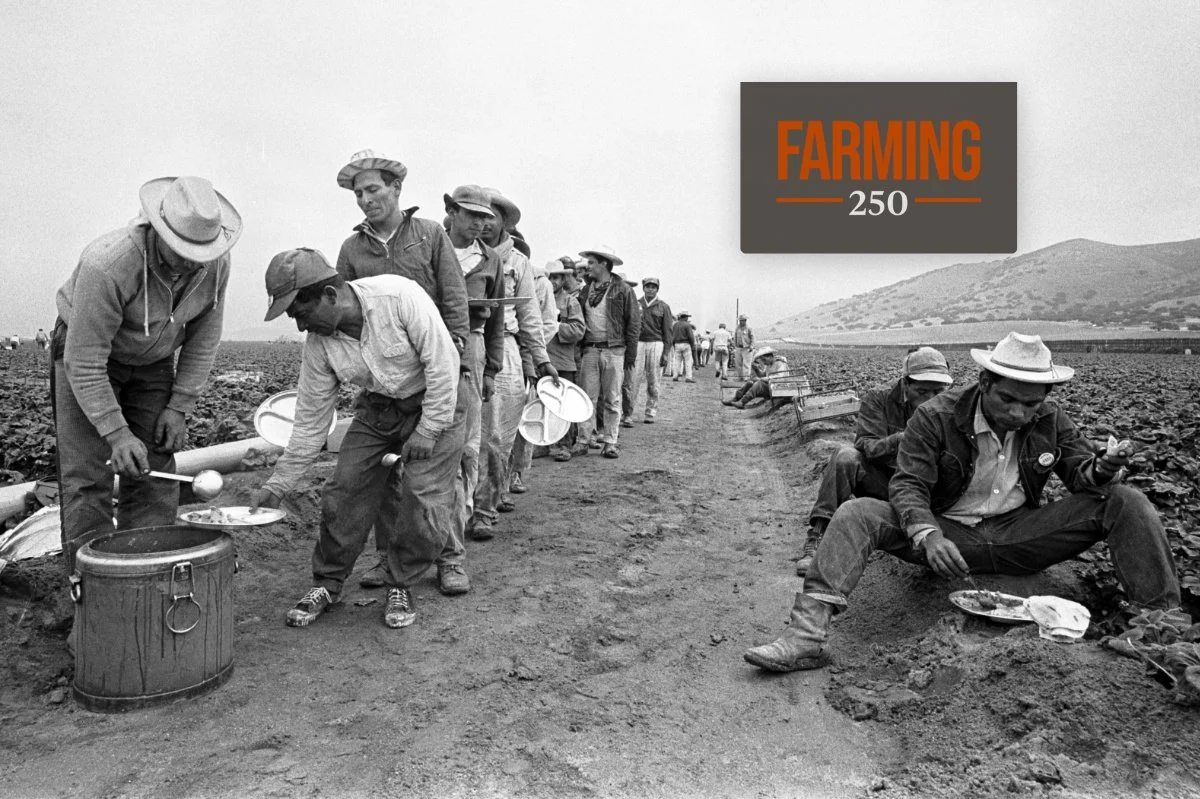
The landscape of American agricultural labor is undergoing a dramatic transformation, marked by an explosive surge in the utilization of the federal H-2A guestworker visa program. In 2005, approximately 50,000 individuals entered the U.S. to perform farm work under this program. A decade later, government data reveals that figure had tripled. By 2024, less than a decade further on, the number had nearly tripled again, approaching 400,000 workers. This eight-fold increase in less than two decades underscores a deepening paradox: despite this unprecedented reliance on foreign guestworkers, U.S. farms are grappling with labor shortages more acutely than ever before. This critical juncture is the culmination of several complex and overlapping trends, including increasing corporate consolidation within the agricultural sector, evolving U.S. immigration policies, and a diminishing willingness among U.S. citizens to engage in demanding farm labor.
The Intensifying Labor Challenge
"We’ve been an industry that has been labor challenged for a long time," stated John Hollay, president and CEO of the National Council of Agricultural Employers (NCAE), emphasizing the escalating severity of the situation. "But it absolutely has gotten more acute." This sentiment resonates across the agricultural community. House Agriculture Chairman G.T. Thompson (R-Pennsylvania) recently confirmed that during his consultations with farmers nationwide for the upcoming farm bill, labor shortages emerged as one of the most pressing concerns, almost universally cited above other issues. In response to this mounting pressure, Chairman Thompson introduced a bill last month aimed at significantly overhauling the H-2A program, proposing changes that would further broaden its scope and potentially expand the number of farms and workers utilizing it.
This legislative proposal has, however, met with a mixed reception. Many agricultural stakeholders view the H-2A program as a measure of last resort, despite its rapid growth. Farmers often find the program cumbersome, laden with bureaucratic hurdles, and prohibitively expensive. Concurrently, farmworker advocates voice serious concerns that the program’s structure can foster exploitation and abuse. Since employers control critical aspects of a worker’s life—including housing, transportation, and their legal right to reside and work in the country—H-2A workers can be highly vulnerable to adverse conditions and rights violations. This dichotomy begs a fundamental question: given these inherent difficulties and criticisms, why are American farms increasingly dependent on a program widely perceived as imperfect at best?
A Deep-Rooted History of Migrant Labor in American Agriculture
The story of labor in American agriculture is inextricably linked to the recruitment and often exploitation of marginalized populations. Two and a half centuries ago, the agricultural economy of the nascent United States was built upon the brutal foundation of chattel slavery, with millions of enslaved Africans and their descendants forced to toil in the sugar, tobacco, cotton, and other fields. By 1860, the eve of the Civil War, historical records from institutions like the Colonial Williamsburg Foundation indicate that 2.5 million enslaved people, the largest number, were engaged in cotton cultivation. Following the abolition of slavery, many formerly enslaved individuals continued to provide labor to landowners, often under the exploitative sharecropping system.
As the 20th century progressed, a significant shift occurred towards hiring immigrants for farm work, typically targeting individuals with the fewest resources and opportunities in their home countries. Mary Mendoza, a Penn State historian specializing in U.S.-Mexico borderlands, articulates this historical pattern starkly: "American capitalism, especially in the agriculture industry, but also in general, rests on the bodies of racialized people, whether it’s forced labor through chattel slavery or coerced labor… really pulling from the poorest echelons of society." Mendoza, whose recent book, Deadly Divide: How Insects, Pathogens, and People Defied the U.S.-Mexico Border, delves into farm labor migration, highlights the enduring legacy of systemic reliance on vulnerable populations.
The Bracero Program: A Precursor to H-2A
A pivotal chapter in this history is the Bracero program, a guestworker initiative that predates H-2A. Between 1942 and 1964, the Bracero program brought approximately 4 million Mexican laborers to the U.S. to address wartime agricultural labor shortages. While migration from Mexico was already underway, World War II intensified the demand. Mexican officials, eager for remittances to stimulate their economy, supported the temporary migration of their impoverished, often Indigenous, laborers.
The Bracero program was highly restrictive, targeting young, healthy, landless men. They often endured arduous journeys to processing centers, sometimes waiting for days or weeks for assessment. Mexican doctors examined them for physical strength and calloused hands. If accepted, they were transported, sometimes in crowded, unsanitary cattle cars lacking basic amenities, to the U.S. border. Upon arrival, American doctors conducted further examinations, often perpetuating xenophobic narratives about Mexican immigrants being unclean or diseased—conditions, Mendoza notes, that were frequently created or exacerbated by the dehumanizing process itself. Workers were infamously sprayed with DDT and other toxic chemicals to eliminate lice before being sent to selection areas where farmers would physically inspect and choose laborers, sometimes by feeling their muscles.
Braceros worked in nearly every U.S. state, though concentrations were highest in Western agriculture. The work was grueling, with long days in difficult conditions. Despite federal regulations meant to protect workers, lax enforcement by government agents meant that unsanitary housing, lack of running water, and other violations were rampant and frequently unaddressed. The program’s termination in 1964 coincided with the passage of the Immigration and Nationality Act of 1965, which introduced the first numerical limits on immigration from Latin America. "It was a much bigger immigration law, but that was a component that really affected Mexico and Mexican immigration," Mendoza explained, adding that this marked "a push to increasingly control the border, which leads us to where we are today."
The Rise of Undocumented Labor and NAFTA’s Impact
This increased border control did not halt migration from Mexico and Central America; instead, it funneled it into unauthorized channels. Many individuals seeking farm work in the U.S. began doing so without legal documentation. The North American Free Trade Agreement (NAFTA) in the 1990s further exacerbated this trend. By opening Mexican markets to heavily subsidized U.S. corn, NAFTA caused the price Mexican farmers could command for their own corn to plummet by over 65 percent, driving millions out of business. Facing economic ruin, many Mexicans, particularly those from rural farming communities, sought livelihoods across the border.
Consequently, the demographic composition of the U.S. agricultural workforce shifted dramatically. U.S. Department of Agriculture (USDA) data shows that in 1990, just over half of U.S. crop farmworkers were immigrants, with about 14 percent lacking legal status. By 2000, more than three-quarters were foreign-born, and over half of those lacked legal status. On a parallel track, the H-2A program, established within the Immigration Reform and Control Act of 1986, began its slow growth, particularly as immigration laws became more restrictive, especially after the events of September 11, 2001.
The Current State of Farm Labor and H-2A’s Mechanics
In recent decades, the U.S. farm labor landscape has been characterized by a combination of undocumented immigrants, immigrants with legal status, U.S. citizens, and a rapidly expanding cohort of H-2A visa holders. U.S.-born workers now represent the smallest share of the workforce. In 2022, the USDA estimated that approximately 70 percent of crop farmworkers were born outside the U.S. The most recent USDA National Agricultural Workers Survey (NAWS) indicates that roughly 60 percent of surveyed crop workers hailed from Mexico, 6 percent from Central America, and 2 percent from other countries.
The NAWS data also reveals that foreign-born workers in the U.S. have, on average, been in the country for about 20 years, with over 70 percent residing for at least 15 years. Crucially, these workers are increasingly "settled" in one location, a departure from the historical pattern of highly mobile migrant workers who followed seasonal harvests across the country. These demographic shifts are key drivers behind the increasing reliance on H-2A, according to John Hollay of NCAE. "The domestic population that’s here in the United States that is still engaged in agriculture, they’re less mobile than they were before," he explained. Furthermore, large, consolidated farms are often "not located in places where you can necessarily attract the local workforce." For instance, about 70 percent of U.S. lettuce is now harvested in California’s Salinas Valley, an area with immense, concentrated labor needs.
Beyond reduced mobility, the existing immigrant farmworker population is aging, and fewer young people, regardless of origin, are choosing farm work. Political factors also play a significant role. Under administrations like that of former President Donald Trump, fear of immigration enforcement has led many farmworkers to avoid work, impacting labor availability. Crackdowns have not only deterred new immigration but have also led to increased deportations and departures, creating ghost towns in some agricultural communities.
The H-2A program, while designed to fill temporary agricultural labor shortages, has become a complex and often contentious necessity. To participate, employers must demonstrate that there are not enough U.S. workers available and willing to perform the work and that hiring foreign workers will not adversely affect the wages and working conditions of similarly employed U.S. workers. They are required to provide free housing, transportation to and from the worksite, and pay a specific wage known as the Adverse Effect Wage Rate (AEWR), which varies by state and is often higher than state minimum wages. Farmers also bear significant recruitment, visa application, and transportation costs. These requirements, while intended to protect workers, are precisely what many farmers find burdensome and expensive.
In 2022, a bipartisan compromise farm-labor reform bill nearly passed Congress. This legislation would have offered a pathway to legal status for some existing farmworkers while simultaneously expanding the H-2A program. Despite garnering support from a broad coalition of farm and farmworker groups, the bill ultimately failed to secure enough votes, leaving H-2A as the primary, albeit flawed, mechanism for addressing labor deficits. As Hollay summarized, "It’s not something that farmers want to do. It’s something they have to do if they actually want to continue to harvest or plant. That’s just where things are at the moment."
Persistent Exploitation and the Future of H-2A
While most experts agree that the modern H-2A program is more regulated and generally safer than the Bracero era, exploitation undeniably persists. Many mid-size fruit and vegetable farms have successfully built long-term relationships with returning H-2A workers, fostering more stable and beneficial arrangements. However, documented cases of severe abuse continue to emerge. In recent years, the Department of Justice brought human trafficking charges against farms in Georgia for allegedly forcing H-2A workers to toil in dangerous conditions without pay in onion fields. Similarly, H-2A workers sued a Michigan blueberry farm over human trafficking allegations. The Centro de Los Derechos del Migrante (CDM), an organization advocating for migrant workers’ rights, has extensively documented common issues within the program, including discrimination, wage theft, harassment, and safety violations.
Under former President Joe Biden, efforts were made to improve worker protections within H-2A. Regulatory changes raised wages and introduced new safeguards. Biden’s USDA also initiated a pilot program to explore ways to make the program more equitable for both workers and employers, though this initiative has faced delays and hiccups due to funding freezes and grant reviews.
The bill introduced by House Agriculture Chairman Thompson at the end of June proposes significant changes, most notably allowing for year-round hiring within a program traditionally designed for seasonal help. This specific shift has drawn strong opposition from farmworker groups and unions. Milton Jones, president of the United Food and Commercial Workers Union (UFCW), voiced concerns that the "Securing Agriculture’s Workforce Act" would convert stable, permanent jobs into temporary ones, thereby diminishing workers’ earnings and their contributions to local economies.
Furthermore, Thompson’s bill seeks to permanently roll back many of the Biden-era protections, streamlining the process for farmers but potentially lowering wages for workers and introducing charges for housing. Diego Lopez, director of the United Farm Workers Foundation, sharply criticized the bill, labeling it a "wish list for H-2A employers on the backs of workers." Hollay, however, countered that the previous wage formula had forced farmers to pay "inflated wages" and that the proposed lower wages would more accurately reflect market conditions. (In 2025, the average H-2A wage was $18.12, varying by state). He argued that the previous trajectory was unsustainable, threatening to "bankrupt the employers to the point where they can’t afford the workers."
The Enduring Tension and Path Forward
This ongoing debate illuminates a fundamental tension deeply embedded in the history of American farm labor: a system that has consistently relied on the labor of individuals from other countries, yet often treats their presence and the value of their labor distinctly from that of U.S.-born citizens. A rare point of consensus across the spectrum is the shared understanding that agricultural policy has historically neglected the critical question of who performs the work, and the welfare of those individuals. While the farm bill is typically renewed every five years, significant legislative reform addressing farm labor has not passed Congress since the 1980s. As Hollay observed, for decades, "we just didn’t think about what it would take to have the modern workforce to meet the modern agriculture system that we kept building."
Looking ahead, experts like Mary Mendoza believe that even with the complicated legacy of the Bracero program, the H-2A program could be reformed to better serve farmworkers. Ultimately, she posits, "it would be even better to scrap it all together and have immigration reform." The path forward remains fraught with challenges, balancing the economic imperatives of a vital industry with the humanitarian obligations to its essential workforce. Comprehensive immigration reform that addresses both the labor needs of agriculture and the dignity and rights of farmworkers may be the only lasting solution to America’s enduring farm labor crisis.