admin
admin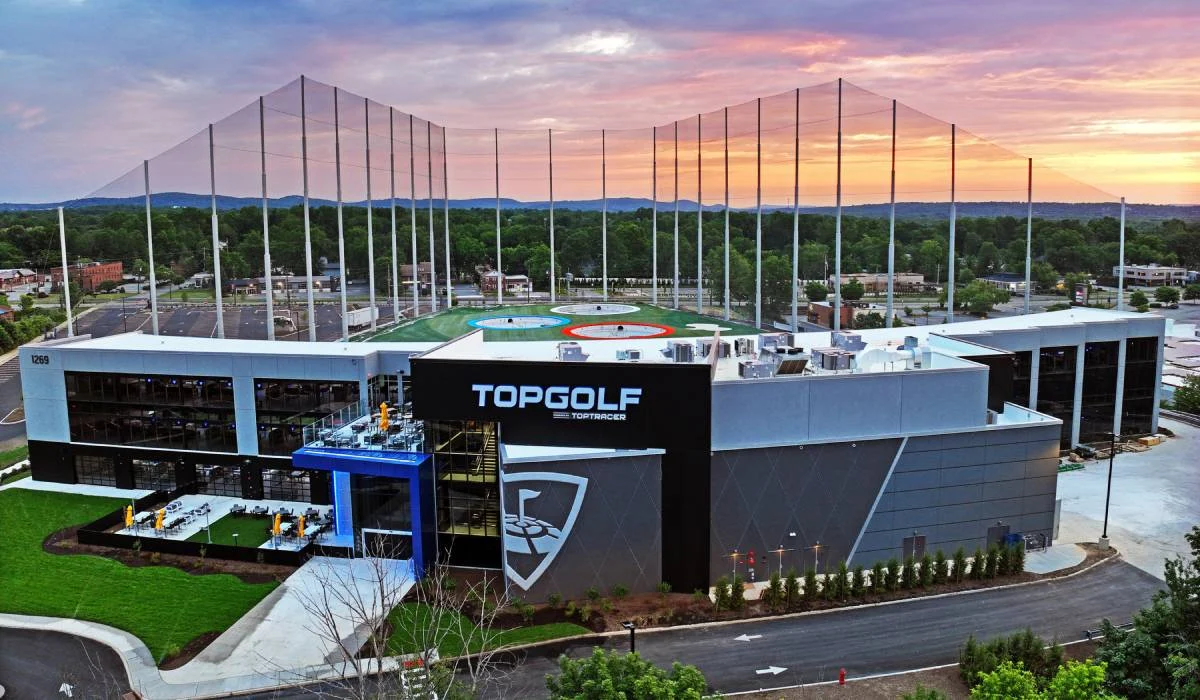
Topgolf, the global leader in golf-based entertainment, has officially announced the formation of Topgolf Media Networks, a dedicated division designed to capitalize on the company’s massive physical footprint and sophisticated digital ecosystem. This strategic pivot signals a fundamental shift in the company’s business model, transitioning from a venue-centric hospitality provider to a comprehensive media and sponsorship platform. By leveraging its 100-plus U.S. venues, millions of annual visitors, and a suite of proprietary digital tools, Topgolf aims to offer advertisers a seamless, omnichannel gateway to a highly engaged and diverse consumer base.
The launch of Topgolf Media Networks represents an ambitious move to institutionalize and scale the company’s existing sponsorship capabilities. Rather than selling fragmented, location-specific advertisements, the new division will offer holistic, data-driven partnerships that integrate physical activations, digital screen networks, and first-party consumer data. This "all-under-one-roof" approach is intended to provide brands with measurable engagement metrics that are often difficult to capture in traditional out-of-home (OOH) advertising environments.
A Strategic Shift Toward Connected Brand Experiences
The core objective of Topgolf Media Networks is to move beyond the traditional "signage and logo" sponsorship model. According to CEO David McKillips, the brand’s evolution has necessitated a more sophisticated approach to how it interacts with corporate partners. McKillips noted that with more than 42 million guests and golfers visiting Topgolf venues annually, the brand has transcended its origins as a mere driving range. The company now views its venues as social hubs where consumers spend an average of two hours per visit—a "dwell time" that far exceeds the engagement windows found in traditional sports stadiums or cinema advertising.
The new division is structured to offer customized partnerships that span the entire customer journey. This journey begins before the guest even arrives at the venue, via Topgolf’s owned digital channels and mobile app, continues during the visit through the network’s 28,000 digital screens, and extends post-visit through targeted digital follow-ups and original content. By integrating these assets, Topgolf Media Networks provides a "closed-loop" environment where brand interactions can be tracked and analyzed with a high degree of precision.
Leadership and Corporate Restructuring
The announcement of the media division follows a period of significant corporate transformation for Topgolf. In early 2026, the company completed a high-profile separation from Topgolf Callaway Brands, following a $1.1 billion transaction in which private equity firm Leonard Green & Partners acquired a 60 percent stake in the business. This separation allowed Topgolf to operate as an independent entity with a renewed focus on venue growth and digital innovation.
Under the new ownership structure, Topgolf has overhauled its executive leadership team to better align with its media and entertainment ambitions. David McKillips, who previously served as the CEO of CEC Entertainment (the parent company of Chuck E. Cheese), was appointed CEO to lead this new chapter. McKillips brings extensive experience in experiential entertainment and brand monetization.
To support the media-first strategy, Topgolf has also brought in specialists from across the technology and entertainment sectors. Jay Spears, formerly the Chief Information Officer at CEC Entertainment, has taken on the role of CIO at Topgolf, where he is tasked with overseeing the technological infrastructure required to power 28,000 synchronized digital screens and data collection systems. Jason Weatherford, a veteran of Palace Entertainment, has joined as Vice President of In-Venue Services, while Erin Chamberlin has been promoted to President and Chief Operating Officer. This leadership team is specifically curated to bridge the gap between physical operations and digital scalability.
Data-Driven Marketing and the "Retail Media" Parallel
Industry analysts have observed that Topgolf Media Networks shares several characteristics with the "Retail Media Network" (RMN) trend currently dominating the advertising landscape. Similar to how retailers like Amazon and Walmart use their first-party shopper data to sell targeted ads, Topgolf is utilizing its unique "first-party golf data" and guest behavior patterns.
Because Topgolf guests must check in, use an app for scoring, and often make reservations online, the company possesses a wealth of demographic and behavioral data. This allows Topgolf Media Networks to offer advertisers high-intent audience segments. For instance, a luxury automotive brand could target specific high-income zip codes during peak evening hours, while a beverage brand could align its messaging with specific menu orders or game-play milestones.
Furthermore, Topgolf’s reach is geographically significant. The company currently operates in 24 of the 25 largest media markets in the United States. This scale puts Topgolf in direct competition with major sports leagues—such as the MLB, NBA, and NHL—for national advertising budgets. Unlike professional sports, however, Topgolf offers year-round, daily engagement rather than a seasonal schedule of home games.
Chronology of Topgolf’s Evolution
The path to the launch of Topgolf Media Networks has been marked by several key milestones over the past two decades:
- 2000–2005: Topgolf is founded in the United Kingdom and expands to the United States, introducing RFID-chip technology in golf balls to gamify the driving range experience.
- 2010s: The company undergoes rapid expansion, evolving from a niche sports activity into a mainstream "eatertainment" destination.
- 2021: Callaway Golf Company completes a merger with Topgolf in a deal valued at approximately $2.6 billion, aiming to create a "golf powerhouse" spanning equipment and entertainment.
- 2024: Following a strategic review, Topgolf Callaway Brands announces plans to spin off Topgolf, citing the need for the entertainment division to pursue its own capital-intensive growth strategy.
- 2025: Leonard Green & Partners enters an agreement to take a majority stake in Topgolf, valuing the transaction at $1.1 billion.
- Early 2026: The ownership transition is completed, and David McKillips is named CEO.
- Late 2026: Topgolf Media Networks is officially launched as a standalone business unit.
The Power of Dwell Time and Interactive Content
One of the primary selling points of Topgolf Media Networks is the interactive nature of the guest experience. Traditional advertising often relies on passive consumption, such as a viewer watching a 30-second commercial. At Topgolf, guests are active participants. The company’s internal data suggests that the average group size is five people, and these groups are socially engaged throughout their stay.
The media network will also serve as a distribution platform for original content. Topgolf has already experimented with in-house programming, such as "Topgolf Chef Showdown" and various golf-instruction series. By expanding its licensing and original content arm, Topgolf Media Networks can create "branded entertainment" where a sponsor’s products are woven into the games and shows that guests watch while waiting for their turn in the hitting bay.
This interactive environment also allows for physical product sampling and experiential activations that digital-only platforms cannot replicate. For example, a consumer electronics company could provide "trial zones" within the hitting bays, allowing guests to test new hardware while their digital interactions are simultaneously captured by the Topgolf app.
Broader Industry Implications and Market Outlook
The move by Topgolf reflects a broader trend in the hospitality and sports industries where physical venues are being reimagined as media assets. As traditional television viewership continues to fragment, brands are searching for "un-skippable" environments where they can reach younger, affluent demographics. Topgolf’s audience skewing toward Millennials and Gen Z makes it an attractive partner for brands that are struggling to reach these cohorts through linear TV or traditional print.
Moreover, the separation from Callaway allows Topgolf to be "brand agnostic" in its media approach. While Topgolf will likely maintain a relationship with Callaway equipment, the media network is now free to pursue broader partnerships with a wider array of lifestyle, technology, and financial services brands that may have previously seen the entity as strictly a golf equipment subsidiary.
From a financial perspective, the creation of Topgolf Media Networks is expected to improve the company’s margins. Media and sponsorship revenue typically carries lower overhead than food, beverage, and labor-intensive venue operations. By increasing the "revenue per guest" through advertising without significantly increasing operational costs, Topgolf can accelerate its path to profitability under its new private equity ownership.
Conclusion and Future Projections
As Topgolf Media Networks begins its rollout, the company is expected to focus on deepening its technology integrations. This includes the potential use of augmented reality (AR) in hitting bays, which would provide even more immersive "real estate" for advertisers. Additionally, as Topgolf continues to expand internationally, the media network could eventually offer global brands a unified platform to reach consumers across multiple continents.
The success of this initiative will ultimately depend on Topgolf’s ability to prove the return on investment (ROI) to its partners. By utilizing its 28,000 screens and first-party data to provide transparent, real-time analytics, Topgolf is positioning itself not just as a place to play, but as a critical component of the modern marketing mix. In a world where consumer attention is the most valuable commodity, Topgolf has found a way to turn a two-hour social outing into a high-value media event.