admin
admin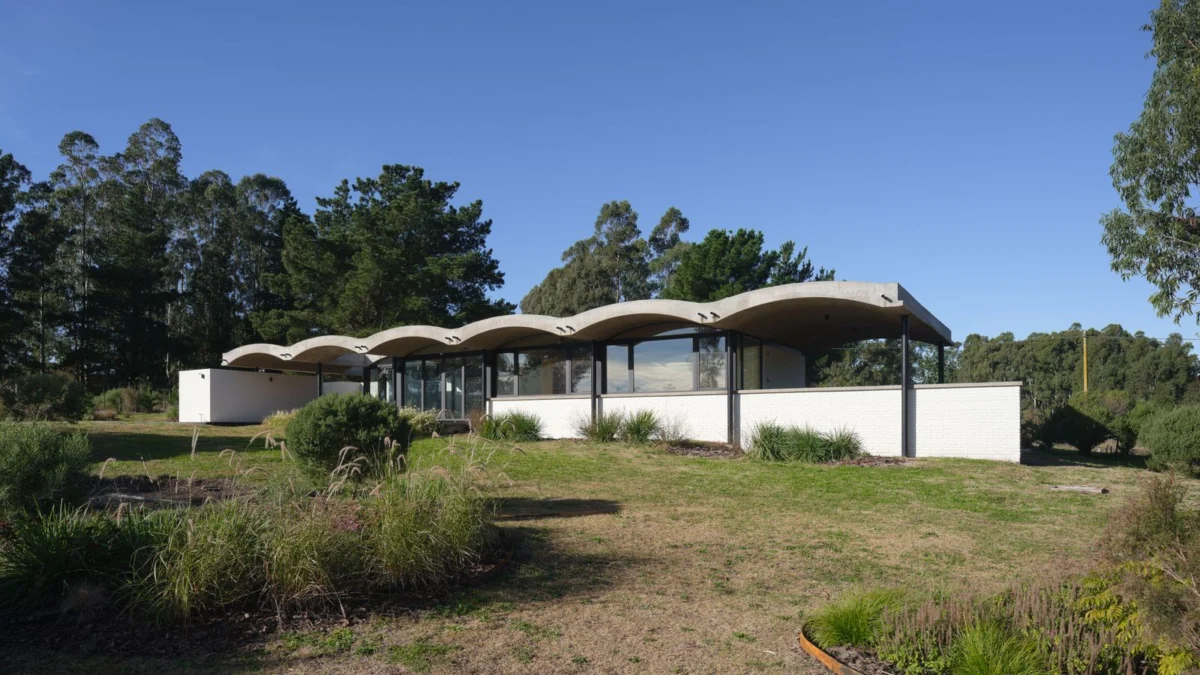
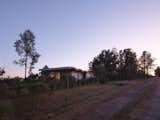
On the rugged outskirts of Balcarce, Argentina, where the dramatic undulations of the mountain ridge meet the expansive sky, a distinctive architectural presence emerges, conceived not as an imposition upon the landscape but as an integral, responsive element. This remarkable dwelling, aptly named "The Bite House," challenges conventional notions of residential architecture by framing itself as a deliberate void—a "clean cut in the slope," a "missing piece that becomes a signal" within its imposing natural context. This foundational concept organizes the entirety of its material composition around an intentional absence, transforming the structure from a mere building into a sophisticated "device for looking," aligning a substantial concrete roof with the ridge’s silhouette to establish a new geometric perspective from which to re-engage with the surrounding environment.
The Genesis of a Concept: Responding to Balcarce’s Topography
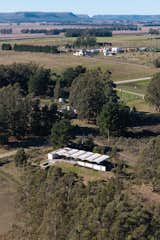
Balcarce, a city nestled in the southeast of Buenos Aires Province, is renowned for its unique geography, characterized by the Sierra de los Padres mountain range and expansive, often windswept plains. The local climate presents distinct challenges, particularly the strong and persistent winds that sweep across the region. It is within this demanding yet inspiring backdrop that the concept for The Bite House took root. The architect’s vision began with observing the mountain ridge, imagining a precise intervention that would not dominate but rather define a new relationship with the terrain. This initial "bite" in the landscape served as more than just an aesthetic gesture; it became the philosophical and structural anchor for the entire project, shaping how light, air, and views would be curated within the living spaces.
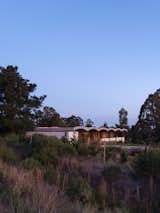
The design team’s understanding of Balcarce’s specific environmental conditions was paramount. The region’s geological history, marked by ancient rock formations and erosion, creates a rugged beauty that the house seeks to complement rather than contrast sharply with. The prevailing winds, while a challenge for comfort and energy efficiency, were embraced as an active design parameter, prompting innovative solutions for shelter and natural ventilation. This contextual sensitivity positions The Bite House as an example of regional modernism, where contemporary architectural language is deeply informed by local site conditions and cultural nuances, moving beyond generic forms to create a truly site-specific dwelling.
Structural Poetics: The Rhythm of Concrete Barrel Vaults
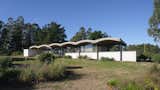
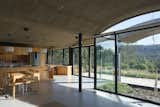
The primary architectural decision, and arguably the most visually striking, is the implementation of a single structure composed of six continuous concrete barrel vaults. These are not merely decorative roofs; they are the fundamental elements that dictate the project’s scale, measure, and rhythm. Arranged in a deliberate sequence, they form a strong horizontal band that enters into a dynamic dialogue with the jagged profile of the adjacent ridge. The choice of concrete, a material celebrated for its durability, thermal mass, and expressive potential, underscores the house’s robust engagement with its environment.
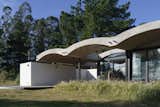
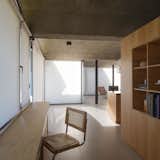
Barrel vaults, a form with a rich history in architecture dating back to ancient civilizations, were chosen for their inherent structural efficiency and aesthetic grace. Their continuous, curvilinear form allows for significant clear spans, creating column-free interior spaces while distributing loads effectively. In The Bite House, these vaults harness the sun, wind, and shade in a meticulously choreographed manner. Light penetrates the interior through "sharp cuts" where the vaults meet the vertical planes, casting dramatic shadows that shift throughout the day. It "slides along the curved gable ends," softening the material’s inherent rigidity and highlighting the fluid geometry of the ceiling. As evening approaches, light enters at a "low angle," distinctly marking the rhythmic progression of the vaults within the interior, transforming the overhead structure into an ever-changing canvas of light and shadow. This dynamic interplay of light not only enhances the aesthetic experience but also contributes to the passive heating and cooling strategies, with the concrete’s thermal mass absorbing heat during the day and releasing it slowly at night, moderating internal temperatures. This approach reflects a growing global trend in sustainable architecture, where passive design elements are integrated to reduce reliance on mechanical systems, particularly in regions with pronounced diurnal temperature variations.
A Journey Within: The Non-Linear Spatial Experience
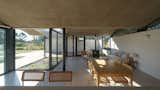
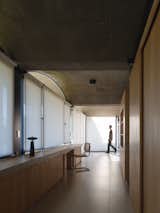
Life within The Bite House unfolds beneath this formidable structural plane, but its organization is far from conventional. The internal layout is conceived "less as a functional layout than as a path of movement." This philosophical departure from traditional corridor-based design results in a fluid, exploratory experience for the inhabitant. There are "no obvious corridors"; instead, access to the bedrooms and other private spaces occurs through an "internal promenade" that actively engages with the architectural form. This pathway intentionally "widens and angles," at times transforming into an intimate study nook, at others becoming a transitional "threshold" between different zones of the house.
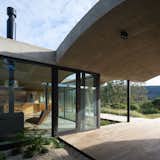
Crucially, this route crosses diagonally against the direction of the vaults. This intentional counterpoint ensures that the inhabitant does not merely occupy static rooms but is constantly in motion relative to the structure, "skirting it, seeing it obliquely, sensing how it repeats and breaks." This creates a rich, multi-layered spatial perception, where the monumental vaults are experienced from various vantage points, their rhythm and scale constantly reinterpreted. The space thus becomes "a sequence of approaches to the roof, the landscape, and the patios," fostering a continuous, conscious connection between the interior experience and the exterior world. This emphasis on movement and varied perspectives is a hallmark of experiential architecture, where the journey through a space is as important as the destinations within it, offering a deeper, more immersive engagement with the built environment.
The Human Touch: White Brick and Intimate Patios
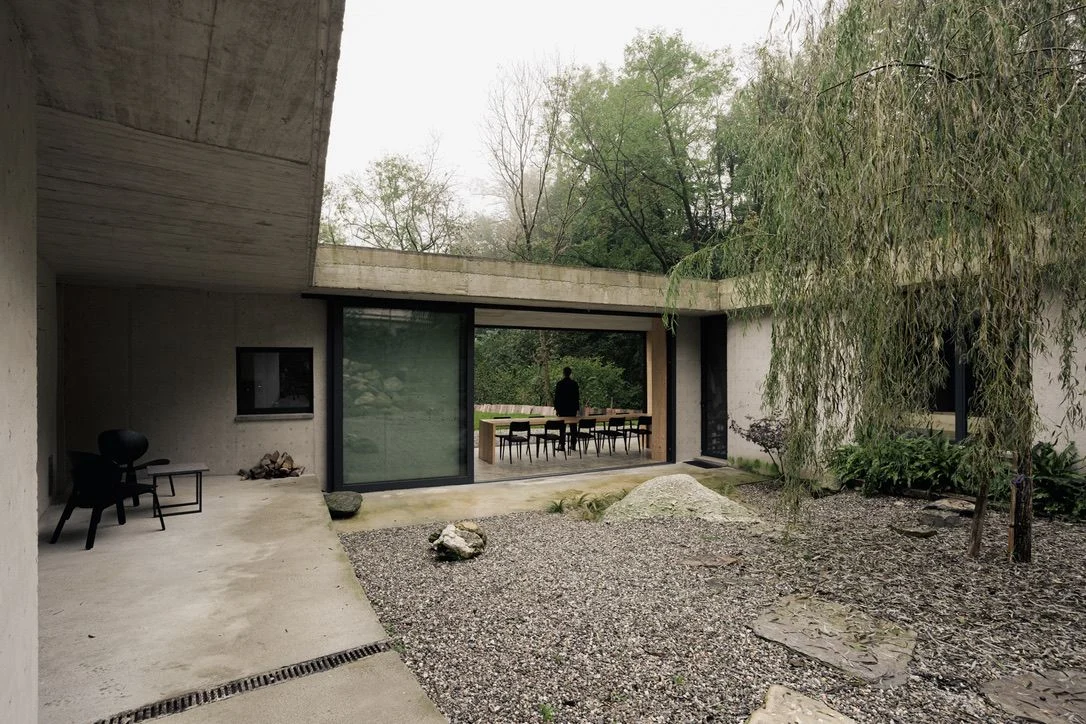
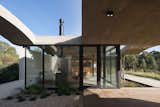
In stark contrast to the imposing and "rigid concrete piece" of the vaults, a second material system emerges, one that is "closer to the body": a network of white brick walls. These walls introduce a delicate, tactile quality to the interior, their lighter scale providing a counterpoint to the heavier concrete. They are designed with a remarkable fluidity, moving "in and out of the plan," extending "outdoors," and bending to form integrated elements such as "benches, niches, and sheltered pockets." This adaptive use of brick blurs the lines between interior and exterior, creating permeable boundaries that invite interaction.
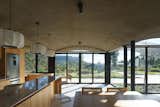
The patios, integral to the design, rely heavily on these white brick walls. They "puncture the planted roof," allowing vegetation to rise directly within the modules defined by the vaults. This integration of green spaces means that the interiors are constructed in an "immediate relationship with small gardens." The simple act of "opening a door" becomes more than just entering a bedroom; it transforms into an encounter with nature—"a tree, a short shadow, a fragment of sky." This biophilic design approach, which seeks to connect building occupants more closely to nature, is known to enhance well-being, reduce stress, and improve cognitive function. The choice of white brick further amplifies these effects by reflecting natural light, brightening the internal spaces, and offering a clean, minimalist aesthetic that allows the greenery to stand out. The careful placement of these patios also creates microclimates, offering protected outdoor zones away from the prevailing winds, enhancing the usability and comfort of the exterior spaces.
Climate Resilience: Crafting a Refuge from the Winds
The climate of Balcarce, particularly its "strong and persistent winds," played a pivotal role in sharpening these design decisions, pushing the architects to create a truly responsive and resilient structure. To the south, the direction from which the most powerful winds typically originate, the brick walls are meticulously arranged as "successive lines that fold and turn." This intricate articulation creates multiple layers of protection, generating "filters, entrances, and shelter" that mitigate the wind’s impact without entirely blocking it.
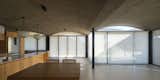
These walls function not merely as static enclosures but as dynamic "frames that channel the air and extend the house into the park." By strategically guiding and diffusing the airflow, they prevent harsh gusts from directly impacting the living areas while still allowing for natural cross-ventilation when desired. This thoughtful response to the local climate demonstrates a deep understanding of environmental design principles. The heavy concrete roof provides structural stability against wind uplift and contributes to thermal insulation, while the layered brick walls offer nuanced protection. The overall effect is that of a "precise refuge"—a dwelling that, despite its openness and engagement with the landscape, provides an unwavering sense of security and comfort. It is a testament to the architect’s ability to transform environmental challenges into design opportunities, resulting in "a quiet work that simply holds shadow, horizon, and a handful of gardens beneath a single gesture."
Broader Implications and Architectural Legacy
The Bite House stands as a compelling case study in contemporary architecture, offering valuable insights into responsive design and contextual integration. Its methodology of creating a "void" as a starting point challenges the traditional additive approach to building, instead proposing a subtractive philosophy that sculpts space from an existing whole. This resonates with broader discussions in architecture about minimizing environmental impact and fostering a deeper connection between human habitation and the natural world.
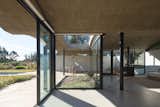
The extensive use of concrete barrel vaults, while structurally sound, also speaks to a renewed appreciation for monumental, yet refined, forms. Coupled with the human-scaled intimacy of the white brick elements and the strategic integration of patios and vegetation, the house demonstrates how robust materials can be employed to create spaces that are both grand and delicate, public and private. This duality offers a rich spatial experience that is increasingly sought after in an era where indoor-outdoor living and a connection to nature are highly valued.
The project also highlights the critical role of the architect in interpreting and responding to specific site conditions. Rather than imposing a preconceived aesthetic, the design for The Bite House emerged directly from a rigorous analysis of Balcarce’s topography, climate, and inherent character. This commitment to site-specificity results in a building that feels intrinsically tied to its location, a true product of its environment. The collaboration with skilled professionals like photographer Javier Agustín Rojas (javieragustinrojas.com / @javieragustinrojas) is also vital in conveying the nuanced interaction of light, material, and space that defines such a project, allowing its story to reach a global audience.
In an architectural landscape often dominated by globalized styles, The Bite House offers a powerful reminder of the potential for architecture to create meaningful, contextually rich experiences. It is not just a house but a living manifesto, demonstrating how innovative structural solutions, thoughtful material choices, and a profound respect for nature can coalesce into a truly remarkable and enduring work of art. Its lessons extend beyond Balcarce, providing a blueprint for architects and homeowners worldwide seeking to build homes that are not merely shelters, but active participants in their surrounding ecosystems.