admin
admin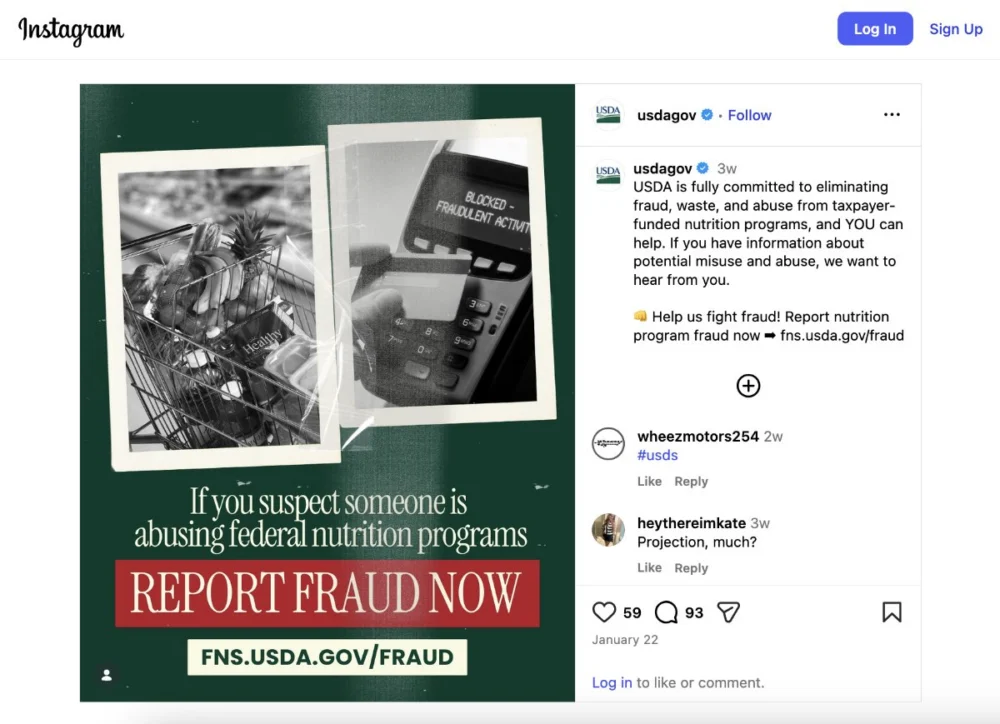
Five states have already implemented bans on soda and candy through federal food assistance programs, with over a dozen more set to take effect this year, sparking a contentious debate over recipient autonomy, administrative complexity, and the true efficacy of public health initiatives. The U.S. Department of Agriculture (USDA) approved 18 waivers in 2025, enabling states to restrict certain food items historically allowed under the Supplemental Nutrition Assistance Program (SNAP), a significant reversal of long-standing federal policy. These changes, largely propelled by the "Make America Healthy Again" (MAHA) movement, have been met with a mix of support from proponents advocating for healthier taxpayer-funded food choices and sharp criticism from anti-hunger advocates, recipients, and retailers grappling with unprecedented logistical and financial challenges.
The immediate impact of these new regulations, which began rolling out on January 1, 2026, has been characterized by widespread confusion among SNAP participants and retail partners alike. West Virginia was among the initial five states to enforce the restrictions, with at least 13 additional states poised to follow suit throughout the year. The diverse interpretations and varying definitions of restricted items from state to state have created a labyrinthine system, undermining the program’s accessibility and efficiency.
A Family Business Navigates New Realities
For Adam and Beth Bedway, owners of a small ceramics studio in Wheeling, West Virginia, the changes to SNAP represent a tangible threat to their family’s stability and their community contributions. Since 2018, the entrepreneurial couple has relied on SNAP benefits to supplement their income, ensuring their children are fed while they invest meager profits back into their business. Their studio, nestled on the Ohio River border, serves as a vital community hub, offering entertainment and educational opportunities in an otherwise quiet town.
"We try so hard to bring arts and culture and experiences to our area, but without that security, what happens then?" Beth Bedway questioned, reflecting on the precariousness introduced by the new rules. "The only reason that we’ve been able to grow the way we have and have all the offerings that we have with our business is because we had that little bit of security." The Bedways’ experience underscores a broader concern that such restrictions disproportionately affect low-income entrepreneurs and families striving for self-sufficiency, forcing them to divert funds from essential business operations to basic sustenance. Adam, who manages his ADHD with caffeine, expressed frustration over the ban on sodas, a simple coping mechanism now deemed ineligible. "So many people are going to argue, ‘Oh it’s so silly, it’s just soda,’" Beth added, "But it’s just this for now." This sentiment highlights a deeper apprehension among recipients about a potential "slippery slope" toward more extensive restrictions and an erosion of their purchasing autonomy.
The Genesis of the Restrictions: The MAHA Movement and Policy Reversal
The current wave of SNAP restrictions marks a significant policy shift, contrasting sharply with previous federal stances. In 2007, the USDA explicitly rejected similar proposals, citing concerns that such restrictions would increase the program’s complexity and administrative costs without guaranteeing improvements in dietary habits. The agency at the time emphasized that SNAP was designed to alleviate food insecurity, not dictate specific food choices, and that micromanaging purchases could lead to stigma and reduced participation.

However, the political landscape has dramatically changed, largely influenced by the ascendance of the "Make America Healthy Again" (MAHA) movement. Spearheaded by figures such as Health and Human Services Secretary Robert F. Kennedy Jr., the MAHA movement advocates for a more interventionist approach to public health, emphasizing dietary reform and a reduction in the consumption of processed foods and sugary beverages. This movement has garnered substantial support within the current administration and among state-level policymakers. In June 2025, a high-profile signing ceremony saw U.S. Agriculture Secretary Brooke Rollins, flanked by prominent state leaders like Arkansas Governor Sarah Huckabee Sanders and Indiana Governor Mike Braun, sign the initial three SNAP food choice waivers for Idaho, Utah, and Arkansas. This event signaled a clear federal endorsement of state-led efforts to restrict what SNAP participants can purchase, aligning with the MAHA movement’s core tenets that taxpayer dollars should not subsidize "unhealthy" foods.
Secretary Rollins and other proponents, including Calley Means, a senior advisor at HHS, argue that these waivers are "very easy" to implement and will encourage SNAP households to prioritize fresh, nutritious foods. They maintain that the initiative is a straightforward way to improve public health and ensure fiscal responsibility. This perspective, however, stands in stark contrast to the on-the-ground experiences reported by anti-hunger organizations, SNAP recipients, and retailers.
Navigating a Labyrinth of Rules: Confusion and Frustration for Consumers
The varying and often perplexing definitions of restricted foods are a major source of frustration. Luke Elzinga, policy and advocacy manager at the Des Moines Area Religious Council, an anti-hunger group, aptly described the situation: "It’s being branded as a healthy foods waiver, or a soda and candy ban. But it’s a lot more complicated than that."
Iowa’s waiver, for instance, is considered among the most restrictive and confusing, directly linking SNAP eligibility to the state’s sales tax on food and beverages. This means that any taxable food or beverage, including zero-sugar sodas, lemonade, Capri Sun, and sweet tea, is now ineligible for SNAP purchase. The definition of "candy" is equally convoluted; a granola bar or fruit bar might be deemed candy unless it contains flour, while a Twix bar, due to its flour content, remains permissible. When it comes to prepared foods, the rules become even more arcane: eligibility can depend on whether a retailer provides a microwave, if a prepared salad includes dressing, if a slice of cake was baked in-store, or even if a cup of fruit is served with or without a spoon. For guidance, the Iowa state Health and Human Services website astonishingly directs visitors to the state Department of Revenue’s sales tax page, underscoring the bureaucratic entanglement.
Hunter Starks, a graduate student in West Virginia who intermittently relies on SNAP to balance their budget, recounted attempting to buy flavored water with their EBT card at a gas station, only to be denied. A week later, the same product was accepted at the same station. "There’s just confusion too about what qualifies," Starks noted, highlighting the inconsistent application of rules. With limited official guidance from the state, many recipients are resorting to social media groups to share information and navigate the bewildering landscape of eligible purchases.
Beyond the practical difficulties, anti-hunger advocates like Eric Savaiano, food and nutrition access program manager at Nebraska Appleseed, warn of a "slippery slope" that undermines recipients’ dignity and choice. Savaiano shared instances where individuals could no longer purchase beverages essential for managing medical conditions, such as caffeine for staying awake at work or probiotic drinks like Olipops. These restrictions, he argued, ignore individual needs and preferences, creating unnecessary hardship.
Retailers Caught in the Crossfire: Added Costs and Compliance Fears

The burden of implementing and enforcing these complex restrictions disproportionately falls on retailers, from large supercenters to small convenience stores. Margaret Hardin Mannion, director of government relations at the National Association of Convenience Stores (NACS), highlighted the widespread confusion and potential for significant added costs.
The USDA, in late 2025, issued guidance detailing penalties for non-compliance, with a 90-day grace period for initial states, meaning enforcement began on April 1, 2026. After a single warning for incorrect application of restrictions, a retailer could face involuntary removal from the SNAP program, jeopardizing their ability to serve a significant portion of their customer base. "I think there’s some real concern that it’s going to lead to many, many retailers being pushed out of the program, even if they are trying their best to comply with the new requirements," Mannion stated.
Retailers have urged the USDA and state agencies for a "robust education campaign" to inform SNAP households, but such efforts have been minimal. Consequently, stores are forced to create their own signage and messaging to clarify that these are government-mandated changes, not retailer decisions. The administrative burden is immense: given the diverse state definitions of sugary beverages and candy, and numerous exemptions, retailers must individually assess thousands of products, update their inventory systems, and adjust shelf signage. This process is time-consuming, labor-intensive, and costly.
An analysis by NACS, the National Grocers Association, and the Food Industry Association (FMI) projected the total up-front cost of these SNAP restrictions to be approximately $1 billion for convenience stores, $11.8 million for small-format stores, and $215.5 million for supercenters. These costs, Mannion warned, are just the "tip of the iceberg," as retailers are simultaneously bracing for other proposed policy changes, such as stricter SNAP retailer stocking requirements that would mandate increased variety in staple food categories.
Economic Repercussions and Access Concerns
The economic implications of these restrictions extend beyond retailers. The analysis by industry associations suggests that some of these compliance costs could be passed on to all consumers through higher food prices, thereby undermining the very goal of making healthy food more accessible. Elzinga of the Des Moines Area Religious Council emphasized this point: "These SNAP restrictions are increasing food prices for everyone, and the high cost of healthy food is the No. 1 reason people on SNAP can’t eat healthier. Banning items does not make healthy food more affordable."
A significant fear is that the prohibitive costs of compliance or the risk of penalties will force retailers to drop out of the SNAP program, leading to "food deserts" where EBT cards are no longer accepted. In Iowa, for example, one in three SNAP participants (over 800,000 people) reside in border counties. If these individuals choose to shop in neighboring states without restrictions, Iowa stands to lose approximately $23 million per month in economic activity. While families like the Bedways, living near the West Virginia-Ohio border, might have the option to travel to unrestricted states, many low-income households in landlocked or rural areas will not, exacerbating existing challenges in accessing affordable and nutritious food. Beth Bedway highlighted that many parts of West Virginia already struggle with access to clean water and fresh produce, often relying on dollar stores or convenience stores where fresh options are scarce or prohibitively expensive.
A Wave of Changes to SNAP: Broader Context and Future Outlook

The food restrictions are not an isolated policy change but rather one component of a larger overhaul of federal food assistance programs. In the preceding year, the "One Big, Beautiful Bill" (OBBB), passed by Republicans, enacted nearly $187 billion in federal spending cuts to SNAP through 2034. This bill included expanded work requirements that have already taken effect and provisions shifting more program costs to states, set to kick in next year.
The Trump administration, and Republicans in Congress, have also intensified focus on alleged fraud within the SNAP program. This has led to demands for states to recertify SNAP households more frequently and to release more participant data, fueling concerns about privacy and increased scrutiny. The USDA itself has taken to social media to mobilize shoppers to "fight fraud," using rhetoric that critics argue increases stigma around food aid.
Gina Plata-Nino, SNAP director at the Food Research and Action Center, noted that these changes add immense workload to already overburdened SNAP caseworkers and raise questions about how states, many facing budget shortfalls, will fund implementation. Nebraska, for instance, estimated a $2 million cost for implementing its restrictions, despite a $471 million state budget deficit. The state plans to use leftover funds from the federally cut SNAP-Ed program, which typically supports nutrition education, to cover administrative costs, rather than outreach or recipient education.
Experts worry that the heightened focus on fraud and the imposition of restrictions will contribute to increased stigma, leading to a "dampening effect on participation." In Iowa, Elzinga observed SNAP enrollment nearing an 18-year low, even as food banks report record visits. This trend suggests that while food insecurity persists, eligible individuals may be deterred from applying for or continuing in SNAP due to perceived shame or administrative hurdles.
Despite these growing concerns, the political momentum for such restrictions appears to be building. Iowa Governor Kim Reynolds, a Republican, recently urged the state legislature to keep the waiver "moving forward." Kansas, Mississippi, and Ohio have submitted similar waivers for USDA approval, and some states with existing restrictions are already considering expanding the list of prohibited items. As state legislatures reconvene, many are expected to consider their own SNAP food restriction legislation.
For families like the Bedways, facing a cascade of changes to a program they have relied on for almost a decade, the future remains uncertain. "It’s unsettling," Beth Bedway concluded. "It makes me question what is the future for us in this state, what is the future for the SNAP program? At what point are we just going to be kicked off of any assistance without warning?" Her words encapsulate the anxieties of millions of Americans whose access to vital food assistance is being reshaped by a complex interplay of public health goals, fiscal policy, and political will.