admin
admin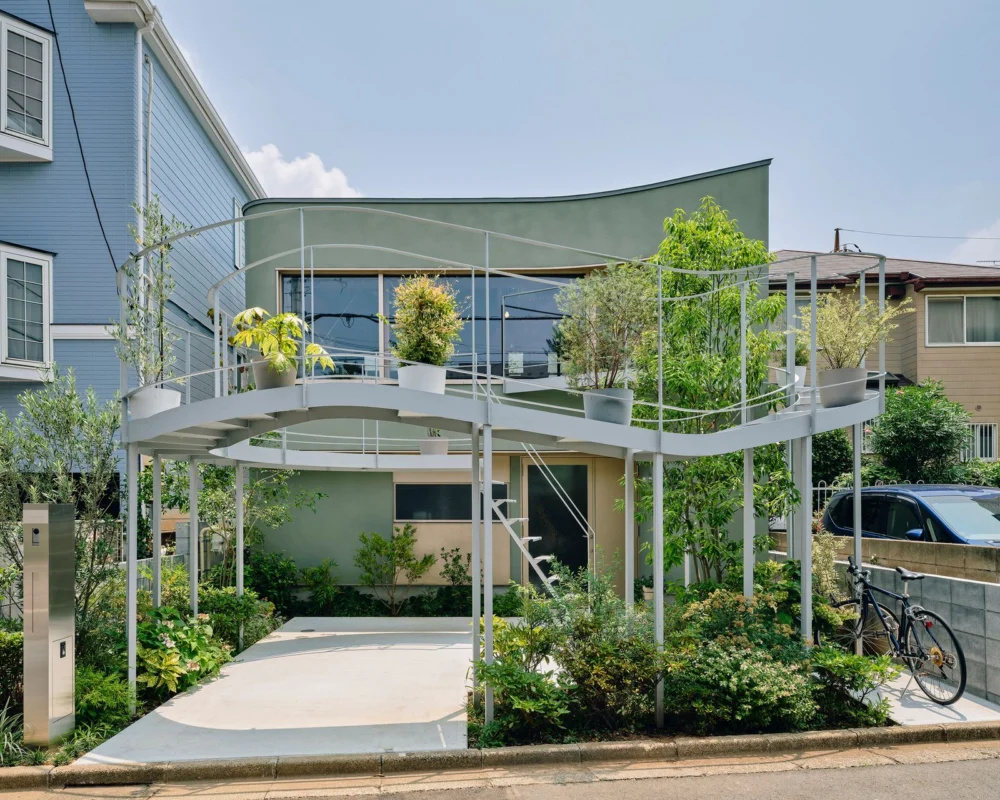
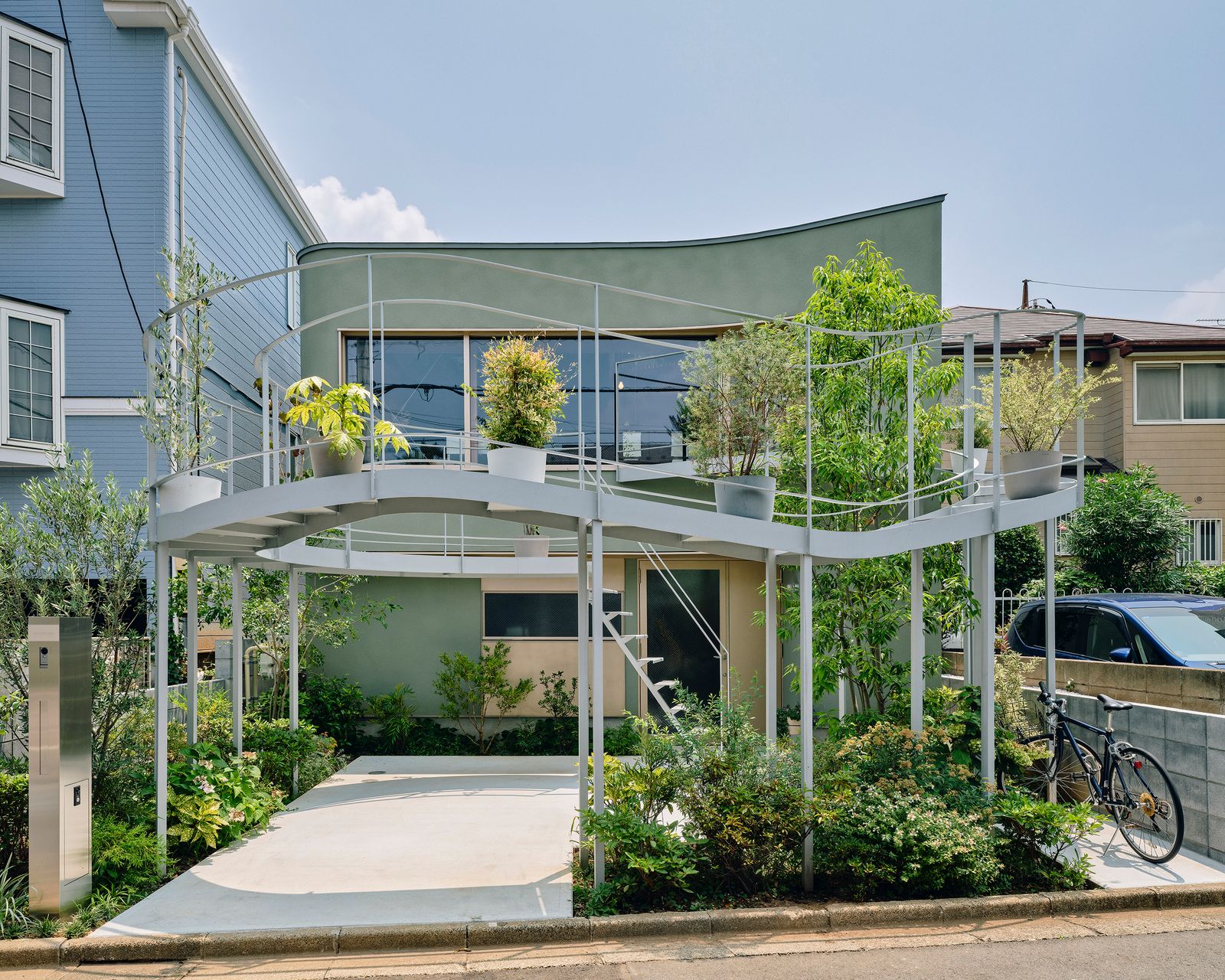
In the relentlessly dense urban fabric of Tokyo, where private green spaces are a coveted luxury and direct sunlight a precious commodity, a remarkable architectural project by HOAA has emerged, redefining the parameters of urban residential design. Located in a tightly packed residential area of the Japanese capital, this architect’s own home and office challenges conventional notions of space, light, and connection to nature within a modest 1,037-square-foot footprint. The innovative design introduces a curvilinear terrace, aptly named the "kazari garden," and a dynamic split-floor interior, meticulously crafted to foster both natural illumination and a mindful engagement with one’s surroundings and the community.
The Urban Conundrum: Space, Light, and Privacy in Tokyo
Tokyo stands as one of the world’s most populous and densely built cities, presenting architects with perennial challenges. Land plots are often small, irregular, and surrounded by adjacent structures, severely limiting access to natural light and ventilation. Traditional Japanese urban planning, characterized by narrow streets and close-set buildings, further exacerbates these issues. Architects in Tokyo are therefore compelled to devise ingenious solutions that maximize utility, ensure privacy, and introduce elements of nature and openness where none seem naturally possible. The project by HOAA directly confronts these constraints, offering a blueprint for sophisticated urban living in an otherwise challenging environment.
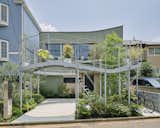
The site for this particular residence was no exception, bordered by neighboring houses on all sides save for the north-facing road. This orientation presented a significant design hurdle: how to create a bright, inviting garden view when the primary street-facing exposure receives minimal direct sunlight. Architects, particularly in Japan, have long grappled with this dilemma, often resorting to internal courtyards or skylights. HOAA’s approach, however, represents a novel interpretation, blending functional necessity with artistic expression.
The Genesis of the "Kazari Garden"
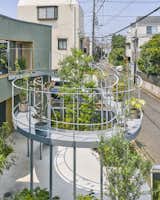
The core innovation of the HOAA project lies in its conceptualization and execution of the "kazari garden." Rather than resigning to the limitations of a north-facing facade, the architects strategically extended a large second-floor window into a sweeping, curved terrace. This "kazari garden" (literally "decoration garden" or "ornamental garden," though its function extends far beyond mere aesthetics) is designed not just to hold plants but to actively "circle the air along the road in search of sunlight." This dynamic form allows the terrace to subtly escape the immediate shadow cast by the building itself and adjacent structures, catching oblique rays of sunlight that might otherwise be missed.
The curvilinear geometry of the kazari garden serves multiple, integrated purposes. Firstly, its smooth, reflective surfaces and strategic planting add a "sparkle to the view" from the north-facing dining room window, transforming what could be a dull, shadowed outlook into a vibrant, ever-changing tableau of light and greenery. This visual enrichment is paramount for the psychological well-being of urban dwellers, providing a vital connection to nature even in a concrete jungle.
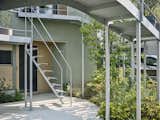
Secondly, the kazari garden acts as a critical "buffer zone" between the bustling city and the private residence. In dense areas, maintaining a sense of privacy without resorting to monolithic, unwelcoming facades is a delicate balance. The elevated, planted terrace offers a permeable screen, filtering views from the street while still allowing light and air to penetrate. It creates a semi-public, semi-private interstitial space that mediates the interface between domestic life and the urban public realm. This architectural device contributes significantly to the residents’ quality of life, offering a sense of retreat while remaining connected to their community.
Interior Dynamics: Split-Levels and Spiral Circulation
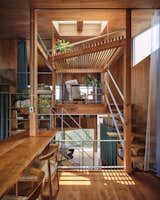
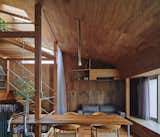
Beyond the striking exterior, the interior of the HOAA home is equally innovative, employing a split-floor design that ingeniously capitalizes on the subtle elevation differences of the site. This approach is a hallmark of many contemporary Japanese urban residences, where architects exploit verticality and slight level changes to create spatial diversity and a sense of expansiveness within limited square footage. Rather than rigid, stacked floors, the split-level arrangement creates interconnected volumes, blurring the lines between different functional areas and fostering a fluid, continuous flow.
This design strategy generates diverse "views to the kazari garden and back garden throughout the building." Each change in elevation offers a new perspective, allowing natural light to penetrate deeply into the core of the home and offering glimpses of greenery from unexpected angles. This constant visual engagement with nature, both the street-facing kazari garden and any rear green space, contributes to a calming and stimulating living environment.
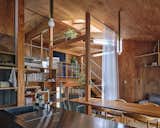
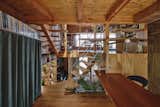
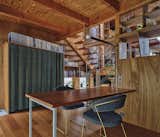
A "spiral circulation system" further enhances this dynamic spatial experience. Instead of linear hallways, the movement through the home is designed as a continuous, gentle ascent or descent, alternating views between the two distinct garden zones. This helical progression transforms mere transit into an engaging journey, where the resident is constantly presented with new visual and spatial relationships. Such a system optimizes the compact footprint, ensuring that every square foot is utilized not just for function but also for enriching the living experience.
The Home as a "Small Art Museum" for Mindful Living
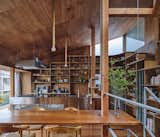
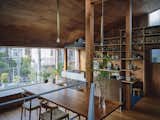
Perhaps the most profound philosophical aspect of HOAA’s design is the concept of the home as a "small art museum." The architect articulates a vision where cherished personal items – "vessels, books, photographs, and plants" – are not merely stored but intentionally displayed. These items are considered "representations of our lives up to now," holding personal histories and meaning. By surrounding the spiral circulation path with shelves dedicated to these displays, the architects sought to create "just the right amount of tension in the home."
This "tension" is not negative but rather a deliberate stimulus for mindful living. It encourages residents to actively engage with their personal narratives, to appreciate the objects that define their journey, and to live with intentionality. In a fast-paced urban environment, the home becomes a sanctuary for reflection, a curated space that inspires introspection and a deeper connection to one’s personal history and aspirations. This approach transcends mere aesthetics, embedding a philosophical dimension into the very structure of daily life. The architect’s statement, "foster the motivation to live mindfully in the future," underscores this commitment to designing spaces that support holistic well-being and personal growth.
Community Engagement and Social Interaction
The kazari garden’s influence extends beyond the private realm, actively fostering community interaction. The architect notes that "stepping out through the second-floor door into the kazari garden and watering the plants sparks conversations with passersby." This seemingly simple act highlights a crucial aspect of urban living in Japan, where incidental interactions often form the bedrock of local community ties. In a city where personal space is at a premium, this elevated garden offers a gentle point of contact, a shared moment of beauty and natural activity that bridges the gap between private dwelling and public street.
This feature is particularly significant in Tokyo, where urban anonymity can sometimes be overwhelming. By creating an inviting, visible green space that encourages interaction, the HOAA project subtly reintroduces a sense of neighborhood camaraderie. It demonstrates how architectural design can facilitate social connections, transforming a functional element into a catalyst for community building.
Broader Implications and Future Trends
The HOAA residence in Tokyo represents more than just a well-designed house; it serves as a powerful case study for the future of urban residential architecture, not only in Japan but globally. Its lessons are particularly relevant for cities worldwide grappling with similar issues of density, limited space, and the imperative to integrate nature and promote well-being.
- Sustainable Urban Living: The project champions a form of sustainable urban living that prioritizes natural light, ventilation, and green spaces, even on constrained sites. The "kazari garden" exemplifies biophilic design principles, demonstrating how a connection to nature can be woven into the fabric of high-density environments. This aligns with global trends towards green architecture and urban reforestation.
- Adaptability and Resilience: The split-level design and flexible interior spaces suggest a model for homes that can adapt to changing needs over time. As urban populations shift and household structures evolve, adaptable architecture becomes increasingly vital.
- Psychological Well-being: The deliberate integration of gardens, natural light, and curated personal displays speaks to a growing understanding of architecture’s role in supporting mental health and mindfulness. In an era of increased stress and digital saturation, homes that encourage introspection and connection to nature are becoming essential.
- Community Integration: The subtle yet effective way the kazari garden fosters social interaction challenges the perception of urban homes as isolated units. It proposes a model where private spaces can gracefully contribute to the public realm and strengthen community bonds.
- Architectural Philosophy: HOAA’s project underscores the importance of a strong philosophical underpinning in architectural design. Moving beyond purely functional or aesthetic considerations, the architects have crafted a home that actively shapes the lifestyle and mindset of its inhabitants, encouraging a more mindful and engaged way of living.
The structural engineering for this intricate design was handled by MSE, ensuring that the ambitious architectural vision was realized with precision and safety, a critical consideration in earthquake-prone Tokyo. The detailed and evocative photography by Takuya Seki beautifully captures the interplay of light, form, and greenery, highlighting the success of the architects’ intentions.
In conclusion, HOAA’s architect’s home and office in Tokyo is a testament to inventive design in the face of urban adversity. By transforming site limitations into opportunities for creativity, the project delivers a vibrant, light-filled sanctuary that thoughtfully integrates nature, fosters mindful living, and subtly enhances community interaction. It is a powerful exemplar of how innovative architecture can elevate the quality of urban life, offering valuable insights for cities around the globe seeking to build more humane and harmonious environments.