admin
admin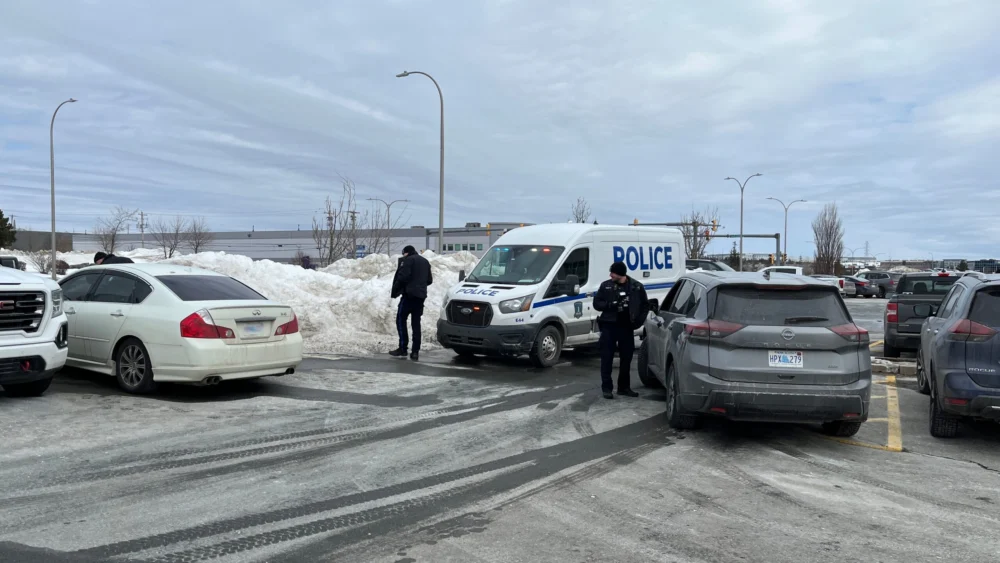
Halifax Regional Police have launched a comprehensive investigation after a 23-year-old man was discovered with a serious gunshot wound in a Dartmouth strip mall parking lot on Thursday morning, March 5, 2026, with authorities indicating the incident was not random and the victim was likely shot elsewhere. The tranquility of the commercial district at the intersection of Wright and Garland avenues was shattered just after 11 a.m. when emergency services were summoned to a report of an injured person. Upon arrival, officers and paramedics located the male victim, who was immediately transported to a local hospital for urgent medical attention. Despite the gravity of his injuries, police confirmed they are not life-threatening, offering a small measure of relief amidst a concerning display of violence in the community. The initial assessment by investigators strongly suggests that the actual shooting did not occur at the scene where the man was found, adding layers of complexity to an already intricate case.
Immediate Aftermath: A Community On Edge
The discovery quickly transformed the bustling commercial area into an active crime scene, drawing a significant police presence and considerable public attention. Uniformed officers swiftly cordoned off a section of the parking lot, establishing a perimeter to secure potential evidence and ensure public safety. Patrons and employees in nearby businesses watched as the Halifax Regional Police (HRP) Major Crime Unit, supported by the Forensic Identification Section, began their meticulous work. Investigators focused their attention on a particular vehicle within the lot, which was later meticulously examined and towed away, signaling its potential significance as a key piece of evidence in the unfolding inquiry. The sight of crime scene tape and emergency vehicles often evokes a sense of unease, and this incident was no exception, prompting local residents and business owners to question the nature of the violence and its potential implications for their safety.
The rapid response by both police and Emergency Health Services (EHS) was crucial. Paramedics administered immediate first aid to the victim at the scene before transporting him to hospital. The journey to the hospital, often a critical window for stabilizing a patient with a gunshot wound, was managed with utmost urgency. While the specifics of the victim’s condition remain private, the police classification of his injuries as "serious but non-life threatening" indicates a significant medical event requiring extensive care, but one from which recovery is expected. This detail, while reassuring to some extent, does not diminish the gravity of being subjected to such a violent act.
The Search for a Primary Crime Scene

One of the most challenging aspects of this ongoing investigation, as articulated by HRP officials, is the belief that the shooting itself did not take place at the Wright and Garland avenues location. This immediately shifts the focus of the investigation beyond the visible crime scene to a potentially unknown primary location. When a victim is discovered at a secondary scene, investigators face the daunting task of piecing together the events that led to the victim’s presence there, and, more critically, identifying where the actual crime occurred. This often involves an extensive canvass of surrounding areas, reviewing surveillance footage from a wider geographical radius, and interviewing anyone who may have seen unusual activity in the hours leading up to the discovery.
Police theorize that the victim either managed to drive himself, was dropped off, or somehow made his way to the strip mall parking lot after being shot. Each scenario presents its own set of investigative challenges. If the victim drove, police would be looking for signs of erratic driving or a trail of evidence leading back to a primary scene. If he was dropped off, identifying the vehicle and its occupants becomes paramount. The absence of a clear primary crime scene means that crucial forensic evidence, such as shell casings, bullet trajectories, or blood spatter patterns, might be located elsewhere, potentially making the collection of definitive proof more difficult. The towed vehicle, therefore, becomes critically important, as it may contain forensic evidence that could link it to the shooting location or to other individuals involved.
Targeted Violence: Dispelling Randomness
Halifax Regional Police were quick to state that they "do not believe the incident was random." This assertion is a critical piece of information for both the public and investigators. In law enforcement terminology, "not random" typically implies that the victim was specifically targeted, suggesting a pre-existing connection between the victim and the perpetrator(s). This can stem from a variety of motives, including disputes related to organized crime, drug trafficking, personal grievances, or other forms of targeted retribution.
The declaration that the incident was not random often serves to alleviate broader community fears, as it suggests the general public is not at immediate, indiscriminate risk. However, it simultaneously raises concerns within specific communities or networks that may be entangled in such conflicts. For investigators, this distinction helps narrow the scope of their inquiry, allowing them to focus on the victim’s associations, recent activities, and potential conflicts. This would involve a thorough background check of the victim, examining phone records, social media activity, and interviewing associates to build a profile of potential motives and suspects. Understanding the nature of the targeting is key to unraveling the complex web of events that led to the shooting.
Halifax Regional Police Mobilize: Investigative Resources

The HRP’s Major Crime Unit has taken the lead in this complex investigation, a standard procedure for serious violent crimes such as shootings. This unit is comprised of experienced detectives specializing in complex investigations, often involving multiple scenes, numerous witnesses, and intricate forensic evidence. Their responsibilities include interviewing witnesses, developing leads, coordinating with other police sections, and ultimately, identifying and apprehending those responsible.
The Forensic Identification Section (FIS) plays an equally vital role. Their experts are responsible for meticulously processing crime scenes, identifying, documenting, and collecting physical evidence. This could include fingerprints, DNA samples, ballistic evidence (if found), and any other trace evidence that could link a suspect to the crime. The detailed examination of the vehicle towed from the Dartmouth parking lot would be a primary task for FIS, searching for bullet holes, blood, fibers, or other materials that could provide crucial clues. The precision and thoroughness of their work are often instrumental in securing convictions.
Furthermore, investigators will undoubtedly be canvassing local businesses and residences for any surveillance footage that might have captured the incident or the movements of the victim and any associated vehicles before or after the discovery. Even seemingly innocuous details, such as a vehicle’s make, model, or license plate number, or the direction of travel, can provide significant breakthroughs in cases where a primary scene is elusive. The HRP also utilizes intelligence units to gather information from various sources, helping to connect this incident to broader crime patterns or known individuals if applicable.
Community Context: Addressing Gun Violence in HRM
The Halifax Regional Municipality, while generally considered a safe community, has experienced periodic spikes in gun violence, particularly in certain areas of Dartmouth and Halifax. These incidents often underscore underlying social issues, including drug-related conflicts, gang activity, and socio-economic disparities. In the years leading up to 2026, HRP has been actively engaged in various initiatives aimed at curbing gun violence, including community outreach programs, targeted enforcement strategies, and collaborations with other law enforcement agencies.
Statistics on gun-related incidents in HRM, while fluctuating, consistently highlight the persistent challenge faced by police and community leaders. While specific 2026 data is still being compiled, the trend in previous years has shown that a significant percentage of these incidents are not random, but rather targeted, often involving individuals known to each other through various illicit activities. This specific incident, therefore, fits into a broader pattern of targeted violence that HRP and community partners continually work to address through prevention, intervention, and enforcement. The impact of such events extends beyond the immediate victims, fostering fear and eroding the sense of security within affected neighborhoods.

The Critical Role of Public Assistance
In investigations as complex as this, public cooperation often proves to be indispensable. Halifax Regional Police have explicitly appealed to anyone with information or video footage from the area of Wright and Garland avenues, or any related details, to come forward. The smallest piece of information, even if seemingly insignificant, can sometimes provide the crucial link that breaks a case wide open.
The appeal for information can be made directly to the police at 902-490-5020, or anonymously through Crime Stoppers. Crime Stoppers programs are vital tools for law enforcement, allowing individuals to provide tips without fear of reprisal or having to identify themselves. This anonymity is particularly important in cases involving targeted violence, where witnesses might be hesitant to come forward due to fear of retaliation. The collective eyes and ears of the community are often the most powerful investigative tools available, and HRP regularly emphasizes that public trust and cooperation are essential for effective policing and maintaining community safety.
Medical Response and Victim Care
The swift and professional response of Emergency Health Services (EHS) paramedics was paramount in ensuring the victim’s survival. Upon arrival, paramedics would have quickly assessed the gunshot wound, controlled any bleeding, and stabilized the victim for transport. Gunshot wounds can vary greatly in severity depending on the location of the injury, the type of weapon used, and the trajectory of the bullet. The fact that the injuries were deemed "serious but non-life threatening" suggests that while critical, vital organs may have been spared or immediate medical intervention was successful in mitigating the most severe outcomes.
At the hospital, the victim would undergo immediate surgical procedures and intensive care. Recovery from a serious gunshot wound is often a long and arduous process, involving not only physical healing but also potential psychological trauma. While the focus of the police investigation is on the criminal aspect, the victim’s journey to recovery will be a significant and personal one, underscoring the profound human cost of gun violence.

Broader Implications and Long-Term Impact
Incidents of gun violence, even when described as "not random," send ripples through the community. They can heighten anxieties, particularly among residents who frequent the areas where such events occur. Local businesses in the Wright and Garland avenues strip mall may experience a temporary dip in customer traffic as people process the incident. Beyond the immediate impact, such events contribute to broader discussions about public safety, the availability of firearms, and the root causes of violence in urban centers.
Community leaders and local politicians often respond to such incidents by reiterating calls for increased support for anti-violence initiatives, mental health services, and programs aimed at addressing socio-economic factors that can contribute to criminal activity. The police, while focused on the immediate investigation, are also part of a larger ecosystem of community safety, engaging in ongoing dialogues with residents and stakeholders to build trust and foster environments where crime is less likely to flourish. The long-term goal is not just to solve individual cases but to create a sustainable reduction in violent crime.
Looking Ahead: The Path to Resolution
The investigation into the March 5, 2026, shooting in Dartmouth is in its early but critical stages. HRP detectives will continue to work tirelessly, following every lead, analyzing every piece of evidence, and interviewing every potential witness. The process is often methodical and time-consuming, requiring patience and persistence. Should suspects be identified and apprehended, they will face charges under the Canadian Criminal Code, leading to a judicial process that could involve preliminary hearings, trials, and sentencing.
The police have reiterated their commitment to bringing those responsible to justice and ensuring the safety of the community. The resolution of this case will depend heavily on the thoroughness of the investigative work and the willingness of the public to provide any information they might possess. As the investigation progresses, further details are expected to be released by the Halifax Regional Police, keeping the public informed while safeguarding the integrity of the ongoing inquiry. The incident serves as a stark reminder of the persistent challenges posed by gun violence and the continuous efforts required from law enforcement and the community to address it effectively.