admin
admin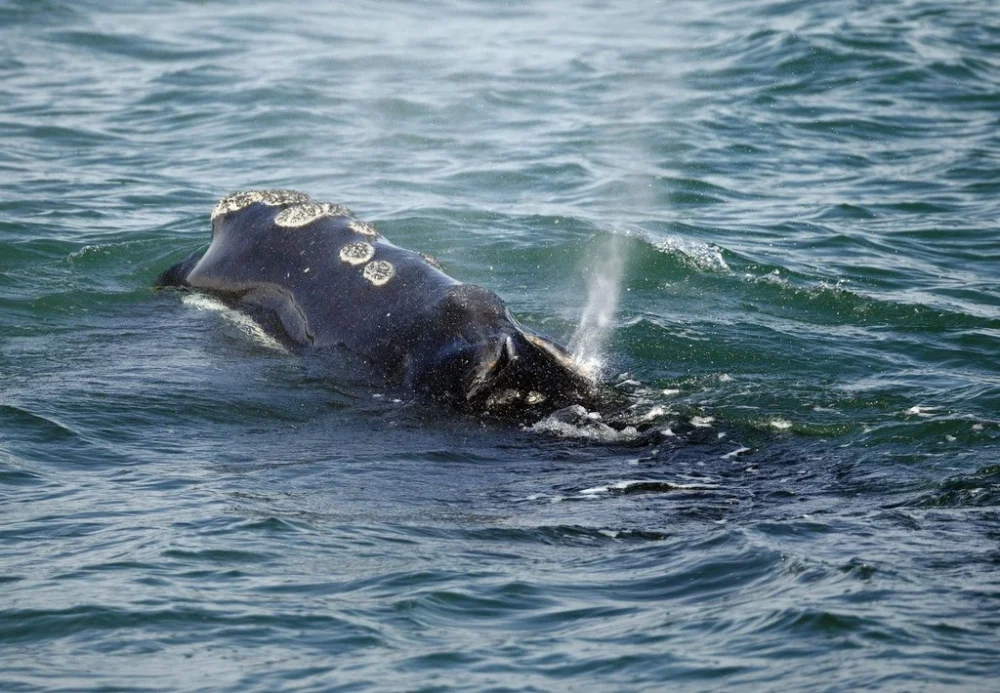
A controversial proposal by the U.S. National Oceanic and Atmospheric Administration (NOAA) to modify existing federal regulations designed to protect the critically endangered North Atlantic right whale has ignited widespread alarm among environmental groups and marine conservationists across both the United States and Canada. The move, announced Wednesday, aims to introduce "business-friendly changes" to rules requiring large ships to reduce speed in designated areas, a measure deemed crucial for mitigating collisions with the imperiled marine mammals.
The Precarious Existence of the North Atlantic Right Whale
The North Atlantic right whale ( Eubalaena glacialis) stands on the brink of extinction, with an estimated population currently hovering at approximately 360 individuals. This critically endangered status, as designated by the International Union for Conservation of Nature (IUCN), underscores the immense vulnerability of the species. Despite a slight uptick in numbers observed since 2020, following years of precipitous decline, conservationists warn that any weakening of protective measures could reverse these fragile gains and push the species closer to oblivion.
These majestic whales undertake an annual migration spanning thousands of miles, journeying from their calving grounds off the coasts of Florida and Georgia northward to their primary feeding grounds, which extend into the rich waters of the Bay of Fundy and the Gulf of St. Lawrence. This extensive migratory path frequently intersects with some of the busiest shipping lanes in the world, making them exceptionally susceptible to anthropogenic threats, primarily ship strikes and entanglement in fishing gear. Scientists estimate that the species can only sustain one human-caused death or serious injury per year to have any hope of recovery, a threshold consistently exceeded in recent years.
The 2008 Regulation: A Foundation for Protection
The existing federal regulation, introduced in 2008, was a landmark effort to safeguard North Atlantic right whales. It mandates that most vessels 20 metres (approximately 65 feet) or longer must travel at speeds of 10 knots (approximately 11.5 miles per hour) or less within designated Seasonal Management Areas (SMAs) along the U.S. East Coast during specific times of the year. These SMAs are strategically located in areas known for high whale presence, such as calving grounds, migratory corridors, and feeding zones. The intent of these speed restrictions is simple yet profound: slower ships provide whales with more time to react and move out of the path of oncoming vessels, and if a collision does occur, the reduced speed significantly decreases the likelihood of a fatal injury.

Studies conducted since the implementation of the 2008 rule have generally indicated its effectiveness in reducing ship strike mortality, particularly for larger vessels. Prior to 2008, ship strikes were the leading cause of death for North Atlantic right whales. While the regulation did not eliminate all collisions, it demonstrably lowered the risk, contributing to a period of relative stability for the population. Canada subsequently introduced its own set of mandatory and voluntary speed restrictions, primarily in the Gulf of St. Lawrence, following a spike in right whale mortalities in 2017 attributed to ship strikes and entanglements in Canadian waters. Compliance with these Canadian measures has reportedly remained high, demonstrating a willingness within the maritime industry to adapt for conservation purposes.
NOAA’s Rationale for "Business-Friendly" Adjustments
NOAA Administrator Neil Jacobs articulated the federal agency’s position, stating that the proposed changes are intended to "allow maritime commerce to coexist with endangered species." He framed this action as "an important step in implementing (President Donald Trump’s) vision of adopting modern technologies, supporting American industry and promoting efficient and effective regulations." The agency is seeking public input on the proposed modifications, which it claims are aimed at reducing "unnecessary regulatory and economic burdens" on the maritime industry while simultaneously ensuring conservation practices.
The National Marine Manufacturers Association, a prominent U.S. industry group, has been vocal in its criticism of the current speed restrictions, describing them as "archaic." The association advocates for a shift towards new technologies as a primary means of whale avoidance, suggesting that modern solutions could offer flexibility to commercial operations without compromising whale safety. This perspective aligns with NOAA’s stated goal of leveraging innovation to streamline regulatory processes.
Environmental and Scientific Community Sound the Alarm
The proposed relaxation of speed restrictions has been met with fierce opposition from a coalition of environmental organizations and leading marine scientists. Jane Davenport, a senior attorney at the conservation group Defenders of Wildlife, unequivocally stated that the United States needs more right whale protections, not fewer. Her sentiment reflects a broader consensus within the conservation community that the species’ perilous state necessitates heightened, rather than diminished, safeguards.
Sean Brillant, marine program coordinator with the Canadian Wildlife Federation, emphasized the critical importance of maintaining the existing U.S. speed limits. In an interview, he noted that these regulations are particularly effective at preventing collisions involving smaller, more manoeuvrable vessels, and while their impact on very large vessels might be less dramatic, "they do a little bit of good for the big vessels, but not as much good as people might think. It doesn’t solve the problem." Crucially, Brillant asserted that despite their imperfections, speed restrictions remain the most reliable tool available for preventing ship strikes, calling them "the only card in our deck right now."

Moira Brown, science director at the Canadian Whale Institute based in Welshpool, N.B., expressed profound concern that raising or entirely eliminating the U.S. speed limit would effectively "destroy 40 years of work aimed at lowering whale deaths caused by ship strikes." Brown, a veteran right whale researcher, highlighted the extensive collaborative efforts between researchers, the shipping industry, and government regulators to develop effective conservation measures. She warned that such a reversal would undermine years of "meetings, negotiations, discussions of what can be done to reduce the impact of vessel strikes on North Atlantic right whales."
The Unproven Promise of New Technologies
A central point of contention in the debate revolves around the efficacy and readiness of "new technologies" touted by industry groups and NOAA as potential alternatives to speed restrictions. While innovations in whale detection, such as passive acoustic monitoring (hydrophones listening for whale calls), thermal imaging cameras, and advanced satellite tracking, are under development, experts like Sean Brillant caution that these devices remain in experimental stages. "Everybody seems to be hanging their hat on early detection," he observed, but critically, "The ability of large vessels to take evasive action using early detection of whales has never been proven."
Moira Brown echoed this skepticism, challenging the notion that whale-detection technology could sufficiently replace the need for speed limits. She underscored that these infrared camera systems and other advanced sensors are still very much in the experimental phase, lacking the proven track record of reducing mortalities that speed restrictions have demonstrated. The sheer size and inertia of large cargo ships and tankers mean that even with early detection, a vessel traveling at higher speeds would require significant time and distance to alter course, potentially making evasive action impractical or impossible in close quarters.
Broader Implications and Stakeholder Concerns
The debate over these regulations extends beyond immediate conservation outcomes, touching upon economic considerations, international cooperation, and the precedent set for future environmental protections. While NOAA seeks to alleviate "economic burdens," conservationists argue that the long-term economic and ecological costs of species extinction far outweigh the short-term inconveniences of reduced vessel speeds. The shipping industry, while generally seeking efficiency, is not monolithic in its views. Brown pointed out that many larger shipping companies have, in fact, come forward to support the existing speed restrictions in both the U.S. and Canada, demonstrating a willingness to adjust operational procedures for the benefit of the whales. These companies recognize their corporate social responsibility and the potential reputational damage associated with contributing to the demise of a critically endangered species.
The migratory nature of the North Atlantic right whale necessitates a coordinated, bi-national approach to conservation. Any weakening of U.S. protections could undermine Canadian efforts and create a fragmented regulatory landscape, leaving whales vulnerable as they traverse international waters. The potential for a "race to the bottom" in terms of environmental standards is a serious concern for advocacy groups.

The history of the North Atlantic right whale is a somber reminder of human impact. Hunted to near extinction during the whaling era—their name derived from being the "right" whale to hunt due to their slow speed, coastal habits, and buoyancy after death—they received international protection from whaling in the 1930s. However, recovery has been agonizingly slow, complicated by modern threats. The U.S. listed them under the Endangered Species Act in 1970, and their critical habitat was further defined over the years, leading to the 2008 speed rule. Yet, since 2017, an "Unusual Mortality Event" declaration has been in effect for the species, with approximately two dozen right whales confirmed killed or seriously injured by ship strikes and fishing gear entanglements in U.S. and Canadian waters. This grim statistic highlights that even with current regulations, the species remains under immense pressure.
The Road Ahead: Public Input and Future Challenges
NOAA’s proposal is currently open for public comment, a crucial phase where scientific data, industry concerns, and public sentiment will be weighed. Environmental organizations are expected to mobilize their networks to submit extensive comments advocating for the maintenance, or even strengthening, of existing protections. The outcome of this process will not only determine the immediate fate of the North Atlantic right whale regulations but could also set a significant precedent for how the U.S. balances economic interests with its commitment to protecting endangered species under federal mandates like the Endangered Species Act and the Marine Mammal Protection Act.
Should NOAA proceed with relaxing the regulations, it is highly probable that environmental groups will pursue legal challenges, arguing that such a move violates existing environmental laws and jeopardizes the survival of a species already on the brink. The tension between economic pressures and ecological imperatives remains a defining feature of modern conservation efforts, and the debate over North Atlantic right whale protections serves as a potent illustration of this ongoing struggle. The whales, as Moira Brown succinctly puts it, "need all the help they can get," and the decision by U.S. regulators will have profound and lasting consequences for their survival.