admin
admin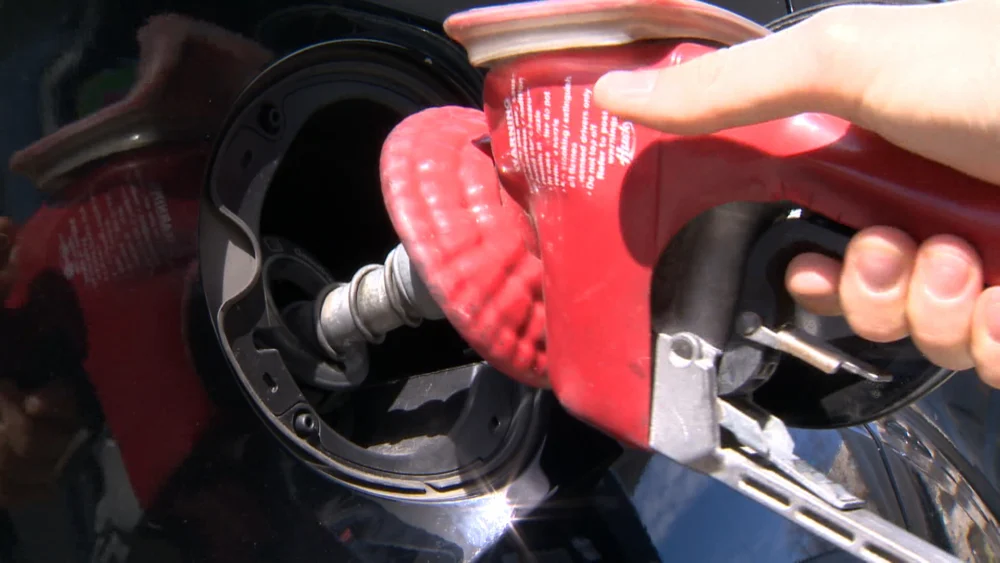
The five-day-old conflict involving Iran has critically impacted global energy markets, manifesting in a sharp rise in crude oil prices that Canadian motorists are already observing at gasoline pumps across the nation. This rapid escalation, characterized by a series of targeted strikes and retaliatory actions, has introduced significant volatility into an already sensitive geopolitical landscape, pushing oil benchmarks to levels not witnessed in over a year. The immediate consequence for consumers is a noticeable increase in fuel costs, with some Canadian provinces bearing a disproportionately heavier burden.
Escalating Conflict and Immediate Market Reaction
The current crisis ignited following a weekend aerial bombardment initiated by the United States and Israel against Iran. These strikes, launched on Saturday, targeted key figures within the Iranian regime, most notably resulting in the death of 86-year-old Supreme Leader Ayatollah Ali Khamenei. According to U.S. President Donald Trump, these preemptive actions were intended to prevent Tehran from acquiring nuclear weapons and to neutralize "imminent threats" posed by the Iranian regime.
Iran’s response was swift and forceful. Over the ensuing days, the Islamic Republic launched a series of retaliatory attacks targeting American and Israeli interests, as well as critical energy infrastructure in neighboring Gulf countries. This dramatic escalation sent immediate shockwaves through the global oil markets. On Tuesday, crude oil prices soared, marking a significant increase from pre-conflict levels and reaching highs not seen in more than twelve months. The market reaction underscores the profound sensitivity of energy supplies to geopolitical instability, particularly in the Middle East, a region pivotal to global oil production and transit.
Canadian Pump Price Impact: A National Overview
Canadian consumers have felt the direct economic fallout of this international crisis. Data compiled by the Canadian Automobile Association (CAA) on Wednesday morning revealed a national average gasoline price of $1.381 per litre. This figure represents a four-cent increase from Tuesday and a substantial nearly nine-cent jump compared to just a week prior, illustrating the rapid pass-through of crude oil price hikes to retail fuel costs.

The pinch is most acutely felt in British Columbia and Prince Edward Island, where pump prices significantly exceed the national average. According to GasBuddy, a technology company specializing in gasoline pricing data, motorists in British Columbia were contending with prices averaging $1.619 per litre for regular unleaded gasoline on Wednesday morning. Similarly, Prince Edward Island drivers faced an average of $1.542 per litre, as reported by the province’s Regulatory and Appeals Commission. These elevated prices in specific regions are often attributed to a combination of factors, including provincial taxation, refining capacity, and transportation costs, which amplify the underlying increases in crude oil.
Other Canadian provinces also experienced notable price adjustments. While specific figures for all provinces were not detailed in the immediate reports, the general upward trend was universal. The Nova Scotia Energy Board, for instance, invoked its "interrupter mechanism" at midnight on Wednesday to implement an immediate price increase. This measure is typically reserved for instances of "significant shifts in the market price," highlighting the severity and suddenness of the market volatility. Even prior to the recent Iranian attacks, gasoline prices were already on an upward trajectory, partly due to refiners transitioning to more expensive summer fuel blends, a seasonal factor that further compounds the current geopolitical premium.
Geopolitical Flashpoint: The Strait of Hormuz
Central to the global energy market’s anxiety is the strategic importance of the Strait of Hormuz. Roger McKnight, chief petroleum analyst with En-Pro International, emphasized the Strait’s critical role in a statement on Tuesday. "Geography is taking centre stage due to the importance of a crucial global crude oil conduit: the Strait of Hormuz, the passage of which is controlled by Iran," McKnight stated. This narrow waterway, often referred to as the "mouth of the Persian Gulf," is an indispensable artery for international oil trade.
Approximately one-fifth of all oil traded globally transits through the Strait of Hormuz. Any disruption to tanker movement, whether actual or merely rumored, has an immediate and profound impact on global crude oil prices. Iran has a history of threatening and, at times, disrupting tanker traffic through the Strait, leveraging its geographical control as a strategic tool. The recent attacks by Iran, which also included strikes on energy facilities in oil-rich Qatar and Saudi Arabia, serve as a stark reminder of its capacity to influence global energy supplies. McKnight underscored this vulnerability, noting, "Any restriction of tanker movement, whether in fact or rumored, will increase the price of crude, and this will quickly be reflected in consumer costs for all refined products such as gasoline and diesel." The direct targeting of energy infrastructure and the implied threat to maritime shipping lanes in the Persian Gulf have thus ‘supercharged’ market anxieties, driving prices upwards not just by fundamental supply-demand dynamics but also by pervasive fear and speculative trading.
The Genesis of Conflict: A Chronology of Escalation
The current state of heightened alert and market instability is the culmination of a rapid sequence of events:

- Saturday (Day 1): The United States and Israel launch coordinated aerial bombardments against targets within Iran. These strikes are characterized as a decisive action aimed at dismantling the Iranian regime’s leadership and preventing its alleged nuclear weapons ambitions. The most significant outcome of these initial strikes is the death of Supreme Leader Ayatollah Ali Khamenei, a figure who had been at the helm of Iran’s political and religious establishment for decades. This act is widely seen as a severe blow to the regime and an unprecedented escalation in the long-standing proxy conflict between Iran and its adversaries.
- Sunday-Monday (Days 2-3): Following the initial strikes, global leaders and international bodies express concern and call for de-escalation. However, Iran issues strong condemnations and vows "crushing revenge" for the death of its Supreme Leader. Initial skirmishes or low-level cyberattacks may occur, signalling Iran’s intent to retaliate without immediately revealing the full extent of its response. Markets begin to show signs of nervousness, with slight upticks in oil futures.
- Tuesday (Day 4): Iran executes its promised retaliation. A series of coordinated attacks are launched against various targets, including U.S. and Israeli military assets in the region (though specific locations are not detailed in the original text, these would typically include bases or facilities), as well as critical energy infrastructure in allied Gulf nations like Qatar and Saudi Arabia. These attacks directly impact oil production and transit capabilities, sending crude oil prices soaring to their highest levels in over a year. The intensity and breadth of Iran’s response demonstrate its capability and resolve.
- Wednesday (Day 5): The global energy markets react fully to the previous day’s attacks. Crude oil benchmarks like West Texas Intermediate (WTI) and Western Canadian Select (WCS) see significant gains. WTI trades at nearly US$74.30 per barrel, while WCS reaches US$62.21 per barrel. Canadian motorists witness the immediate reflection of these increases at the pumps, with national averages rising and regional disparities becoming more pronounced. Diplomatic efforts intensify, though the "pot is on full boil," as McKnight describes it, indicating that the situation remains extremely volatile and prone to further escalation.
Official Responses and International Reactions
U.S. President Donald Trump, addressing the nation from the Oval Office on Tuesday, acknowledged the immediate economic impact. "We have a little high oil prices for a little while, but as soon as this ends, those prices are going to drop, I believe, lower than even before," he stated, attempting to reassure the public while underscoring the temporary nature of the price hike. He reiterated the U.S. commitment to ensuring global energy security.
In a subsequent social media post, Trump outlined concrete measures to mitigate the disruption to oil supplies. He announced that, if necessary, the U.S. Navy would provide escorts for oil tankers transiting the Strait of Hormuz, a move designed to deter further Iranian interference and maintain freedom of navigation. Furthermore, he ordered the U.S. International Development Finance Corporation to offer political risk insurance for tankers carrying oil and other goods through the Persian Gulf "at a very reasonable price." This measure aims to reduce the financial burden and risk for shipping companies, thereby encouraging continued trade despite the heightened threat environment.
Beyond the immediate belligerents, the international community has largely reacted with alarm and calls for de-escalation. While specific statements from the United Nations or European Union leaders are not detailed, it can be logically inferred that such a significant escalation, involving the death of a supreme leader and attacks on vital infrastructure, would trigger widespread diplomatic engagement. Neighbouring Gulf countries, directly affected by the instability and potential targets of further attacks, would likely be coordinating security measures and appealing for international mediation. The broader international implications include a potential fracturing of global alliances, increased military posturing, and a renewed focus on non-proliferation efforts, particularly concerning Iran’s nuclear program.
Expert Analysis and Future Outlook
Roger McKnight’s analysis offers a stark perspective on the market’s current state. He contends that the price of crude is "being supercharged not by facts but by headlines," highlighting the significant role of market sentiment, speculative trading, and rapid information dissemination in amplifying price movements during crises. Traders and investors worldwide react instantaneously to news, rumors, and official statements, often creating a self-fulfilling prophecy of price increases, even if the actual physical supply disruption is not yet fully quantifiable.
McKnight’s projections for future pump prices paint a concerning picture for consumers. He warned that "The consumer is in for a very rough ride if this war extends in time and/or location." He provided clear examples: a crude oil increase from $67 to $80 per barrel would translate to an eight-cent per litre increase at the pump. A more drastic jump to $100 per barrel, which is not an inconceivable scenario given the volatility, would result in a substantial 20-cent per litre boost for consumers. These figures underscore the direct and severe impact of international conflict on household budgets and national economies.

However, McKnight also offered a glimmer of hope, noting that "This could all be reversed should the political temperature be reduced." The potential for diplomatic breakthroughs, de-escalation agreements, or a return to stability could quickly temper market anxieties and lead to a correction in oil prices. Yet, as he concluded, "But right now, the pot is on full boil," indicating that such a resolution remains distant amidst the ongoing hostilities.
Broader Economic Implications
The surge in oil prices carries significant broader economic implications beyond the immediate cost to motorists. For Canada, a major oil producer, a higher crude price can offer some economic benefits through increased export revenues, particularly for provinces like Alberta. However, as a net energy consumer, the overall impact on the national economy is often negative. Increased fuel costs translate to higher operational expenses for businesses, particularly in transportation, logistics, and manufacturing. This can contribute to inflationary pressures across various sectors, eroding consumer purchasing power and potentially dampening economic growth.
Globally, sustained high oil prices can act as a drag on the world economy, potentially slowing down recovery from other economic challenges. Developing nations and those heavily reliant on oil imports would be particularly vulnerable to economic instability, trade imbalances, and social unrest. Furthermore, disruptions to shipping routes, even if mitigated by naval escorts, can increase insurance premiums and transit times, impacting global supply chains and international trade flows. The prospect of prolonged conflict in the Persian Gulf also introduces significant uncertainty for foreign direct investment in the region, affecting long-term energy projects and regional economic development.
Long-Term Geopolitical Ramifications
The killing of a supreme leader and direct military confrontation between Iran, the U.S., and Israel mark a dangerous new chapter in Middle East geopolitics. The long-term ramifications could be profound. Regionally, the conflict risks drawing in other actors, potentially destabilizing the entire Persian Gulf and beyond. The intricate web of alliances and rivalries in the Middle East means that an escalation in one area can quickly ripple outwards, creating a broader humanitarian and security crisis.
Internationally, the crisis will test the resolve and diplomatic capabilities of global powers. The pursuit of nuclear weapons by Iran, cited by President Trump as a primary driver for the initial strikes, remains a central and highly contentious issue. The conflict could either accelerate Iran’s nuclear ambitions as a deterrent or, conversely, lead to a more robust international effort to constrain its program. The role of major powers like China and Russia, who have varying degrees of influence and interests in the region, will be critical in shaping any diplomatic off-ramps or containment strategies. The broader implications include a re-evaluation of international security architectures, the future of global energy security, and the ongoing struggle between state sovereignty and international interventionism.

As of Wednesday morning, with West Texas Intermediate trading at nearly US$74.30 per barrel and Western Canadian Select at US$62.21 per barrel, the market remains on edge. The volatility underscores the interconnectedness of global politics and economics, where a conflict thousands of kilometers away can directly influence the daily expenses of Canadian families. The resolution of this crisis, whether through de-escalation or prolonged conflict, will have lasting consequences for global energy markets and international stability.