admin
admin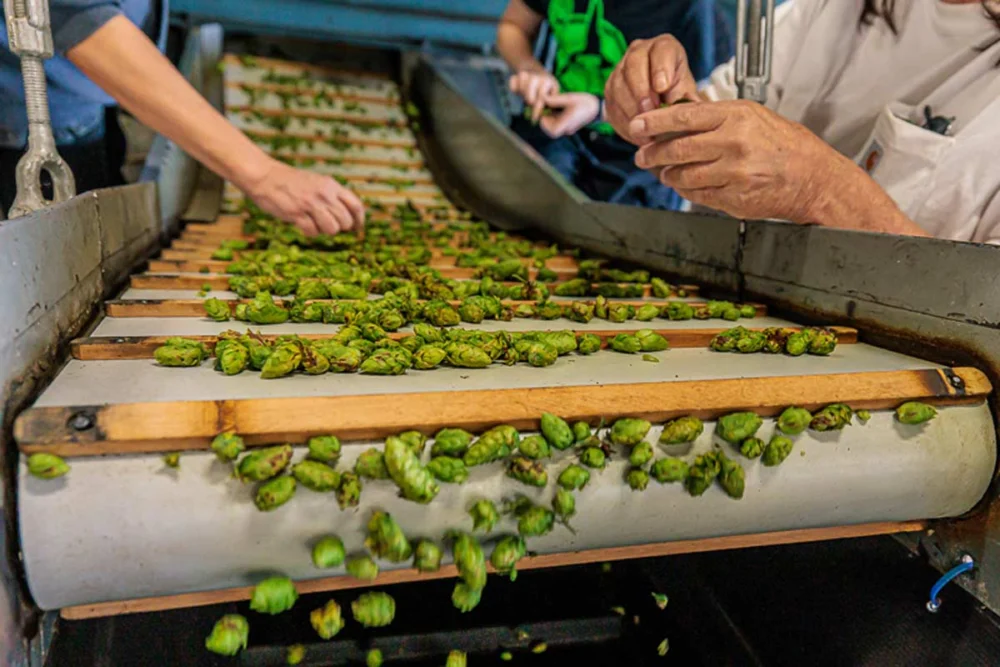
Michigan currently stands as the premier hop-producing state in the Great Lakes region and ranks fourth nationally in total hop acreage, trailing only the Pacific Northwest giants of Washington, Oregon, and Idaho. While the state’s craft beer industry has long been a point of regional pride, a significant portion of the agricultural success fueling this boom is driven by women whose contributions often occur away from the public eye. From advanced greenhouse propagation and integrated pest management to the implementation of industrial quality control standards and land stewardship, women are defining the modern era of Michigan viticulture. Despite these contributions, industry experts note a persistent visibility gap that obscures the foundational roles women play in harvest coordination, research, and the long-term sustainability of the crop.
The Geographic Advantage: The 45th Parallel and Glacial Legacy
The success of Michigan’s hop industry is rooted in a unique intersection of geography and geology. Hops (Humulus lupulus) are notoriously temperamental perennials that require specific environmental triggers to thrive. The "sweet spot" for commercial hop production is generally recognized as the 45th parallel, which bisects Northern Michigan. This latitude provides the precise photoperiod—long, sunny summer days followed by the cold winter dormancy periods—necessary for the plants to develop the resinous lupulin glands prized by brewers.
Furthermore, the state’s soil composition, a result of prehistoric glacial movements, offers the well-drained, sandy loam essential for hop health. Unlike many agricultural products, hops are highly susceptible to "wet feet," or root rot, making Michigan’s naturally porous soil a critical asset. Biologically, hops grow on bines rather than vines. While vines utilize tendrils or suckers to adhere to surfaces, bines employ stiff, downward-pointing hairs along their stems to wrap clockwise around support structures. In Michigan’s climate, these bines can grow up to 20 feet in a single season, requiring immense physical labor and technical oversight to manage.
Technical Leadership: Michigan State University’s Research Infrastructure
A cornerstone of the state’s hop resurgence is the partnership between growers and Michigan State University (MSU). Erin Lizotte, MSU’s integrated pest management (IPM) coordinator and senior statewide educator, has emerged as a pivotal figure in the industry’s technical evolution. As growers face increasing pressure from climate volatility and emerging pathogens, Lizotte’s work provides a research-backed framework for crop protection.
The MSU Extension team provides critical diagnostic services, helping farmers navigate the complexities of chemical approvals and disease mitigation. For Michigan growers, the ability to access the MSU Plant and Pest Diagnostics lab is often the difference between a successful harvest and a total crop loss. Lizotte’s role involves constant monitoring of local conditions to provide real-time advice on threats such as downy mildew and potato leafhoppers. This scientific oversight has allowed Michigan to professionalize its hop production, moving beyond "backyard" farming into a sophisticated agricultural sector that can compete on a national scale.
Propagation and the Clean Plant Protocol
The integrity of Michigan’s hop supply begins in the greenhouse, where specialists like Julie Kane of Sandy Ridge Farms in Zeeland have spent decades refining propagation techniques. Kane, who transitioned from ornamental horticulture to hops in 2008, was instrumental in establishing one of the state’s first commercial hop propagation programs.
The propagation process is fraught with biological risks, particularly from viruses and viroids that can lie dormant in plant tissue. To combat this, Kane adheres to a rigorous "Clean Plant" protocol. This involves starting with virus-free mother plants sourced from the National Clean Plant Network. The methodology requires strict sanitation of tools, preventative fungicide applications, and annual testing through MSU.
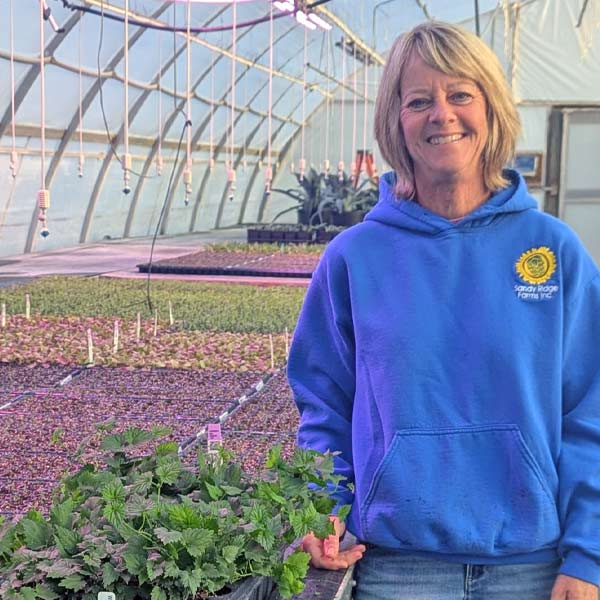
The importance of this work has been magnified by recent climate shifts. During the record-breaking heat waves of recent summers, greenhouse temperatures in Michigan have frequently exceeded 100 degrees Fahrenheit. Maintaining the health of starter stock under these conditions requires constant adjustments to irrigation, shading, and humidity control. Kane’s expertise ensures that when farmers plant new acreage, they are starting with genetically stable, disease-resistant stock, which is the primary defense against long-term industry decline.
Industrial Standards in the Field: Quality Control and Operations
The professionalization of Michigan’s hop farms has also benefited from the infusion of expertise from other sectors, most notably the automotive industry. Mel Trowbridge of Top Hops Farm in Goodrich applied her 40 years of experience as an automotive engineer and quality control specialist to the agricultural field.
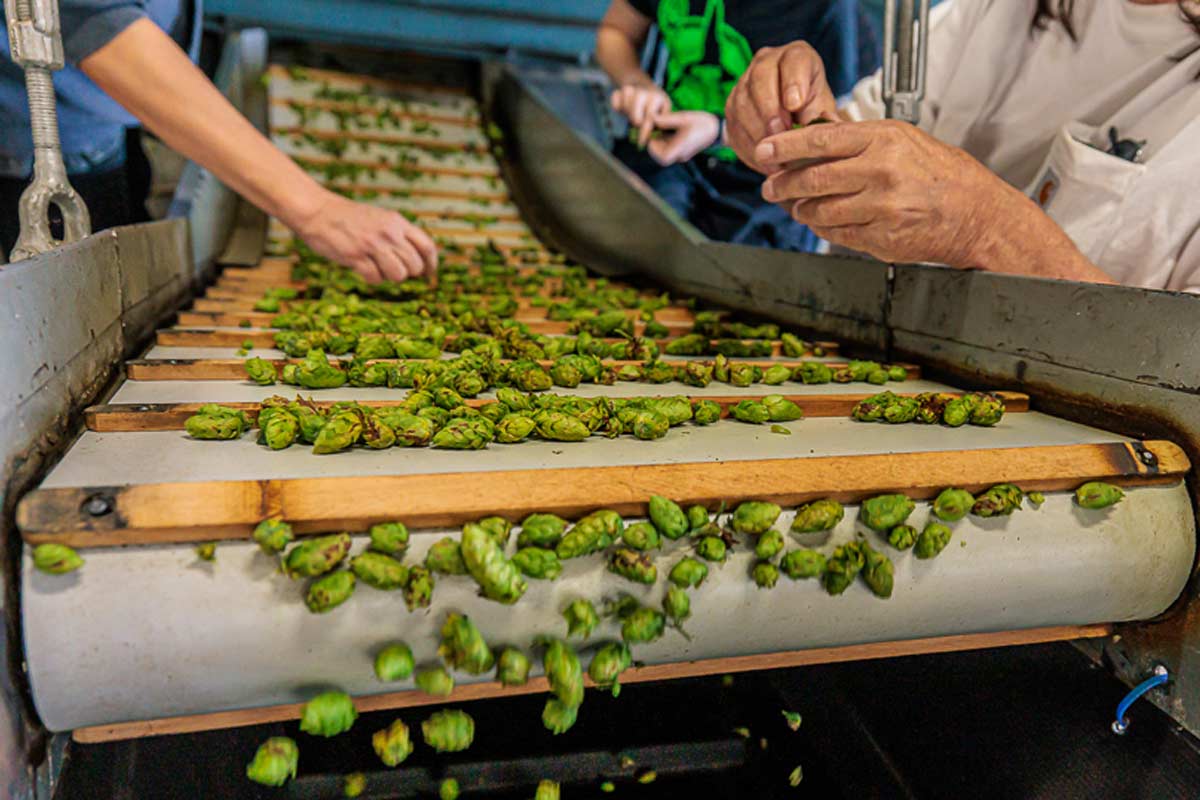
Trowbridge’s approach emphasizes process-driven operations, a necessity for a crop that requires intensive labor during a very narrow harvest window. By implementing structured training, task rotation, and daily team debriefs, Trowbridge has modeled how industrial efficiency can improve agricultural yields. During the harvest, which Trowbridge describes as "wrestling a jungle," her role as an orchestrator is vital. Managing the timing of the pick, the drying process in the oast (hop kiln), and the subsequent pelletization requires a level of precision that mirrors factory floor management. This transition from "farming by feel" to "farming by data" is a hallmark of the modern Michigan hop farm.
Stewardship and the Sensory Identity of Michigan Chinook
While technical and industrial standards are vital, the industry’s growth also relies on land stewardship and market differentiation. At Bell’s Brewery in Comstock, Bonnie Steinman and Elizabeth Mullins manage a two-and-a-half-acre hop yard that serves as both a production site and a laboratory for sustainable practices.
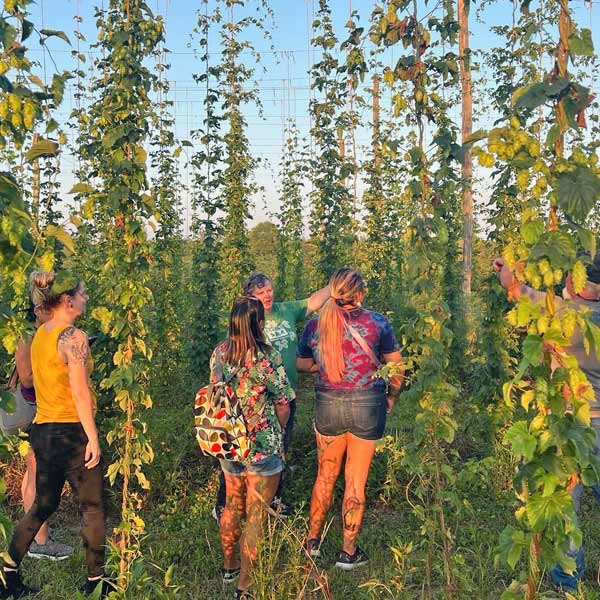
Steinman, a veteran horticulturist, has focused on the sensory development of Michigan-grown hops. A key point of her research is the "Michigan Chinook" variety. While Chinook hops are grown globally, the Michigan-grown version has developed a distinct terroir. Unlike the resinous, pine-heavy Chinook of the Pacific Northwest, Michigan’s version frequently exhibits notes of pineapple and bright citrus.
To highlight this, Steinman and Mullins have integrated educational spaces like "The Hideaway"—a gathering space beneath the hop bines—designed to immerse brewers and the public in the crop’s peak growth. This focus on the "emotional" and sensory connection to the plant is paired with rigorous pest scouting and sustainability efforts, including the maintenance of butterfly waystations and employee gardens. Their work underscores a broader trend: the integration of the brewery and the farm to create a closed-loop system of quality control.
Market Realities and the "Invisible" Workforce
Despite the successes of individual leaders, the Michigan hop industry faces significant headwinds. Market contraction, labor shortages, and the dominance of the Pacific Northwest supply chain present constant challenges for independent growers. Amy Tennis of the Michigan Hop Alliance points out that on many family-owned farms, women manage the essential administrative and logistical labor that keeps the business solvent.
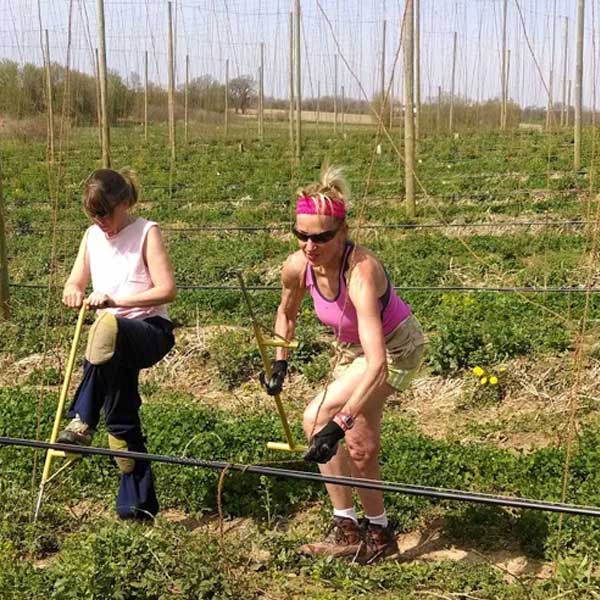
Tennis notes that women often handle the "back-office" complexities—grant writing, irrigation management, bookkeeping, and fundraiser organization—while also performing physical labor like weeding and training bines. This "double duty" is often unrecognized in industry awards or public-facing marketing. The ongoing struggle for visibility is not merely a matter of credit; it impacts access to capital, networking opportunities, and the long-term recruitment of new talent into the agricultural sector.
Analysis: Carving a Regional Identity in a Global Market
The future of Michigan’s hop industry depends on its ability to carve out a niche identity that differentiates it from larger competitors. Nicole Shriner, a hops researcher at MSU, suggests that Michigan’s path forward lies in quality and regional branding rather than sheer volume. The establishment of the "Chinook Cup" at the Great Beer State Conference, an event organized in part by Rose Stahl of Mr. Wizard’s Hops, is a prime example of this strategy. By incentivizing growers to produce the highest quality regional variants, the industry is building a brand that brewers recognize as "uniquely Michigan."
The evolution of the industry—from the flooded cornfields that led Rose Stahl to plant her first test row to the sophisticated "Clean Plant" greenhouses of Julie Kane—reflects a broader shift in American agriculture. As climate change continues to alter traditional growing regions, Michigan’s position on the 45th parallel, supported by a workforce of highly skilled women, places it at the forefront of the next generation of hop production.
The narrative of Michigan hops is no longer just about the number of acres planted; it is about the precision of the science, the efficiency of the operations, and the stewardship of the land. As the industry moves forward, the visibility of the women driving these innovations will be a key indicator of the sector’s maturity and its ability to sustain the "Great Beer State" for decades to come.