admin
admin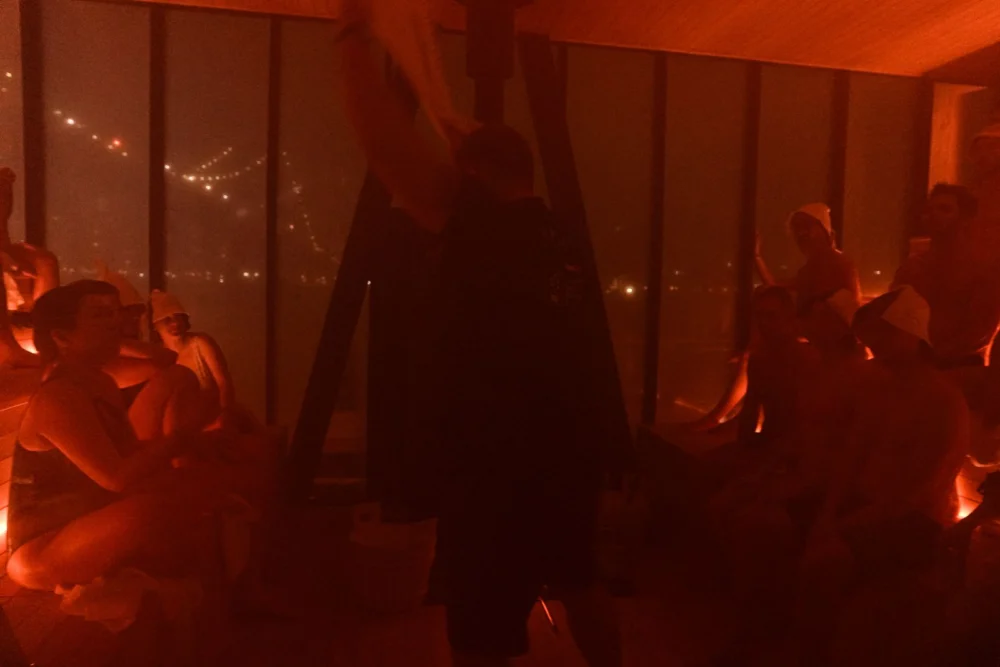
Approximately a month after experiencing the ancient, intensely humid embrace of a thirty-year-old concrete temazcal in Oaxaca, guided by a temazcalero named Larissa, the reporter found themselves enveloped in a different kind of heat. This time, the setting was a meticulously converted Airstream trailer, transformed into a sauna and strategically positioned on the picturesque shoreline of the Hudson River within Williamsburg’s vibrant Domino Park. The profound, transformative potential of steeping in 180-degree heat, a practice long revered for its capacity to induce a state of zen and a subtle euphoria, took on a distinctly New York flavor at this unique event. The atmosphere, punctuated by the diligent presence of festival volunteers, the casual strolls of locals and their dogs along the waterfront, and the curious glances directed towards the steaming structures, felt intrinsically woven into the city’s fabric. Even the adjacent, American Eagle-sponsored pop-up ice rink contributed to this quintessential urban tableau.
Perhaps the most defining characteristic of this particular sauna experience was its sheer scale and diversity. The reporter was situated in one of sixteen distinct saunas dotting the waterfront, each offering a unique thermal journey. Offerings ranged from rustic, wood-fired barrel saunas, emanating deep, earthy steam, to the "AirSteam" itself—a cleverly retrofitted Airstream adorned with sleek black waxed cladding, inviting long wooden benches, and a small window framing the mesmerizing sight of ice floes drifting languidly down the Hudson, passing beneath the iconic Williamsburg Bridge. This eclectic collection underscored a burgeoning movement in urban wellness, pushing the boundaries of traditional thermal experiences.
The Genesis of a Sweaty Spectacle: Culture of Bathe-ing and Therme Group
The unprecedented "Culture of Bathe-ing" festival, a collaboration between the grassroots collective of the same name and the global wellness development giant Therme Group, marked a significant moment in New York City’s evolving relationship with thermal bathing. Running from February 12 through March 1, amidst the lingering chill of winter and strategically placed between two snowstorms, the event transformed Domino Park into what organizers proudly declared the largest sauna village ever staged in the United States.
The "Culture of Bathe-ing" initiative, which organically grew from a simple WhatsApp group of passionate bathhouse operators into a dynamic event series and now boasts its own Substack, represents a burgeoning community dedicated to promoting the benefits and rituals of communal bathing. Their partnership with Therme Group, a prominent developer known for creating expansive thermal bathing and spa destinations in international hotspots like Dubai and Bucharest, injected significant organizational and financial impetus into the festival. Beyond simply capitalizing on the city’s already thriving bathhouse scene, the organizers aimed to recalibrate New Yorkers’ perception of bathing, repositioning it primarily as a social, collective experience—a sweaty, yet undeniably shared, endeavor.
Robert Hammond, president of Therme Group U.S., articulated this vision with clarity. "I would like to see sauna culture in the U.S. move out of gym and spa spaces and beyond the optimization cycle," he stated. Hammond envisions thermal bathing as a means to foster genuine connection, embracing "ritual, performance, and culture, not just recovery." This perspective is particularly noteworthy coming from a major investor in large-scale bathing facilities, as much of the contemporary discourse around saunas and cold plunges tends to focus on biometric data, physiological benefits, and prescribed durations, often overshadowing the inherent social and spiritual dimensions. Hammond’s emphasis on embracing sauna as a potential "third space"—a concept recently re-embraced by Gen Z as a way to disconnect from digital devices and foster in-person connections—suggests a more holistic and community-centric approach to wellness. He further elaborated, "[The festival] echoes how bathhouses once functioned as civic infrastructure and still do in many parts of the world," citing cities like Helsinki and Seoul where weekly communal bathing is a cultural norm rather than an occasional luxury. "We wanted to place bathing back in the public imagination, not tucked behind a spa door."

New York’s Enduring and Evolving Bathhouse Landscape
New York City has a rich, albeit often understated, history of communal bathing. Venerable institutions like the East Village’s Russian & Turkish Baths, established in 1892 and still co-run by the families of its longtime owner-operators, Boris Tuberman and David Shapiro, offer a tangible link to a bygone era. Elsewhere, Spa Castle in College Point provides extensive Korean scrubs and rooftop hot tubs, while Mermaid Spa in Seagate preserves the traditional "platza service," a vigorous massage administered with a birch venik (a bundle of birch, eucalyptus, or oak tree twigs). These establishments have long served as cultural anchors for various immigrant communities, offering authentic experiences rooted in their respective traditions.
However, the tide in New York’s bathing scene began to shift significantly around 2019 with the advent of "Bathhouse." Opening first in Williamsburg and later in Flatiron, Bathhouse presented a more refined, contemporary interpretation of bathing. Characterized by its subdued lighting, minimalist cement aesthetics, and pools heated by the innovative (and controversial) method of Bitcoin mining, it heralded a new era. This was quickly followed by a proliferation of other modern bathing spaces, including Othership, World Spa, and Akari, each contributing to a rapidly expanding wellness ecosystem. The demand for efficient wellness solutions also spurred the development of abbreviated experiences, such as the "temperature contrast session" at Elahni in Flatiron, allowing busy New Yorkers to "reset their nervous system" through a circuit of sauna, shower, and ice bath, completed in a mere hour.
The emergence of the "Culture of Bathe-ing" festival, therefore, feels like a natural, if somewhat overdue, progression in this dynamic landscape. It serves as both a celebration and an expansion of this growing appreciation for thermal wellness, bringing a diverse array of sauna experiences directly to a public park.

The Festival Experience: A Global Tour of Heat and Community
Upon arrival for the afternoon sessions, attendees, many donning Culture of Bathe-ing branded sauna hats, traversed River Street from the festival’s makeshift locker room to the waterfront. While some came in groups of friends, the festival’s design actively fostered a communal, rather than solitary, atmosphere. Beyond the sheer variety of international sauna types—from a sophisticated cedar-walled mobile unit by Rhode Island-based Altaer, to an authentic Estonian-made Leil, and the quintessential Finnish löyly—the event offered an extensive program of bathing-adjacent activities.
These included captivating performances by Romanian Aufguss masters, who skillfully choreographed towel movements to circulate heated, often essential oil-infused, air within the saunas, creating a mesmerizing, almost dance-like ritual. Guided meditation sessions were offered throughout the day, providing moments of introspective calm amidst the bustling energy. The reporter even found themselves drawn into a collective storytelling session, a testament to the festival’s intent to weave narratives and connections into the thermal experience. This eclectic programming underscored how American (and particularly New York) sauna culture is increasingly becoming a melting pot of global traditions, blending ancient practices with contemporary interpretations.
However, this fusion also introduced elements less common in traditional bathing rituals. The inclusion of DJs, for instance, particularly during the evening sessions marketed as an "alternative night out," offered a distinct urban flavor. While this element appealed to some, others found it a departure from the more introspective or naturally social ambiance of traditional Japanese ryokans, Moroccan hammams, or even the Russian banyas found within the city. Critics often point to the influence of "big tech" wellness trends (such as hyper-focused cold plunges) and the economic realities of New York City as factors contributing to a perceived lack of "soul" in many newer, upscale bathhouses. These establishments, while impeccably designed and often demanding gym-like membership fees, can sometimes feel utterly "vibeless," prioritizing clinical efficiency over authentic human connection.

The Attercop: A Bold Statement in Communal Bathing
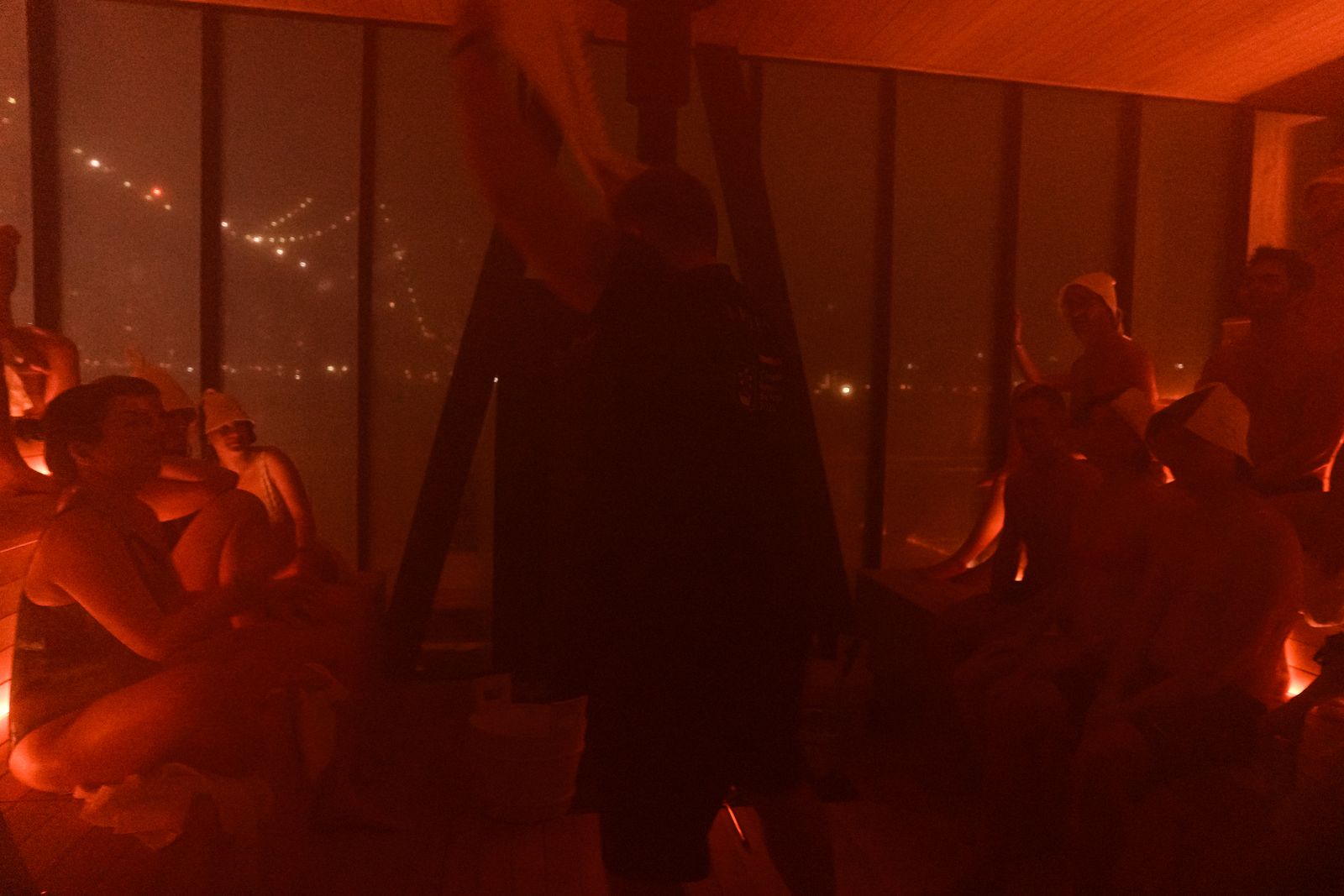
The true litmus test of the festival’s commitment to "gatherability" lay in its most ambitious centerpiece: the seventeenth sauna, not merely "plopped" but meticulously hand-built on-site. This imposing, black-winged structure, named Attercop (a curious choice, given its etymological link to a venomous spider, a far cry from a health-inspired emblem), was designed by the acclaimed Finnish architect Sami Rintala. Engineered to accommodate over 75 bathers simultaneously, its interior featured stadium-style seating, allowing occupants to face each other while gazing out at the river and the expansive New York City skyline. At its heart sat a formidable 750-pound stove, radiating intense heat. This monumental structure was more than just a sauna; it was a deliberate architectural statement, a direct challenge to Robert Hammond’s central thesis for New York: Do urban dwellers truly desire to embrace the sauna as a vibrant social hub? And, perhaps more fundamentally, do they possess the inherent understanding or etiquette to navigate such large communal thermal spaces effectively?
Kelly Crimmins, owner-operator of Big Towel, a sauna company renowned for its two wood-burning units nestled by a small lake in Germantown, New York (and recently expanded to the Hudson shores in Kingston), offered a critical perspective on this question. "Americans don’t know how to gather in big [sauna] spaces in an etiquette kind of way because we are trained to go to concerts or to football—we’re supposed to be screaming," Crimmins observed. Her own smaller saunas, deliberately devoid of DJs or other sound-based accompaniments, foster a quieter, more intimate environment where loud personal conversations are gently discouraged in favor of a more zen atmosphere. Yet, Big Towel is far from antisocial; Crimmins actively encourages unique programming, such as butter churning with a nearby farm, and conversations often naturally drift to local happenings, fostering a genuine sense of community.
The Economics of Wellness: Accessibility and the Future of Bathing
One of the persistent challenges facing Robert Hammond and other modern bathhouse operators in New York City is the issue of pricing. Tickets for the "Culture of Bathe-ing" festival ranged from $60 to $95, depending on the time and day, granting a two-hour window of access to all saunas. This price point, while standard for many new wellness offerings in the city, inadvertently highlights a critical concern: accessibility. New York’s burgeoning bathhouse culture, despite its growth, remains largely stunted by its inability to cater to a broader economic demographic. Even with the support of multiple sponsors like Therme, Athletic Brewing Co., and Vital Proteins, the festival could not fully circumvent this fundamental economic barrier.
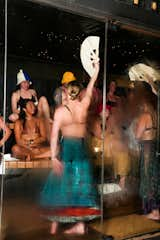
However, the festival did succeed in offering an unparalleled variety of sauna experiences for those who could afford to attend. This global sampler, featuring units from Rhode Island, Estonia, and traditional Finnish designs, provided a rare opportunity for bathing enthusiasts to explore the diverse world of thermal practices without international travel.
Courtney Wittich, a self-described thermal journalist, sauna sommelier, and bathing connoisseur who authors S.P.A., a Substack dedicated to the now multi-billion-dollar wellness industry, reflected on the festival’s educational value. (Wittich herself made promotional appearances for the event.) "I think what a lot of people are used to is a hot box and they don’t know how they’re supposed to feel in that space," she noted. "If you enjoyed a specific type of steam [at the festival], you can seek that out more authentically on your travels or wherever else you go." Wittich playfully termed this era the "post-iPhone leisure world," emphasizing that while these practices might seem like new trends, "they’ve been here forever." She posited that this movement represents a societal "reverting back to a more nostalgic way of living to feel more human again."
Kelly Crimmins of Big Towel echoed the sentiment regarding the delicate balance between offering unique experiences and ensuring regularity. Her saunas are priced from $22, aiming to make them a weekly resource rather than an occasional indulgence. "It’s that question of maintenance versus novelty," Crimmins observed, pinpointing the ultimate push and pull within the booming sauna industry.
Broader Implications and the Vision Ahead
The "Culture of Bathe-ing" festival in Domino Park was more than just a temporary attraction; it was a bold experiment and a significant statement about the potential future of wellness in New York City. It challenged the prevailing narrative of wellness as an individualistic, often optimized, pursuit, advocating instead for its role as a communal, culturally enriching experience. The success of such a large-scale public event, attracting hundreds of attendees and generating significant media attention, underscores a palpable public appetite for these types of "third spaces" in an increasingly isolated urban environment.
However, the question remains: Can New York City truly become a "bathhouse town for the people"? While initiatives backed by substantial investors like Therme Group can stage impressive, diverse events, they often struggle to achieve the kind of accessible pricing necessary for regular, widespread community integration. As Kelly Crimmins succinctly put it, "I hope the future of sauna is that people keep making spaces where people can feel that anyone can literally come and won’t feel like, Oh, can I touch this? Or can I sit here? What is this? Am I allowed to drink that? And also just affordable in pricing as well. You want people to be able to come often."
The festival’s impact will likely be multifaceted. It has undoubtedly raised awareness and broadened the appeal of thermal bathing, potentially inspiring new entrepreneurs and prompting existing facilities to consider more community-focused programming. It has also demonstrated the viability of temporary, pop-up wellness installations as a means to engage the public and test new concepts. Ultimately, the "Culture of Bathe-ing" festival has ignited a vital conversation about how New York City can foster genuine, inclusive communal wellness experiences, moving beyond the transactional nature of many modern amenities towards a more ritualistic, social, and truly human connection to heat and rejuvenation. The path forward will require creative solutions to address the economic barriers, ensuring that the transformative power of communal bathing is accessible to all, not just a privileged few.