admin
admin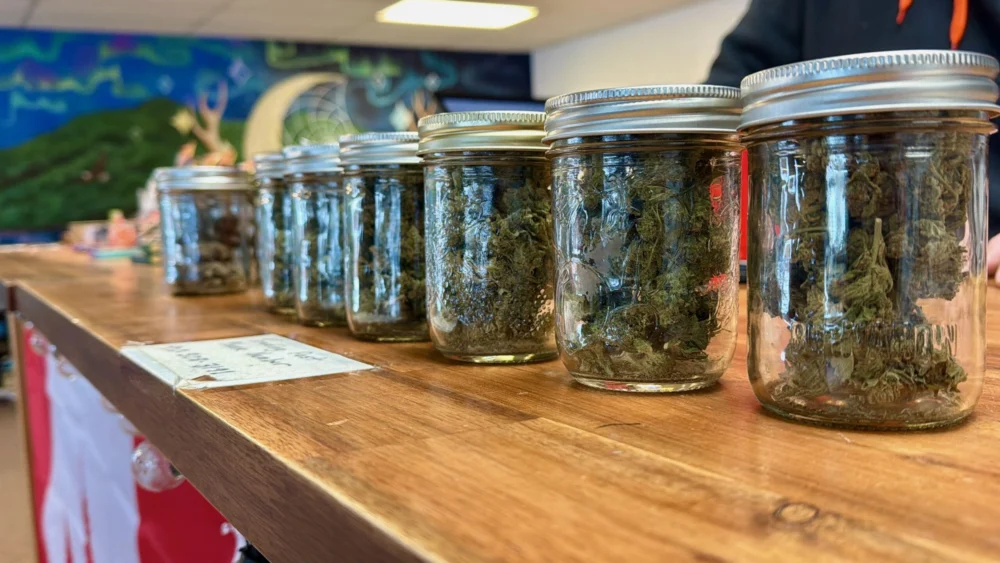
Nova Scotia’s Justice Minister, Scott Armstrong, has announced significant amendments to the province’s Cannabis Control Act, tabling new legislation designed to intensify the crackdown on illegal cannabis dispensaries. The bill, introduced on Wednesday, February 25, 2026, aims to bolster enforcement capabilities, increase financial penalties, and address critical evidentiary issues in the ongoing effort to regulate cannabis sales exclusively through the Nova Scotia Liquor Corporation (NSLC). This legislative push comes at a contentious time, following a provincial directive in December 2025 for police to escalate enforcement, a move that has drawn sharp criticism from Mi’kmaq chiefs who argue it undermines Indigenous relations and sovereignty.
The provincial government’s stated objective is to safeguard public health and safety, particularly concerning youth, while ensuring that adults who choose to consume cannabis have access to regulated, tested products. "We are strengthening the Cannabis Control Act through expanded enforcement authority, increased fines and addressing evidentiary issues," Minister Armstrong articulated in a statement, emphasizing the government’s commitment to maintaining a controlled cannabis market. The proposed changes are a direct response to the persistent challenge posed by a thriving illicit market, which authorities contend undermines the legal framework established following federal legalization in 2018.

The Genesis of Cannabis Regulation in Nova Scotia
Canada made history in October 2018 by becoming the first G7 nation to legalize recreational cannabis nationwide. This landmark federal decision necessitated a swift response from provincial and territorial governments, tasking them with establishing regulatory frameworks for distribution and retail. In Nova Scotia, the provincial government promptly enacted its Cannabis Control Act, designating the Nova Scotia Liquor Corporation (NSLC) as the sole legal retailer for cannabis products within its borders. This model was adopted by several provinces, aiming to tightly control sales, ensure product safety, and generate tax revenue while simultaneously working to dismantle the pre-existing illicit market.
However, despite the introduction of legal avenues, the illegal cannabis market has proven resilient. Unlicensed dispensaries, often operating with lower overheads and offering competitive pricing, have continued to proliferate, particularly in rural areas and increasingly in urban centers. Data from Statistics Canada and various industry reports consistently show that while the legal market has grown steadily, a significant portion of cannabis sales still occurs through unregulated channels. For instance, in the fiscal year 2024-2025, estimates suggested that the illicit market still captured approximately 30-40% of total cannabis sales in some Canadian regions, representing hundreds of millions of dollars in untaxed revenue and posing ongoing challenges to public health and safety. The Nova Scotia government’s current legislative efforts are a clear indication of its determination to reclaim this market share and reinforce the legitimacy of the legal retail system.
Key Provisions of the Amended Cannabis Control Act
The new legislation introduces several crucial changes designed to provide law enforcement with more robust tools to combat illegal cannabis operations. Among the most significant amendments is the creation of a new offence specifically targeting landlords who knowingly permit their properties to be used for the illegal sale of cannabis. This provision aims to disrupt the infrastructure supporting illicit dispensaries by holding property owners accountable, thereby increasing the risk for those who facilitate such operations. Previously, enforcement efforts often focused solely on the operators of the dispensaries, leaving landlords largely unaddressed.

Furthermore, the bill significantly expands enforcement authority by empowering a wider range of peace officers, including conservation officers, to enforce the Cannabis Control Act. This move broadens the net of potential enforcement personnel beyond traditional police forces, potentially allowing for more widespread and frequent interventions across the province. This expanded capacity is expected to be particularly impactful in areas where police resources might be stretched thin, or where illegal operations have historically found sanctuary due to limited oversight. The legislation also proposes increased fines for various infractions related to illegal cannabis sales, signaling a more punitive approach to deterring illicit activity. While specific figures for the increased fines were not immediately detailed in the initial announcement, they are anticipated to be substantial enough to act as a significant deterrent, reflecting the government’s resolve. Lastly, the amendments aim to address evidentiary issues, streamlining the legal process for prosecuting offenders and making it more challenging for those engaged in illegal sales to evade conviction on technicalities.
A Timeline of Escalation and Contention
The legislative amendments are the culmination of a period of intensifying governmental focus on the illegal cannabis market. The chronology of recent events highlights the escalating tensions:
- October 2018: Federal legalization of recreational cannabis, followed by Nova Scotia’s implementation of the Cannabis Control Act, establishing the NSLC as the sole legal retailer.
- Throughout 2019-2024: Persistent growth of illegal dispensaries across Nova Scotia, despite ongoing, albeit often localized, enforcement efforts by police. Concerns about product safety, lack of taxation, and potential links to organized crime continue to be raised by provincial authorities and the legal cannabis industry.
- December 2025: The Nova Scotia government issues a province-wide directive to police forces, urging them to "intensify enforcement" efforts to shut down illegal cannabis operations. Concurrently, Justice Minister Scott Armstrong dispatches letters to the 13 Mi’kmaq chiefs in Nova Scotia, requesting their "co-operation" in addressing the issue of unlicensed dispensaries operating within or near their communities. This directive and the accompanying letters are seen as a significant hardening of the provincial stance.
- Early January 2026: Mi’kmaq chiefs publicly condemn the provincial directive, asserting that it undermines the spirit of reconciliation and infringes upon their inherent and treaty rights to self-governance and economic development. They highlight the economic role of some Indigenous-run dispensaries, arguing for a nation-to-nation dialogue rather than unilateral provincial enforcement.
- Mid-January 2026: Premier Tim Houston publicly defends the crackdown, citing serious concerns about human trafficking and the potential for fentanyl contamination in unregulated cannabis products. These claims are presented as primary drivers for the intensified enforcement.
- Late January 2026: In a significant counterpoint, the federal Justice Minister’s office states there are no substantiated reports linking human trafficking to contraband cannabis operations nationally. Separately, both the Nova Scotia RCMP and Halifax Regional Police publicly confirm that they have not detected fentanyl in any cannabis products seized from illegal storefronts in the province. These statements directly contradict key justifications offered by the provincial government, further fueling the controversy.
- February 25, 2026: Justice Minister Scott Armstrong tables the new legislation to strengthen the Cannabis Control Act, formalizing the province’s enhanced enforcement strategy.
Divergent Narratives: Public Safety vs. Indigenous Rights
The provincial government’s narrative for the crackdown is heavily rooted in public safety. Premier Tim Houston has repeatedly emphasized the risks associated with unregulated cannabis, specifically citing the alleged connections to human trafficking and the danger of fentanyl contamination. While these are serious public health and safety concerns, the lack of supporting evidence from federal and local law enforcement agencies has created a credibility gap. The federal Justice Minister’s office and local police forces have explicitly stated they have no reports to corroborate these specific threats in the context of illegal cannabis sales. This discrepancy has led to questions about the true motivations behind the intensified enforcement and whether these claims are being used to justify broader political objectives.

On the other side of the debate, Mi’kmaq chiefs have voiced profound disappointment and strong opposition to the provincial directive and subsequent legislation. They argue that the order represents a unilateral provincial action that disregards their inherent rights to self-determination and economic sovereignty, which they assert are protected by treaties and the Canadian Constitution. Many Indigenous communities view the establishment of cannabis dispensaries as a means of economic development, providing jobs and revenue that can be reinvested into their communities, particularly in regions where other economic opportunities are scarce. They contend that the province’s approach undermines the ongoing efforts towards reconciliation and calls for a nation-to-nation dialogue to develop a mutually agreeable regulatory framework that respects Indigenous jurisdiction. The Mi’kmaq Grand Council has historically asserted its right to self-govern and manage its own resources and economies, making the provincial crackdown on Indigenous-run dispensaries a flashpoint in the broader struggle for Indigenous rights.
Broader Implications and Future Outlook
The strengthening of the Cannabis Control Act carries significant implications across various sectors in Nova Scotia.
Impact on the Legal Cannabis Market: By aggressively targeting illegal dispensaries, the province hopes to channel more consumers towards the legal NSLC retail system. This could lead to increased revenue for the province through cannabis taxes, which are then theoretically reinvested into public services. It also aims to create a more level playing field for licensed producers and retailers who operate under strict regulations and contribute to the provincial economy through job creation and taxation. However, overly aggressive enforcement without addressing the root causes of the illicit market (such as pricing, product variety, and accessibility) could also lead to unintended consequences, potentially driving some operations further underground rather than eliminating them.

Public Health and Safety: From a public health perspective, the government’s move aims to ensure that all cannabis consumed in Nova Scotia meets rigorous safety and quality standards. Legal cannabis products undergo extensive testing for pesticides, heavy metals, mould, and accurate THC/CBD potency, providing consumers with transparency and assurance. The eradication of unregulated products is intended to remove potentially harmful substances from circulation and protect consumers from unknown risks.
Indigenous Relations and Reconciliation: The most sensitive and potentially far-reaching implication is the impact on Indigenous relations. The current dispute risks exacerbating tensions between the provincial government and Mi’kmaq communities, potentially hindering progress on reconciliation efforts. Experts in Indigenous law and governance suggest that a collaborative approach, involving joint regulatory frameworks or revenue-sharing agreements, would be more conducive to long-term reconciliation than confrontational enforcement. The Mi’kmaq have often pointed to the success of agreements in other sectors, such as fisheries, as models for how shared jurisdiction can be managed respectfully and beneficially.
Enforcement Challenges: While the new legislation provides expanded powers and increased fines, effective enforcement will still require substantial resources and careful execution. Police forces, already contending with various demands, will need to allocate significant personnel and funding to address the illegal cannabis market consistently. The legal complexities of prosecuting cases, especially those involving properties and multiple individuals, will also pose ongoing challenges.

The amendments to Nova Scotia’s Cannabis Control Act represent a decisive, albeit controversial, step by the provincial government to assert its authority over the cannabis market. While the stated goals of public safety and a robust legal market are clear, the methods employed and the conflicting narratives surrounding the crackdown have ignited a significant debate. The coming months will reveal how effectively the new legislation can achieve its objectives, and more importantly, how the province navigates the delicate balance between enforcing its laws and fostering respectful, productive relationships with its Indigenous communities. The outcome of this legislative push will undoubtedly shape the future of cannabis regulation and Indigenous-provincial relations in Nova Scotia.