admin
admin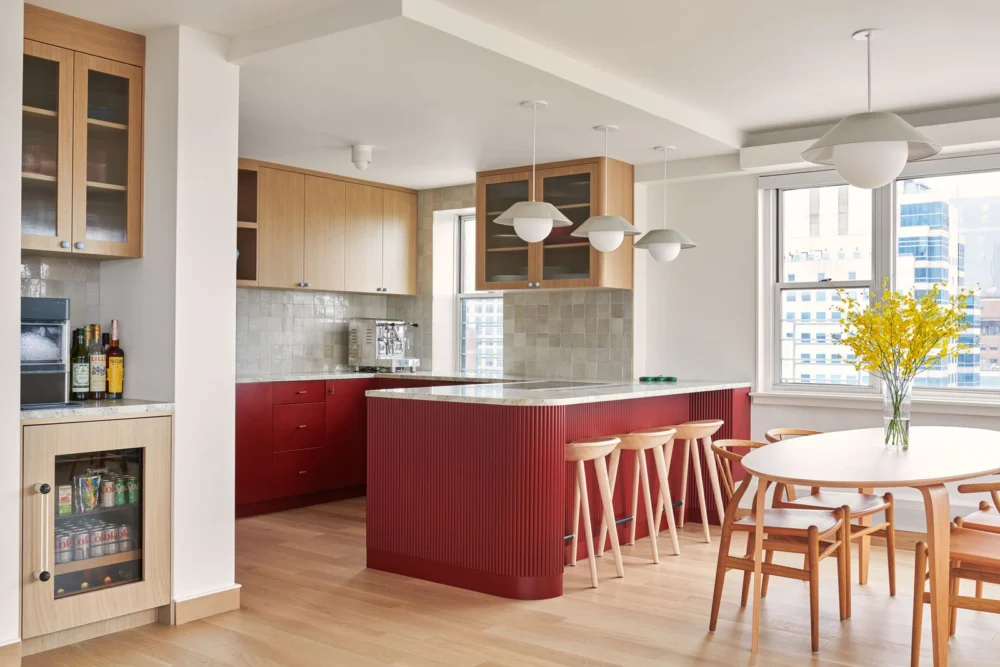
The New York City skyline, a perpetual canvas of architectural ambition, recently witnessed a significant residential reimagining as Opa Architecture unveiled its comprehensive renovation of an Upper East Side penthouse for a family of five. Eschewing conventional luxury apartment aesthetics, the design firm embarked on a mission to dismantle restrictive spatial paradigms, infuse vibrant chromatic energy, and sculpt distinct "islands of design," culminating in a dwelling that prioritizes dynamic family interaction and personalized functionality over mere opulence. The project, widely anticipated in design circles, was formally presented on February 23, 2026, marking a new benchmark for family-centric urban luxury.
The Genesis of a Vision: A Family’s Evolving Needs
The Tsarevsky family, comprising Brianna and Daniel and their three children, had long called their Upper East Side penthouse home. However, as their children grew and their lifestyle evolved, the existing layout, characterized by compartmentalized rooms and a muted palette, no longer served their contemporary needs. The original design, while embodying traditional luxury, lacked the fluidity, adaptability, and vibrancy essential for a bustling family navigating the demands of urban life. Their primary objective for the renovation was clear: to create a home that was not only aesthetically pleasing but also inherently functional, fostering connection, creativity, and comfort for every member. This meant moving beyond superficial updates to a fundamental restructuring of the living environment.
According to Brianna Tsarevsky, the impetus for the renovation was driven by a desire for a space that could genuinely accommodate their family’s active social life. "The playdates are always at our place now," she remarked, highlighting the immediate and palpable success of the new design in transforming their home into a welcoming hub. This anecdotal evidence underscores the project’s core achievement: a successful translation of architectural theory into lived experience, where design directly enhances social and familial well-being.
Opa Architecture’s Innovative Approach: Deconstructing and Reconstructing Space
Opa Architecture, known for its bold yet thoughtful approach to residential design, was selected for its proven ability to blend structural innovation with a deep understanding of human-centric living. The firm’s initial assessment of the penthouse identified several key areas for intervention. Foremost among these was the need to "break down walls"—a metaphorical and literal directive that aimed to dismantle physical barriers hindering natural light penetration and seamless flow between living areas.
The process began with an exhaustive structural analysis, a critical step in any significant renovation within New York City’s dense urban fabric. Working in close collaboration with structural engineers, Opa Architecture meticulously planned the removal of several non-load-bearing walls and the strategic reinforcement of load-bearing elements. This intricate phase, which spanned several months, required extensive permitting from the city’s Department of Buildings and a careful consideration of the building’s historical integrity. The objective was to create an expansive, open-plan living area that connected the kitchen, dining, and main living spaces, allowing natural light from the penthouse’s multiple exposures to permeate deeper into the interior. This strategy not only enhanced the spatial grandeur but also facilitated greater visual connectivity, enabling parents to supervise children while engaging in other activities—a crucial consideration for modern family dynamics.
A Spectrum of Intent: The Strategic Infusion of Color
Beyond structural redefinition, Opa Architecture introduced a dynamic color palette, a stark departure from the often-monochromatic schemes prevalent in luxury residential design. The firm’s philosophy posits that color is not merely decorative but a powerful tool for mood-setting, spatial definition, and personal expression. For the Tsarevsky residence, the design team meticulously curated a palette that balanced vibrancy with sophistication, ensuring each hue served a purpose.
In communal areas, such as the open-plan living space, a foundation of warm neutrals was established, providing a calming backdrop. This was then punctuated by strategic bursts of color: a deep cerulean blue for an accent wall in the dining area, inviting forest green upholstery in the living room, and playful citrus tones in the children’s dedicated zones. The kitchen, often the heart of family activity, received a striking treatment with custom cabinetry in a rich, earthy terracotta, complemented by a pristine white marble island. The selection of these colors was informed by principles of color psychology, aiming to evoke feelings of warmth, creativity, and tranquility in different parts of the home. For instance, the children’s bedrooms and play areas feature brighter, more stimulating hues designed to encourage imagination and energy, while the master suite employs softer, more muted tones conducive to relaxation. This thoughtful application of color contributes significantly to the unique character of the penthouse, distinguishing it from conventional luxury renovations.
Crafting "Islands of Design": Functional Zones within Openness
Perhaps the most innovative aspect of Opa Architecture’s design was the creation of "islands of design." This concept addresses the challenge of maintaining distinct functionality and privacy within an open-plan environment, particularly for a family of five. Rather than relying on traditional walls, the firm employed a combination of bespoke millwork, custom furniture pieces, varying floor levels, and intelligent lighting to delineate specific functional zones.
In the expansive living area, for instance, a large, custom-designed rug with a unique pattern anchors the primary seating arrangement, forming a comfortable "island" for communal gathering. Adjacent to this, a raised platform with built-in shelving and a cozy window seat creates a semi-private reading nook—an island for quiet contemplation. The kitchen island, a focal point of the open space, serves not only as a culinary workstation but also as an informal dining area and a homework station, becoming a multi-functional "island" for family activity. In the children’s wing, flexible partitions and custom-built storage units allow for easy transformation of spaces, from individual play zones to a collaborative study area. Even the outdoor terrace, a coveted amenity for an Upper East Side penthouse, was designed with distinct zones for al fresco dining, lounging, and a small urban garden, each acting as a miniature "island" for specific leisure activities. This innovative approach ensures that while the home feels open and connected, it also provides the necessary structure and intimacy for individual and collective pursuits.
The Renovation Journey: A Timeline of Meticulous Execution
The renovation project, initiated in late 2023, followed a rigorous timeline, typical of high-stakes urban architectural endeavors. The initial conceptualization and design phase, lasting approximately four months, involved intensive consultations with the Tsarevskys, numerous design iterations, and material selections. This was followed by the critical regulatory approval phase, which extended for another six months due to the complexity of structural modifications and the stringent requirements for renovations in historic districts within NYC.
Construction commenced in mid-2024. The demolition phase, while swift, required careful logistical planning due to the penthouse’s high-rise location and the need to minimize disruption to other residents. The structural reinforcement and framing, a meticulous process, laid the groundwork for the new open-plan layout. Following this, the installation of new electrical, plumbing, and HVAC systems ensured the penthouse met modern efficiency and comfort standards. The interior fit-out, including custom millwork, flooring, painting, and fixture installation, occupied the majority of 2025. Challenges encountered during construction included unforeseen structural complexities in older sections of the building and the coordination of numerous specialized trades. However, through diligent project management and effective communication between Opa Architecture, the general contractor, and the Tsarevskys, these hurdles were systematically overcome. The project reached its completion in early 2026, culminating in the family moving back into their transformed residence just ahead of its public unveiling.
Statements from Stakeholders: A Testament to Collaborative Design
"Working with Opa Architecture was a truly collaborative experience," said Daniel Tsarevsky, reflecting on the journey. "They didn’t just impose a design; they listened to our family’s routines, our children’s needs, and our aspirations for a home that felt truly ours. The result is a space that perfectly balances elegance with the joyful chaos of family life."
The lead architect at Opa Architecture, who oversaw the project, emphasized the firm’s commitment to designing for human experience. "Our goal was to challenge the notion that luxury must be synonymous with austerity. For the Tsarevsky family, luxury meant functionality, adaptability, and an environment that actively encourages interaction and personal growth. Breaking down walls wasn’t just about opening up space; it was about opening up possibilities for how a family lives within their home. The ‘islands of design’ concept allowed us to create distinct moments and functions without sacrificing the overall sense of openness and light."
Broader Implications: Reshaping Urban Family Residences
The Opa Architecture renovation of the Tsarevsky penthouse is more than just a single design project; it serves as a significant case study in the evolving landscape of luxury urban living, particularly for families. New York City, with its high density and premium real estate, often presents unique challenges for families seeking spacious and functional homes. This project demonstrates a powerful trend towards bespoke design solutions that prioritize lifestyle over purely aesthetic statements.
Data from the New York City real estate market indicates a growing demand for larger, family-friendly apartments and penthouses that offer both privacy and communal living spaces. According to a recent report by Douglas Elliman, properties featuring innovative open-plan designs and child-friendly amenities command a significant premium, with such renovations often adding 15-20% to property values in prime Manhattan locations like the Upper East Side. Furthermore, the emphasis on integrated smart home technologies, sustainable materials, and personalized recreational zones, as seen in the Tsarevsky penthouse, reflects a broader shift in consumer expectations. Families are increasingly seeking homes that are not just beautiful but also intelligent, efficient, and tailored to their dynamic needs.
This project also highlights the economic impact of high-end renovations. Such undertakings stimulate local economies by creating jobs for architects, engineers, contractors, artisans, and suppliers. The use of custom millwork, specialized finishes, and high-quality materials ensures that significant investment circulates within the local design and construction industries.
The Future of Urban Family Living
The Tsarevsky penthouse, through Opa Architecture’s visionary design, stands as a testament to the potential for urban residences to evolve beyond mere shelter into highly customized, adaptive environments. By breaking down physical and conceptual walls, infusing strategic color, and crafting distinct functional zones, the project has not only transformed a single apartment but also offered a blueprint for future urban family living. It underscores the growing importance of architecture and design in enhancing quality of life, proving that even in the densest urban environments, a home can be a sanctuary, a playground, and a vibrant hub for family life. As cities continue to grow and families increasingly choose to remain in urban centers, the demand for such thoughtful, human-centric design solutions will only intensify, making projects like the Tsarevsky penthouse a beacon for future innovations in residential architecture.