admin
admin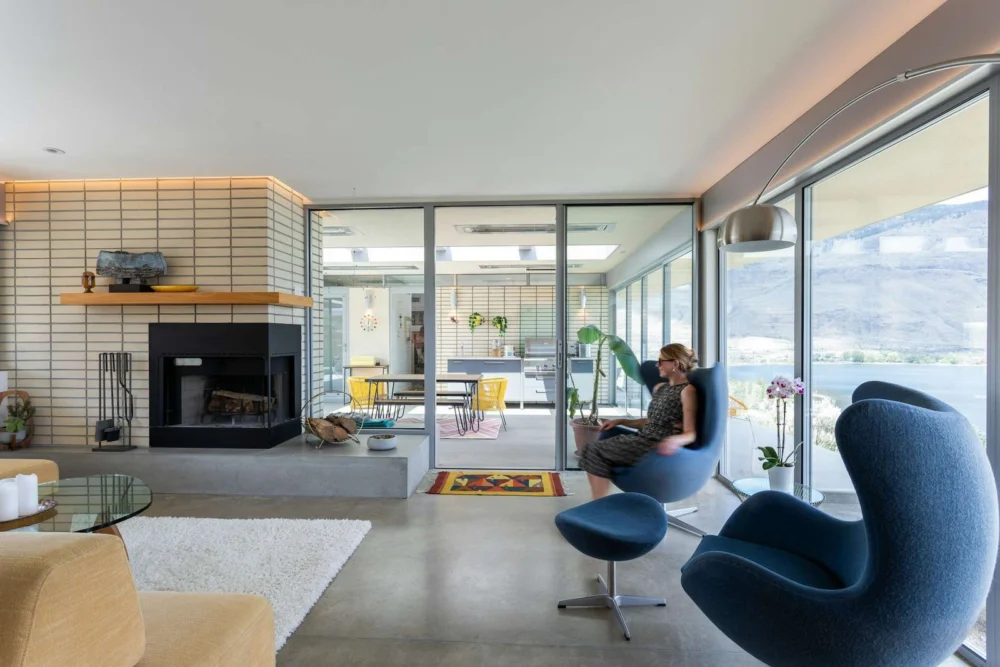
Palm Springs, California, is globally synonymous with midcentury-modern architecture, a legacy meticulously crafted by visionary designers such as Richard Neutra and Albert Frey. Their modernist philosophies, emphasizing clean lines, functional elegance, and seamless integration with the desert landscape, cemented the city’s status as an architectural mecca. This enduring appeal draws over 100,000 visitors annually for Modernism Week alone, contributing to the city’s estimated million yearly tourists who come to admire these iconic structures. It is within this vibrant architectural pilgrimage that Canadian architectural designer and illustrator Calum Srigley, alongside his wife, Kathie, discovered a profound connection that would ultimately redefine their primary residence over 1,500 miles north.
The Genesis of a Vision: From California Desert to Canadian High Desert
Calum and Kathie Srigley’s journey to creating their unique home began in 1999 when they eloped in Palm Springs. The couple immediately fell under the spell of the Southern California desert’s dramatic landscape and the architecture that seemed to perfectly embody a casual, unpretentious lifestyle. "We both immediately fell in love with the desert landscape and the architecture that seemed so suited to the casual lifestyle we experienced," Calum recounts. This initial enchantment evolved into an annual tradition, with each subsequent visit deepening Calum’s engagement with midcentury-modern architecture and his understanding of its intrinsic connection to the land.
This deepening appreciation sparked an audacious idea: to replicate the distinctive Palm Springs aesthetic as their permanent home in British Columbia. Their motivation was dual-faceted, aiming to create "a place to work but also enjoy our surroundings more," incorporating Calum’s design studio within a relaxed living environment tailored for their next chapter of life. The challenge lay not just in transplanting a design style, but in adapting it to a dramatically different climate while maintaining its core principles.
Selecting the Canvas: Savona, British Columbia’s Surprising Resemblance
The first critical step in this ambitious project was securing the ideal location. The Srigleys found their perfect site on a hilltop property in Savona, an unincorporated community nestled amidst British Columbia’s semi-arid grasslands and rolling hills, with a picturesque lake nearby. This location held a personal significance for the couple, as it was in this very region that they had first met while horseback riding. More importantly, Savona’s landscape—characterized by large rock outcroppings, abundant cacti, and sagebrush—bore a striking resemblance to the arid environs of Southern California that had captivated them years prior. This unexpected ecological parallel provided the perfect natural backdrop for their Palm Springs-inspired vision.
With the site chosen, the next pivotal phase was finding a builder capable of translating Calum’s precise architectural vision into reality. Calum, who honed his architectural sensibilities at the University of Edinburgh, drew significant inspiration from Albert Frey’s iconic Frey House II. This celebrated Palm Springs residence, ingeniously built into a rocky hill, resonated deeply with Calum’s desire for a home that would integrate seamlessly with its rugged natural surroundings. He found an ideal collaborator in Paul Douglas, co-owner of Malcolm Homes, a custom home-building company based in nearby Kamloops.
Calum vividly recalls the initial interaction: "When you talk to contractors or builders, in my experience, they either get it or they don’t. When I described the design to Paul, I understood immediately that he would be challenged by it but was up for it and was interested, which just sealed the deal." This shared understanding was crucial, as Calum’s design demanded "very thin lines and a tautness that this style of home has that are very difficult to achieve in the modern-day world because we have new building regulations." Douglas, acknowledging the intricate demands, confirms the complexity: "To those who know what they’re looking for, it will blow their mind with some of the stuff that we ended up having to do to create and achieve a very simple, clean look." He points to seemingly simple features, like windows extending directly to the roofline, which, from a structural standpoint, are not load-bearing and required innovative engineering solutions. "There are layers of complexity that reveal themselves the longer you look at the house," Douglas adds, underscoring the meticulous craftsmanship involved.
Architectural Blueprint: Form, Function, and Family
The resulting 1,600-square-foot home is a masterclass in adaptive modernism. It comprises a 1,200-square-foot one-bedroom main house, featuring a den, kitchen, and living space. This is thoughtfully connected via an enclosed breezeway to a 400-square-foot split-level studio. A key consideration in the home’s design was its capacity to host their large, blended family, which includes four adult children and eight grandchildren. "Every weekend in the summer, we’re like a hotel," Calum quips, highlighting the need for a dynamic living environment. The house was designed to effortlessly "morph from being comfortable for two to being able to accommodate up to 10 or 11 sleeping there, and 15 to 20 gathering there." To further expand guest capacity, a vintage Shasta trailer provides additional sleeping quarters, often accompanying the couple on their winter trips back to Palm Springs.
The aesthetic principles of midcentury desert modernism, which emerged as a direct response to Southern California’s arid climate, were meticulously adapted for Savona’s distinct conditions. Despite the geographical and climatic differences, Calum believes their Palm Springs-inspired house "looks as though it belongs" on its British Columbia site, which they affectionately call "Palm Springs North." He notes that the property "neither dominates nor is overwhelmed by its setting," a testament to thoughtful site integration.
Overcoming Climatic Challenges: Engineering for Extremes
One of the most significant hurdles in constructing a desert-modern home in British Columbia was Savona’s extreme seasonal temperature variations. While Palm Springs is renowned for its intense heat, it doesn’t experience the subzero temperatures common in Savona. This disparity necessitated innovative engineering and material choices to ensure year-round comfort and energy efficiency.
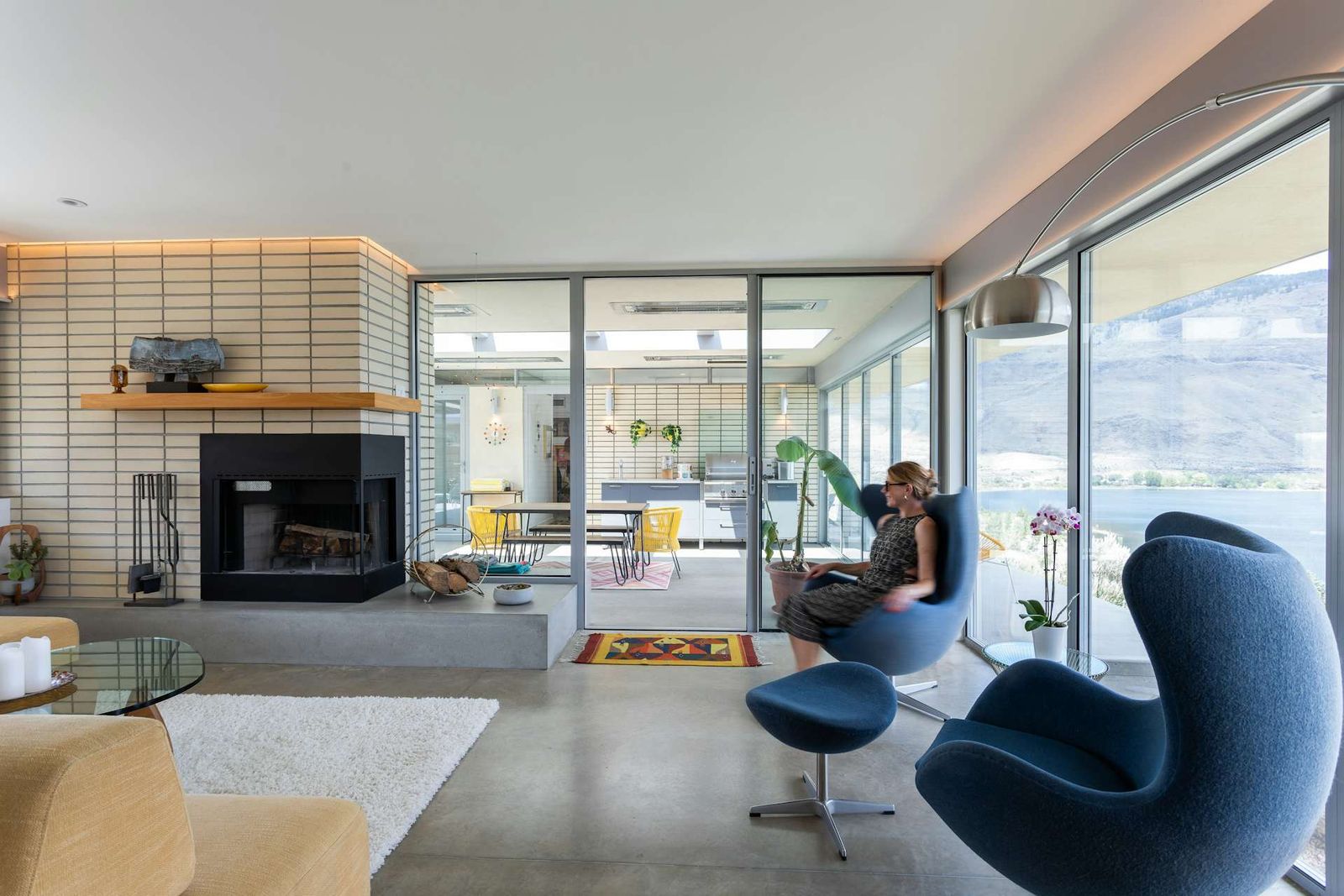
The solution began with foundational elements. The home features polished concrete floors equipped with in-slab radiant heating, providing efficient warmth during the harsh winters. For glazing, triple-glazed windows were selected for superior insulation. The expansive, floor-to-ceiling windows, a hallmark of midcentury design, required robust aluminum frames, as vinyl or wood alternatives would not suffice for the sheer scale and structural integrity. "In North America now, with the energy codes, it’s very hard to get aluminum windows that are affordable," Calum explains, revealing the international scope of their sourcing. To meet both aesthetic and performance demands, all windows were imported from Europe, specifically Belgium, Poland, and Spain.
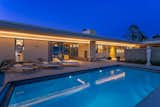
Paul Douglas highlights the initial goal of building an "essentially passive" home, designed to minimize the need for air conditioning even in extreme summer heat. A critical design feature in achieving this passive efficiency is the six-foot cantilevered overhangs that extend around the entire house. These extensive overhangs are strategically designed to prevent direct sunlight from hitting the triple-glazed windows during the summer months, thereby significantly reducing thermal heat gain. "In the summer, we turn off the [gas-powered] heat in the house and it heats the pool," Calum states, demonstrating the clever integration of systems. Douglas elaborates on the precision: "The sun hits right at the right at the ground level. It was those types of little details that really go a long way to be able to make it bearable in the summer with minimal cooling." The engineering behind these large cantilevers, a complex feat for a simple wood-frame structure designed to mimic a steel house, speaks to the skill of both the builder and the structural engineer.
Adaptive Living: Microclimates and Multifunctionality
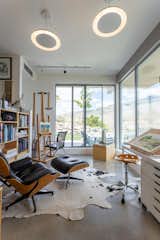
The Srigleys’ home is not just an architectural statement but a highly adaptable living space. The design studio, with its split-level layout, exemplifies this versatility. It can comfortably accommodate four guests, featuring fold-down bunk beds and a pullout queen bed ingeniously hidden beneath the raised floor. Similarly, the TV room transforms into an additional guest bedroom, complete with a queen Murphy bed.
An unexpected but practical adaptation involved the breezeway connecting the main house to the studio. Initially conceived as an open space, the Srigleys quickly realized that Savona’s powerful winds, which can reach 60 to 80 kilometers per hour (37 to 50 mph), made an open breezeway impractical. They enclosed it with sliding glass doors, adding ceiling heaters to create a sheltered, versatile area. This enclosed breezeway has proven invaluable, even serving as a winter exercise studio for Kathie’s classes. "The house has proven to be incredibly adaptable to our changing lifestyle," Calum notes.
Beyond the main structure, the Srigleys have actively shaped their immediate surroundings. A concrete breeze-block wall encloses courtyards, creating protected microclimates that mitigate wind and generate heat. This walled garden not only offers respite but has also proven agriculturally productive, yielding "a fantastic tomato crop."
A Singular Statement in the "Great White North"
In Savona, British Columbia, the Srigleys’ midcentury-modern residence stands out dramatically. "Let’s just say we stand out," Calum admits with a smile. "We are the ‘glass house’ in our town." This distinctiveness underscores the challenges involved in building such a precise architectural style today. Modern energy codes and stringent building practices necessitate creative solutions and an unwavering attention to detail that often surpasses what was required in the 1960s.
The "Palm Springs North" project is more than just a house; it is a testament to the power of architectural vision, meticulous planning, and collaborative craftsmanship. It demonstrates that with a clear understanding of design principles and a willingness to innovate, beloved architectural styles can transcend their original geographical and climatic boundaries. The Srigleys’ home in Savona exemplifies how passion for design, combined with adaptive strategies for sustainability and functionality, can create a truly unique and enduring residence that is both deeply personal and universally inspiring. This project serves as a compelling case study for architects, builders, and homeowners alike, illustrating the intricate dance between historical aesthetics, contemporary challenges, and the dream of a perfectly suited home.