admin
admin
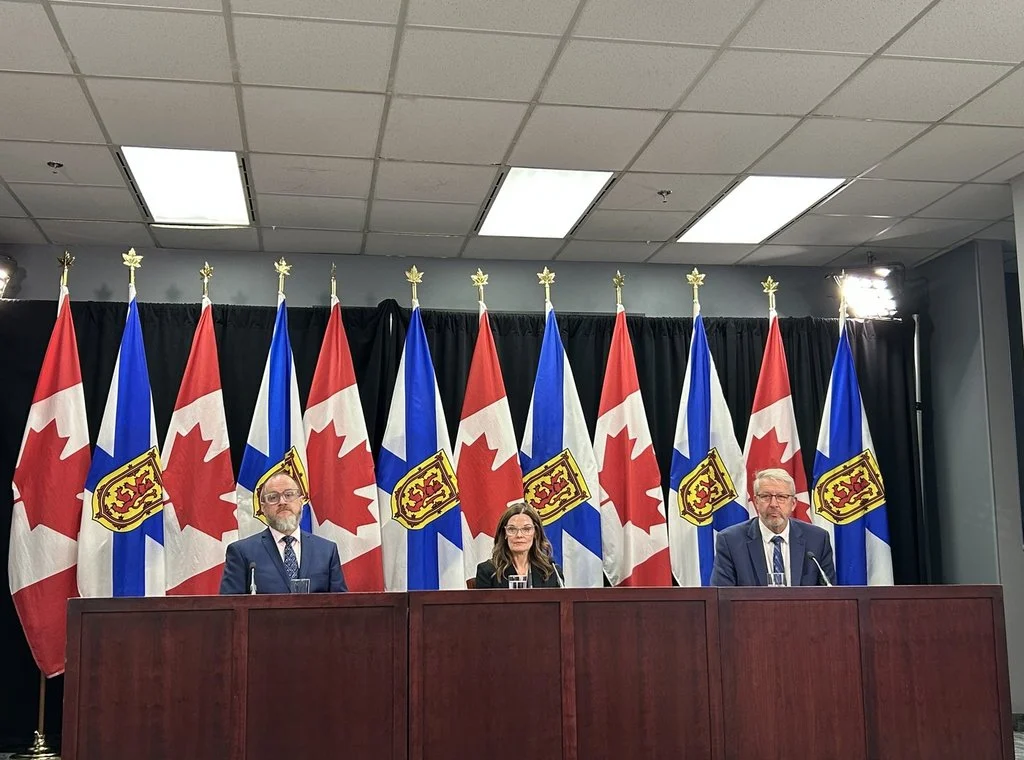
Nova Scotia Premier Tim Houston has delivered a scathing warning to Vivek Sood, the newly appointed CEO of NS Power, accusing the provincial utility of perpetuating an "outdated business model" that disproportionately burdens customers with incessant rate hikes. The premier’s unequivocal statement, shared across his social media platforms on Wednesday evening, February 11, 2026, underscored a deepening rift between the provincial government and its primary electricity provider, urging the incoming executive to fundamentally recalibrate the utility’s operational and financial strategies.
Houston’s pointed remarks came mere days after NS Power, a subsidiary of Emera Inc., announced earlier in the week that Vivek Sood, currently a board member, would assume the role of Chief Executive Officer on March 1, 2026. Sood is set to replace Peter Gregg, who will transition to a new position as vice-president of strategy and policy with Emera, the utility’s parent company. The timing of the leadership change, coupled with the premier’s swift and public admonishment, suggests a critical juncture in the long-strained relationship between the public, the regulator, and the monopoly utility.
A Premier’s Public Rebuke and the Call for Change
Premier Houston, who also holds the portfolio of Minister of Energy, expressed profound concern that the executive reshuffle might be an attempt to deflect from what he described as a "long-standing pattern of failure" on the part of NS Power. His public statement on social media was a direct challenge, not just to the new leadership, but to the entrenched practices of the utility. The premier’s message resonated with a public increasingly frustrated by rising costs and perceived service deficiencies.
In his lengthy statement, Houston articulated his vision for a modern utility, one that prioritizes efficiency, innovation, and affordability over what he characterized as a default reliance on increasing customer rates to cover operational costs and infrastructure investments. He emphasized that the province’s economic growth and the well-being of its citizens are inextricably linked to a stable, affordable, and reliable energy supply, a standard he believes NS Power has consistently fallen short of meeting.
The Contested Rate Hike Proposal
At the heart of the current dispute is NS Power’s recent application to the Nova Scotia Utility and Review Board (NSUARB) for a significant residential rate increase. The utility is seeking an approximate eight percent increase for customers by next year, a proposal that has ignited widespread public outcry and drawn the direct ire of the provincial government.

Under the proposed structure, the first segment of the increase, a 3.8 percent hike, would be applied retroactively to January 1, 2026. This would mean customers would see an immediate adjustment on their bills, accounting for charges accumulated since the beginning of the year. The second phase, a 4.1 percent increase, is slated to take effect on January 1, 2027. If approved in its entirety, these increases would represent a substantial rise in electricity costs for Nova Scotia households and businesses, adding further pressure to already tight budgets amidst broader inflationary trends.
The Role of the NSUARB and Government’s Delicate Balance
The Nova Scotia Utility and Review Board (NSUARB) serves as an independent quasi-judicial tribunal responsible for regulating public utilities, including NS Power, and ensuring that rates are just and reasonable. The board operates at arm’s length from the government, a crucial element for maintaining impartiality and investor confidence in the regulated market.
Premier Houston acknowledged this critical separation, stating that while his department has diligently worked to present evidence to the NSUARB advocating for the rejection of NS Power’s application, he would not take the extraordinary step of overruling the board should they approve the rate hike. The premier elaborated on this nuanced position, explaining that government intervention to override the independent regulator would risk creating "chaos" in the financial market. Such a move, he cautioned, could severely undermine investor confidence in Nova Scotia, potentially leading to higher borrowing costs for the province and its entities, thereby hurting the province’s long-term economic stability. This stance highlights the delicate balance governments must maintain between responding to public pressure and upholding regulatory integrity.
A History of Tension and Public Frustration
The current confrontation is not an isolated incident but rather the latest chapter in a long and often contentious relationship between NS Power, the provincial government, and the people of Nova Scotia. For decades, the utility, which operates as a regulated monopoly, has been a frequent target of public criticism regarding service reliability, particularly in the face of severe weather events, and the steady upward trajectory of electricity rates.
Nova Scotia, geographically vulnerable to powerful Atlantic storms, has experienced numerous widespread power outages that have tested the resilience of NS Power’s infrastructure and its response capabilities. Major hurricanes and winter storms have frequently left tens of thousands, sometimes hundreds of thousands, of customers without power for extended periods, leading to calls for greater investment in grid hardening and improved storm response protocols. Each significant weather event often leads to costly repairs and subsequent arguments for rate increases to cover these unexpected expenditures, perpetuating a cycle that frustrates consumers.
Historically, NS Power has faced accusations of prioritizing shareholder returns over customer affordability and service. As a private entity, its mandate includes generating profit for its parent company, Emera Inc., while simultaneously fulfilling its public service obligations. This dual mandate often creates inherent tensions, particularly when investment in infrastructure, grid modernization, and the transition to renewable energy sources are costly endeavors that utilities typically seek to recover through customer rates.

The Challenge of Modernizing an Aging Grid and Green Transition
Nova Scotia is committed to ambitious environmental targets, aiming to phase out coal-fired electricity generation and achieve 80 percent renewable energy by 2030, with a long-term goal of net-zero emissions. These targets necessitate massive investments in renewable energy infrastructure, such as wind and solar farms, as well as significant upgrades to the transmission and distribution grid to integrate these intermittent sources reliably.
NS Power argues that these critical investments, coupled with the ongoing costs of maintaining an aging infrastructure and responding to increasingly frequent and severe weather events, necessitate rate adjustments. They often point to rising fuel costs, particularly for natural gas used in existing generation plants, and the capital required for modernization as primary drivers for their rate applications. However, Premier Houston’s critique of an "outdated business model" suggests a belief that the utility has not adequately explored or implemented innovative cost-saving measures, efficiency improvements, or alternative financing mechanisms that could mitigate the need for constant reliance on customer rate increases. This could include exploring demand-side management programs, smart grid technologies, or more aggressive operational efficiencies.
Inferred Reactions and Broader Implications
The premier’s forceful statement and the impending rate hike decision are poised to trigger a cascade of reactions from various stakeholders and carry significant implications for the province.
From NS Power and Emera Inc.: While specific statements from Vivek Sood or Emera Inc. are not yet public, it is highly probable that NS Power will issue a response acknowledging the premier’s concerns while reiterating its commitment to providing reliable and sustainable electricity service. Their communication would likely emphasize the complex challenges facing the utility, including the substantial investments required for grid modernization, storm resilience, and the transition to cleaner energy sources. They might also highlight the regulatory framework under which they operate, where capital expenditures and operational costs are subject to NSUARB review for inclusion in the rate base. Vivek Sood, as the incoming CEO, would likely express his dedication to working collaboratively with the provincial government and all stakeholders to navigate these challenges, focusing on a path that balances affordability with necessary infrastructure development. Peter Gregg’s move to a strategic role within Emera could be framed as a natural progression, leveraging his deep understanding of utility operations to inform broader corporate strategy.
Consumer Advocacy Groups: These groups are expected to voice strong opposition to the proposed rate increases, emphasizing the growing burden on Nova Scotia households, particularly low-income families and seniors. They would likely call for greater transparency from NS Power regarding its operational costs and profits, and demand a more proactive approach from the NSUARB in scrutinizing the utility’s applications. Arguments would center on energy poverty and the need for government intervention or alternative solutions to protect vulnerable populations.
Opposition Parties: The provincial opposition parties would likely seize upon the premier’s statement as an opportunity to criticize the government’s overall energy policy and its handling of NS Power. They might argue that the government has not done enough to rein in the utility, calling for more direct action or policy changes to ensure affordability and accountability.

The Business Community: Businesses across Nova Scotia would express concerns about the impact of higher electricity rates on their operating costs, potentially affecting their competitiveness and investment decisions within the province. Energy-intensive industries, in particular, could face significant challenges, leading to calls for commercial rate stability or targeted support programs.
Regulatory Independence and Governance: The NSUARB’s upcoming decision will be under intense public and political scrutiny. Its ruling will not only determine the immediate financial fate of Nova Scotia consumers but also serve as a test of the board’s independence and its capacity to balance the interests of the utility, its shareholders, and the ratepayers. The premier’s decision not to overrule the board, while upholding regulatory integrity, places the onus firmly on the NSUARB to make a decision that is perceived as fair and just.
The Path Forward for Nova Scotia’s Energy Future
Premier Houston’s direct confrontation with NS Power’s incoming leadership signals a turning point. It underscores a growing provincial impatience with a utility model perceived as outdated and unresponsive to contemporary economic and environmental imperatives. The challenge for Vivek Sood will be to chart a new course that addresses the premier’s concerns about an "outdated business model" while simultaneously meeting the immense demands of grid modernization, climate change adaptation, and the ambitious transition to renewable energy.
The impending decision from the NSUARB on the proposed rate hikes will be a critical determinant of Nova Scotia’s energy future. It will directly impact the cost of living for every resident, the operational viability of businesses, and the province’s ability to achieve its environmental goals. The premier’s strong warning serves as a powerful reminder that the stakes are exceptionally high, demanding innovative solutions and a renewed commitment to affordability and reliability from NS Power as it moves forward under new leadership. The coming months will undoubtedly be a period of intense deliberation and significant decisions for Nova Scotia’s energy landscape.