admin
admin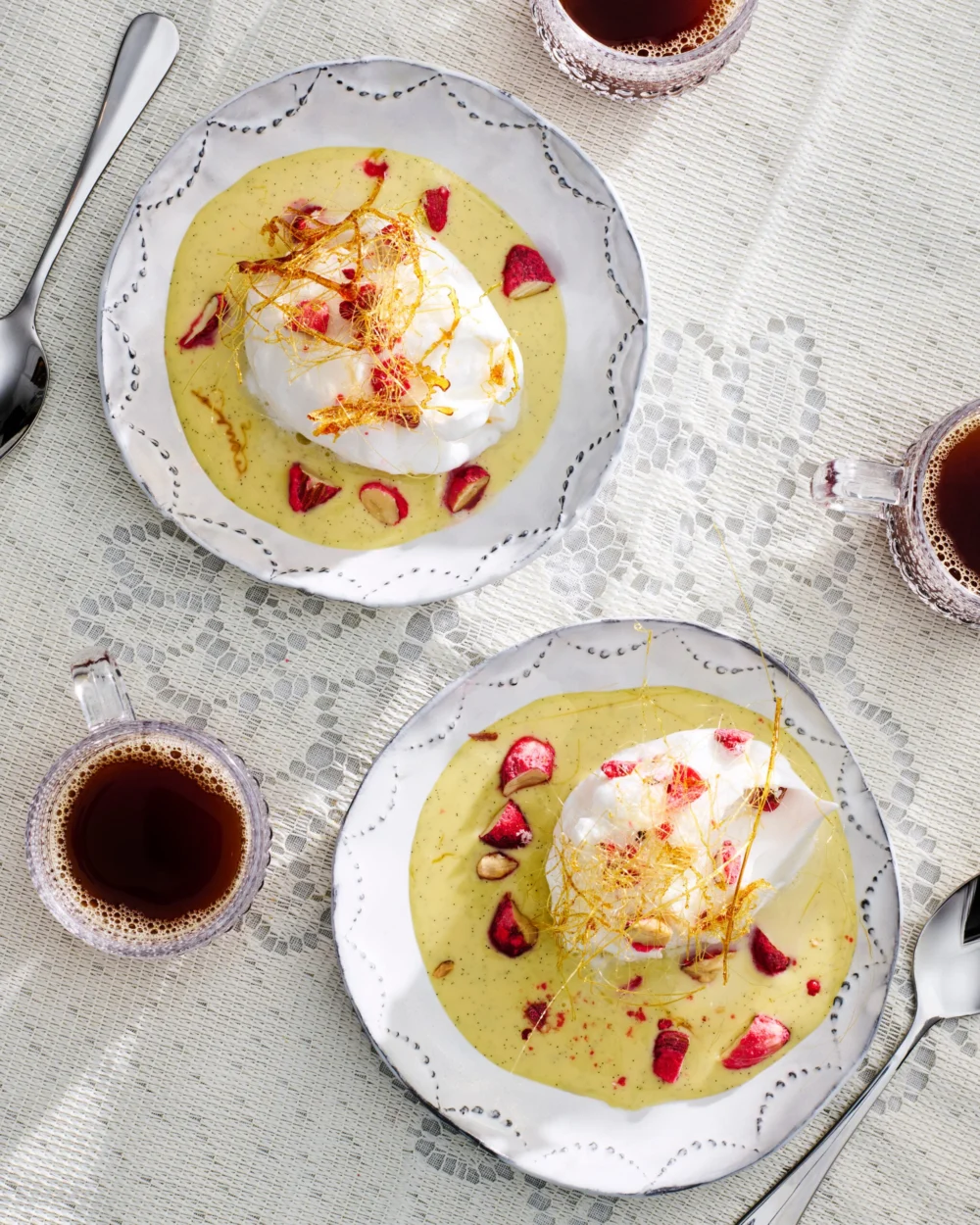
A delicate dance of textures and temperatures, the poached meringue with crème anglaise and spun caramel represents a pinnacle of patisserie, a dessert that transcends mere sustenance to become an experience. This seemingly simple combination, when executed with precision and artistry, yields a symphony of contrasting elements: the ethereal lightness of the meringue, the silken richness of the custard, and the brittle, airy sweetness of the caramel. While the provided instructions detail a specific method for achieving this dessert, understanding its nuances, historical context, and the scientific principles at play elevates it from a recipe to a culinary exploration.
The Foundation: Crafting the Crème Anglaise
The journey begins with the crème anglaise, a foundational custard sauce that serves as the creamy canvas for the other components. The instructions meticulously outline a process that emphasizes temperature control and careful emulsification. Starting with whole milk infused with vanilla bean, the process aims to extract maximum flavor from the aromatic pod. The slow heating to a simmer is crucial; boiling the milk could denature the proteins and affect the final texture.
Simultaneously, egg yolks are whisked with sugar and cornstarch. This mixture forms the thickening agent. Cornstarch, a common addition to crème anglaise in some variations, provides a more stable and less prone to curdling custard compared to one relying solely on egg yolks for thickening. The sugar not only sweetens but also plays a role in the emulsification process, helping to bind the fat in the egg yolks.
The critical step of tempering the egg yolks – gradually whisking in a portion of the hot milk – is vital. This slow introduction of heat prevents the eggs from scrambling, a common pitfall for novice cooks. The subsequent addition of the tempered egg mixture back into the remaining hot milk, and then cooking over low heat while constantly stirring, is where the magic of emulsification truly takes hold. The lecithin in the egg yolks binds with the milk fats and proteins, creating a smooth, homogenous sauce. The directive to stir and scrape the bottom and sides of the pot with a silicone spatula is paramount; this ensures even cooking and prevents the custard from sticking and burning, which would impart an unpleasant flavor.
The process of straining the custard immediately into an ice bath is a testament to the importance of halting the cooking process. This rapid cooling, known as an ice bath, prevents the custard from overcooking and becoming grainy or curdled. The addition of cream at this stage enriches the custard, adding a luxurious mouthfeel. The instruction to allow it to cool to room temperature before refrigerating further ensures a smooth texture, as chilling a hot custard can sometimes lead to a less desirable consistency. The note that crème anglaise can be stored for up to three days in an airtight container highlights its versatility as a make-ahead component, a valuable attribute in any culinary endeavor.
The Ethereal Cloud: Poaching the Meringues
The poached meringue is a less common but highly regarded method of preparing this delicate confection. Unlike baked meringues, which achieve their crispness through prolonged exposure to dry heat, poached meringues retain a soft, yielding interior with a slightly firm exterior. The poaching liquid, a gentle bath of milk, sugar, and water, provides a mild environment for the meringues to cook.
The preparation of the meringue itself involves a precise balance of egg whites and sugar, stabilized by cream of tartar. Egg whites, when beaten, trap air, creating a foam. Cream of tartar, an acidic salt, helps to denature the egg white proteins, allowing them to form a more stable and voluminous foam. The process of beating the egg whites to soft peaks indicates the initial formation of the structure. The gradual addition of sugar is crucial; adding it all at once can weigh down the foam and prevent it from reaching its full potential. As the sugar is incorporated, it dissolves and forms a syrup, further stabilizing the meringue and contributing to its smooth texture. Beating until stiff peaks form signifies that the meringue is robust enough to hold its shape.
The method of scooping the meringue into half-spheres or quenelles and gently dropping them into the simmering milk mixture is a delicate operation. The low simmer is essential; a rolling boil would likely break apart the delicate meringue structure. The cooking time of 3-4 minutes ensures that the exterior firms up while the interior remains soft and cloud-like. The instruction to turn them occasionally promotes even cooking. Removing them with a slotted spoon and blotting them on paper towels removes excess moisture, preventing them from becoming soggy. This technique, while less common than baking, offers a unique textural contrast, yielding a meringue that is both tender and subtly sweet.
The Alchemical Transformation: Crafting the Spun Caramel
The spun caramel adds an element of visual drama and a contrasting brittle sweetness. This step is often perceived as the most challenging, requiring precision and speed. The instructions for making the caramel are detailed and emphasize the prevention of crystallization, a common issue that results in a grainy or sticky caramel.
The process begins with sugar and a minimal amount of water. Dipping fingers in fresh water and wiping down the inside of the pot is a classic technique to wash away any stray sugar crystals that could act as nucleation sites for crystallization. Bringing the mixture to a boil over medium-high heat initiates the caramelization process, where the sugar molecules undergo complex chemical reactions, breaking down and reforming into new compounds that create the characteristic amber color and nutty flavor.
The instruction to cook without stirring is critical during the initial boiling phase. Stirring can introduce air and disrupt the formation of uniform sugar crystals, leading to crystallization. Once the sugar melts and turns a dark amber, the caramel is nearing its peak. Gently swirling the pot after removing it from the heat allows for a very slight thickening without further cooking, preventing it from becoming too dark and bitter.
The drizzling of the caramel over an upturned, greased bowl is a technique that creates fine, delicate threads. This is an art form in itself, requiring a steady hand and a swift motion. The caramel sets almost instantly upon contact with the cooler air and surface, forming a fragile, airy nest. The instruction to transfer the cooled threads to a dry plate and continue with the remaining caramel ensures that the spun sugar does not stick together. The ability to re-melt the caramel if it becomes too stiff highlights a practical aspect of working with this temperamental ingredient.
The Grand Finale: Assembly and Presentation
The final step brings together the meticulously prepared components. Dividing the crème anglaise among shallow bowls provides the creamy base. The placement of two poached meringues atop the custard offers a textural counterpoint. The addition of praline roses, while not detailed in the preparation steps, suggests a crunchy, nutty element that further enhances the dessert’s complexity.
The crowning glory is the nest of spun caramel, a delicate, edible sculpture that adds visual appeal and a delightful crunch. The instruction to serve immediately emphasizes the ephemeral nature of the spun caramel, which can soften if exposed to moisture. This presentation transforms the individual components into a cohesive and elegant dessert, showcasing a mastery of technique and a deep understanding of flavor and texture.
Broader Culinary Context and Implications
The creation of this dessert draws upon centuries of culinary tradition. Crème anglaise, a fundamental element in French patisserie, has been a staple since the 17th century. Its versatility has seen it incorporated into countless desserts, from trifles to fruit tarts. Meringues, too, have a long history, with various methods of preparation evolving over time. The poaching method, though less common than baking, offers a distinct textural profile that can appeal to a refined palate.
The scientific principles at play are significant. The Maillard reaction and caramelization are complex chemical processes that contribute to the flavor and aroma of the dessert. Understanding the role of emulsification in creating a smooth custard, the protein structures in egg whites that form stable foams, and the principles of crystallization in sugar work are all crucial for successful execution.
The nutritional profile of such a dessert, while indulgent, is worth noting. Rich in carbohydrates from sugar and fats from cream and egg yolks, it is a calorie-dense treat. However, the protein content from the egg whites and yolks, along with the potential for micronutrients from vanilla and any added garnishes like praline roses, contribute to its overall composition. In a broader context, desserts like these represent a celebration of culinary artistry and the ability of skilled chefs to transform simple ingredients into extraordinary experiences. They often feature in fine dining establishments, where the emphasis is on sophisticated flavors, meticulous presentation, and a memorable dining experience. The meticulous nature of each step, from the gentle simmer of the milk to the delicate drizzle of caramel, underscores the dedication required to achieve such a refined outcome. This dessert, therefore, is not just a sweet ending; it is a testament to the enduring power of skilled craftsmanship in the culinary world.