admin
admin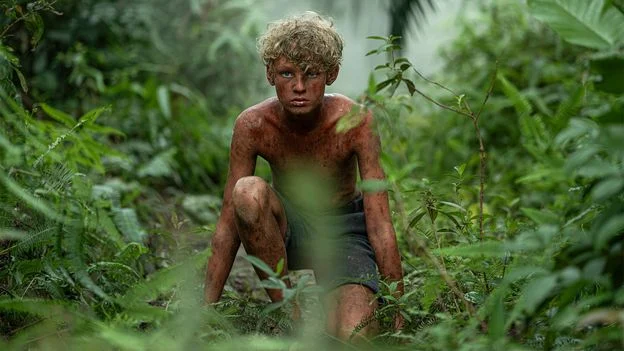
The Berlin Film Festival recently served as the backdrop for the international premiere of one of the most anticipated television projects of the year: a four-part adaptation of William Golding’s seminal 1954 novel, Lord of the Flies. Written by the prolific and critically acclaimed screenwriter Jack Thorne, the series arrives on the heels of his massive success with the Netflix drama Adolescence. While both works examine the capacity for violence within the youth, Thorne’s latest endeavor pivots from the naturalistic, contemporary crime-drama roots of his previous work to a surreal, hallucinogenic, and deeply philosophical inquiry into the fragility of civilization. This new interpretation, directed by Marc Munden, seeks to bridge the gap between a faithful period piece and a modern psychological thriller, offering a visceral look at the darkness inherent in collective human behavior.
The Creative Evolution of Jack Thorne
Jack Thorne has established himself as a cornerstone of contemporary British drama, moving seamlessly between the stage and the screen. His resume includes the global theatrical phenomenon Harry Potter and the Cursed Child and the television adaptation of Philip Pullman’s His Dark Materials. However, it was his 2023 collaboration with actor Stephen Graham on Adolescence that redefined his standing in the industry. That series, which utilized a real-time narrative to follow a 13-year-old boy accused of murder, became a critical juggernaut, securing multiple Emmy Awards and igniting international conversations regarding the British justice system and the psychology of juvenile offenders.
The transition from Adolescence to Lord of the Flies represents a strategic but risky evolution for Thorne. While the former dealt with the specificities of modern youth and the legal consequences of violence, the latter is a broader allegory. Golding’s original text, written in the aftermath of World War II, was a direct response to the "R.M. Ballantyne" style of adventure stories, which often depicted British schoolboys as paragons of virtue and ingenuity when stranded. Thorne’s adaptation honors Golding’s cynicism, presenting the descent into savagery not as an anomaly of childhood, but as a reflection of the inherent flaws in the social structures adults take for granted.
A Bold Structural and Aesthetic Departure
Thorne’s Lord of the Flies distinguishes itself from previous cinematic efforts—namely Peter Brook’s 1963 black-and-white classic and Harry Hook’s 1990 Americanized version—through its unique structural innovation. The four-part series allocates each episode to a specific character’s point of view. This intimacy of characterization allows the audience to experience the island’s descent into chaos through the varying lenses of Ralph’s desperate pragmatism, Piggy’s intellectual isolation, Jack’s charismatic authoritarianism, and Simon’s spiritual sensitivity.
The production maintains the novel’s mid-century period setting, a choice that grounds the narrative in a specific class-based reality. The dialogue utilizes the archaic, upper-crust British vernacular of the 1950s, featuring terms such as "long vacs," "togs," and "gnasher paste." This linguistic fidelity serves a dual purpose: it creates a sense of historical distance while highlighting the irony of the boys’ sophisticated upbringing in the face of their subsequent brutality.
Visually, director Marc Munden employs a disorienting aesthetic to mirror the boys’ deteriorating mental states. The use of fish-eye lenses creates a sense of claustrophobia despite the vastness of the tropical setting. Furthermore, the series utilizes Terrence Malick-style cutaways to nature—macro shots of ants swarming and beetles scuttling—to remind the viewer of the indifference of the natural world. The color palette is intentionally over-saturated, featuring garish greens and blazing oranges that lend the island a hallucinogenic, nightmare-like quality. This is further bolstered by a discordant, rumbling score from composer Cristobal Tapia de Veer, whose previous work on The White Lotus earned him acclaim for creating sonic landscapes of mounting dread.
Chronology of the Lord of the Flies Adaptation
The development of this adaptation follows a long history of Golding’s work in the public consciousness:
- 1954: William Golding publishes Lord of the Flies after being rejected by multiple publishers. It eventually becomes a staple of the English literary canon.
- 1963: Peter Brook directs the first major film adaptation, noted for its stark, documentary-style realism.
- 1990: A second film adaptation is released, updating the setting to a modern American military school context, which received mixed reviews for losing the original’s allegorical weight.
- 2023: Jack Thorne and Stephen Graham’s Adolescence premieres, winning critical acclaim and setting the stage for Thorne’s "youth in crisis" thematic brand.
- Late 2023: Production begins on the BBC/Netflix co-production of Lord of the Flies, with filming taking place in remote tropical locations to ensure environmental authenticity.
- Early 2024: The series premieres at the Berlin Film Festival, receiving praise for its direction and Thorne’s nuanced script.
Thematic Analysis: From Individual Pathology to Social Anarchy
A critical distinction made by Thorne in his promotional statements at Berlin is the difference between "youthful violence" and "social breakdown." While Adolescence focused on the "why" of a single act of murder, Lord of the Flies focuses on the "how" of a collapsing society. The series posits that the boys are not inherently evil because they are young, but because they are human. Without the artificial scaffolding of law, hierarchy, and parental oversight, the thin veneer of civilization evaporates.
The series is being framed as an "inquiry into the malignity of collective human behavior." By using the four-episode structure to rotate perspectives, Thorne highlights how groupthink and tribalism can override individual morality. The transition from the "democratic" assemblies led by Ralph to the "dictatorial" hunts led by Jack is depicted not just as a loss of innocence, but as a terrifyingly efficient reorganization of power.
Industry Implications and Cultural Impact
The success of Thorne’s adaptation at the Berlin Film Festival suggests a growing appetite for high-end, limited-series re-imaginings of classic literature. In an era dominated by franchise IP, the BBC and its international partners are betting on the enduring relevance of "prestige" adaptations that offer a darker, more philosophical edge.
Industry analysts note that Thorne’s involvement provides a significant "halo effect." Following the Emmy sweep for Adolescence, Thorne has become a "brand-name" writer capable of drawing significant viewership across demographics. Data from streaming platforms indicates that dramas focusing on "societal collapse" or "survival" (such as The Last of Us or Yellowjackets) have seen a 35% increase in engagement over the last three years. Lord of the Flies fits neatly into this trend while carrying the added prestige of being a literary classic.
Official responses from the festival highlight the performance of the young cast. Casting directors reportedly auditioned over 1,000 children to find actors who could handle the intense emotional and physical demands of the script. Critics have noted that the performances are "startlingly naturalistic," contrasting with the "heightened, nightmare-like" direction of Munden.
Broader Socio-Political Resonance
While Thorne’s version remains a period piece, the implications of the narrative are strikingly modern. In a global political climate characterized by increasing polarization and the breakdown of traditional institutions, the story of a group of people unable to maintain a shared reality or a functional governance system feels particularly urgent.
The adaptation does not shy away from the darker elements of Golding’s book, including the brutal treatment of Piggy and the sacrificial murder of Simon. By leaning into these "gruesome" elements, Thorne avoids the trap of making a "children’s story about children." Instead, he has crafted a mature, chilling thriller that asks uncomfortable questions about the nature of authority and the speed at which humans can abandon their humanity when the lights of civilization go out.
As the series prepares for its global broadcast and streaming debut, it stands as a testament to the enduring power of Golding’s vision and Jack Thorne’s ability to translate complex psychological themes into gripping television. It is a series that promises to be as much a topic of debate in academic circles as it will be in the living rooms of viewers worldwide.