Jia Lissa
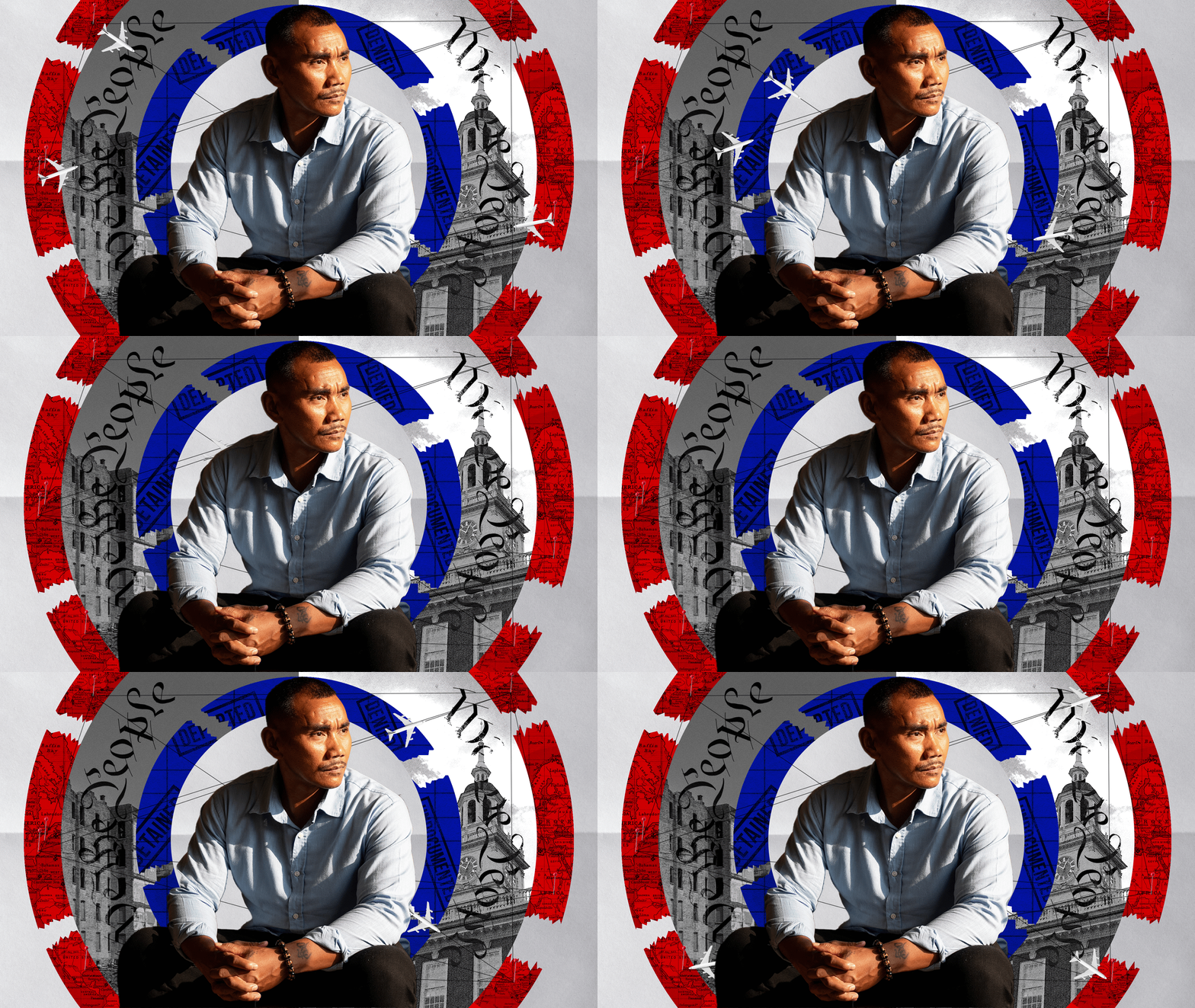
Pheap Rom, a man who spoke with a distinct Philly accent and carried the physical marks of a life forged in American streets, found himself in late 2025 in a bare cell in Eswatini, Africa’s last absolute monarchy. The warden of Matsapha Correctional Centre, a towering figure known as Kuenene, insisted that Rom and his fellow deportees from the United States were not prisoners, but "the king’s guests." This was the monarch’s version of hospitality: daily 7:30 AM awakenings to Eswatini’s national anthem, "Nkulunkulu Mnikati Wetibusiso temaSwati," echoing through the halls, followed by meager meals of rice and thin broth. Fifteen minutes of outdoor time was the sole reprieve from the stifling heat and thick clouds of mosquitoes that plagued their nights. Rom’s bewildered questions to Kuenene—"If I’m a guest, then why am I being held in a prison with criminals? Why aren’t I allowed to leave?"—were met with an unsettling absurdity that mirrored his entire situation.
A Policy Redefined: The US’s Mass Removal to Third Countries
Rom’s predicament was not an isolated incident but a direct consequence of a radical shift in U.S. immigration enforcement under the second Trump administration. Historically, deporting immigrants to countries with which they had no ties was a rare and highly restricted measure, typically reserved for extreme cases where return to their nation of origin posed a severe risk of persecution or torture. However, this practice has expanded dramatically, evolving into a signature White House policy of mass removal. Over the preceding two years, the administration had forged agreements with approximately 35 nations to accept third-country deportees from the U.S. Eswatini was one such nation, reportedly agreeing to house up to 160 migrants for a fee of $5.1 million. The list of other destination countries included some of the world’s most unstable and violent regions, such as the Central African Republic, the Democratic Republic of the Congo, and South Sudan—all of which appear on the U.S. State Department’s "Do Not Travel" list.

This policy faced immediate and widespread criticism. Public outcry, investigations by Democratic lawmakers, and a stern warning from the United Nations about a "cascade of human rights violations" failed to deter the administration. U.S. federal courts twice ordered the Department of Homeland Security (DHS) to halt these removal flights due to insufficient due process, but both times, the Supreme Court swiftly intervened, allowing the administration to resume its operations. In September 2025, amidst one of these brief, court-ordered pauses, DHS general counsel James Percival provocatively posted on X, sharing comprehensive figures on the policy’s impact. His post, featuring a GIF of Taylor Swift excitedly mouthing "That’s my husband," was captioned: "How my wife looks at me when I tell her we have deported 25,000 illegal aliens to third nations." This flippant attitude underscored the administration’s resolve in the face of resistance, and the policy’s influence extended beyond American borders. In November 2025, five European Union countries announced plans to send rejected asylum seekers to a deportation hub in Rwanda, following Italy’s precedent of sending asylum seekers to Albania. The United Kingdom also quietly deported a Sri Lankan asylum seeker to Eswatini earlier that year, a man who tragically died by apparent suicide the following month, according to local media reports. Tin Thanh Nguyen, Rom’s lawyer and himself a child of Vietnamese refugees, expressed deep concern, predicting that if these expulsions continue unchecked, they will establish a dangerous new model for wealthy Western nations to "offload their undesirables to poorer nations for a price," effectively rendering them "out of sight, out of mind."
Pheap Rom’s American Journey: From Refugee to "Aggravated Felon"
Pheap Rom’s journey began far from the correctional facilities of Eswatini, rooted in the tragic history of Southeast Asia. Born in a Thai refugee camp in 1982, his existence was a direct consequence of the Khmer Rouge’s genocidal regime in Cambodia. His parents had fled their homeland around 1979, escaping the atrocities that followed in the wake of Richard Nixon’s extensive carpet-bombing campaign. After Rom’s birth in the refugee camp, the family moved to a resettlement center in the Philippines. It was there, while his father was selling possessions to finance their ultimate move to America, that tragedy struck: he was killed by roadside thieves. Rom, then just a toddler, sat beside his father’s body, his mother later recounted, desperately trying to wake him.
In 1985, Rom arrived in the United States with his mother and six siblings, entering a new world of cramped, dimly lit rooms in a small Bronx apartment. "There was just one mattress, and we all slept on that," he recalled. "It was a new world to us; everything was new." His family was part of the largest resettlement effort in U.S. history, as hundreds of thousands of refugees from Vietnam, Laos, and Cambodia sought refuge following America’s faltering war efforts in the 1970s. Of the nearly 158,000 Cambodians admitted between 1975 and 1994, many, like Rom’s family, bore the indelible scars of the Khmer Rouge.

The family eventually relocated to Philadelphia with the help of an uncle, but life remained a struggle. Rom’s mother, who did not speak English, relied on government aid and meager income from sewing and scavenging. Rom, even as a child, would help her collect cans to exchange for cash. Resettled in areas of high crime and poverty, with limited job opportunities and often dilapidated housing, many Cambodian refugees faced immense challenges. It was in this environment that an adolescent Rom was drawn into gang life, joining a Cambodian clique within the Crips known as the Blue Dragons. "If you don’t want to get bullied," older members told him, "you need to link up with us." Barely a teenager, he earned the nickname "Menace."
By 18, Rom had accumulated three juvenile detention stints and was embroiled in escalating street conflicts. In 2008, after being jumped by rival gang members at a New Year’s Eve party, he sought revenge. Waiting for a day off from his job caring for abandoned dogs at a local rescue, he opened fire from his car on his targets. Though he considered fleeing, the thought of his young daughter anchored him. He chose to face justice, believing he could at least see her from behind bars. In April 2010, Rom pleaded guilty to multiple charges, including attempted murder.
As a legal permanent resident, Rom had been granted status as a refugee. Despite this, he was told his juvenile record would prevent him from obtaining full American citizenship, a barrier that would fundamentally alter his life’s course. Under U.S. immigration law revised in the 1990s, legal permanent residents convicted of "aggravated felonies"—a broad and often criticized legal category—risk losing their immigration status and becoming subject to deportation upon completing their sentences. Rom’s conviction meant the loss of his green card, a "double punishment" in the eyes of immigrant advocates. He was well aware that in the post-9/11 era, Cambodia had capitulated to U.S. pressure, agreeing to accept the repatriation of deported Cambodian refugees. He was prepared for this fate.

The Labyrinth of Deportation: Misdirection and Denial of Due Process
Rom likes to say that prison saved his life. He spent his 15-year sentence reading, exercising, and working in the kitchen to save for small gifts for his daughter. As America’s immigration policies shifted dramatically—from Obama’s support for Dreamers and record deportations to Trump’s family separations and Biden’s border crisis, and eventually Trump’s return—Rom believed his fate was sealed. He expected to be deported to Cambodia, a country he had never seen.
On November 13, 2024, Rom walked out of prison after 15 years, only to be immediately transferred to Immigration and Customs Enforcement (ICE) holding. What he anticipated to be a straightforward deportation process devolved into a bewildering odyssey through the American deportation machine. From detention, Rom actively tried to expedite his removal, repeatedly calling the Cambodian embassy in Washington, D.C., for information, only to be redirected to DHS. Officers in Pennsylvania claimed to have no updates, citing an overwhelming caseload. At one point, they erroneously told him he would be deported to Thailand, his country of birth, not citizenship. After six months in detention, Rom filed a writ of habeas corpus, arguing unlawful detention.
Three more months passed. On September 24, 2025, his daughter’s birthday, Rom noticed his commissary account had been zeroed out—a clear sign among ICE detainees that deportation was imminent. The next day, he was transferred to Pine Prairie ICE Processing Center in Louisiana, then days later to Alexandria, Louisiana, a hub for charter airlines ferrying deportees abroad. After another 72 hours, Rom pressed officers for information. Initially, they claimed ignorance, a response Rom found hard to believe. When an officer checked his case on the computer and quickly clammed up, Rom’s suspicions intensified. Finally, he was told to pack, and he managed to glimpse the immigration paperwork: Eswatini was listed as the country of deportation. Confused, he asked another detainee, "Hey, bro, is Eswatini another ICE facility in Louisiana?" The man’s response—that it was in southern Africa—sent Rom into a panic.

He immediately called his sister in Las Vegas, who confirmed Eswatini’s location. She was urged to contact the Cambodian Embassy. Another detainee’s lawyer suggested the group request "reasonable fear" interviews, a process through which U.S. Citizenship and Immigration Services asylum officers determine if a person fears persecution or torture. Rom recounted that immigration agents seemed amused by the suggestion, taunting them with remarks like, "What could the men be afraid of? Y’all a bunch of murderers." Rom’s pleas for due process continued to be dismissed. Eventually, an officer promised to take down their request in writing if they agreed to be shackled. As they sat in chains, Rom made one last attempt: "Hey, you think you are going to give us that interview?" He realized then that it was "all fake," and the officers had no intention of filing anything.
Under heavy guard, Rom and the others were loaded onto a small plane. For KV, another deportee on the flight, the closing door felt "like my coffin is closing." The plane flew from Alexandria to Puerto Rico, then on to Senegal, where it was delayed while officials sought permission to continue. Rom believed they were being "smuggled through Africa." When the flight finally touched down at King Mswati III International Airport on the morning of October 6, the runway was lined with dozens of armed military personnel. Rom was loaded into a paddy wagon. As the van turned onto a dirt road, an overwhelming fear seized him: "Oh yeah, they are going to kill us. They’re definitely going to kill us."
Eswatini: An Absolute Monarchy’s Role in a Global Policy
Eswatini, a landlocked country roughly the size of New Jersey, is surrounded almost entirely by South Africa. It holds the dubious distinction of being Africa’s last remaining absolute monarchy. In April 1973, King Sobhuza II suspended the constitution and banned all political parties, a prohibition that remains in effect. His son, King Mswati III, ascended to power in 1986 at just 18 years old. Challenges to the monarchy are routinely met with violent suppression. In June 2021, security forces brutally cracked down on pro-democracy protests, killing at least 46 people, including two children, a figure civil society organizations claim is an undercount. Two years later, a leading human rights lawyer and pro-democracy activist was assassinated at his home, with no one held accountable.

Beyond its political repression, Eswatini grapples with profound socio-economic challenges. It has the highest HIV prevalence rates in the world, and poverty is pervasive. A 2024 report from the U.S. State Department explicitly described Eswatini as having "significant human rights issues," citing torture, media restrictions, and the worst forms of child labor. In stark contrast to the suffering of his populace, King Mswati III lives an extravagant lifestyle, reportedly married to a cohort of wives. His lavish 40th-anniversary celebration of his reign in April 2026, held at a luxury convention center and featuring a performance by Grammy-nominated singer Davido, served as a stark reminder of his detachment from his country’s brutal realities. It was into this nation, marked by repression and poverty, that the U.S. chose to send its deportees.
Life in Matsapha Correctional Centre: "Hospitality" Under Scrutiny
Upon arrival, Rom and the other deportees, none of whom had committed any crime in Eswatini, were confined to a high-security section of the Matsapha Correctional Centre. Rom’s cell was situated behind a large metal door with a forest-green barred window. The cells were initially filthy, and requests for cleaning products were denied. Basic hygiene supplies only arrived four months into their detention. For their meager 15 minutes of outdoor time daily, they had access to a row of concrete sinks in a dirt courtyard to hand-wash their clothes. One detainee was permitted to retrieve the laundry in the evening.
Rom, drawing on his 15 years in U.S. prisons, fell back into a disciplined routine of 500 pushups, burpees, and sit-ups daily. He devoured books donated to the prison, reading through the Hunger Games and Twilight series, and later a copy of First They Killed My Father, a memoir about surviving the Khmer Rouge, sent by his lawyer. The tropical heat offered little nighttime reprieve, and heavy blankets meant a choice between sweltering or being swarmed by mosquitoes. His repeated question to the jailers, "How long am I going to be here?", remained unanswered.

Gradually, some limited freedoms were granted. The men were taken to a mobile store to buy phones with money sent by their families. During these excursions, they were allowed to eat at KFC and buy two beers each—Rom’s first taste of freedom outside detention facilities in over 15 years. Rom noted that a DHS official’s post on X, labeling the deportees as "depraved monsters," had spread in local media. Despite this, Rom would smile and wave at the locals who stopped to gawk.
Communication was severely restricted: one phone call per week via WhatsApp, broadcast in a common room with a prison official scribbling notes nearby. Rom resorted to speaking Khmer with his sister to discuss sensitive matters. Local lawyers were barred from visiting. It was through his sister, who saw a Facebook post about North Carolina lawyer Tin Thanh Nguyen, that Rom finally secured legal representation. Rom, informed by a TV in the common room, was aware of the controversy surrounding his fellow deportees, including Cuban inmate Roberto Mosquera del Peral, who was on a hunger strike. Rom recounted officers mockingly checking Mosquera del Peral’s cell each morning, asking if he was still alive.
Unraveling the Bureaucracy: Cambodia’s Unasked Question
The mechanism behind Rom’s forced transfer to Eswatini, and indeed that of others, remained opaque. A Reuters report indicated that the deal was brokered in February 2025 between Caitlin Piper, a U.S. diplomat leading the embassy in Mbabane, and Russell Dlamini, Eswatini’s prime minister, who secured approval from King Mswati III. Neither Dlamini nor the acting government spokesperson responded to comment requests. In May 2025, a spokesperson for King Mswati informed Reuters that "the king embraced the deal as Eswatini’s contribution to world order." Piper, the U.S. diplomat, later departed Eswatini and was reportedly based at the U.S. Consulate in Erbil, Iraq.

In November 2025, over a month after Rom’s arrival and four months after the first deportees were sent, Eswatini’s finance minister confirmed receiving the $5.1 million payment from the U.S., stating it would be directed to the National Disaster Management Agency. The State Department later posted a memorandum of understanding, signed May 14, 2025, confirming the agreement for Eswatini to accept 160 deportees. The signature of the U.S. official, a looping "C" without a printed name, remained unidentified. The Eswatini embassy directed inquiries to the Department of State, which declined to comment on the signatory.
This disclosure of payment fueled accusations from detainees, including KV, that they had been trafficked. "You are moving people around, and money is exchanged," KV stated. "So what is that?" Rom questioned why he had to spend his own money on basic necessities like a cell fan if Eswatini had received such a substantial sum. The Southern Africa Litigation Centre (SALC), a human rights NGO, along with other groups, launched a legal challenge in Eswatini in 2025 to declare the deportation agreement unconstitutional, obtain its terms, and halt further arrivals. The initial challenge was dismissed, but an appeal was filed with Eswatini’s Supreme Court in March 2026. Ironically, weeks before her reported meeting to facilitate the deportations, Caitlin Piper had addressed an SALC workshop, urging participants "to bring injustice to light, to demand the respect of those in power, to advocate for a world in which our most cherished freedoms are secured."
Rom’s personal path to Eswatini appears to have been a compounding of bureaucratic ineptitude and, arguably, cruelty. His lawyer, Tin Thanh Nguyen, highlighted that Cambodia had been accepting deportees for over two decades and was generally cooperative in issuing travel documents. Nguyen stated that the Cambodian government began rectifying the situation within a week of his contacting them in October 2025. He believes the U.S. mistakenly thought Rom should be sent to Thailand, his country of birth but not citizenship, and never bothered to contact officials from either Thailand or Cambodia. Chann Rotana, a spokesman for Cambodia’s foreign ministry, confirmed that the U.S. had not contacted their embassy regarding Rom’s case before his deportation to Africa, describing the action as "strange." The Department of Homeland Security directed questions to the Department of State, which again declined to respond. Nguyen summarized the arbitrary nature of the deportations: "There’s no rhyme or reason as to why any of my clients were picked to go to Eswatini versus the clients that I have who are actually in Vietnam, Laos, and Cambodia. There’s nothing that makes them distinguishable."

A Return to Roots: Rom’s New Chapter and Ongoing Struggle
Following an interview with Cambodian officials, Rom’s case for removal progressed, offering a glimmer of hope to other detainees. When he was cleared for transfer to Cambodia in early February 2026, he insisted on being escorted by a representative from the UN’s International Organization for Migration (IOM) as a safeguard. Rom finally arrived in Cambodia on March 26, becoming the second U.S. deportee freed from Eswatini. (The first, Jamaican national Orville Isaac Etoria, had been deported to Eswatini in July 2025 and repatriated to Jamaica in September of that year.)
When Rom was met in June 2026 at a restaurant in Phnom Penh, the Cambodian capital, he was dressed in all black, his polo shirt sleeves taut around his thick, tattooed arms. Their meeting point was within walking distance of S-21, a former Khmer Rouge torture center now a museum, a stark reminder of the genocide that had set his family’s harrowing journey in motion. Rom, contemplative and soft-spoken, reflected on his ordeal. After arriving in Cambodia, he enrolled in a creative writing class, aspiring to document his experience. He also began teacher training courses, hoping to secure a position at an international school, and took on air conditioner repair work when available. The challenging transition to life in Cambodia was compounded by a personal tragedy: his older sister, who had been his lifeline during detention, died in July. "I’m trying to hold it together," he texted. By August, Rom had secured a job teaching English to a rambunctious group of third graders, a new chapter in a life forever marked by displacement and institutional betrayal.
The Future of Third-Country Deportations: Legal Battles and Global Implications
Despite Rom’s release, the plight of other deportees in Africa continues. More individuals have been sent to Eswatini; weeks after Rom’s interview, the country announced receiving a fourth batch of 11 deportees, followed by another group, bringing the total forced into the country to 32. KV remains imprisoned, texting in late September, "With the holidays around the corner, it feels I’m wasting my life sitting here for no reason." His release date remains uncertain.

The ultimate legality of the U.S. policy of third-country deportations is poised for a decisive moment. After twice granting temporary stays to the Trump administration, the U.S. Supreme Court is scheduled to hear oral arguments on the practice’s constitutionality in December 2026. The outcome will have profound implications, potentially solidifying or dismantling a policy that critics argue sidesteps due process, commodifies human lives, and externalizes human rights responsibilities.
Shortly after his arrival in Cambodia, Rom noticed that Kuenene, his former warden at Matsapha, had added him as a contact on Telegram and WhatsApp. Another Eswatini official requested to connect on Facebook and follow Rom on Instagram. Rom accepted some invitations, declining others, perplexed by their overtures. He speculated that Kuenene might be trying to monitor his public statements. "He was one of those guys that tell you what you want to hear, smile at your face, make you believe that he is the most supportive guy in the world, and then he will stab you in the back," Rom stated, reiterating his deep distrust. Before his release, Rom had told the guards and other deportees that he might return to Eswatini as a tourist. In reality, he harbors no intention of ever setting foot there again. One visit as a "royal guest" was unequivocally enough. The case of Pheap Rom stands as a stark testament to the human cost of policies that prioritize political expediency over fundamental human rights and due process, echoing a warning of a global future where "undesirables" are simply shuffled out of sight, out of mind, and into the prisons of nations willing to accept a fee.