admin
While the Pacific Northwest has long been synonymous with American hop production, a quiet revolution in the Great Lakes region has propelled Michigan to the position of the fourth-largest hop-growing state in the nation. This resurgence, which began in earnest around 2008, is not merely a product of favorable geography but is the result of a sophisticated infrastructure built and maintained by women. From academic research and greenhouse propagation to large-scale harvest orchestration and land stewardship, women occupy critical, though often underreported, roles in an industry that remains largely male-dominated in its public-facing sectors.
The Geographic and Historical Context of Michigan Hops
Michigan currently ranks number one in the Great Lakes region and number four nationally for total hop acreage, trailing only Washington, Oregon, and Idaho. The state’s success is rooted in its unique positioning along the 45th parallel—a latitude it shares with some of the world’s most famous hop-growing regions, including the Hallertau region of Germany. Hops (Humulus lupulus) are photoperiod-sensitive perennials that require long, sunny days for flowering and cold winter nights to achieve necessary dormancy.
The state’s pedological history also plays a vital role. Glacial deposits from the last ice age left Michigan with well-drained, sandy-loam soils. This is essential because while hops require significant hydration, they are highly susceptible to "wet feet," or root rot, in poorly drained soil. Historically, Michigan was a hop-producing powerhouse in the late 19th century before the combination of downy mildew outbreaks and the onset of Prohibition decimated the industry, pushing commercial production to the arid climates of the West. The modern revival represents a return to form, driven by the explosion of the craft beer movement.
Unlike most climbing plants that use tendrils or adhesive pads, hops grow as "bines." These plants utilize stiff, downward-pointing hairs along their stems to wrap clockwise around support structures, such as coir twine. In the peak of the growing season, a hop bine can grow up to 10 inches in a single day, eventually reaching heights of over 20 feet. Managing this rapid, aggressive growth requires a blend of delicate horticultural skill and intense physical labor.
The Scientific Infrastructure: Research and Pest Management
The stability of the Michigan hop industry is heavily dependent on the partnership between private growers and Michigan State University (MSU). Central to this relationship is Erin Lizotte, MSU’s integrated pest management (IPM) coordinator and senior statewide educator. As the industry faces increasing pressure from climate volatility and emerging pathogens, Lizotte’s work in diagnosing diseases and navigating complex chemical approval processes has become a cornerstone of regional agricultural security.
Growers frequently cite the MSU Plant and Pest Diagnostics lab as a critical resource for maintaining crop health. The implementation of research-backed strategies allows Michigan farmers to combat regional challenges like downy mildew and potato leafhoppers, which are more prevalent in the humid Midwest than in the Yakima Valley. This scientific oversight ensures that Michigan hops meet the rigorous quality standards required by commercial brewers.
Propagation and the Clean Plant Protocol
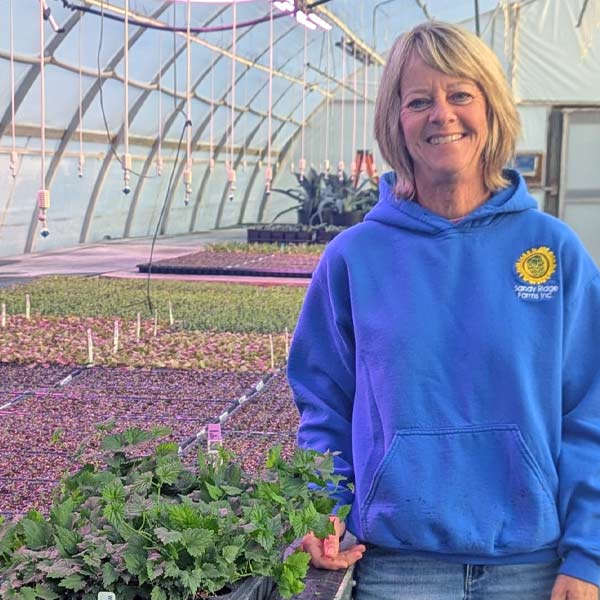
The lifecycle of a Michigan hop begins in the greenhouse, where specialists like Julie Kane of Sandy Ridge Farms in Zeeland manage the delicate process of propagation. Kane, who transitioned from ornamental horticulture to hops in 2008, has spent over two decades refining the "Clean Plant" protocol. This rigorous system is designed to prevent the spread of devastating viruses and viroids, such as Hop Latent Viroid (HLVd), which can significantly reduce alpha-acid content and yield.
Kane’s process begins with virus-free mother plants sourced from the National Clean Plant Network. The protocol involves strict sanitation of tools, preventative fungicide applications, and annual testing in collaboration with MSU. This focus on biosecurity is increasingly vital as climate change introduces new stressors. During the prolonged heat waves of recent summers, greenhouse temperatures have frequently exceeded 100 degrees Fahrenheit, requiring Kane to implement advanced cooling techniques, including extra shade cloths and adjusted irrigation schedules, to preserve the integrity of the starter stock.
Operational Excellence and Quality Control
As the industry matures, the focus has shifted from mere survival to operational efficiency and quality consistency. Mel Trowbridge of Top Hops Farm in Goodrich exemplifies this transition. Bringing 40 years of experience as an automotive engineer and quality control specialist, Trowbridge has applied "lean manufacturing" principles to the hop yard.
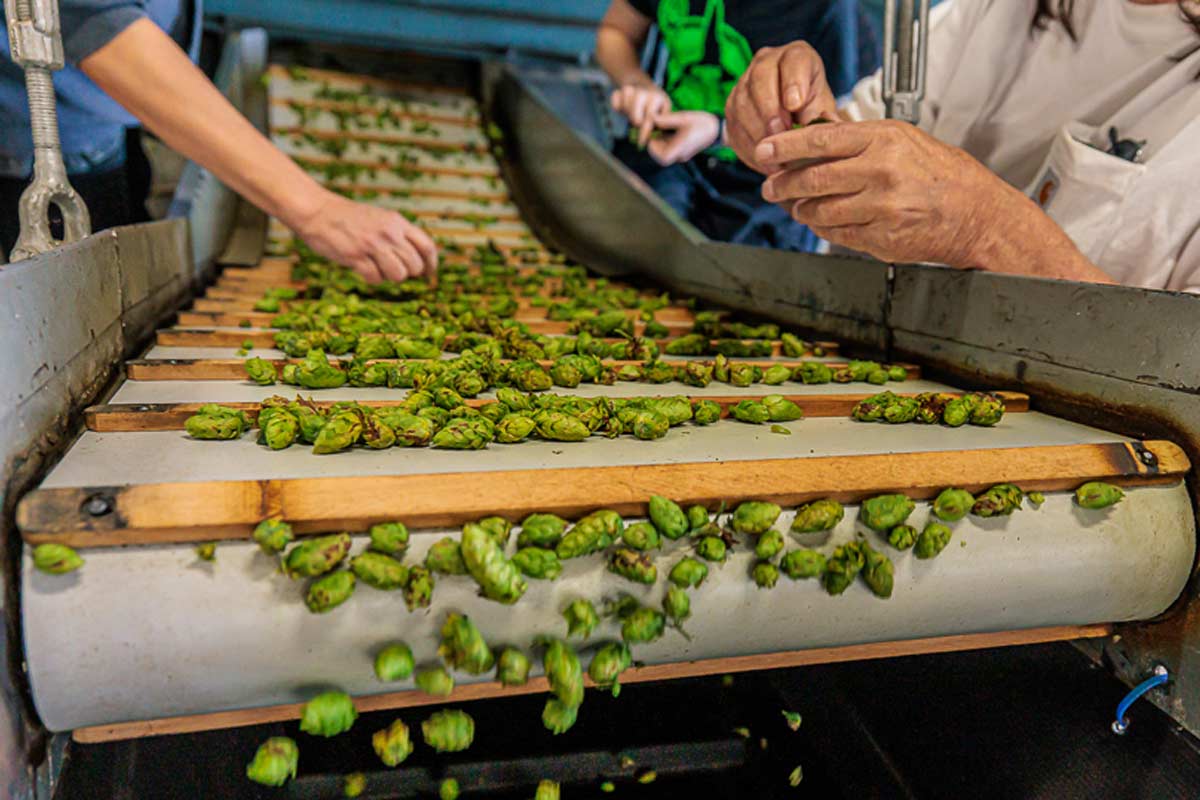
Her approach involves a process-driven operation where tasks are rotated, and every shift concludes with a formal debriefing—a practice rarely seen in traditional agriculture but common in high-stakes manufacturing. During the harvest, which Trowbridge describes as "wrestling a jungle," her role is one of orchestration, managing logistics to ensure that the window between cutting the bines and kiln-drying the cones is minimized to preserve essential oils and resins.
Corporate Stewardship and Sensory Analysis
At Bell’s Brewery in Comstock, one of the state’s most iconic craft institutions, the management of the hop supply chain is led by land steward Bonnie Steinman and her colleague Elizabeth Mullins. Steinman, a veteran horticulturist who co-founded Hop Head Farms, oversees a two-and-a-half-acre hop yard that serves as both a production site and an educational hub.
Steinman’s work emphasizes the sensory evolution of the plant. Under the mentorship of industry veterans like John Mallett, she developed a rigorous daily practice of "rubbing and smelling" the hop cones to determine peak ripeness. This method tracks the aromatic transition of varieties like Chinook from grassy notes to fruity esters and, finally, to resinous oils.
Mullins, who specializes in pest management and field operations, works alongside Steinman to monitor the yard for threats while managing broader sustainability initiatives, such as butterfly waystations and employee gardens. Their work culminations in "The Hideaway," a lush gathering space beneath the bines designed to immerse the public and industry professionals—including members of the Pink Boots Society—in the agricultural reality of brewing.
The Identity of Michigan Chinook
A significant portion of the effort led by these women is dedicated to establishing a unique "terroir" for Michigan hops. While the Pacific Northwest Chinook is known for its piney, resinous qualities, Michigan-grown Chinook has developed a distinct profile characterized by notes of pineapple and citrus.
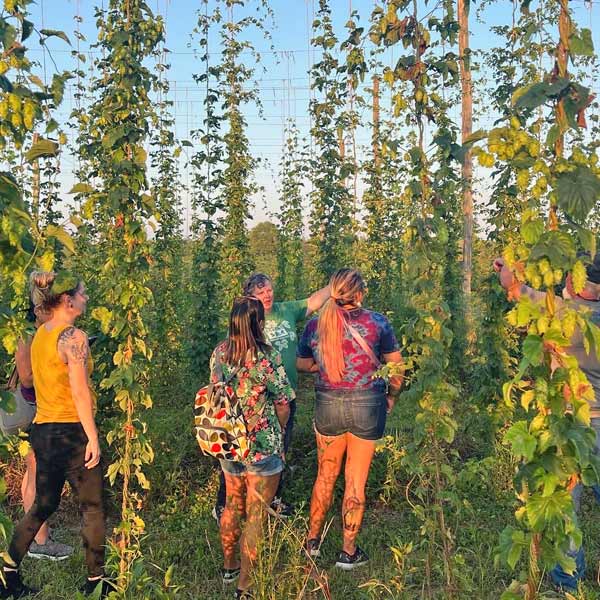
Rose Stahl, co-owner of Mr. Wizard’s Hops in Monroe, has been instrumental in promoting this regional identity. Since 2017, she has helped organize the Chinook Cup, a competition hosted by the Hop Growers of Michigan. The event utilizes blind sensory analysis to honor the best harvest in the state, providing a platform for growers to demonstrate that Michigan’s environmental conditions produce a superior aromatic profile for certain styles of beer.
Stahl’s entry into the industry was born of necessity; after a catastrophic flood destroyed five acres of corn on her family farm, she pivoted to hops based on a suggestion from her son, a brewer at Short’s Brewing. A decade later, her involvement in the Great Beer State Conference and Trade Show has helped solidify Michigan’s reputation as a serious contender in the global hop market.
Economic Implications and the Future of the Industry
The growth of the Michigan hop industry has significant economic implications. According to data from the Hop Growers of America, Michigan’s hop acreage, while smaller than the "Big Three" Western states, represents a high-value specialty crop that supports local processing facilities, pelletizing plants, and laboratory services. However, the industry faces ongoing challenges, including market contraction as the craft beer sector stabilizes and the rising costs of labor and specialized equipment.
Amy Tennis of the Michigan Hop Alliance notes that much of the work performed by women remains "invisible labor." On many family-owned farms, women manage the complex administrative side of the business—grant writing, irrigation management, bookkeeping, and labor coordination—while men often serve as the public face of the operation. Tennis argues that acknowledging this labor is essential for the industry’s long-term sustainability.
Conclusion: A Distinct Regional Legacy
The story of Michigan hops is still being written, but its trajectory is increasingly defined by the women who manage its scientific, operational, and promotional facets. As Nicole Shriner, a hops researcher at MSU, suggests, the goal is not to replicate the Pacific Northwest but to carve out a distinct identity.
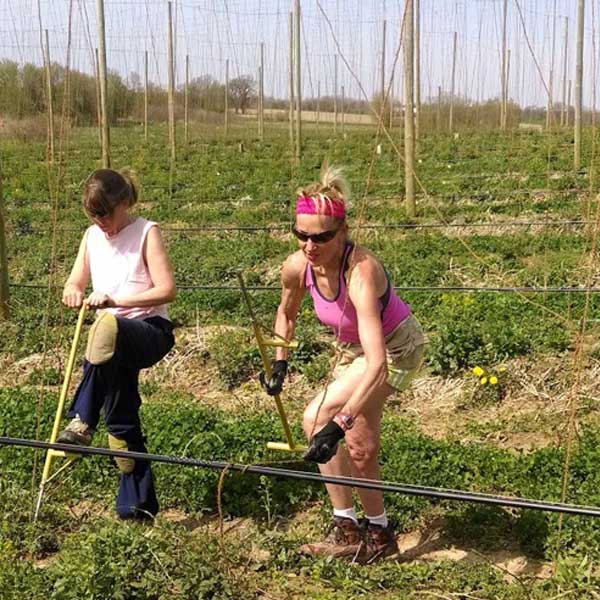
The success of this endeavor is visible in the pint glasses of craft beer drinkers across the country. The transition from a "high-maintenance" crop to a stable, quality-driven industry is a testament to the expertise of the women behind the bines. Through their efforts in propagation, pest management, and quality control, they have ensured that "Michigan-grown" is a label that carries weight, signifying a product that is the result of both a unique geography and an uncompromising standard of excellence.