admin
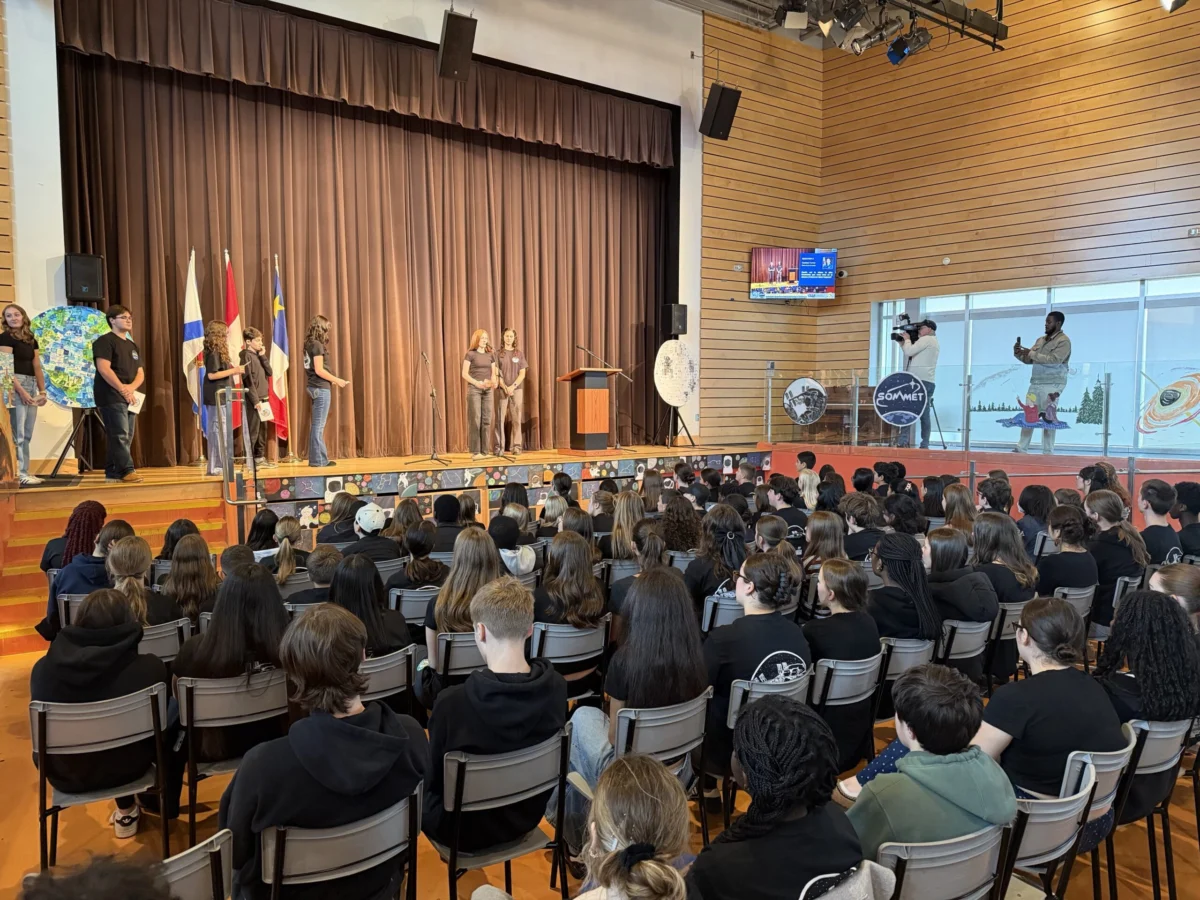
Halifax, Nova Scotia – Students at École Secondaire du Sommet in Halifax experienced an extraordinary educational opportunity on Friday, November 13, 2026, when they established direct radio contact with Canadian astronaut Joshua Kutryk aboard the International Space Station (ISS). This rare interaction, facilitated by the Amateur Radio on the International Space Station (ARISS) program, provided a profound glimpse into space exploration and inspired a new generation to consider careers in science, technology, engineering, and mathematics (STEM). The event underscored the critical role of international collaboration in space and the power of hands-on learning to ignite curiosity about the cosmos.
A Fleeting Connection with Orbit
The connection was a marvel of orbital mechanics and amateur radio technology. For a brief, ten-minute window, as the International Space Station hurtled over Nova Scotia at an astonishing speed of approximately 27,600 kilometers per hour (17,150 miles per hour) – 25 times the speed of sound – students at École Secondaire du Sommet had the chance to speak directly with Commander Joshua Kutryk. This narrow time frame, dictated by the ISS’s rapid orbit, required precise timing and sophisticated ground station equipment to capture the signal from the orbiting laboratory, some 400 kilometers (250 miles) above Earth. The school’s science department, in conjunction with local amateur radio enthusiasts, had meticulously prepared for weeks, ensuring the antennae were optimally positioned and the radio equipment was perfectly calibrated for the fleeting pass.
The anticipation in the school gymnasium was palpable as students, teachers, and local dignitaries gathered around the amateur radio station. Each student had prepared a question, eager to hear firsthand accounts from an astronaut living and working in microgravity. When the contact was established, a collective hush fell over the room, soon replaced by murmurs of excitement as Kutryk’s voice, clear despite the vast distance, filled the space.
Student Voices Reach for the Stars

Among the students who posed a question was Marie Gooding, who described the experience as "amazing." "I thought it was amazing to have an opportunity like this to talk to an astronaut. It’s not something I thought I’d ever see in my lifetime," Gooding remarked, reflecting on the profound impact of the direct interaction. Her curiosity led her to ask a question that often piques public interest: "How does space smell?" Kutryk’s response, that space has a distinct metallic or iron-like scent, was particularly memorable for Gooding. This unexpected detail provided a tangible, sensory connection to an environment otherwise beyond human experience, solidifying the reality of space travel for the young learners.
The encounter transcended mere curiosity for many students. Gooding elaborated on how the conversation significantly influenced her academic trajectory. "It has pushed me really to go into the sciences and now it makes me want to be like a doctor. So while I might not be going into the space domain, it does make me want to learn a lot more about how space works and the planets that surround us in our universe," she stated. Her sentiment echoes the broader goal of the ARISS program: to inspire and motivate students towards scientific inquiry and exploration, regardless of their ultimate career path.
Joshua Kutryk: A Canadian in Orbit
Canadian astronaut Joshua Kutryk, currently serving as a mission specialist with NASA’s four-person Crew 13, is a seasoned professional whose journey to space began long before his current six-month mission. A former CF-18 fighter pilot with the Royal Canadian Air Force, Kutryk brings a wealth of experience in high-performance environments. His extensive background in engineering and operational command made him an ideal candidate for the Canadian Space Agency (CSA), which he joined in 2017. This mission marks a significant milestone in his career, building on years of rigorous training and preparation.
Kutryk’s responsibilities aboard the ISS are diverse, ranging from conducting scientific experiments in microgravity to performing critical maintenance and operational tasks. Earlier in his mission, he garnered international attention for his first spacewalk, a complex and physically demanding endeavor crucial for the station’s upkeep and expansion. Such activities highlight the versatility and resilience required of astronauts and underscore Canada’s ongoing contribution to human spaceflight. His presence on the ISS not only represents Canadian expertise but also serves as a powerful symbol of national achievement and inspiration for Canadians, particularly young people, interested in STEM fields.
The ARISS Program: Bridging Earth and Orbit

The Amateur Radio on the International Space Station (ARISS) program is a globally recognized, volunteer-run initiative that makes these unique space-to-ground contacts possible. Founded in 1196 as a joint venture between NASA, the American Radio Relay League (ARRL), and various international amateur radio organizations, ARISS aims to provide educational outreach by connecting students directly with astronauts using amateur radio. Since its inception, ARISS has facilitated thousands of contacts with schools and educational groups worldwide, allowing millions of students to engage in real-time conversations with crew members on the ISS.
The program’s success relies on a network of dedicated amateur radio operators, educators, and technical experts who volunteer their time and resources. Schools apply through a competitive process, demonstrating their commitment to integrating the ARISS contact into a comprehensive STEM curriculum. The selection criteria often include detailed lesson plans, student engagement activities, and public outreach initiatives, ensuring the contact has a lasting educational impact. For École Secondaire du Sommet, securing an ARISS contact was the culmination of months of planning and collaboration, involving not just the science department but also the broader school community and local amateur radio clubs.
The technology behind ARISS is a testament to the ingenuity of amateur radio. Astronauts on the ISS use a specialized amateur radio station, often utilizing simple handheld transceivers or more powerful fixed equipment, to communicate with ground stations. These ground stations, typically set up at schools or by local radio clubs, employ high-gain antennae and sensitive receivers to track the fast-moving ISS and maintain a clear signal. The ten-minute window for contact is a critical period, requiring precise tracking and efficient communication protocols to maximize the interaction. This hands-on application of physics, radio frequency engineering, and orbital mechanics provides students with a tangible example of scientific principles in action.
Igniting STEM Passions
Science teacher Karen Scarcella emphasized the profound educational value of the ARISS program. "Science is not just in their classroom, it’s not just what they learn out of a textbook, it’s really bigger than that. So to see if they can start making connections between what they learned and what they see outside in the real world," Scarcella articulated. Her words highlight the program’s ability to transcend theoretical concepts and demonstrate the real-world applications of scientific knowledge. By connecting classroom learning to the frontier of space exploration, ARISS helps students understand that STEM fields are dynamic, relevant, and filled with exciting possibilities.
The event at École Secondaire du Sommet serves as a powerful catalyst for STEM engagement. For many students, the direct interaction with an astronaut demystifies space travel and human spaceflight, making it a more accessible and relatable endeavor. It encourages critical thinking, problem-solving, and a deeper appreciation for scientific inquiry. The program specifically targets core STEM areas, demonstrating how physics, chemistry, biology, mathematics, and engineering are all integral to space exploration. Furthermore, the collaborative nature of preparing for an ARISS contact fosters teamwork and communication skills, vital attributes for any future professional.

The Broader Context of Human Spaceflight
The International Space Station, a collaborative project involving five space agencies – NASA (United States), Roscosmos (Russia), JAXA (Japan), ESA (Europe), and CSA (Canada) – stands as a beacon of international cooperation and scientific advancement. Orbiting Earth since 1998, the ISS has served as humanity’s continuous presence in space, a unique microgravity laboratory for cutting-edge research in various disciplines, including human physiology, material science, and astrophysics. Experiments conducted on the ISS yield insights that benefit life on Earth, from new medical treatments to advanced materials.
Canada’s involvement in the ISS is significant, notably through its contribution of the Canadarm2 robotic arm, a crucial component for station assembly and maintenance, and the Dextre robotic "hand." Canadian astronauts have played pivotal roles in operating these systems and conducting scientific research. Joshua Kutryk’s mission continues this proud legacy, reinforcing Canada’s position as a key partner in global space endeavors. Events like the ARISS contact not only inspire students but also serve to remind the public of the ongoing scientific breakthroughs and collaborative spirit that define the ISS mission.
A Timeline of Inspiration and Engagement
The journey to this extraordinary ten-minute conversation involved a meticulous timeline of preparation and coordination:
- Spring 2026: École Secondaire du Sommet submits a comprehensive application to the ARISS program, outlining their educational goals and proposed curriculum integration.
- Summer 2026: The school receives notification of selection for an ARISS contact, initiating a flurry of planning and organization. A local amateur radio club volunteers its expertise and equipment.
- September – October 2026: Students participate in specialized workshops on amateur radio, orbital mechanics, and the ISS. They research Joshua Kutryk’s background and mission, formulating thoughtful questions. Teachers integrate space-related topics into their science and even language arts curricula.
- November 12, 2026: Final technical rehearsals are conducted, ensuring all equipment is operational and communication protocols are established. Students practice their questions, and the school community buzzes with anticipation.
- November 13, 2026, Morning: Last-minute checks and preparations at the school. Media outlets are invited to cover the historic event.
- November 13, 2026, Afternoon (4:52 pm AT): The International Space Station passes over Halifax. The ARISS ground station at École Secondaire du Sommet establishes contact.
- November 13, 2026, Afternoon (4:52 pm – 5:02 pm AT): Students engage in a direct, ten-minute question-and-answer session with astronaut Joshua Kutryk.
- November 13, 2026, Evening (6:13 pm AT): Global News updates its report, reflecting the successful conclusion of the contact and initial reactions.
- Post-Contact: The school plans follow-up activities, including presentations, essays, and further STEM projects, to leverage the momentum generated by the ARISS experience.
Looking Towards the Future of Space Exploration

The impact of such interactions extends far beyond the individual students involved. These events contribute to a broader societal appreciation for scientific discovery and technological innovation. As nations set their sights on returning humans to the Moon through programs like Artemis and establishing a lunar Gateway station, and eventually venturing to Mars, the need for a skilled and inspired workforce in STEM fields becomes even more critical. Programs like ARISS are foundational in cultivating the next generation of engineers, scientists, astronauts, and technicians who will drive these ambitious future missions.
The Canadian Space Agency actively supports initiatives that engage youth in space, recognizing that today’s students are tomorrow’s explorers and innovators. Joshua Kutryk’s participation in this ARISS contact is a testament to the CSA’s commitment to inspiring young Canadians. By providing authentic, high-impact learning experiences, these programs help bridge the gap between abstract scientific concepts and the tangible reality of human achievement.
The connection between École Secondaire du Sommet and the International Space Station was more than just a brief conversation; it was a powerful moment of inspiration, a testament to human ingenuity, and a vivid demonstration of how science can connect us across unimaginable distances. For the students of Halifax, the scent of iron or metal in space, shared by an astronaut hurtling above them, will undoubtedly linger as a potent reminder of a day they literally reached for the stars.