admin
Four individuals are facing an unprecedented 220 charges following a meticulous 16-month investigation by the Cape Breton Regional Police (CBRP) that successfully dismantled a sophisticated organized crime group operating across multiple Canadian provinces. The extensive probe, which commenced in July 2025 and culminated in arrests and charges announced in November 2026, uncovered a sprawling network responsible for the acquisition, trafficking, dismantling, and resale of over $10 million in stolen vehicles and related property, alongside the seizure of numerous illegal firearms. This significant law enforcement victory underscores the growing challenge posed by inter-provincial organized crime and highlights the critical importance of collaborative police efforts in combating such complex criminal enterprises.
Unveiling a Sophisticated Network
The investigation began modestly in July 2025 when CBRP officers responded to a report of a stolen vehicle that was subsequently tracked to a property in Florence, Nova Scotia. What initially appeared to be an isolated incident quickly escalated as officers, upon executing search warrants, discovered not just the initially reported vehicle but a trove of additional stolen automobiles and parts. This initial discovery was the thread that unraveled a far more intricate and expansive criminal operation than first imagined, prompting a multi-agency, multi-provincial investigation that would span more than a year.
The criminal organization’s modus operandi was characterized by its sophistication and geographical reach. Stolen vehicles were sourced from as far west as Manitoba, and from Ontario, New Brunswick, and Newfoundland, before being systematically transported to various locations, including Cape Breton. Once acquired, these vehicles underwent a meticulous process of alteration, primarily through the manipulation or complete replacement of Vehicle Identification Numbers (VINs). This tampering was designed to obscure their origins, rendering them virtually untraceable to their original owners and making them appear legitimate for resale. Alternatively, many vehicles were dismantled for their high-value components, which were then trafficked through online retailers, exploiting the anonymity of digital marketplaces to offload parts without drawing suspicion.
A Meticulous 16-Month Investigation
The scale and complexity of the operation necessitated a prolonged and resource-intensive investigation. Over 16 months, the CBRP, working in close collaboration with provincial and national law enforcement partners including the Royal Canadian Mounted Police (RCMP) and other regional police forces across the affected provinces, employed a range of investigative techniques. This included extensive surveillance, forensic analysis of recovered vehicles and parts, financial tracking to follow the illicit proceeds of crime, and intelligence sharing across jurisdictions.
"This was not a simple case of opportunistic theft," stated Chief Robert MacLean of the Cape Breton Regional Police in a press conference following the announcement of charges. "This was a highly organized, professional criminal enterprise with a clear business model centered on exploiting a demand for cheap vehicles and parts, all while operating under the radar. Our officers and our partners spent countless hours meticulously piecing together this puzzle, navigating jurisdictional complexities, and building a case against a network that thought it was untouchable."
The investigative timeline saw several key phases:
- July 2025: Initial stolen vehicle report leads to the discovery of multiple stolen vehicles at a Florence, N.S., property, triggering the formal launch of the organized crime probe.
- Late 2025 – Early 2026: Intelligence gathering confirms the multi-provincial nature of the ring, identifying connections to vehicle thefts and trafficking operations in Ontario, New Brunswick, Newfoundland, and Manitoba. Law enforcement agencies in these provinces are engaged.
- Mid-2026: Surveillance and financial forensics begin to map out the network’s structure, key players, and financial transactions, including the use of online platforms for resale of parts. The involvement of firearms in the group’s activities is also established.
- Late 2026: Execution of multiple search warrants across five properties, leading to significant seizures and the apprehension of the four primary suspects.
- November 2026: Formal announcement of charges, summarizing the success of the extensive investigation.
Significant Seizures and Arrests
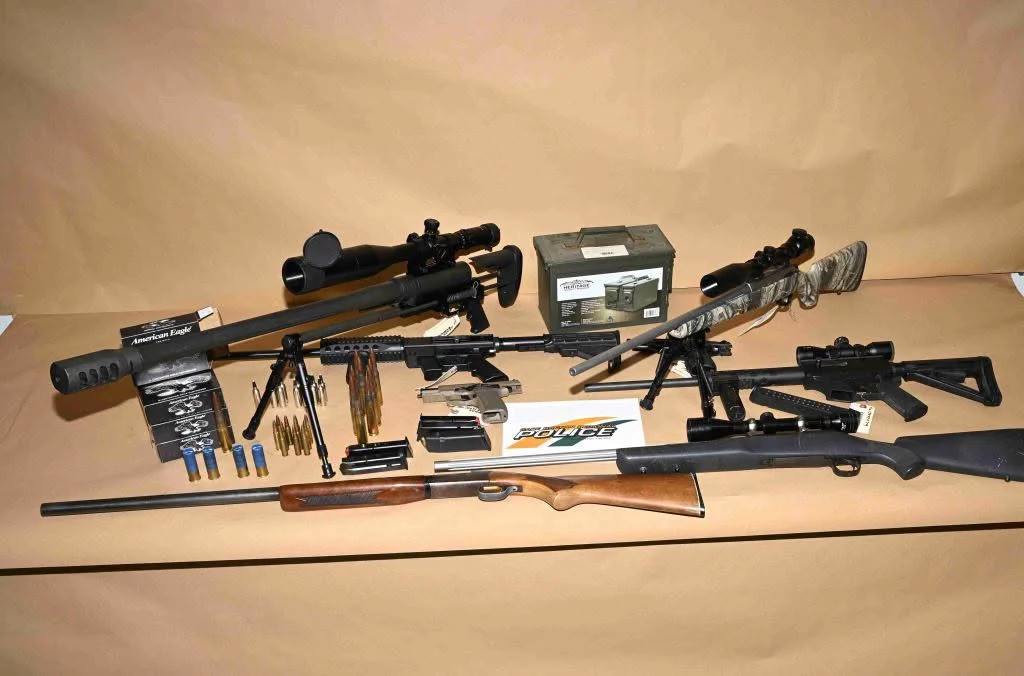
The culmination of the 16-month probe involved the execution of search warrants at five distinct properties, primarily within the Cape Breton region. These searches yielded a significant haul of illicit goods and evidence crucial to the prosecution. Police seized a substantial number of vehicles, both complete and dismantled, various vehicle components and parts, commercial equipment used in the dismantling and alteration process, heavy machinery, and a cache of firearms. While specific details regarding the types and quantities of firearms seized were not immediately disclosed due to ongoing legal proceedings, their presence underscores the inherent danger associated with organized crime groups and their potential for violence. The estimated value of the recovered stolen vehicles and property alone exceeds $10 million, making this one of the most substantial busts of its kind in recent Nova Scotian history.
The four individuals arrested and charged in connection with this operation have not yet been publicly identified, as is common practice in the early stages of such high-profile cases. However, the breadth of charges against them paints a clear picture of the severity of their alleged involvement.
The Weight of the Law: Charges Laid
The 220 charges laid against the four individuals reflect the comprehensive nature of the criminal enterprise and the depth of evidence collected by investigators. The charges include:
- Participating in Activities of a Criminal Organization: This charge targets the core structure of the group, recognizing their coordinated efforts to commit multiple indictable offenses for financial gain.
- Laundering Proceeds of Crime: This addresses the financial component of the operation, where illicit profits from stolen vehicles and parts were integrated into legitimate financial systems or used to fund further criminal activities.
- Possession and Trafficking Property Obtained by Crime: These charges directly relate to the handling and distribution of the stolen vehicles, parts, and equipment.
- Tampering with a Vehicle Identification Number (VIN): This specific charge highlights the deceptive practices employed to alter the identity of stolen vehicles, making them difficult to trace and enabling their illegal resale.
These charges carry significant penalties under the Canadian Criminal Code, including lengthy incarceration, and demonstrate law enforcement’s commitment to dismantling organized crime at every level, from the street-level operative to the masterminds orchestrating the complex networks.
Official Responses and Collaborative Success
The successful disruption of this multi-provincial crime ring has been met with strong statements from law enforcement and judicial officials, emphasizing the collaborative spirit that was central to the investigation’s triumph.

"This investigation exemplifies the unwavering dedication of our officers and the critical importance of inter-agency cooperation," remarked Inspector Emily Carter, head of the CBRP’s Major Crime Unit. "Organized crime doesn’t respect municipal or provincial borders, so neither can our investigations. The synergy between Cape Breton Regional Police, the RCMP, and other regional forces was paramount in gathering the intelligence and evidence needed to bring these individuals to justice."
A spokesperson for the Nova Scotia Department of Justice echoed these sentiments, stating, "Organized crime poses a grave threat to the safety and economic well-being of our communities. The successful outcome of this investigation sends a clear message that such activities will not be tolerated, and that law enforcement across Canada is equipped and committed to working together to protect citizens from these sophisticated networks."
Experts in criminology have also weighed in on the significance of the bust. Dr. Lena Singh, a criminologist specializing in organized crime at Dalhousie University, noted, "Vehicle theft rings have become increasingly sophisticated, often linked to other illicit activities like drug trafficking and illegal firearms trade. The fact that this operation crossed five provinces and involved such high-value assets and firearms speaks to the significant challenge these groups present. This bust in Cape Breton is a testament to effective intelligence gathering and coordinated law enforcement, setting an important precedent for future multi-jurisdictional investigations."
The Broader Landscape of Organized Auto Crime
The disruption of this Cape Breton-based ring sheds light on a broader, escalating issue of organized auto theft across Canada. According to recent reports from Équité Association, a national organization that works to combat insurance fraud and crime, auto theft rates have been on a sharp rise across the country, with an estimated $1.2 billion in insured losses in 2022 alone. Ontario and Quebec have seen particularly dramatic increases, but the Atlantic provinces, including Nova Scotia, are not immune. The methods employed by the Cape Breton group – VIN tampering, dismantling for parts, and inter-provincial trafficking – are characteristic of modern organized auto theft rings, which are often connected to broader criminal enterprises.
The motivations behind these thefts are diverse, ranging from resale in domestic or international markets (often to fund drug operations or terrorism) to being dismantled for high-value parts, or even used in other criminal activities. The sheer profitability of the trade makes it an attractive venture for organized crime. A single stolen high-end vehicle can yield tens of thousands of dollars, either intact or broken down into components. The involvement of firearms in this particular case also underscores the dangerous nexus between vehicle theft and other forms of violent crime, posing a direct threat to public safety.
Economic and Societal Repercussions
The impact of organized auto crime extends far beyond the immediate victims of theft. Economically, it drives up insurance premiums for all motorists, as insurance companies bear the brunt of these losses. Canadian drivers effectively subsidize these criminal operations through higher rates. Furthermore, it strains law enforcement resources, diverting police attention and funding from other critical areas. The environmental cost of illicit vehicle dismantling, often conducted in unregulated "chop shops," also poses a risk, with improper disposal of hazardous materials.

Societally, such criminal operations erode public trust, foster a sense of insecurity, and can inadvertently support other criminal activities through the illicit funds generated. The availability of stolen parts can also pose safety risks if those parts are of compromised quality or illegally installed.
Fortifying Against Future Threats
The success of the Cape Breton Regional Police and their partners in dismantling this sophisticated network serves as a powerful reminder of the ongoing battle against organized crime. It highlights the need for continued investment in law enforcement resources, advanced investigative technologies, and robust inter-agency cooperation. Beyond enforcement, preventative measures are also crucial. Public awareness campaigns about vehicle security, the risks of buying suspicious parts online, and the importance of reporting suspicious activities can all play a role.
As the legal proceedings against the four accused individuals unfold, this case will undoubtedly serve as a critical example of how dedicated, collaborative police work can effectively disrupt high-level criminal operations, safeguarding communities and upholding the rule of law against increasingly complex and geographically dispersed threats. The Cape Breton bust offers a glimpse into the hidden world of organized crime and a beacon of hope that these networks can be effectively challenged and dismantled.