Jia Lissa
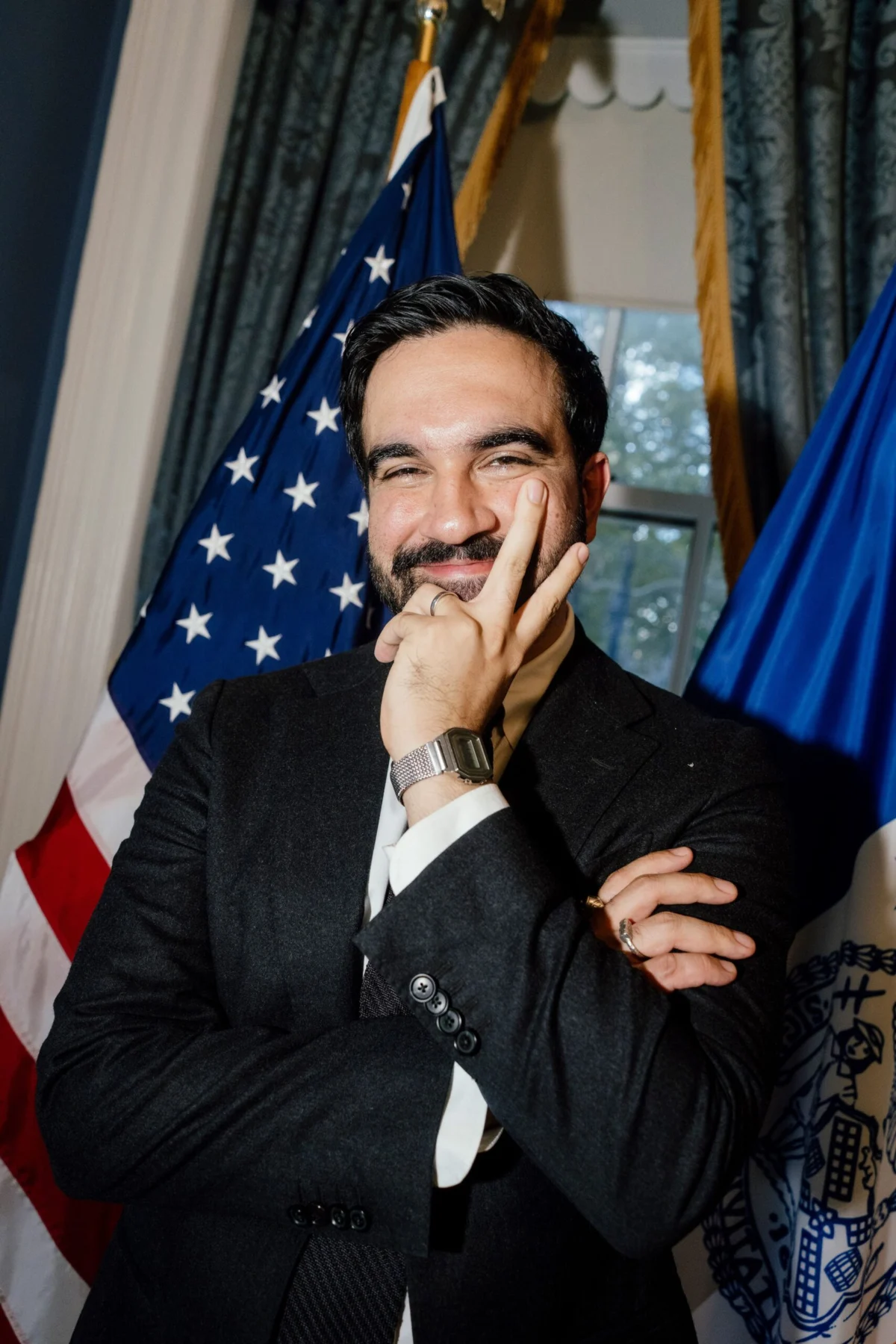
New York City Mayor Zohran Mamdani, a year into his landmark tenure, recently sat down with WIRED to offer a candid reflection on his first ten months in office, his evolving approach to digital governance, and his profound concerns regarding artificial intelligence and its societal implications. The interview, conducted at City Hall ahead of the crucial 2026 midterm elections, provided a rare glimpse into the mind of a leader who has rapidly become one of the most influential figures on the American left, navigating the complex interplay of technology, policy, and public perception.
A Transformative Year: From Campaign Trail to City Hall
Mamdani’s journey to the mayoralty has been nothing short of meteoric. In October 2025, just weeks before his historic election, WIRED first profiled the then-33-year-old candidate, noting his “supernatural electricity” and his unprecedented rise from relative obscurity to mayoral front-runner. His campaign captivated New Yorkers with a message sharply focused on affordability and working-class issues, amplified by a masterful, often unconventional, use of social media that redefined political outreach. His ability to connect directly with constituents online made traditional politicians appear technologically antiquated, turning local politics into a perceived cultural revolution.
Now, at 35, the initial campaign dynamism has matured into the steady, often exhausting, rhythm of governance. The mayor, admitting to a "long day" during the interview, still radiates a palpable energy, albeit one tinged with the weariness of leading a global metropolis. His approval rating among Big Apple voters remains remarkably high at 69 percent, a testament to his continued connection with the electorate. However, his prominent online presence has also made him a lightning rod for national and international debates, from the Israeli-Palestinian conflict to the ideological tenets of the Democratic Socialists of America (DSA). He is simultaneously hailed as a beacon of hope for millions and criticized by detractors as a dangerous radical whose policies threaten the city’s stability. This dual identity underscores the intense scrutiny that accompanies his every move.

Redefining Political Communication: The Internet’s Mayor in Action
Mamdani’s pioneering approach to social media, which WIRED famously dubbed him "the internet’s Mayor" even before his victory, has seamlessly transitioned from campaign strategy to a core component of his governance model. He views digital platforms not as supplementary tools, but as legitimate and essential mediums for engaging with New Yorkers. "For many New Yorkers, this is how they engage with the world," Mamdani stated, emphasizing the responsibility of government to communicate policy through "every conceivable measure."
His administration has innovated in this space, exemplified by initiatives like "El Chisme Oficial de NYC," a WhatsApp channel designed to directly inform Spanish-speaking New Yorkers about city policies. On this channel, the mayor himself delivers voice notes in what he describes as "incredibly halting Spanish," demonstrating a commitment to direct, authentic communication, even if it means sacrificing traditional political polish. This approach directly challenges the "pat myself on the back" mentality he attributes to past administrations, where information was often sequestered in obscure press releases. Instead, Mamdani’s team actively brings political decisions to where people "already are," rejecting what he calls the "condescension" of expecting citizens to seek out information.
The mayor’s willingness to embrace vulnerability and even "embarrassment" online has remained a hallmark of his digital presence. Whether it’s jumping into freezing water to draw attention to the Rent Guidelines Board or engaging in candid, unscripted moments, Mamdani believes this approach demystifies politics. He argued that while the medium’s effectiveness is important, it must serve a substantive message. "Putting tired, old ideas into a short-form version in a vertical video does not answer the critical issue with politics today," he asserted, stressing that genuine engagement requires both innovative presentation and impactful policy.
This strategy has, however, drawn scrutiny. A September 2026 New York Times report highlighted the administration’s extensive collaboration with content creators, some of whom receive talking points or exclusive access to events not granted to traditional journalists. This raised questions about the blurring lines between "professional journalism" and content creation. Mamdani defended this practice by equating talking points to press releases and asserting the need to engage with all forms of media—television, print, radio, and social platforms like TikTok or Instagram—equally. He contends that dismissing digital-first creators as illegitimate media is a form of "political condescension" that fails to acknowledge how a significant portion of New Yorkers consume information.

Midterm Elections and Strategic Alliances
As the 2026 midterms approach, Mayor Mamdani’s influence extends beyond City Hall. A prominent figure within the Democratic Party, his endorsement carries significant weight. His decision to publicly endorse Governor Kathy Hochul for re-election, despite his past criticisms of her, reflects a calculated political strategy rooted in a productive working relationship. Mamdani characterized their partnership as a "stark contrast" to the historically adversarial dynamic between NYC mayors and New York governors.
The cornerstone of this alliance, according to Mamdani, is the delivery of "material wins for working-class New Yorkers," with Universal 2K being the prime example. This initiative, launched on the eighth day of his administration with a $1.2 billion commitment from the state, aims to provide universal childcare for 2-year-olds in New York City. The program has already expanded from serving 2,000 children to an anticipated 12,000 next year, with plans for citywide implementation across all boroughs. Mamdani shared the story of a family whose child enrolled in 2K, saving them over $20,000 annually—funds they can now allocate towards purchasing a home. He emphasized that in a city grappling with a cost-of-living crisis, where childcare is the second-highest expense for families, such savings are transformative and embody what politics "has to be."
This partnership stands in sharp contrast to the agenda of Hochul’s Republican opponent, Bruce Blakeman. Mamdani lambasted Blakeman for his reliance on AI-generated videos, his defense of ICE, and his characterization of universal childcare as a "benefit to lazy parents." He further highlighted Blakeman’s proposals to cut the 2K program and halve Medicaid, arguing that such policies would only make life "harder and more expensive" for working New Yorkers.
The Rising Tide of Democratic Socialism

Mamdani’s political identity is inextricably linked to the Democratic Socialists of America (DSA), a movement he sees as uniquely positioned for the current political climate. He believes the DSA’s focus on "delivering dignity to working-class people" resonates deeply in an era marked by "the betrayal of the working class." The core problems facing New Yorkers—unaffordable rent, childcare, groceries, and utility bills—mirror challenges across the country, making the DSA’s message universally compelling.
He emphasized the "democratic" principle inherent in the DSA, where members actively shape the organization’s direction, offering a stark alternative to what he perceives as a top-down political establishment. This commitment to grassroots democracy, extending from the ballot box into everyday life, is what Mamdani believes draws people to the movement and makes it relevant "now" more than ever. The increasing number of DSA candidates winning elections nationwide reflects a growing demand for a politics that prioritizes the material well-being of ordinary citizens.
Navigating the AI Frontier: Data Centers, Regulation, and the "Bubble"
Beyond local governance, Mayor Mamdani is a vocal critic of the unregulated proliferation of artificial intelligence, particularly its infrastructure. He expressed a "real sense of hope" in the bipartisan opposition emerging against the development of massive data centers, which he views as a critical flashpoint. The mayor noted similarities in concerns between disparate political figures like himself and Florida Governor Ron DeSantis, underscoring the broad alarm over AI’s resource demands.
Mamdani cited staggering figures, such as the training of a single ChatGPT model consuming energy equivalent to powering San Francisco for three days. This scale, he argued, fuels public opposition driven by fears of soaring electricity rates and environmental degradation. He characterized the prevailing approach to AI as "our risk, their reward," and pointed to municipalities, including some in California, that have banned data center construction. New York State’s one-year pause on data center development, which Mamdani supported, is seen as a crucial step towards understanding the full costs of AI.

His skepticism extends to the broader AI industry, which he views as operating under a veil of "opacity" designed to prevent informed public discourse. He rejects the narrative that AI is "mythical" or "unknowable," stressing that it is a human-controlled technology that demands human responsibility. Mamdani voiced deep concern about an "AI bubble," drawing parallels to the 2008 housing crisis, driven by "wildly varying estimates of actual profitability" and "artificial valuation" by powerful companies. When asked if he trusts figures like Sam Altman, CEO of OpenAI, Mamdani’s answer was an unequivocal "No."
He criticized the federal government’s "lacking" policy on AI, accusing it of resorting to "arms race terminology" (e.g., competing with China) to justify a "complete abdication of federal law." Mamdani highlighted the immediate and "fatal consequences" of AI, referencing instances where AI hallucinations nearly led to war with China or the use of outdated information resulted in the bombing of an Iranian children’s school. These are not hypothetical futures, he stressed, but current realities that demand urgent federal action focused on "humanity as the primary responsibility."
Local AI Initiatives and Surveillance Concerns in NYC
In the absence of robust federal regulation, New York City under Mamdani has taken proactive steps to mitigate AI’s potential harms. The administration implemented one of the most comprehensive AI moratoriums in any American school system, banning generative AI for students from 2K through eighth grade. This policy aims to protect students’ learning process, allowing them "room to be students," and to prevent them from being "guinea pigs for the profit motives of technology companies." Mamdani highlighted the absurdity of partnering with tech firms to shape curriculum while rejecting similar influence from pharmaceutical companies.
Beyond education, the Department of Consumer and Worker Protection has enacted new rules. One prohibits realtors from using AI-generated images of apartments, ensuring that prospective tenants are not misled by fabricated listings in an already challenging housing market. Another rule places limitations on the use of chatbots, addressing the "doom loops" many New Yorkers experience when seeking assistance from automated systems. These local initiatives demonstrate a practical, ground-level effort to rein in technology’s negative impacts.

Mamdani also addressed the controversial surveillance technology at Madison Square Garden, extensively reported by WIRED, which has been described as a "panopticon." He unequivocally stated that no private citizen, like James Dolan, should wield such extensive surveillance power over everyday New Yorkers. He supported proposed City Council legislation, introduced by Council member Shahana Hanif, as a necessary response to this issue, noting similar concerns about practices at Radio City Music Hall.
Technology’s Impact on Democracy and the Future of the Democratic Party
Reflecting on a question posed in their previous interview, Mamdani reiterated his conviction that technology is currently making democracy "weaker." He cited personal anecdotes, such as family members sending him AI-generated videos of himself, believing them to be real. This "crisis of faith as to what is real right now," he argued, is particularly terrifying in an age of diminishing trust in traditional institutions, further eroded by the deceptive capabilities of AI.
Looking a decade ahead to 2036, Mamdani envisions a Democratic Party that fully recognizes and champions the "working class" as the true majority in the country. He hopes for a party that moves beyond historical ambitions and embodies a "living, breathing politic" dedicated to fighting for working people, drawing inspiration from the city’s monuments to past figures who championed similar causes. He believes the party’s leadership should ultimately rest with "the American people." As for his own future, Mamdani concluded modestly, "Hopefully I will have finished a second term, but I can never take that for granted."
Mayor Zohran Mamdani’s first year has established him as a distinctive voice in American politics—a progressive leader adept at leveraging digital tools while fiercely advocating for working-class interests and confronting the ethical and societal challenges posed by rapidly advancing technology. His tenure serves as a microcosm of the broader debates shaping the nation, positioning New York City as a testing ground for innovative governance in the digital age.