Jia Lissa
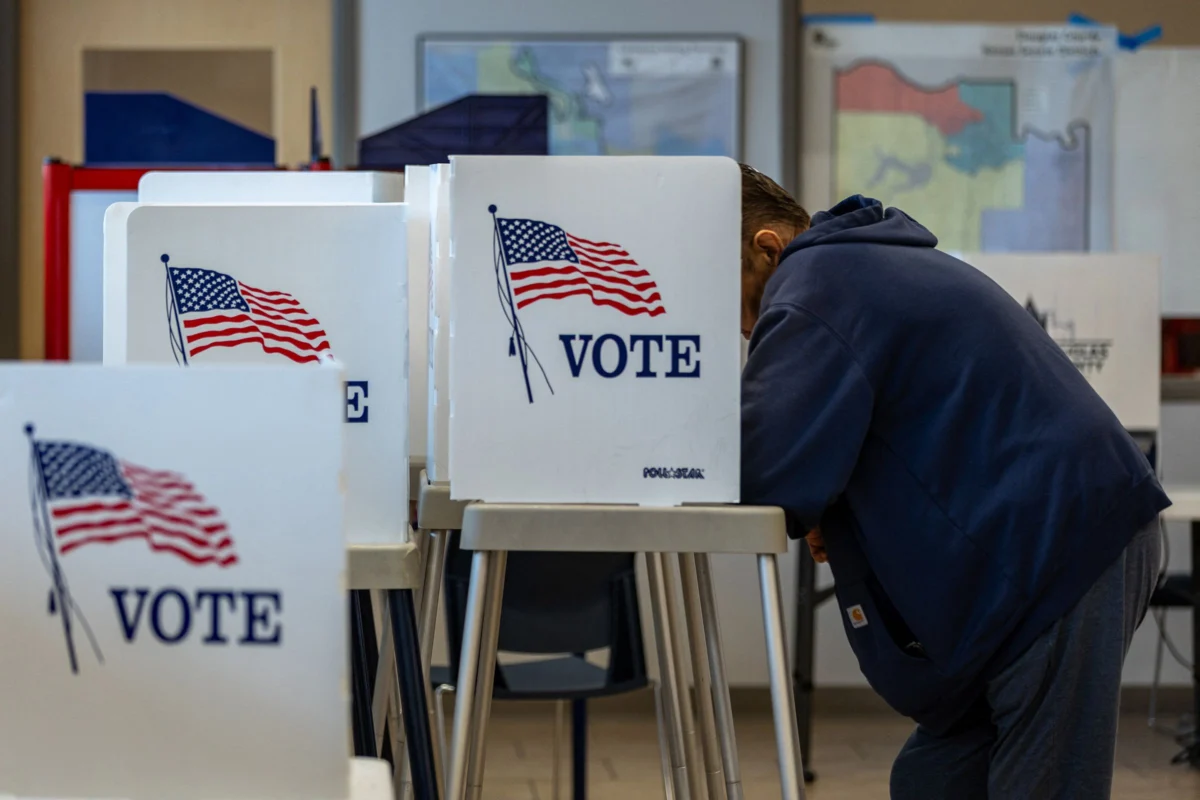
Initially, civil society groups and voting rights advocates expressed deep concerns that the aggressive anti-immigration campaigns witnessed across the United States this year, coupled with hard-line rhetoric from political leaders, would cast a chilling effect over voter participation, particularly within Latino communities. These fears were rooted in the historical context of voter intimidation and the specific, often traumatic, experiences of communities targeted by immigration enforcement. However, contrary to these apprehensions, the reality emerging from early voting data and grassroots observations suggests a powerful counter-narrative of defiance and mobilization. Rather than deterring voters, the perceived threats appear to be galvanizing a significant surge in political engagement.
The Climate of Fear and Hard-Line Policies
For months, the specter of increased immigration enforcement by Immigration and Customs Enforcement (ICE) has loomed large over Latino neighborhoods nationwide. Under the Trump administration, hard-line immigration policies have been characterized by mass anti-immigration surges, often involving highly visible operations and increased detentions. These policies have been widely documented as disproportionately targeting Latino communities, leading to widespread anxiety and a sense of vulnerability. Reports have frequently highlighted instances where law-abiding U.S. citizens, including those with deep community ties, have been caught in the broad dragnet of ICE operations, further intensifying fears and eroding trust in governmental institutions.
The rhetoric surrounding these enforcement actions has often been amplified by political figures. President Donald Trump and his administration officials, including former Homeland Security Secretary Markwayne Mullin and Attorney General Todd Blanche, have, at various times, hinted at the potential deployment of ICE agents to polling locations on Election Day. While the Department of Homeland Security and the administration have officially stated that they have no plans for such deployments, these contradictory messages have fueled uncertainty and alarm among civil rights organizations and potential voters. The psychological impact of such suggestions cannot be overstated, as they evoke historical precedents of voter intimidation and attempts to suppress minority votes.
These concerns were not unfounded. Civil rights groups have long documented tactics designed to suppress minority votes, ranging from restrictive voting laws to overt intimidation at polling sites. The explicit suggestion of ICE presence at places of democratic participation was seen as a direct extension of these tactics, designed to create an environment of fear that would keep eligible voters, particularly those from mixed-status families or communities, away from the ballot box. This pervasive climate of fear was precisely what many activists and organizers feared would lead to a significant downturn in voter engagement.
A Wave of Mobilization and Defiance
Yet, in a striking display of civic resolve, the response from Latino communities has been the opposite of what was feared. Instead of succumbing to intimidation, a powerful wave of mobilization has swept across the country. Grassroots organizations, community leaders, and dedicated volunteers have worked tirelessly for months, actively engaging with residents to underscore the importance of their participation in the democratic process.
Michael Mireles, a seasoned canvassing organizer with LUPE Votes, a prominent get-out-the-vote group operating in southern Texas, articulated this sentiment clearly to WIRED. "We have not seen here at the local level people worried to show up to vote because they think ICE is going to be there," Mireles stated, adding, "People are driven right now by their anti-ICE sentiment, and it’s not stopping them from going to the polls." This perspective was echoed by a dozen other activists, volunteers, and organizers interviewed, all of whom noted a prevailing sense of determination rather than fear.
These organizers have adopted a direct and unflinching approach. Liliana Rivera Baiman, an organizer with 614 ICE Watch and the Ohio Good Neighbor Network, explained their strategy: "We didn’t try to pacify people or make it seem like it wasn’t going to be that bad. We didn’t want to exaggerate either. We said this is the reality of what’s been happening. These are examples of what we’ve seen. You’ve told us that it’s really bad and that you don’t want this to continue, so you have a choice. You’re either going to show up and vote and make sure that your voice is counted, or you’re going to stay home and continue to deal with this for the next two or three years, possibly longer. I really think that motivated a lot of people." This stark choice, presented with honesty and urgency, appears to have resonated deeply within the communities facing these challenges.
The direct experiences of facing ICE’s intensified operations have also played a crucial role in fostering resilience. Jill Garvey, executive director of States at the Core, an organization dedicated to combating authoritarianism and political extremism, observed that communities that have "come face-to-face with some of the worst of the ICE violence are feeling like they understand that preparation is key." She noted that while these experiences are "traumatizing" and "chaotic," they also empower communities, making them "frankly, a little less scared." Having confronted these realities, they now know that "it’s possible, and that the escalation can happen very, very quickly," which fuels their determination to be as prepared as possible for any scenario, including exercising their right to vote.
Evidenced by Early Voting Data
This anecdotal evidence of defiance is robustly supported by concrete early voting figures, which reveal a significant upswing in participation. As of Monday afternoon in the current election cycle, more than 57 million people had already cast their ballots early across the nation. This figure represents a substantial increase of 10 million more votes compared to the total early voting count recorded in the 2022 midterm elections. This surge indicates a broader trend of heightened voter engagement, but the data becomes even more compelling when broken down by demographic.
According to data compiled by the University of Florida’s Election Lab, Latino communities are contributing a larger share to these early voting numbers than in previous election cycles. This trend is not confined to isolated pockets but is observable across various states with significant Hispanic populations.
In Texas, a state often at the forefront of immigration debates, the numbers are particularly striking. Tom Bonier, a Democratic strategist and advisor to the data analytics firm TargetSmart, revealed in a recent interview that over 400,000 individuals who did not participate in the 2020 presidential election have already cast their ballots in the current election cycle. Crucially, half of these newly engaged voters, approximately 200,000, are Latino voters. This influx of new Latino voters represents a formidable shift in the electorate, particularly in a state with such a large and growing Hispanic population.
This Texas phenomenon is not an anomaly but reflects a national pattern. TargetSmart data indicates that by October 27th, 3.8 million Hispanic and Latino voters had cast a ballot nationwide. This marks a massive increase from the 2.35 million Hispanic and Latino voters who had voted by the same date in the 2022 midterms, representing an approximately 61 percent increase in two years.
Michael McDonald, who directs the University of Florida Election Lab, further elaborated on this trend. In an analysis last week, he noted, "Where large Hispanic communities exist in Texas, there is elevated turnout even above the blistering statewide pace." He added that "Texas Hispanics are voting at higher levels than in past elections, as we can see in Florida, Georgia, and North Carolina," underscoring the widespread nature of this increased engagement.
Further corroborating these findings, data shared by the League of United Latin American Citizens (LULAC), the largest Latino civil rights organization in the country, offered granular insights. In Texas’ 15th congressional district, an area that includes a significant portion of the Rio Grande Valley, over 12,000 individuals who had not voted in previous general elections have already cast their early ballots in the current cycle. This surge is particularly impactful in a district where the incumbent Republican congresswoman, Monica De La Cruz, secured her victory in 2022 by a slim margin of approximately 12,000 votes. The potential for these newly engaged voters to swing the outcome of closely contested races is evident, highlighting the strategic importance of this mobilized electorate.
Calls to Action and Democratic Resilience
The narrative of defiance is being championed by political figures and voting rights advocates alike. In Nevada, Secretary of State Cisco Aguilar, who is campaigning for re-election against election denier Jim Marchant, emphasized the need for elected leaders to "get real" with voters. Aguilar recounted addressing a Latino community event, stating, "I did a Latino community event [and said] we have to actually fucking vote to tell these motherfuckers to fuck off." He asserted that when leaders are authentic and willing to fight for their constituents, those constituents are more inclined to show up at the polls.
Suzanne Almeida, vice president of states with the prominent voting rights group Common Cause, echoed this sentiment, stressing the importance of "leaning into that defiance." She advised communicating to voters "that the opposition wouldn’t be making it so difficult if there wasn’t power in voting." Almeida eloquently concluded, "The threats are real, but so is the joy, and there is a real joy that comes in participating in democracy."
Community organizations like Living United for Change in Arizona are seeing the direct impact of these messages. César Fierros, a spokesperson for the group, noted that in a single recent week, volunteers knocked on thousands of doors targeting working-class Latino voters, resulting in 1,000 people confirming they had already voted early or mailed their ballots. "That’s a really good sign; that’s something that we have really never seen before," Fierros observed, capturing the unprecedented nature of this engagement. "People are saying, ‘Yes, there are threats out there, looming, but we’re still going to show up regardless.’"
Similarly, in DeKalb County, Georgia, volunteers from the Save America Movement, an anti-Trump group, reported consistent voter enthusiasm. Mary Corcoran, co-founder and executive director of the movement, shared, "We’re hearing it everywhere our Vote Safe team members are. Voters came through in a steady stream from the moment the polls opened until they closed. Person after person told our team that nothing was going to keep them from voting this year. People know what this administration is trying to do, and they are refusing to be scared out of their own democracy."
Broader Implications and Future Outlook
The surge in Latino voter turnout carries significant implications for the current election cycle and the broader political landscape. Firstly, it challenges the conventional wisdom that intimidation tactics invariably lead to voter suppression. Instead, it suggests that such efforts can, under certain conditions and with effective community mobilization, backfire, generating increased resolve and participation. This could redefine strategies for both political parties and civil rights organizations in future elections.
Secondly, the growing electoral power of the Latino community, demonstrated by these early voting figures, underscores its increasing demographic and political influence. This demographic shift, combined with heightened engagement, could lead to a re-evaluation of campaign strategies, resource allocation, and policy priorities by candidates and parties aiming to secure this crucial voting bloc. The ability of Latino voters to sway outcomes in competitive districts, as seen in Texas’ 15th congressional district, highlights their potential as kingmakers in key races.
Finally, this phenomenon serves as a powerful testament to the resilience of democratic participation in the face of adversity. It illustrates that when fundamental rights are perceived to be under threat, communities can unite and leverage the power of the ballot box as a primary tool of resistance. The ongoing mobilization efforts, coupled with this demonstrated willingness to defy fear, signal a long-term shift in political engagement among Latino communities, potentially reshaping the future of American democracy. This surge is not merely about a single election; it is a profound declaration of agency and a vibrant reaffirmation of the power of the people’s voice.