Jia Lissa
As the United States approaches a critical midterm election cycle, with recent polling data indicating a significant electoral advantage for Democrats, the political landscape is bracing for unprecedented challenges. Beyond the traditional campaign rhetoric and policy debates, the Trump administration has already signaled its intent to contest election outcomes through legal challenges and by sowing doubt about the legitimacy of results in various races. However, a more radical and potentially destabilizing strategy has emerged from an influential right-wing think tank, the Center for Renewing America (CRA), proposing to prevent duly elected Democratic representatives from taking office, irrespective of their electoral victories. This audacious proposal, detailed in recent publications, targets specific ideological and religious groups, sparking widespread condemnation from legal scholars and constitutional experts.
The Center for Renewing America’s Controversial Strategy
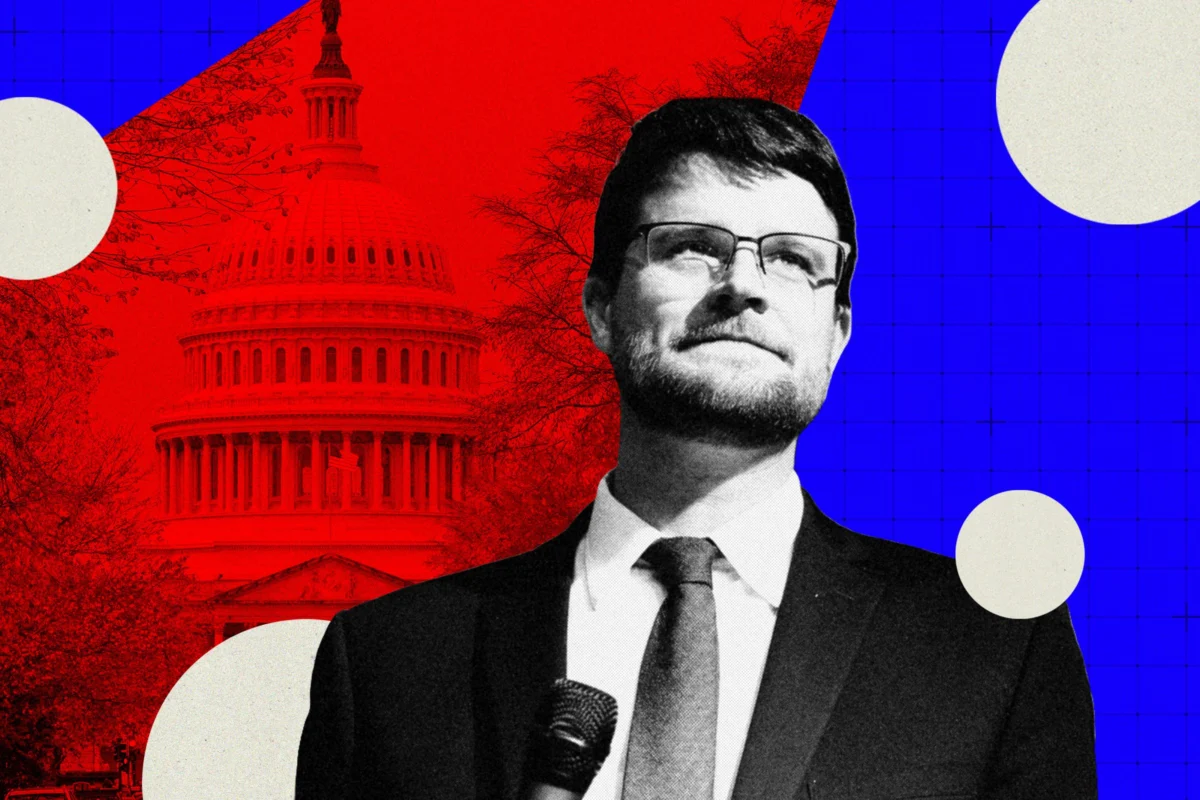
At the heart of this escalating controversy is a post published last month by the Center for Renewing America, an organization that wields considerable influence within conservative circles. Titled “Can Congress Seat a Member-Elect Who Vows to Destroy our Constitution?” the article outlines a mechanism by which certain winning candidates could be barred from holding office. The CRA’s core contention asserts that individuals from what it provocatively labels a "Red-Green Alliance" – purportedly comprising "neo-Marxist progressives and anti-Western Muslims" – hold beliefs fundamentally incompatible with the U.S. Constitution. The publication, authored by Benjamin Osborne, a legal fellow at the organization and a Georgetown Law School graduate, argues that such individuals, by allegedly embracing "the destruction of the constitutional order," cannot truthfully swear to support that order as a condition of taking office. Effectively, the CRA claims that winning Muslim and progressive candidates need not be legally accepted into their elected positions.
This strategy, if pursued, represents a profound departure from established democratic norms and processes. Legal experts have been swift to denounce it. Richard Pildes, a distinguished professor at New York University’s School of Law, characterized the CRA’s approach as "another attempt to contort and twist basic norms that have never been used this way for their own partisan purposes." The implications extend far beyond mere partisan squabbling, touching upon the very foundations of electoral integrity and representative democracy.
Identifying the "Red-Green Alliance"
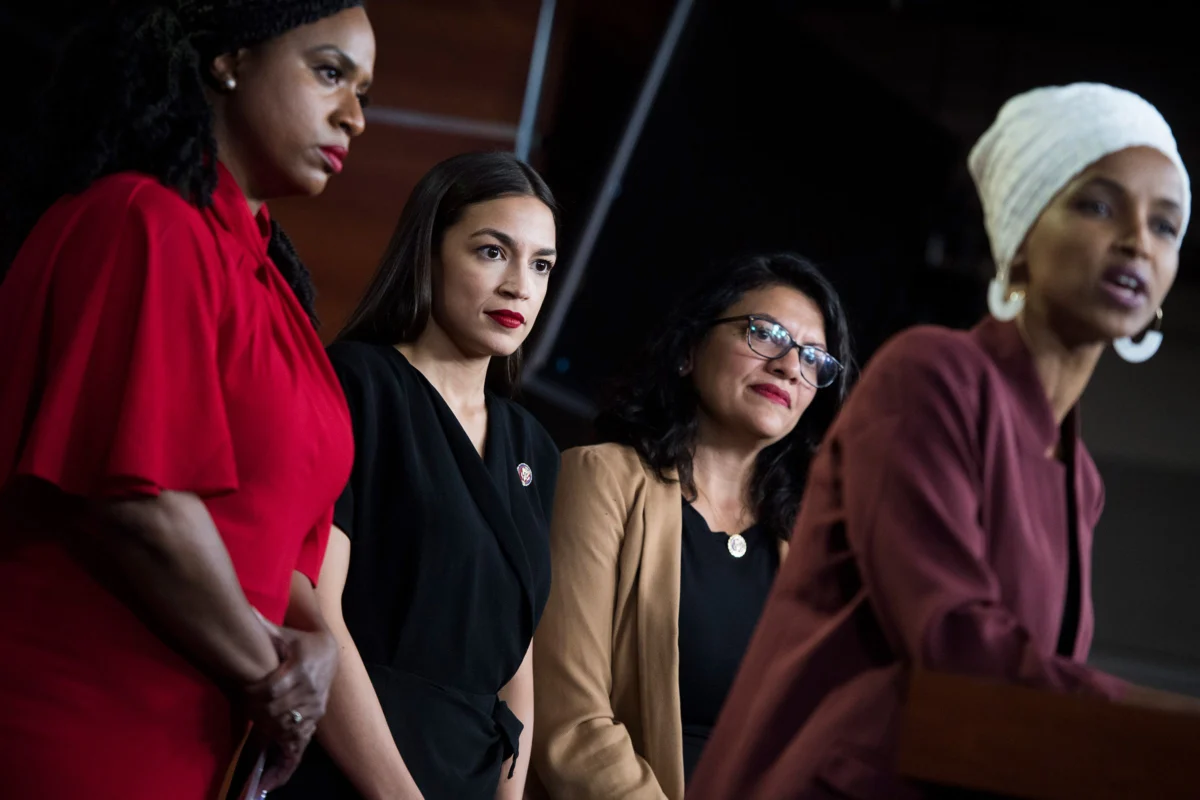
A separate CRA publication from earlier this year, penned by the organization’s executive director, Wade Miller, further elaborates on the concept of the "Red-Green Alliance" and explicitly names its perceived members. This purported alliance, according to the CRA, includes prominent progressive figures in Congress, collectively known as "The Squad." This group comprises four progressive women of color who first won seats in 2018: Representatives Alexandria Ocasio-Cortez, Rashida Tlaib, Ayanna Pressley, and Ilhan Omar. The CRA’s net also casts wider, encompassing politicians like New York Mayor Zohran Mamdani and Michigan Senate candidate Abdul El-Sayed.
The publication levies serious accusations against these individuals, claiming they are "purveyors of ideology dedicated to destroying capitalism, Christianity, and the Western political tradition." It is crucial to note, however, that none of the politicians identified in the CRA’s pieces have ever self-identified as Marxists. While some, such as Ocasio-Cortez and Mamdani, are openly Democratic Socialists – a distinct political ideology with a long history in democratic nations – the CRA’s framing appears designed to conflate their political positions with more extreme, anti-constitutional tenets. The inclusion of Muslim politicians like Rashida Tlaib, Ilhan Omar, and Abdul El-Sayed also raises concerns about religious discrimination, particularly given the CRA founder’s past comments.
Architects of the Challenge: Russell Vought and Project 2025
The Center for Renewing America is not an obscure entity; it was founded by Russell Vought, a highly influential figure within the conservative movement. Vought is recognized as one of the principal architects of Project 2025, an ambitious initiative aimed at preparing conservative personnel and policies for a potential future Republican administration. His previous role as the director of the Office of Management and Budget (OMB) during the first Trump administration provides crucial context to the CRA’s current strategies.
During his nomination process for OMB director, Vought faced significant criticism for past anti-Muslim comments. He notably stated that Muslims had a "deficient theology" and "do not know God," remarks that drew strong condemnation from civil rights groups like the ACLU. This history of making disparaging comments about a religious group underscores the concerns raised by the CRA’s targeting of Muslim politicians.
Vought has publicly described himself and his allies, including members of the CRA, as "radical constitutionalists." However, critics argue that his actions, particularly during his tenure at OMB, have often run contrary to established constitutional principles, specifically those related to the separation of powers. While Congress is constitutionally tasked with allocating and approving funds for the operation of the federal government, Vought has been accused of taking steps that infringed upon the legislative branch’s authority to expand the power of the executive.
Most notably, Vought’s OMB reportedly impounded, refused, or significantly delayed the disbursement of funds that Congress had explicitly approved. For instance, last year saw a freeze on $5 billion in foreign aid funding, followed by the clawback of over $800 million this year. Maine Senator Susan Collins, a Republican, publicly stated in late September that this move "may violate the Impoundment Control Act" of 1974, a statute designed to prevent the executive branch from unilaterally withholding funds appropriated by Congress. This pattern of actions, perceived as an overreach of executive power, establishes a precedent of challenging established legal and constitutional norms, which appears to be extended in the CRA’s current electoral strategy.
Legal and Constitutional Scrutiny: A "Congress-versus-Courts Showdown"?
The legal underpinnings of the CRA’s strategy have been met with skepticism and outright dismissal by constitutional law experts. Corey Brettschneider, a professor of politics and constitutional law at Brown University and host of "The Oath and the Office" podcast, asserts that both CRA publications are "engaged in an attack on the Constitution and then trying to use the law of that as an attack on opponents." He firmly believes that such a strategy would be quickly identified and quashed by a court.
Brettschneider particularly highlighted the targeting of Muslim politicians based on their religion, noting that such a maneuver would face even stronger constitutional hurdles. The U.S. Constitution is explicit in stating that "no religious Test shall ever be required as a Qualification to any Office or public Trust under the United States." This foundational principle, enshrined in Article VI, Clause 3, directly prohibits the kind of religious discrimination implied by the CRA’s "anti-Western Muslim" designation and its underlying premise that certain religious beliefs render an individual unfit for office. Therefore, any attempt to disqualify a winning candidate on religious grounds would almost certainly be found unconstitutional.
While the consensus among legal scholars is that any successful legal case based on the CRA’s logic would be unlikely to withstand judicial scrutiny, Brettschneider cautions against complacency. He suggests that the CRA’s strategy is designed to "float it to see if it will stick," testing the boundaries of acceptable political discourse and legal challenges.
Christian Grose, a professor of political science at the University of Southern California, offered insights into the potential effectiveness of such a strategy, noting its variability depending on the electoral margins. If Democrats secure a narrow victory, perhaps by only one or two seats in the Senate, Republicans might be emboldened to dispute results aggressively in an attempt to retain control. However, Grose suggests that "if Democrats win the Senate by something like four seats, I think we will be less likely to see those kinds of things." He added, "The bigger the margin is on either side, the less likely this will be a viable strategy, and it becomes more preposterous the larger number of winning candidates that someone would try not to seat."
The situation for House members could be particularly precarious if Republicans manage to retain a majority. In such a scenario, the House itself could theoretically vote to refuse to seat incoming Democrats. A historical precedent often cited is the case of Adam Clayton Powell Jr. In 1967, the House of Representatives refused to seat Powell, a Democratic representative from Harlem and the first Black person from New York State elected to Congress, due to allegations of misappropriating funds. However, the Supreme Court later ruled in Powell v. McCormack (1969) that the House had overstepped its constitutional authority by attempting to exclude a duly elected member who met the age, citizenship, and residency requirements. The Court affirmed that the House could only judge the qualifications explicitly enumerated in the Constitution, not create new ones based on behavior or, by extension, ideology or religion. This precedent significantly limits the House’s power to refuse to seat members.
Grose also highlighted the potential for prolonged legal battles. Any challenge could risk remaining unresolved beyond the start of the new Congress in 2027, potentially leading to judges issuing injunctions to seat challenged senators. This could precipitate a "Congress-versus-courts showdown," a scenario where the legislative and judicial branches clash over fundamental questions of electoral legitimacy and constitutional authority. Despite these serious concerns, Richard Pildes remains unequivocal in his assessment: "This isn’t going to happen."
Broader Implications and the Erosion of Democratic Guardrails
While the legal strategy proposed by the CRA may ultimately prove untenable in court, its mere existence and promotion carry significant broader implications for American democracy. Corey Brettschneider underscores the critical need to take such efforts seriously, even if their direct legal success is doubtful. He points to the Trump administration’s repeated attempts to dismantle "the guardrails and the norms that are supposed to protect against this," citing examples like multiple attempts to charge former FBI director James Comey with various crimes, despite the unlikelihood of securing convictions.
The essence of this strategy, Brettschneider argues, lies not solely in legal victory but in its chilling effect: "Even if they don’t get away with it directly, threatening and shutting down opponents creates fear and makes people worry ‘they might come after me next.’" This weaponization of legal challenges serves to intimidate political adversaries, exhaust their resources, and delegitimize their electoral mandates in the eyes of a segment of the public.
Such tactics contribute to a deepening climate of political polarization and distrust in democratic institutions. By casting doubt on the legitimacy of entire blocs of elected officials based on their perceived ideology or religion, the CRA’s strategy undermines the fundamental principle of majority rule and the peaceful transfer of power. It risks normalizing the idea that election results can be overturned or ignored if the winning candidates are deemed ideologically unacceptable by a powerful minority.
The timing of these proposals, amidst a backdrop of heightened political tensions surrounding midterm elections, suggests a deliberate attempt to inject uncertainty and controversy into the democratic process. Even if the courts ultimately uphold constitutional principles, the damage inflicted by such challenges—in terms of public confidence, increased polarization, and the erosion of norms—could be substantial and long-lasting. The continued effort to challenge the validity of elections and the eligibility of elected officials, even when legally baseless, represents a profound threat to the stability and health of American democracy. It compels a renewed vigilance from institutions, legal experts, and the electorate to safeguard the foundational principles of representative governance.