Jia Lissa
As the United States approaches critical midterm elections, with polls suggesting a significant Democratic showing, a right-wing think tank with deep ties to the Trump administration is advocating for an unprecedented strategy: preventing duly elected Democrats from taking office. This radical proposal, outlined in a recent publication by the Center for Renewing America (CRA), suggests that certain winning candidates, particularly those it labels as part of a "Red-Green Alliance," could and should be legally barred from assuming their seats in Congress, regardless of electoral victory. This development comes as the Trump administration itself is reportedly preparing to mount legal challenges and cast doubt on election results, escalating concerns over the integrity of the electoral process and the peaceful transfer of power.
The Center for Renewing America and Its Controversial Architect
The Center for Renewing America, an influential conservative organization, has emerged as a key player in shaping right-wing policy and strategy. Founded by Russell Vought, a figure central to the first Trump administration, the CRA positions itself as a guardian of constitutional principles, yet its proposals often push the boundaries of established legal and democratic norms. Vought, who previously served as the director of the Office of Management and Budget (OMB) under President Trump, is also a principal architect of Project 2025, an extensive blueprint aimed at preparing a conservative presidential administration for a rapid overhaul of the federal government.
Vought’s tenure in government was marked by controversy, particularly his staunch adherence to a "radical constitutionalist" ideology that critics argue often prioritized executive power over legislative oversight. During his confirmation hearings for OMB director, Vought faced significant backlash for past anti-Muslim comments, notably stating that Muslims hold a "deficient theology" and "do not know God." These remarks, which sparked condemnation from civil liberties groups like the ACLU, underscore a pattern of rhetoric that demonizes certain religious and political groups—a pattern that now appears to inform the CRA’s latest strategy.
Beyond his rhetoric, Vought’s actions at OMB demonstrated a willingness to challenge institutional checks and balances. He was notably criticized for impounding, refusing, or delaying the disbursement of billions of dollars in funds that Congress had explicitly approved. For instance, he froze $5 billion in foreign aid and later clawed back over $800 million, actions that Maine Senator Susan Collins suggested might violate the Impoundment Control Act of 1974. This Act was specifically designed to prevent the executive branch from unilaterally withholding appropriated funds, a practice seen as an overreach of presidential power and an infringement on Congress’s constitutional authority over the purse. Vought’s history thus paints a picture of an ideologue willing to aggressively interpret and, some would say, "contort and twist basic norms" for partisan ends, a tendency now reflected in the CRA’s election strategy.
The "Red-Green Alliance" and the Strategy to Disqualify
The contentious strategy to block winning candidates from office is detailed in a CRA post titled "Can Congress Seat a Member-Elect Who Vows to Destroy our Constitution?" Authored by Benjamin Osborne, a legal fellow at the organization and a Georgetown Law School graduate, the article posits that candidates from a supposed "Red-Green Alliance"—a term the CRA uses to describe an alleged coalition of "neo-Marxist progressives and anti-Western Muslims"—should be deemed ineligible to serve. The core argument rests on the premise that if these elected individuals have "personally embraced the destruction of the constitutional order espoused by these groups," they cannot truthfully swear to support that order, a condition for taking office. In essence, the CRA claims that the beliefs and ideologies it imputes to these Muslim and progressive candidates should legally disqualify them.
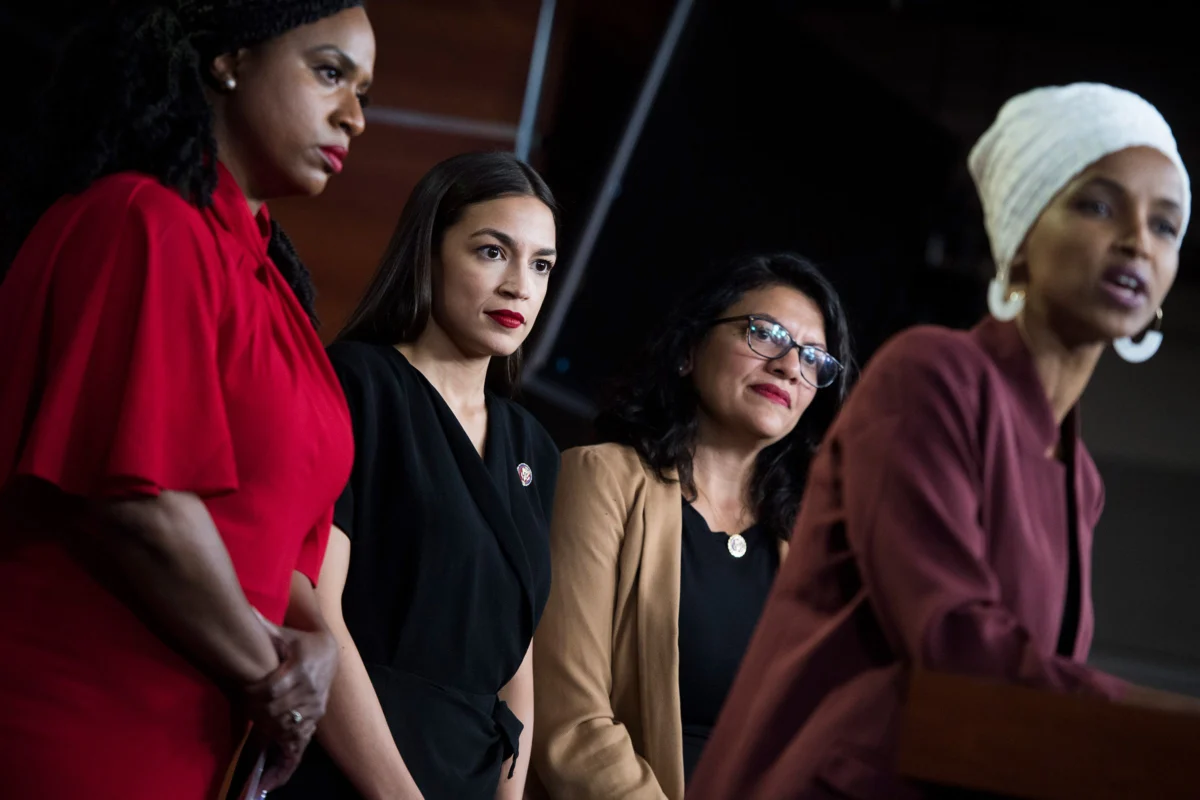
A separate CRA publication from earlier this year, penned by Executive Director Wade Miller, further elaborates on the concept of this "Red-Green Alliance." It explicitly names prominent progressive and Muslim politicians as adherents, including members of "The Squad"—Alexandria Ocasio-Cortez, Rashida Tlaib, Ayanna Pressley, and Ilhan Omar—all progressive women of color who gained national prominence after their 2018 election victories. Other named politicians include New York mayor Zohran Mamdani and Michigan senate candidate Abdul El-Sayed. The CRA asserts that these politicians are "purveyors of ideology dedicated to destroying capitalism, Christianity, and the Western political tradition." It is crucial to note that none of the politicians named have self-identified as Marxists, though some, like Ocasio-Cortez and Mamdani, are openly democratic socialists, a distinct political philosophy advocating for democratic control of the economy within a democratic framework, not the violent overthrow of the state associated with classical Marxism.
The rhetoric employed by the CRA is highly inflammatory, drawing upon long-standing conservative anxieties about socialism and Islam. By conflating progressive policy positions with an alleged intent to "destroy" the Constitution, and by linking Muslim faith with "anti-Western" sentiments, the think tank creates a narrative designed to delegitimize political opponents and sow distrust among the electorate. The article essentially attempts to transform ideological disagreement into a constitutional disqualification, a move that legal experts widely condemn as baseless and dangerous.
Legal and Constitutional Rebuttals: Experts Weigh In
Legal scholars and constitutional law experts have swiftly dismissed the CRA’s strategy as legally untenable and a profound distortion of constitutional principles. Richard Pildes, a professor at New York University’s School of Law, characterizes the CRA’s proposal as "another attempt to contort and twist basic norms that have never been used this way for their own partisan purposes." He stresses that such an interpretation would fundamentally undermine the foundational principles of representative democracy.
Corey Brettschneider, a professor of politics and constitutional law at Brown University and host of The Oath and the Office podcast, goes further, asserting that both the CRA posts are "engaged in an attack on the Constitution and then trying to use the law of that as an attack on opponents." He maintains that any court would quickly identify and quash such an attempt.
A cornerstone of the American legal system that directly refutes the CRA’s argument regarding Muslim candidates is Article VI, Clause 3 of the US Constitution, which explicitly states: "no religious Test shall ever be required as a Qualification to any Office or public Trust under the United States." Brettschneider emphasizes that "The protections I’d say are even stronger against that maneuver because the Constitution is explicit in saying you can’t have a religious test for office." Attempting to disqualify a Muslim politician based on their faith, or on a prejudiced interpretation of their faith, would constitute a clear violation of this fundamental constitutional safeguard.
Furthermore, the oath of office, which requires members of Congress to "support and defend the Constitution of the United States against all enemies, foreign and domestic," is a commitment to uphold the legal framework, not an ideological purity test. Legal precedent overwhelmingly supports the idea that once a candidate is duly elected by the people, their right to take office is paramount, barring very specific and legally defined circumstances such as age, citizenship, or residency requirements, or demonstrable electoral fraud. Disqualifying a candidate based on their political views, however radical they might be perceived by opponents, would set a dangerous precedent, effectively allowing a partisan body to veto the will of the voters.
Historical Precedent and Congressional Authority
While the CRA’s legal argument faces overwhelming rejection from constitutional experts, the prospect of Congress refusing to seat a duly elected member is not entirely without historical precedent, though such instances are rare and typically involve very different circumstances. The most frequently cited case is that of Adam Clayton Powell Jr. In 1967, the House of Representatives refused to seat Powell, a Democratic representative from Harlem and the first Black person from New York State elected to Congress. However, this refusal was based on allegations of misappropriating funds and contempt of court, not on his ideology or political beliefs. The Supreme Court later ruled in Powell v. McCormack (1969) that the House had overstepped its authority by attempting to exclude a member who met the constitutional requirements for age, citizenship, and residency, affirming that the power to judge qualifications is limited.
This historical context is critical. The Powell case highlights that while Congress has some authority over its members, that authority is constrained by constitutional requirements. The CRA’s attempt to use alleged ideological or religious incompatibility as grounds for disqualification goes far beyond the scope of the Powell precedent and directly contradicts fundamental constitutional protections.
Christian Grose, a professor of political science at the University of Southern California, notes that the practical effectiveness of such a strategy would largely depend on the margins of a Democratic victory. If Democrats win the Senate by a narrow margin, say one or two seats, Republicans might be more inclined to dispute results to maintain control. "But if Democrats win the Senate by something like four seats, I think we will be less likely to see those kinds of things," Grose says. "The bigger the margin is on either side, the less likely this will be a viable strategy, and it becomes more preposterous the larger number of winning candidates that someone would try not to seat."
Grose also warns that any protracted legal challenge could extend beyond the start of the new Congress in 2027, potentially leading to a "Congress-versus-courts showdown" as judges might issue injunctions to seat challenged senators. Despite these logistical and legal hurdles, Pildes offers a more direct assessment of the CRA’s strategy: "This isn’t going to happen."
Broader Implications for Democracy and Election Integrity
Even if the CRA’s legal strategy is destined for failure in the courts, its very articulation carries significant implications for American democracy and election integrity. Brettschneider warns that "We absolutely need to take it seriously because Trump has been dismantling the guardrails and the norms that are supposed to protect against this, or trying to influence the courts through appointments." He points to the administration’s multiple attempts to charge former FBI director James Comey with various crimes, even when prosecutors were unlikely to secure a conviction, as an example of weaponizing legal processes.
The strategy of "floating it to see if it will stick," as Brettschneider describes it, contributes to a climate of distrust and political instability. Regardless of legal success, the act of threatening to invalidate election results or prevent duly elected officials from serving undermines public confidence in democratic institutions. This tactic can have a "chilling effect," creating fear among political opponents and discouraging participation, speech, and even candidacy from targeted groups.
The CRA’s proposal is not an isolated incident but rather part of a broader trend, particularly within segments of the Republican Party, to question election outcomes and delegitimize political opponents. Following the 2020 presidential election, the extensive efforts by the Trump campaign and its allies to challenge results, despite overwhelming evidence of a fair election, set a precedent for casting doubt on the democratic process. This continued rhetoric, now amplified by influential think tanks, suggests a sustained effort to challenge the legitimacy of elections and those who win them, particularly if the outcomes do not favor their preferred candidates.
Furthermore, the language used by the CRA—labeling opponents as "anti-Western," "destroying capitalism," and having "deficient theology"—exacerbates political polarization and contributes to a toxic political environment. This demonization of opponents can lead to real-world consequences, fueling extremism and potentially inciting violence, as seen in the January 6th Capitol attack.
The lack of response from the Center for Renewing America to requests for comment, and the non-response from Abdul El-Sayed’s campaign regarding awareness of the piece, highlight the challenges in addressing such preemptive and legally dubious attacks. While specific reactions from the targeted politicians or their parties were not immediately available, Democratic leaders and civil rights organizations have consistently voiced concerns over attempts to undermine election results and the use of inflammatory rhetoric against minority groups and political opponents.
In conclusion, the Center for Renewing America’s proposal to prevent winning Democratic candidates from taking office represents a profound challenge to the foundational principles of American democracy. While legal experts widely dismiss the strategy as unconstitutional and unlikely to succeed, its very existence, coupled with the Trump administration’s broader efforts to cast doubt on election outcomes, underscores a dangerous trend. It signifies an escalating willingness within certain political factions to weaponize legal and rhetorical tactics, not to uphold the Constitution, but to subvert democratic norms and delegitimize political opponents, thereby eroding public trust in the electoral system and the peaceful transfer of power. The ongoing battle for election integrity and the defense of constitutional principles remains a critical concern as the nation navigates an increasingly polarized political landscape.